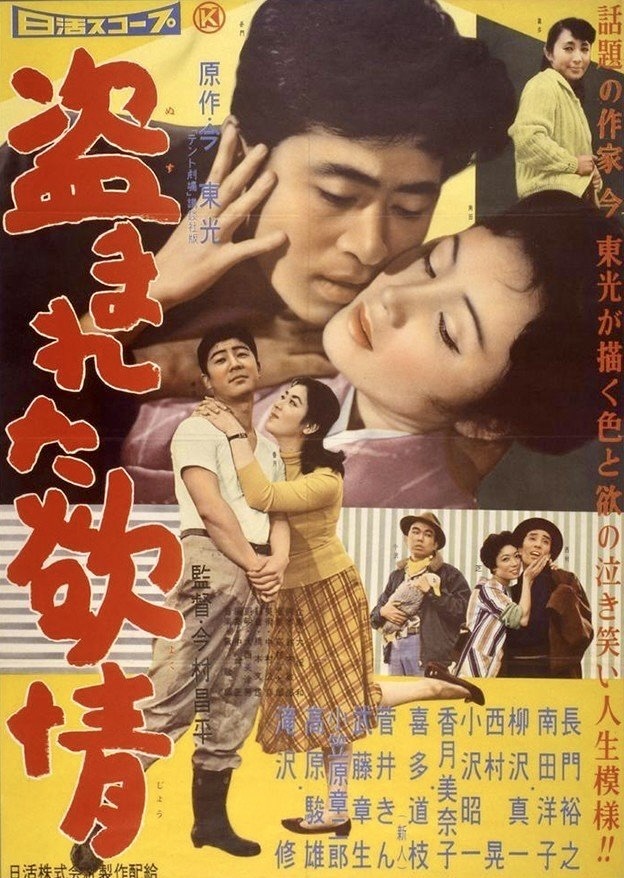
During the post-war years in Japan, a new generation of filmmakers began to address the changing social and political changes in their country which earned them the label of the Nuberu Bagu. Emerging around the same time as the French New Wave in the late 1950s/early 1960s, Masahiro Shinoda, Nagisa Oshima, Yoshishige Yoshida and Shohei Imamura were among the most famous directors in this radical new movement. Imamura, in particular, is an intriguing figure because he worked as an assistant director for Yasujiro Ozu on three of his films – Early Summer [1951], The Flavor of Green Tea Over Rice [1952], and Tokyo Story [1953]. Despite his respect for Ozu, Imamura became frustrated with the director’s rigid and idealized view of Japanese life and broke away to make his own kind of movies which dealt with the lower rung of society, especially outcasts, prostitutes and criminals – the kind of people Imamura lived among and empathized with during the late 1940s. None of this was blatantly obvious with the first films Imamura made for Nikkatsu Studios but you can still perceive a fondness and admiration for disenfranchised people in his feature film debut, Nusumareta Yokujo (English title: Stolen Desire, 1958). An episodic and picaresque tale of a ragtag theater troupe, the movie is an earthy, sensual comedy-drama and surprisingly upbeat in tone compared to Imamura’s later work.
Continue readingMonthly Archives: August 2026
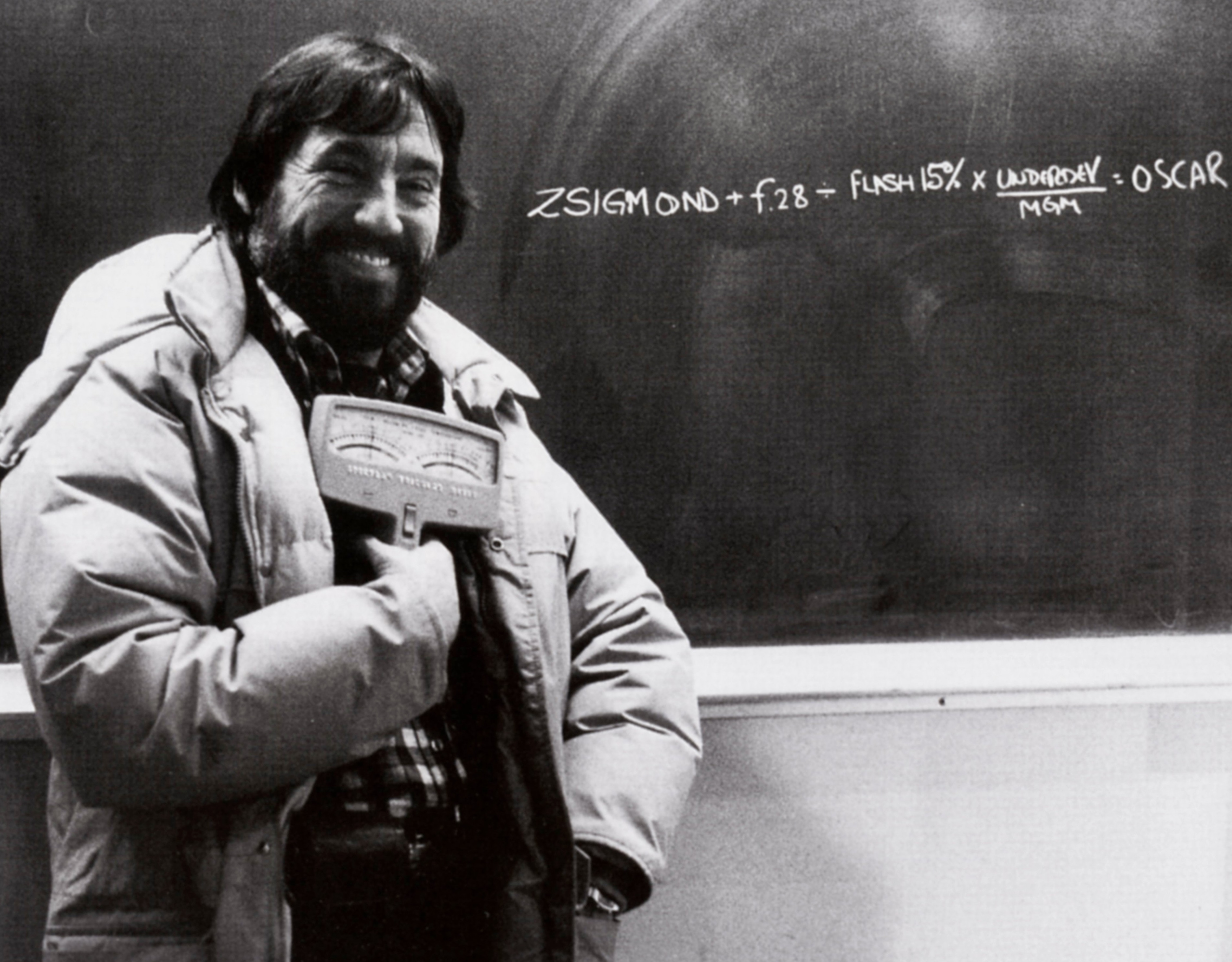
A Conversation with Cinematographer Vilmos Zsigmond
*This is an archival interview from 2004 that originally appeared on the Turner Classic Movies website.
One of the great cinematographers to emerge in the second half of the 20th century was Vilmos Zsigmond (1930-2026). His rise to prominence occurred around the same time as the Hollywood Renaissance of the 1970s when such directors as Martin Scorsese, Steven Spielberg, Dennis Hopper, Hal Ashby, Brian De Palma, Francis Ford Coppola and other young directors changed the way movies were made.
Continue readingPlastic Nightmare
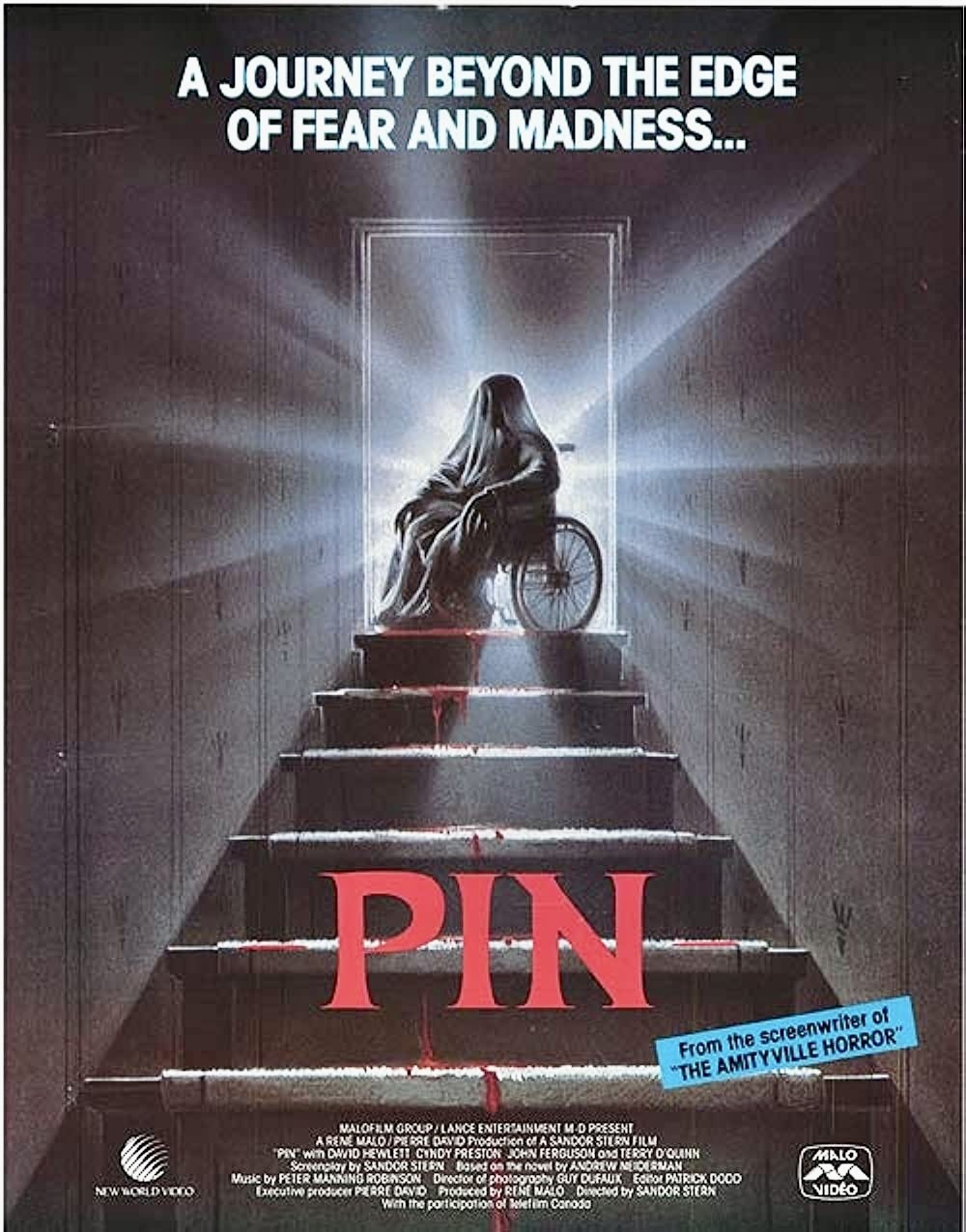
During the early years of the VHS boom movie lovers were suddenly able to access hundreds of films they had always wanted to see but weren’t available on TV or had never played movie houses in their town. Many were titles they had only read or heard about from fellow movie buffs. So it is no wonder that VHS became the dominant format in the home entertainment industry for awhile. I certainly credit VHS with introducing me to countless B-movies, forgotten Hollywood pictures and genre films but also introducing me to movies from outside the U.S., especially those from Canada. Among some of my favorites are Circle of Power aka Brainwash aka Naked Weekend (1981), a disturbing drama about a corporate retreat weekend for employees led by a dominatrix-like motivator (Yvette Mimieux); Siege aka Self Defense (1983), in which a small group of people are trapped in an apartment and attacked by crazed vigilantes; Family Viewing (1987), Atom Egoyan’s hypnotic drama about alienation; and Tales from the Gimli Hospital (1988), Guy Maddin’s bizarre debut feature. These were all surprising revelations to me but the one that still haunts me is Pin aka Pin: A Plastic Nightmare (1988).
Continue readingShellshocked Romance
PTSD (Post-traumatic stress disorder) is a term that became prominent in 1980 when the American Psychiatric Association recognized it as a mental health diagnosis that was often used to describe Vietnam War veterans and Holocaust survivors. Although PTSD could also apply to survivors of violent crimes, natural disasters and other calamities, it is more often association with war victims. Shellshocked is an earlier term for this disorder and was common in describing afflicted soldiers returning from battle during World War I. The Return of the Soldier, Rebecca West’s debut novel (published in 1918), was unique for featuring a shellshocked war veteran whose return home exposed his fragile mental condition to those who knew him before he went to battle. West’s novel was also significant for addressing such prevalent concerns in the narrative as class differences, Freudian psychoanalysis (which was popular at the time) and the lives of women living in a patriarchal society. All of this was skillfully integrated into the overlooked 1982 film adaptation of The Return of the Soldier, which faithfully captures the spirit and central focus of West’s narrative, one that utilizes the shellshocked protagonist as a means to examine three important women in his life and their response to his war trauma.
Continue readingThe Werebull of Camargue
Some movie lovers may be familiar with the Camargue region in the south of France since it has figured prominently in a number of films, especially 1953’s Crin Blanc: Le Cheval Sauvage (English title, White Mane), Albert Lamorisse’s lyrical tale of a boy and the wild, untamed horse he befriends, and Maniac (1963), a psychological thriller from Hammer Studios. This unique expanse of marshlands and salt flats is located between the Mediterranean Sea and two arms of the Rhone River and is well known for its wildlife which includes the stocky, semi-feral horses of Camargue as well as the region’s bulls (the animals are bred and raised for “course camarguaise,” a bloodless form of bull fighting). It is in this stunning landscape that French Algerian director Emma Benestan has set her second feature film, Animale (2024). It is an impressionistic exploration of the area’s ancient traditions and folklore focusing on Nejma (Oulaya Amamra), a 22-year-old woman who is determined to master the art of bull-running, even though it has always been exclusively an all-male athletic competition.
Continue readingRaoul Walsh’s Gun Fury
It is hard to believe that Raoul Walsh, the man who directed The Roaring Twenties (1939), High Sierra (1941), They Died with Their Boots On (1941), Objective, Burma! (1945), White Heat (1949) and other classic genre films for Warner Brothers, never received an Oscar nomination. Film historian David Thomson pondered this in The New Biographical Dictionary of Film, writing, “Was it just that he was so reliable, so direct and “simple” an entertainer? Or was it a matter of not making the proper “big” pictures?” Even after his peak years at Warners, Walsh continued to make audience pleasing hits such as Battle Cry (1955), the fourth biggest box office success of its year. Even some of the B-pictures Walsh made during his final years in Hollywood look like A-pictures now such as the 1953 western, Gun Fury.
Continue reading