Do you have a favorite nun movie? It seems that the most popular and commercially successful of the lot are either serious dramas like The Nun’s Story (1959) or comedy/musicals such as The Sound of Music (1965) and Sister Act (1992). There is also the more polarizing subgenre known as nunsploitation which caters to grindhouse audiences with abundant scenes of sex and violence (Jess Franco’s Love Letters of a Portuguese Nun [1977], Killer Nun [1079]) but can also embrace art house fare like Ken Russell’s The Devils (1971) and Walerian Borowczyk’s Behind Convent Walls (1978). Entre Tinieblas (English title: Dark Habits, 1983), directed by Pedro Almodovar, doesn’t fit easily into any of the above categories but, like any nunsploitation flick, it is likely to offend conservative and religious viewers. Still, Almodovar’s film is much closer to a Hollywood soap opera crossed with screwball comedy but its subversive and controversial nature isn’t the result of explicit sex or violence but its wicked satire of Catholicism and those who practice it. In this case, it’s a quintet of nuns who call themselves the Community of Humble Redeemers.
Continue readingMonthly Archives: March 2026
Raise the Pirate Flag!
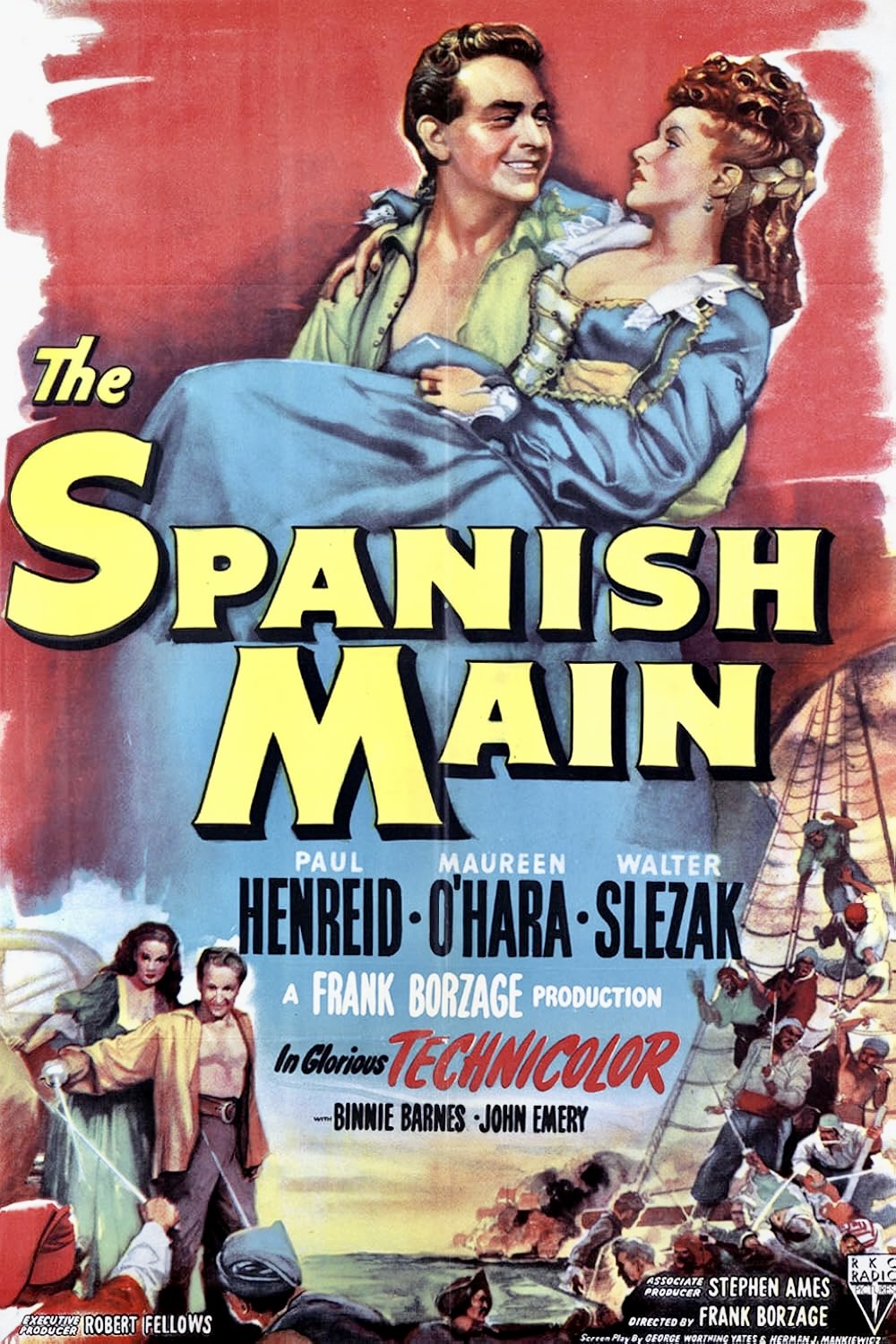
In the pantheon of great Hollywood directors from the 1930s, Frank Borzage and his films are often overshadowed by the work of such peers as Frank Capra, George Cukor and Ernst Lubitsch. Yet many film historians and scholars consider his work the equal of these better-known directors with such exemplary examples as 7th Heaven (1927) and Bad Girl (1931) – both of which won Borzage the Oscar for Best Director – plus Man’s Castle (1933), History is Made at Night (1937), Three Comrades (1938) and The Mortal Storm (1940). Often referred to as “The Great Romanticist,” whose most famous films usually focused on the redemptive power of love, Borzage began to fall out of favor in his later career when his films were seen as old-fashioned and anachronistic. But he was still capable of turning out a late period masterpiece such as the poetic film noir Moonrise (1948) as well as handle a big budget studio entertainment like The Spanish Main (1945). The latter pirate tale may seem atypical for a Borzage film but don’t forget he also dabbled in other unlikely genres such as war dramas (Flight Command, 1940) and musicals (Seven Sweethearts, 1942). It was also a rousing costume adventure which compared favorably to the swashbucklers of Errol Flynn such as Captain Blood (1935) and The Sea Hawk (1940), with the added attraction of being filmed in glorious Technicolor by George Barnes.
Continue readingUFO Sighting in the Lower East Side
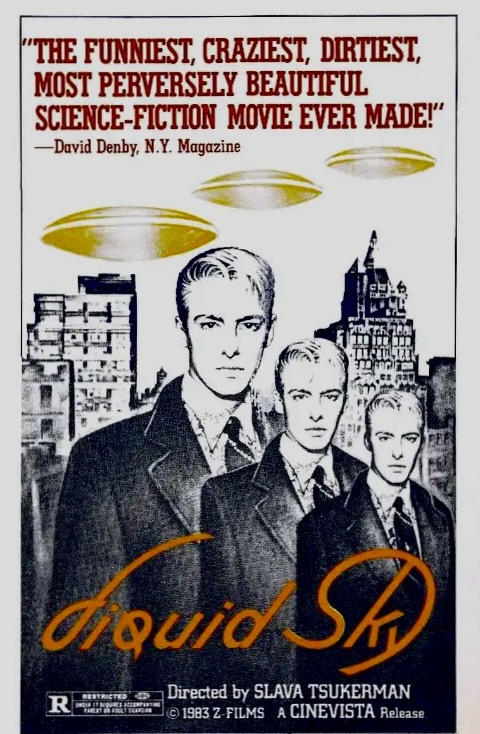
Is it possible for a struggling independent film director to make a science fiction film today for less than a million dollars? It doesn’t seem likely but it could be possible if the director is driven, highly creative and blessed with a team of uniquely gifted collaborators. That was certainly the case for Russian émigré Slava Tsukerman in 1982 when he embarked on his American feature film debut, Liquid Sky. Made for approximately $500,000 and produced during a 28-day shooting schedule, the film became an overnight sensation, winning special awards at film festivals around the globe and attracting adventurous filmgoers to a long run at New York City midnight movie screenings.
Continue readingNo Justice, No Peace

On October 2, 1968, one of the most shameful and tragic events in 20th century Mexico occurred in the public square of Tlatelolco, a new housing development in Mexico City. The Mexican army opened fire on a large group of protestors and unarmed civilians who were protesting the upcoming Summer Olympics in the city in response to the government’s politically repressive regime. Sources vary over how many people died in the violent confrontation but estimates range from 300 to 400 people or more. No one was ever prosecuted for the massacre which was carried out by the U.S. backed PRI (Institutional Revolutionary Party) regime but in 2018, on the 50th anniversary of the event, the Mexican government finally admitted it was a state crime. But that’s not the same thing as justice for the victims and the infamous massacre has been the subject of several dramatizations and documentaries over the years. One of the most powerful of them is the Mexican drama No Nos Moveran (US title: We Shall Not Be Moved, 2024), the directorial debut of Pierre Saint-Martin. Part of its effectiveness is due to its intimate approach which is not a historic recreation of the event but the story of how one woman’s life was forever altered by the tragedy.
Continue readingChild’s Play
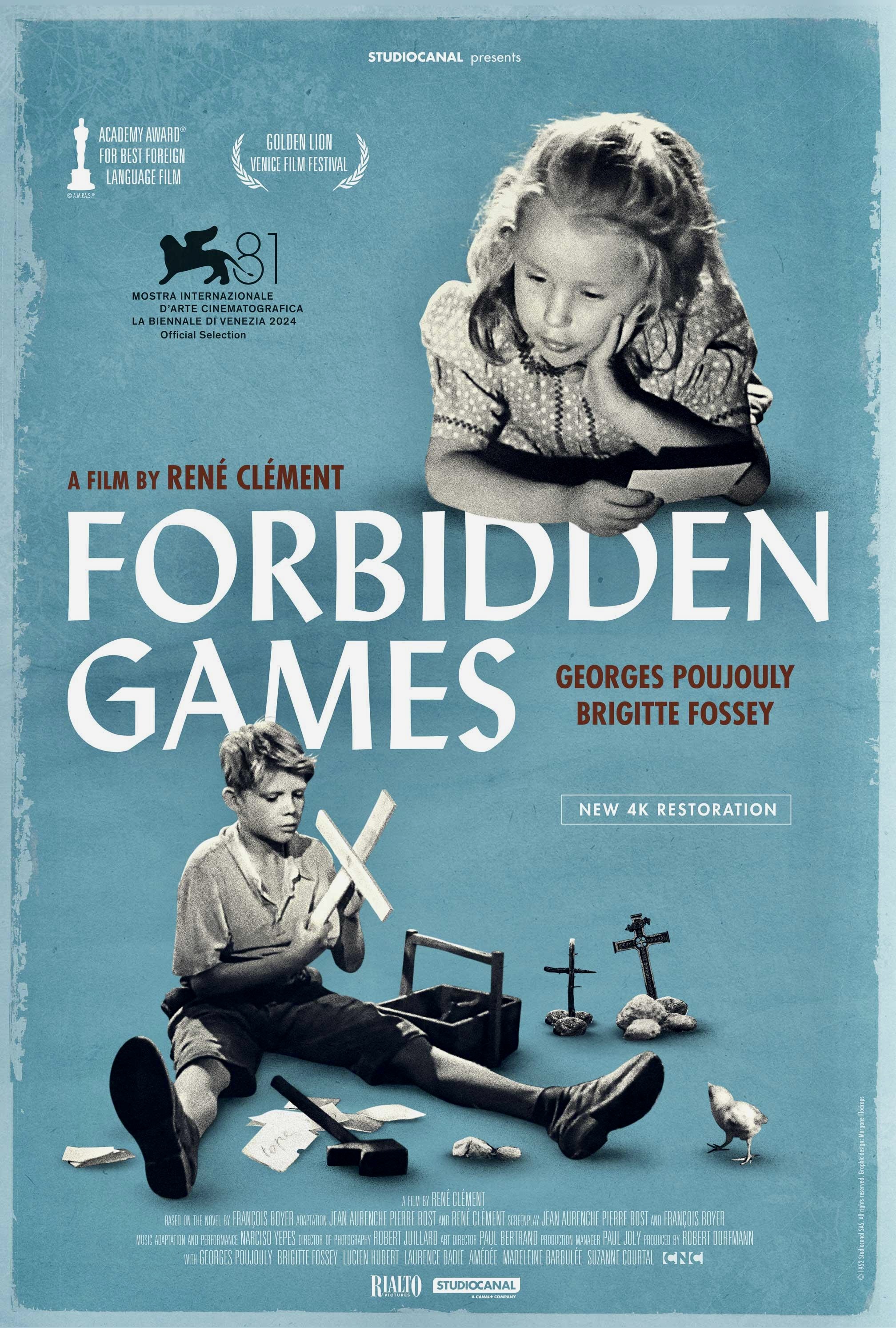
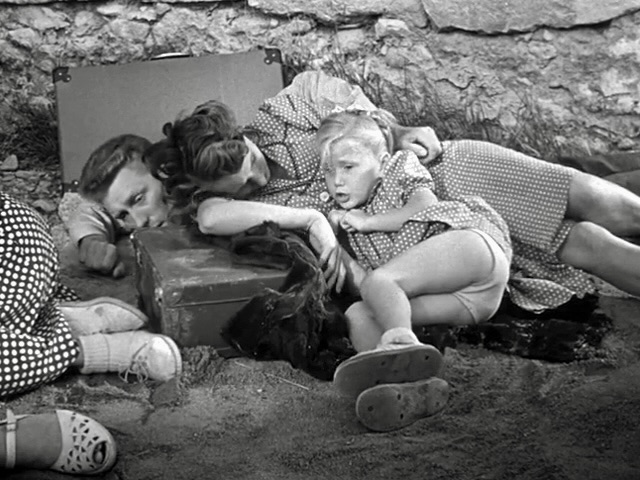
June 1940. A long line of French refugees flee Paris for the countryside during the German invasion of France in WW2. Among the evacuees are a young couple with their 5-year-old daughter Pauline and her pet dog Jock. When the couple’s car stalls on the road, angry refugees push it out of the way and down a hill. The family grab whatever they can carry from their stranded vehicle and return to the road as German aircraft start dropping bombs. In the confusion, Jock runs off and Pauline chases after him. Her parents follow in pursuit but the family is forced to take shelter again as aerial machine-gunners target the escaping Parisians. This time the parents and the dog are mortally wounded and Pauline is left abandoned. She wanders into the countryside clutching her dead pet, not really comprehending what has happened to her. All of this occurs in the few ten minutes of Jeux Interdits (English title: Forbidden Games), one of the most powerful war films of all time. Yet, it is unique within its specific genre because it does not focus on the war itself but the effects of the devastation on a young child. Directed by Rene Clement, the film became an international sensation and won a honorary Oscar as Best Foreign Film of 1952.