The Wandering Yamamura Theater Troupe

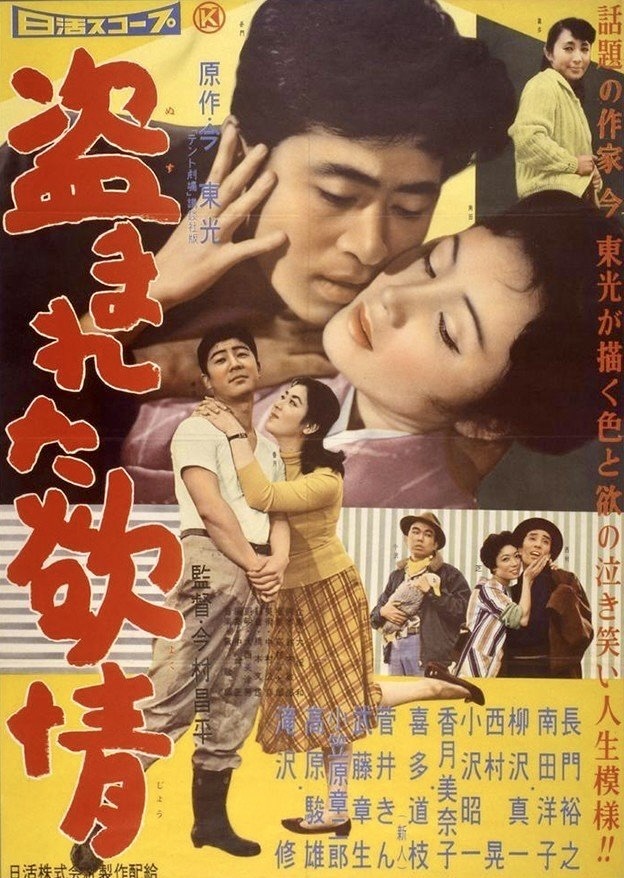
The Japanese film poster for STOLEN DESIRE (1958), directed by Shohei Imamura.

During the post-war years in Japan, a new generation of filmmakers began to address the changing social and political changes in their country which earned them the label of the Nuberu Bagu. Emerging around the same time as the French New Wave in the late 1950s/early 1960s, Masahiro Shinoda, Nagisa Oshima, Yoshishige Yoshida and Shohei Imamura were among the most famous directors in this radical new movement. Imamura, in particular, is an intriguing figure because he worked as an assistant director for Yasujiro Ozu on three of his films – Early Summer [1951], The Flavor of Green Tea Over Rice [1952], and Tokyo Story [1953]. Despite his respect for Ozu, Imamura became frustrated with the director’s rigid and idealized view of Japanese life and broke away to make his own kind of movies which dealt with the lower rung of society, especially outcasts, prostitutes and criminals – the kind of people Imamura lived among and empathized with during the late 1940s. None of this was blatantly obvious with the first films Imamura made for Nikkatsu Studios but you can still perceive a fondness and admiration for disenfranchised people in his feature film debut, Nusumareta Yokujo (English title: Stolen Desire, 1958). An episodic and picaresque tale of a ragtag theater troupe, the movie is an earthy, sensual comedy-drama and surprisingly upbeat in tone compared to Imamura’s later work.

Continue reading
Queen of Karate

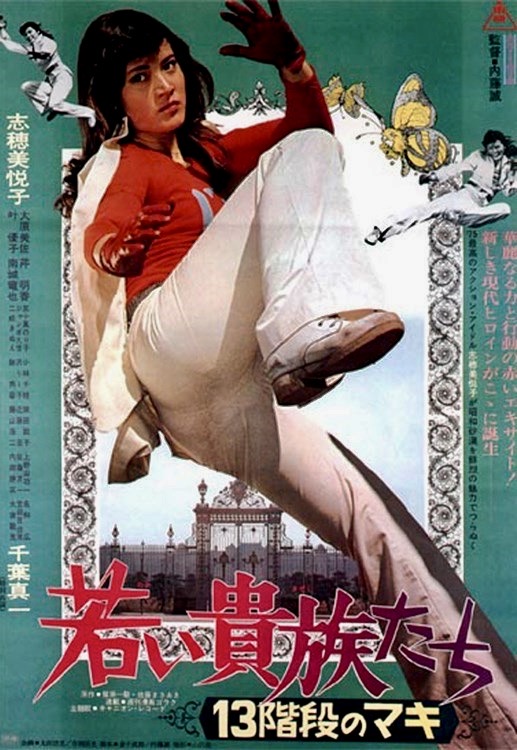
The Japanese poster for the 1975 film 13 STEPS OF MAKI: THE YOUNG ARISTOCRATS.
The Japanese poster for the 1975 film 13 STEPS OF MAKI: THE YOUNG ARISTOCRATS starring Etsuko Shihomi.

Most of the famous icons of Japanese action cinema of the 1970s are usually male stars but there are a few exceptions. The best known is easily Meiko Kaji, who enjoyed a double career as a popular singer and film actress whose most famous movies inspired Quentin Tarantino’s Kill Bill Vol. 1 (2003) and Vol. 2 (2004). She built up a cult following with a quintet of girl gang features – the Stray Cat Rock franchise (1970-71) – and then moved on to greater success in the Female Prisoner Scorpion series (1972-73) and two genre classics, Lady Snowblood (1973) and Lady Snowblood 2: Love Song of Vengeance (1974).

The Japanese poster for the 1970 film STRAY CAT ROCK: DELINQUENT GIRL BOSS starring Meiko Kaji.

The only other Japanese actress from the same period to rival Kaji’s track record is probably Etsuko Shihomi, who first attracted attention in a supporting role in The Street Fighter (1974) opposite martial arts legend Shin’ichi Chiba aka Sonny Chiba. Shihomi followed this up with her breakthrough feature Sister Street Fighter (1974), which proved to be such a hit that she made four sequels to it while appearing in other action flicks with her mentor Chiba. But probably Shihomi’s wildest and least seen movie is Wakai Kizoku-tachi: 13-Kaidan no Maki (English title: 13 Steps of Maki: The Young Aristocrats, 1975), which should have spawned a series but also feels like a homage to Kaji’s Stray Cat Rock series.

Continue reading

The Girl with the Fishing Spear

Mari Shirato plays a fisherman’s widow who is preparing to avenge her husband in the 1984 thriller Mermaid Legend, directed by Toshiharu Ikeda.

In 1984 ATG (Art Theater Guild), one of the most experimental and artistic of Japan’s film distribution companies, and Directors Company, released Ningyo Densetsu, directed by Toshiharu Ikeda. ATG had already established itself as a cutting-edge visionary with such releases as Toshio Matsumoto’s Funeral Parade of Roses (1969), Shuji Terayama’s Pastoral: Hide and Seek (1974) and Seijun Suzuki’s Zigeunerweisen (1980). Ningyo Densetsu was something altogether different – a commercially viable fusion of murder mystery, white collar crime and revenge thriller which looked more mainstream than most of ATG’s previous releases. Also known as Mermaid Legend, the movie is also much more extreme than some of the most infamous exploitation films of its era yet it is distinguished by its artistry in all areas of production. But make no mistake, this is not family-friendly fare or recommended for fans of The Little Mermaid

Continue reading

Pandemonium in the Dark

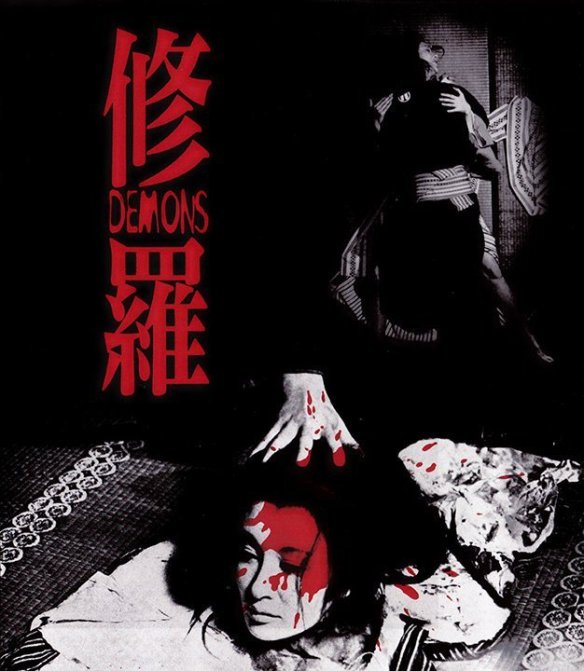
In Japanese cinema, the samurai film can be many things. It can be a ghost story (Ugetsu, 1953), a rousing adventure (The Hidden Fortress, 1958), a tragic romance (Gate of Hell, 1953), a sweeping historical epic (Tales of the Taira Clan, 1955), a Shakespeare adaptation (Throne of Blood, 1957) or even a revenge saga (Chushingura, 1962). The latter is my favorite sub-genre in the category and the best samurai revenge films are usually driven by the avenger’s sense of honor being defamed and/or moral outrage at personal injustice. This is certainly the motivation behind the heroine of Lady Snowblood (1973), played by Meiko Kaji, and its sequel, Lady Snowblood 2: Love Song of Vengeance (1974). It is also the central premise of Masaki Kobayashi’s Harakiri (aka Seppuku, 1962), which is more doom-laden and brooding than the kinetic action of the Lady Snowblood films but nevertheless explodes in a bloody, sword-wielding finale. But if you want to go deeper, darker and crueler, it is hard to top Toshio Matsumoto’s Demons (aka Shura aka Pandemonium, 1971) for pure malice.   Continue reading