

Some movie lovers may be familiar with the Camargue region in the south of France since it has figured prominently in a number of films, especially 1953’s Crin Blanc: Le Cheval Sauvage (English title, White Mane), Albert Lamorisse’s lyrical tale of a boy and the wild, untamed horse he befriends, and Maniac (1963), a psychological thriller from Hammer Studios. This unique expanse of marshlands and salt flats is located between the Mediterranean Sea and two arms of the Rhone River and is well known for its wildlife which includes the stocky, semi-feral horses of Camargue as well as the region’s bulls (the animals are bred and raised for “course camarguaise,” a bloodless form of bull fighting). It is in this stunning landscape that French Algerian director Emma Benestan has set her second feature film, Animale (2024). It is an impressionistic exploration of the area’s ancient traditions and folklore focusing on Nejma (Oulaya Amamra), a 22-year-old woman who is determined to master the art of bull-running, even though it has always been exclusively an all-male athletic competition.
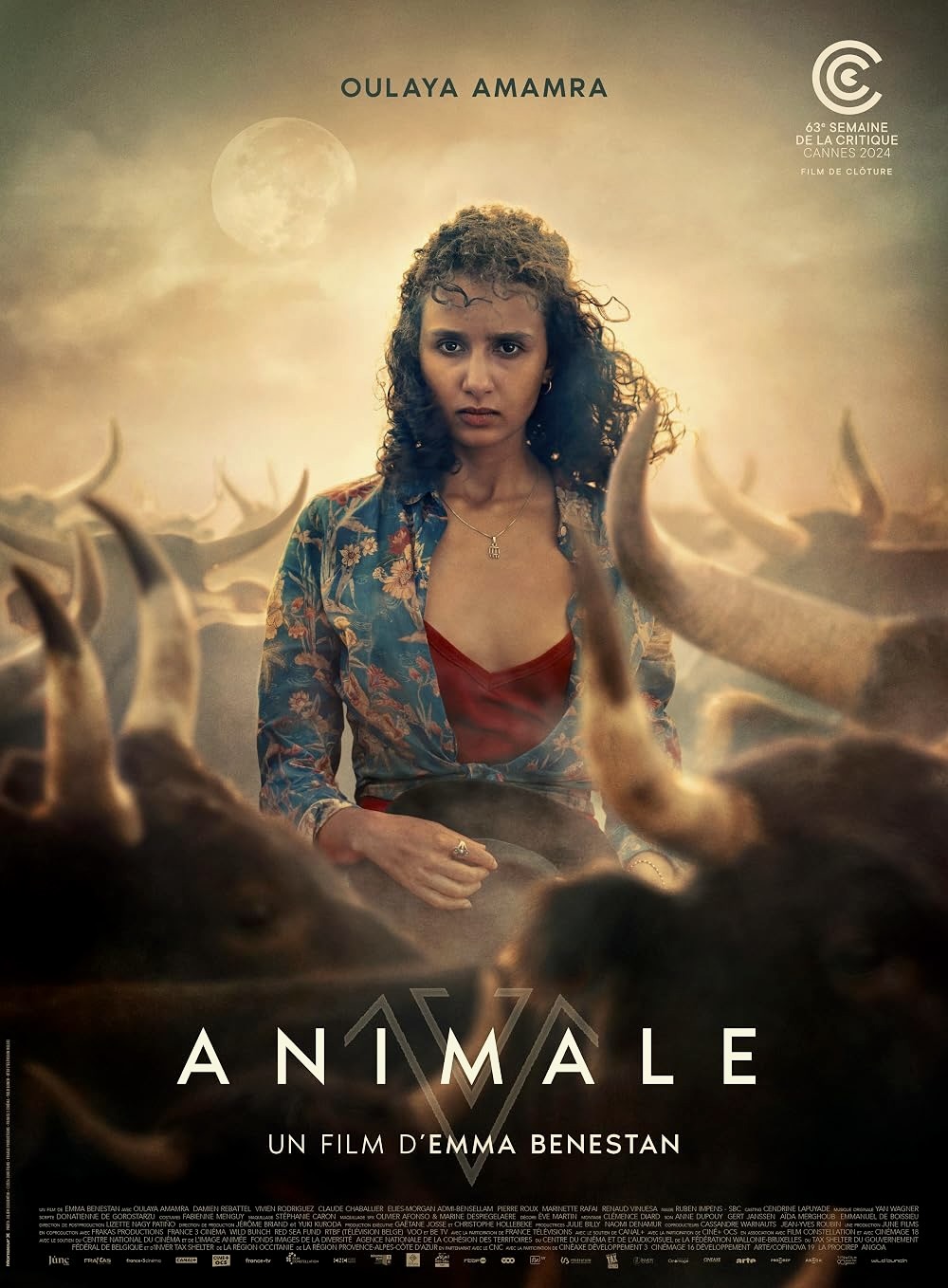
This dangerous sport is not to be confused with the annual “Running of the Bulls” in Pamplona, Spain, where scores of daredevil participants are given a head start to outrun six bulls in a half mile race within a closed off section of the city. In Benestan’s film, bull-running is something else. It takes place in a public arena where razeteurs (Camargue bullfighters) dress in white and try to snatch a tassel or rosette from the bull’s head with a metal hook. The bulls are unharmed in the confrontations but their rage at being baited always triggers violent reactions and a razeteur could easily get gored or killed by the beast’s horns.
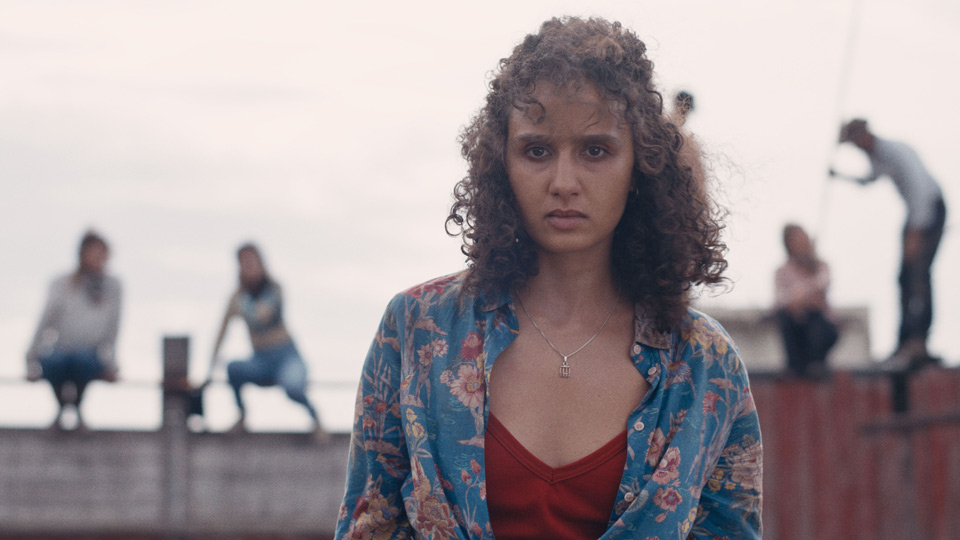
Nejma never articulates why she wants to prove herself in this macho male environment but Benestan slowly provides the heroine’s motivations, not through dialogue or a tightly constructed narrative, but through Nejma’s body language, facial expressions, and a sensory bombardment of imagery and sound design. (The ravishing cinematography is by Ruben Impens [2022’s The Eight Mountains] and [2021’s Titane]) and the brooding music score is by Yan Wagner.
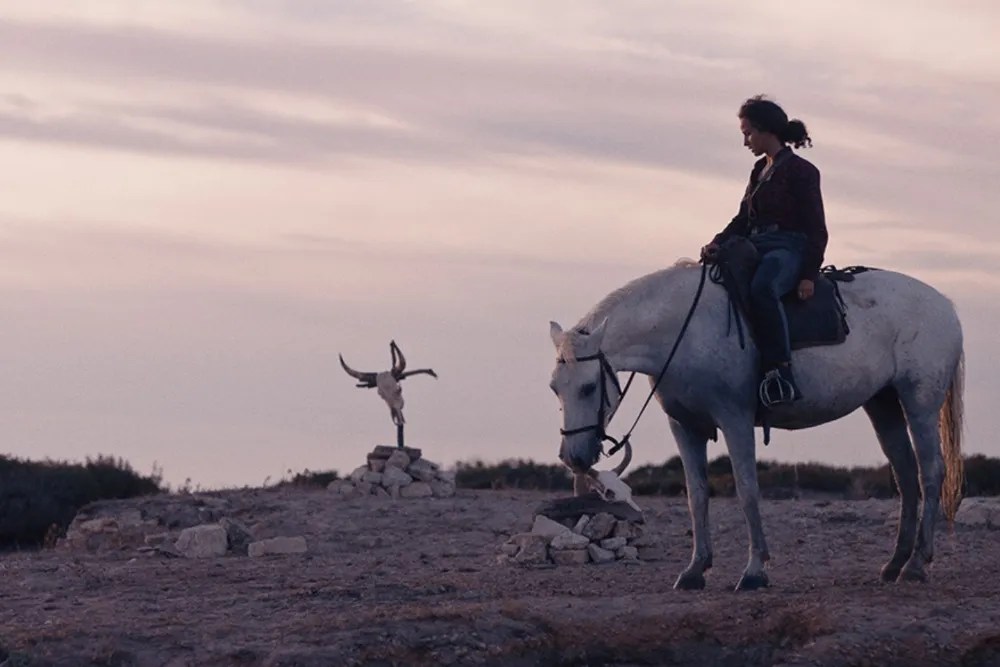
As the only woman among the local bull-runners, Nejma is subjected to the kind of teasing you’d expect from her male compadres but most of it is good natured (she even shares a bunkhouse and locker room with the men). And she also has the respect of Leonard (Claude Chaballier), the ranch owner who breeds the bulls for games, and his son Tony (Damien Rebattel), a supportive friend who helps with her training. Yet, a constant tension still exists between Nejma and the razeteurs because some of them believe Najma is handicapped by her gender. A backhanded compliment like “Not bad for a girl” is exactly the sort of thing Nejma is trying to rise above.
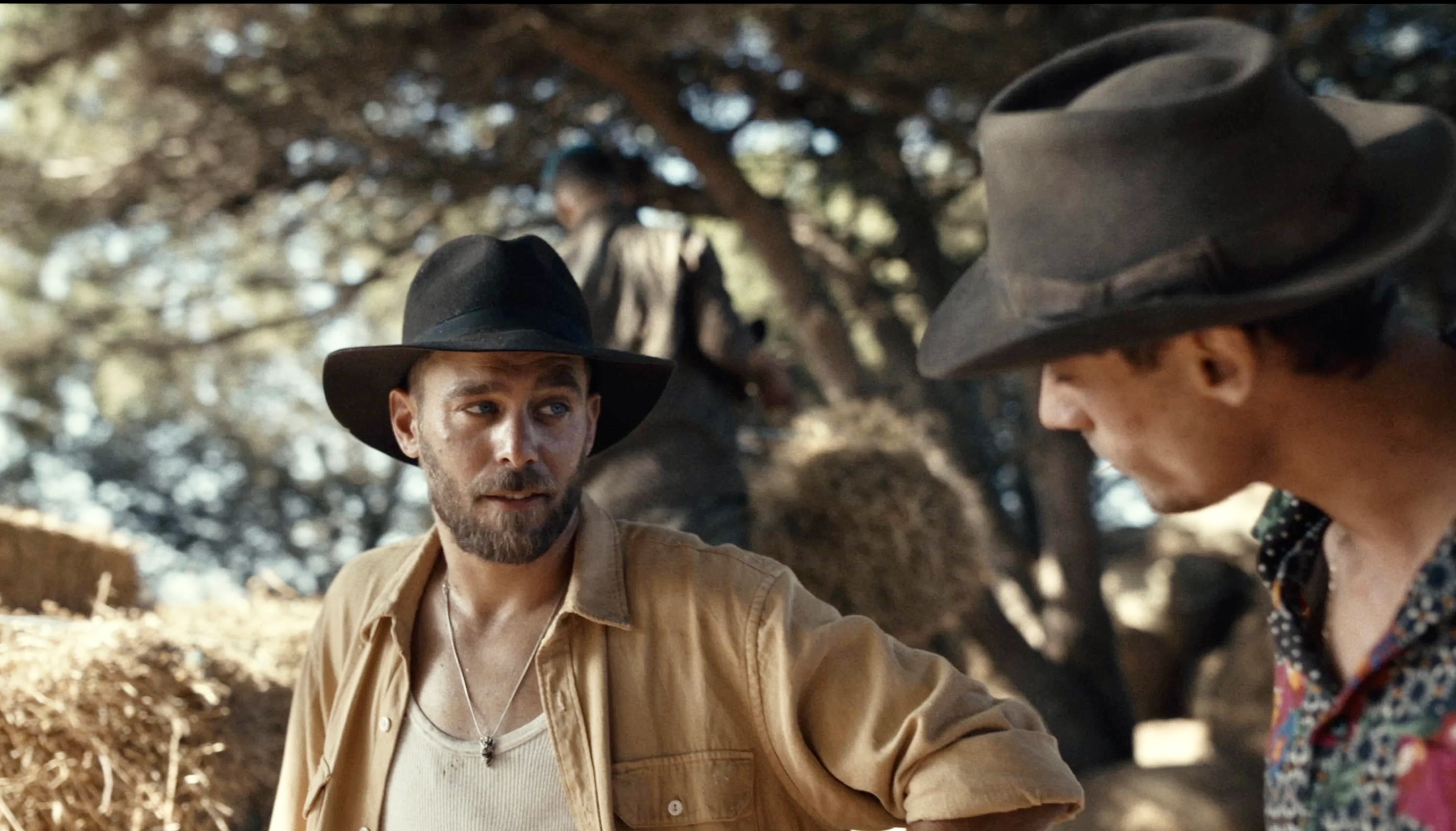
Yet Nejma’s determination to prove herself soon has unexpected consequences. She begins to connect with the animals on a psychological level while witnessing their mistreatment on the ranch such as being held down and marked with a red-hot branding iron.
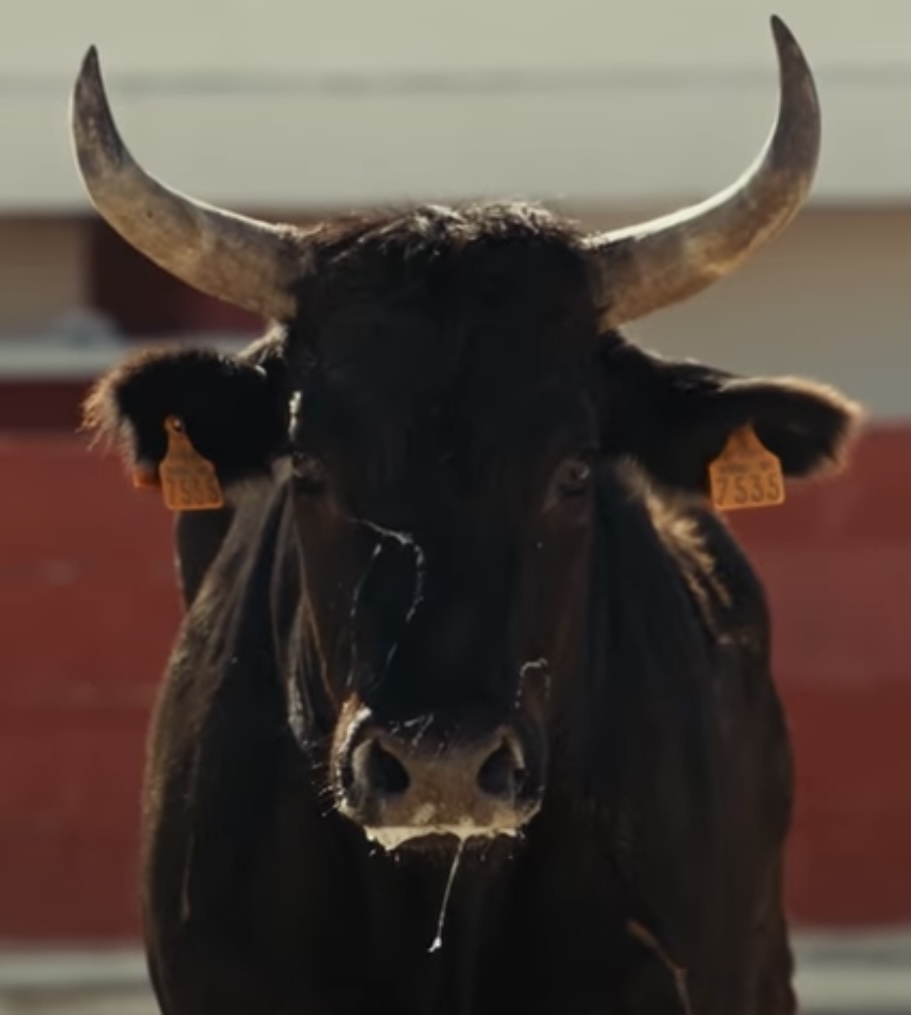
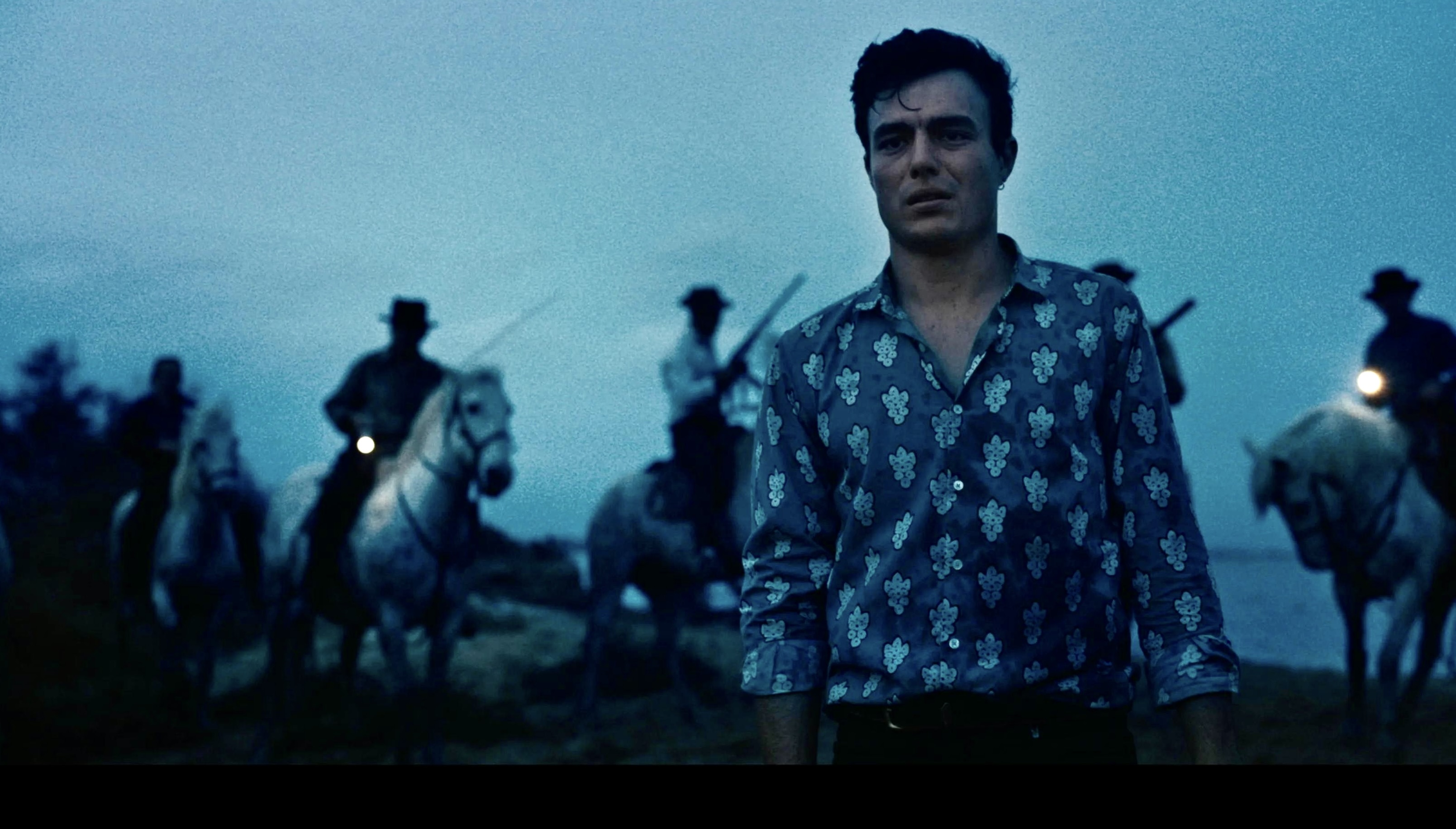
Animale takes a turn into darker territory after Nejma parties one night with fellow cowboys Kylian (Vivien Rodriguez), Jordan (Elies-Morgan Admi-Bensellam) and Arthur (Pierre Roux) and blacks out in a field, where she is found the following morning. She has no memory of what happened but where did she get that bloody gash on her back? Shortly after this incident, Arthur’s gored corpse is found and Thunder, Nejma’s favorite bull in the herd, is blamed for the nocturnal attack, despite a lack of evidence, and put to death.
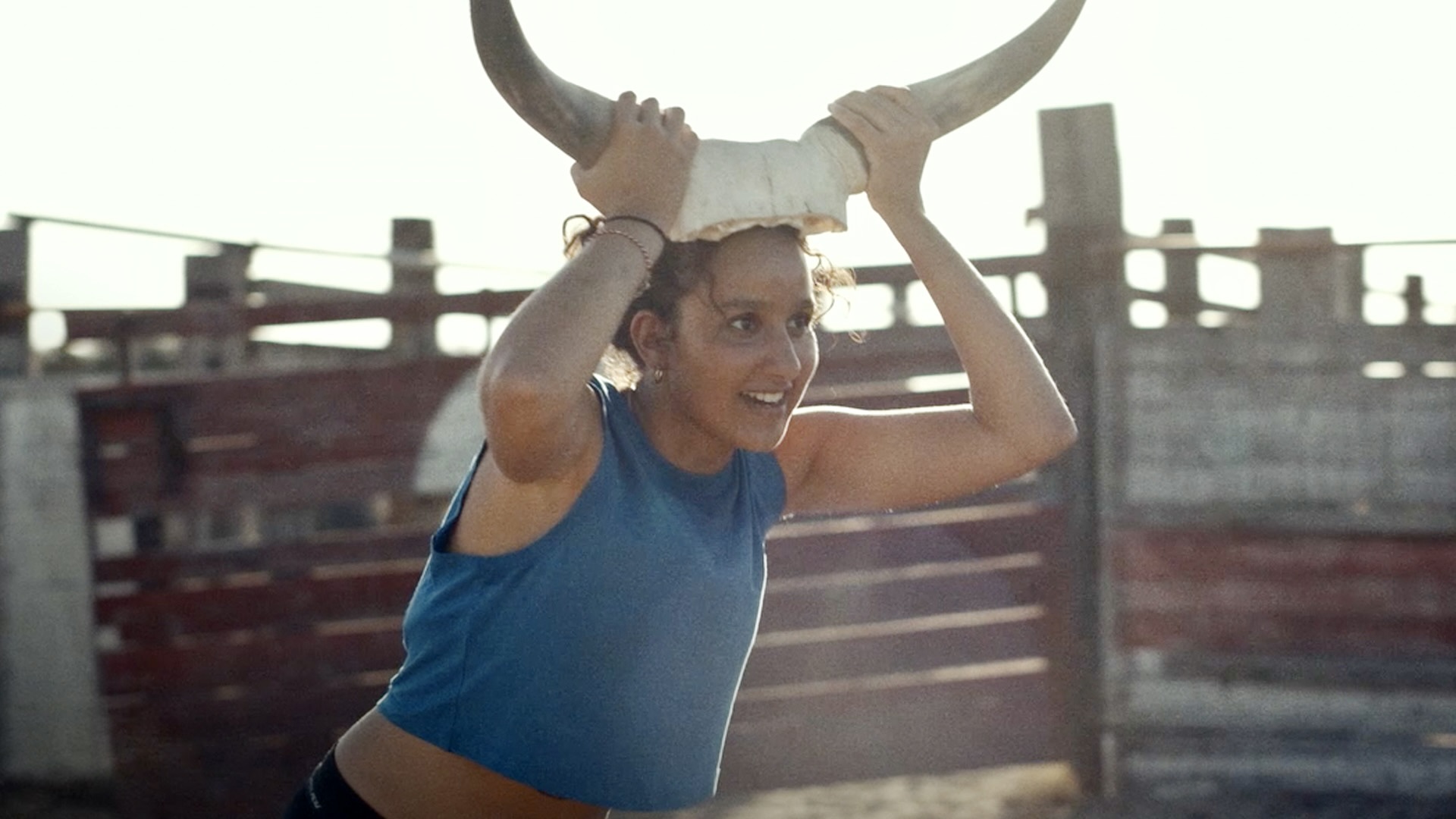
It is at this point that Animale transitions from being a gender twist on a bull-runner’s rise to fame into something closer to a supernatural folk myth or a body horror film. But even if the second half of Benestan’s film becomes too literal minded in its depiction of the heroine becoming a werebull, Animale consistently works on a metaphorical level allowing the viewer to follow Nejma’s journey to female empowerment as an avenging wraith.
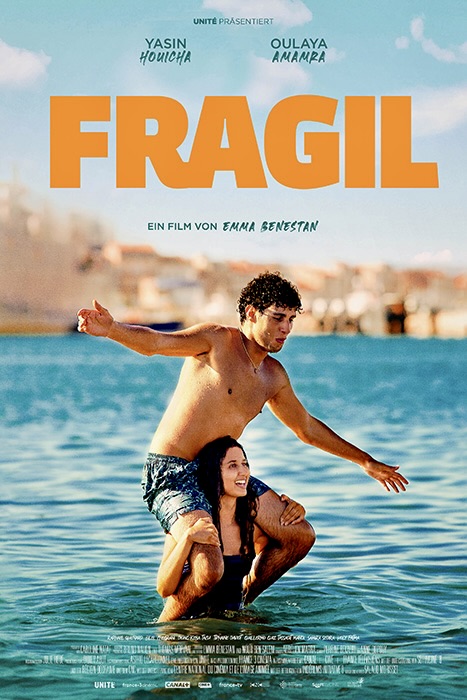
Oulaya Amamra, the only experienced actor in the cast (the rest are non-professionals), gives a riveting performance as the driven, head-strong heroine. The actress first attracted attention for her breakthrough performance in Housa Benyamina’s Divines (2016), a raw portrait of two street kids in Paris, and she also appeared in Benestan’s feature debut Fragile aka Hard Shell, Soft Shell (2021), which chronicles the awkward love life of a young oyster farmer. In an interview with Ava Cahen of Semaine de la Critique, the director stated, “Fragile questioned men’s fragility. In Animale, I wanted to question the power of a woman – a power that is scary – but also the price to pay to achieve that power and strength. That’s why I wanted the film to revolve around denial. That denial is made stronger by her burning desire to be one of them.”
Benestan’s interest in the male dominated world of bull-running has been a long standing interest ever since her childhood when she lived close to the Camargue region. She even made a 26-minute documentary Un Monde sans Betes (English title: Facing the Beast) in 2018 about a 14-year-old boy who wants to be a manadier (bull breeder and herder). She followed that with Prends Garde a Toi (English title: Fearless Girl), a 2021 documentary on female bull-runner Marie Segretier.
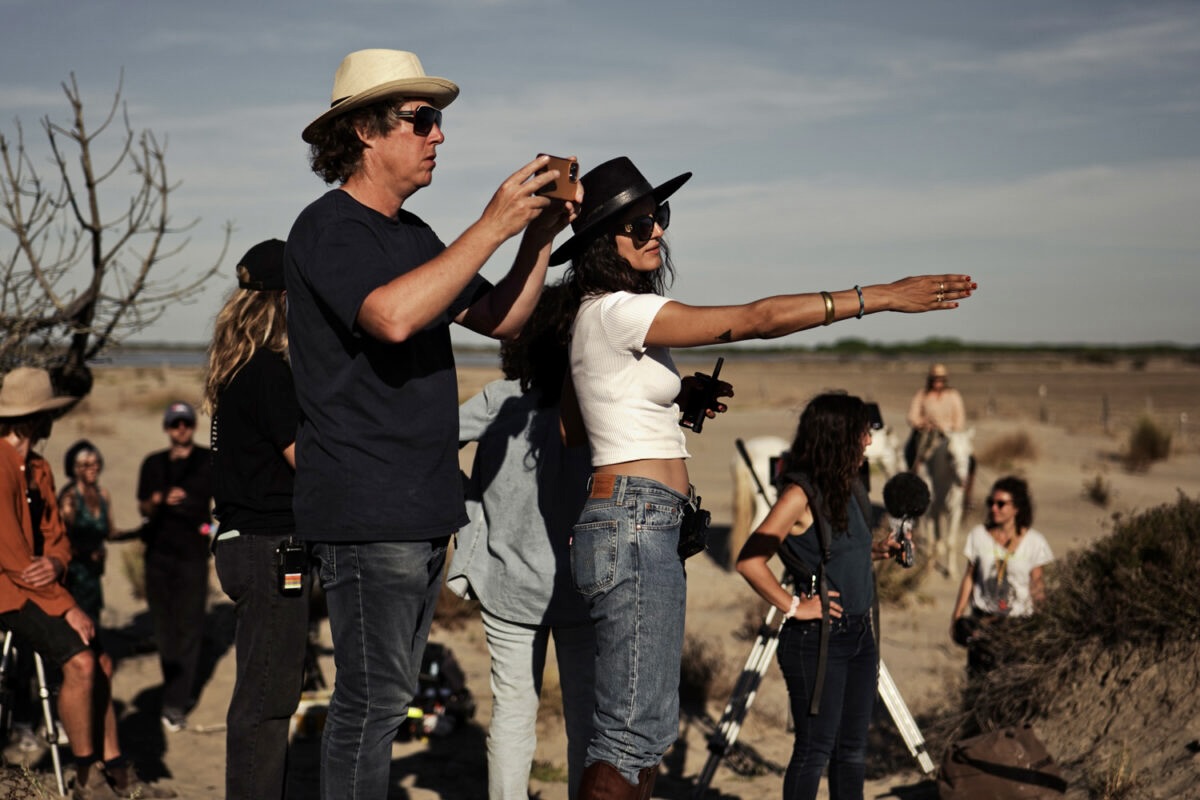
Working with real bulls was clearly a challenge for Benestan while filming Animale. She admitted in an interview with Rebecca Leffler of Screen Daily, “There are a lot of scenes with real bulls and we didn’t want stunt doubles. There is no such thing as a ‘bull tamer.’ We just did a sort of casting for bulls who would be most gentle and wouldn’t attack while we were shooting.” Although the animals represent a constant threat to the main characters in Animale, they are also magnificent creatures to witness in their natural habitat and Benestan’s film celebrates their ferocious beauty and physical prowess.

As for movies which influenced Benestan when making Animale, she mentioned Kathryn Bigelow’s cult vampire thriller Near Dark (1987), Julia Ducournau’s Titane (2021), Joss Whedon’s Buffy the Vampire Slayer (1992), and the naturalistic dramas of Chloe Zhao (The Rider, Nomadland). Of course, there will be unavoidable comparisons to other body horror films like An American Werewolf in London (1981) and Ginger Snaps (2000) but no one should go in expecting a traditional genre offering. Animale is much more of an art film meditation on gender identity crossed with ancient traditions and folklore.

Animale was well received at several film festivals such as Sitges where it was nominated for Best Motion Picture in the Official Fantastic Competition. Critic reviews have also been predominately positive with Eric Lavallee of Ion Cinema writing, “Working from the premise that equality is a fundamental right rather than a privilege to be earned, Benestan skillfully weaves together themes of community, tradition, betrayal, rebellion, masculinity, and the symbolic use of the bull as a central motif. This allows for a seamless transition from reality to myth, with the unchecked force of nature mirroring the aftermath of a vengeful world akin to that of Jason Voorhees.
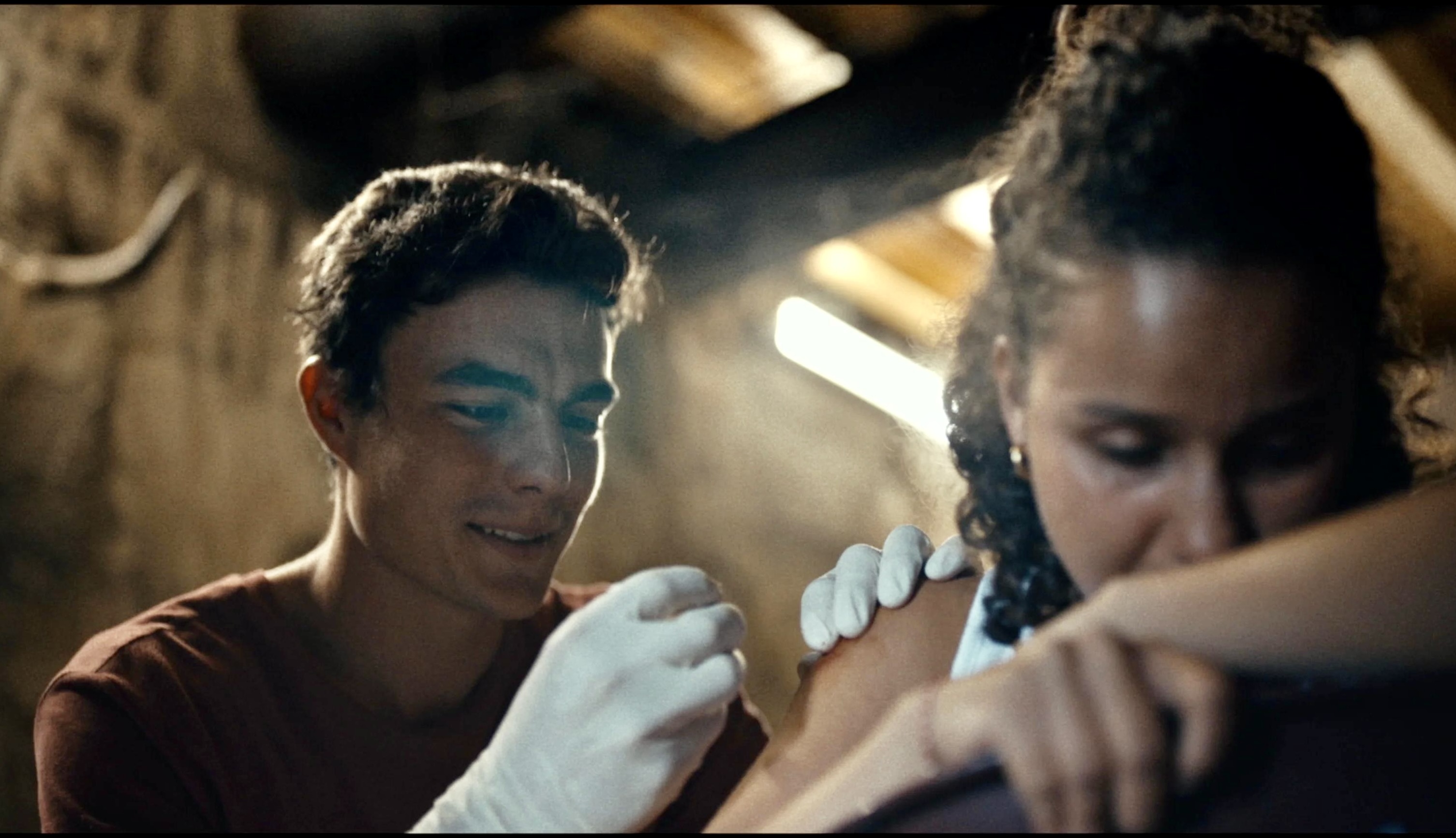
Animale is currently available for streaming on several digital platforms including Kanopy. You can also purchase it on Blu-ray from Film Movement, which released the disc in May 2026

Other links of interest:
https://www.avignon-et-provence.com/en/traditions/course-camarguaise-camargue-bullfighting
https://www.atlasobscura.com/articles/course-camarguaise-french-bullfighting
https://deadline.com/2024/05/emma-benestan-interview-animale-cannes-1235909838
https://www.semainedelacritique.com/en/articles/about-animale
https://www.behindtheblinds.be/love/transforming-identities

