It is hard to believe that Raoul Walsh, the man who directed The Roaring Twenties (1939), High Sierra (1941), They Died with Their Boots On (1941), Objective, Burma! (1945), White Heat (1949) and other classic genre films for Warner Brothers, never received an Oscar nomination. Film historian David Thomson pondered this in The New Biographical Dictionary of Film, writing, “Was it just that he was so reliable, so direct and “simple” an entertainer? Or was it a matter of not making the proper “big” pictures?” Even after his peak years at Warners, Walsh continued to make audience pleasing hits such as Battle Cry (1955), the fourth biggest box office success of its year. Even some of the B-pictures Walsh made during his final years in Hollywood look like A-pictures now such as the 1953 western, Gun Fury.
Continue readingTag Archives: Magnificent Obsession
Crossing the Color Line

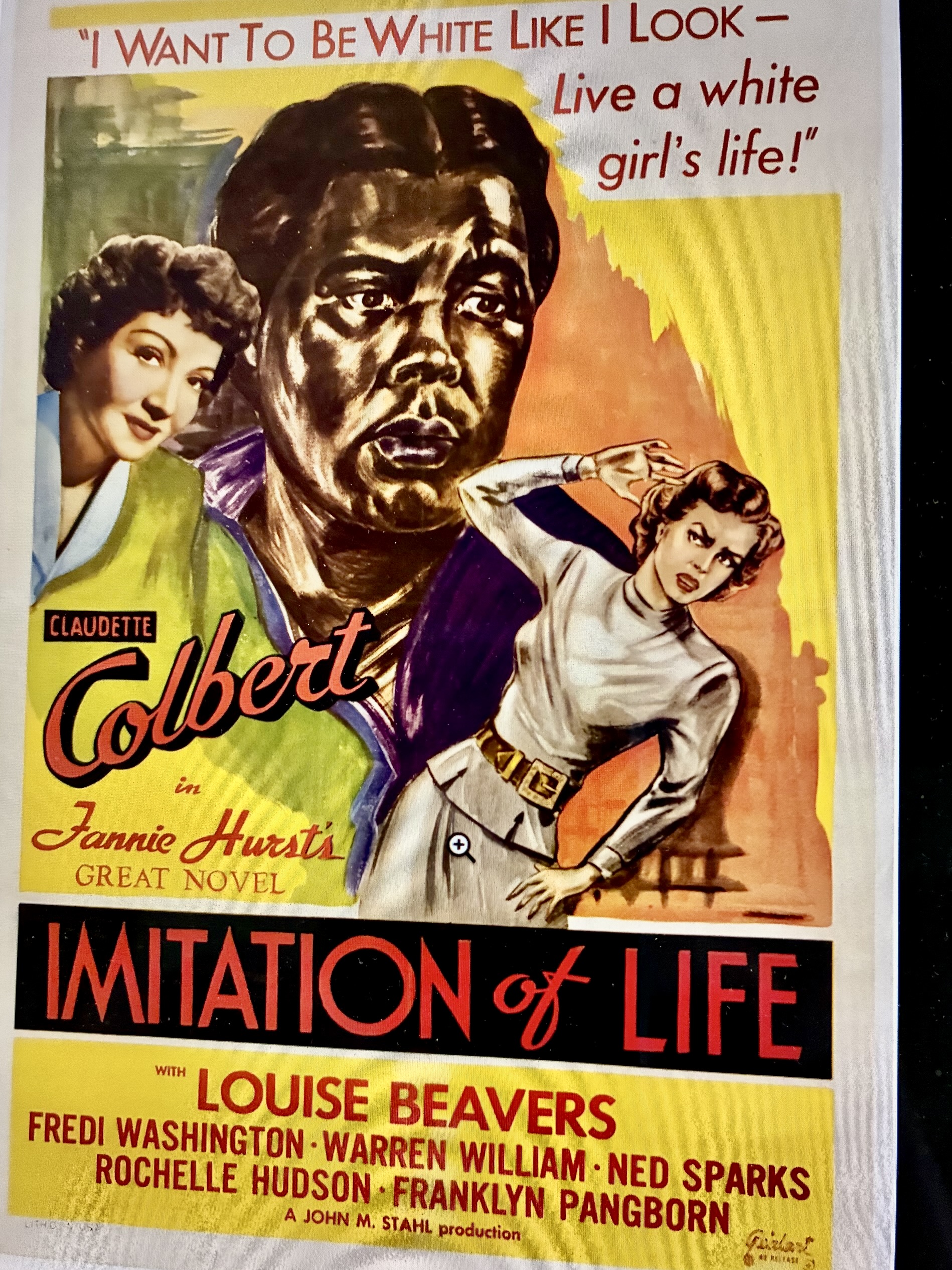
“The only Hollywood movie of its era that even suggested the existence of such a thing as a race problem in America, the film set off sparks within the black community. Black ministers preached sermons about it while black intellectuals wrote about the film as well. And the movie acquired a legend of its own that still lives today.” – Donald Bogle on Imitation of Life (1934) in Blacks in American Films and Television: An Illustrated Encyclopedia
Less well known than the 1959 Douglas Sirk remake starring Lana Turner and Juanita Moore, the first film version of Imitation of Life, directed by John M. Stahl, is actually more faithful to the Fannie Hurst novel (except for the ending) and in many ways presents a much more socially progressive viewpoint than the Sirk version as noted in the below article.
Continue readingAerial Daredevils

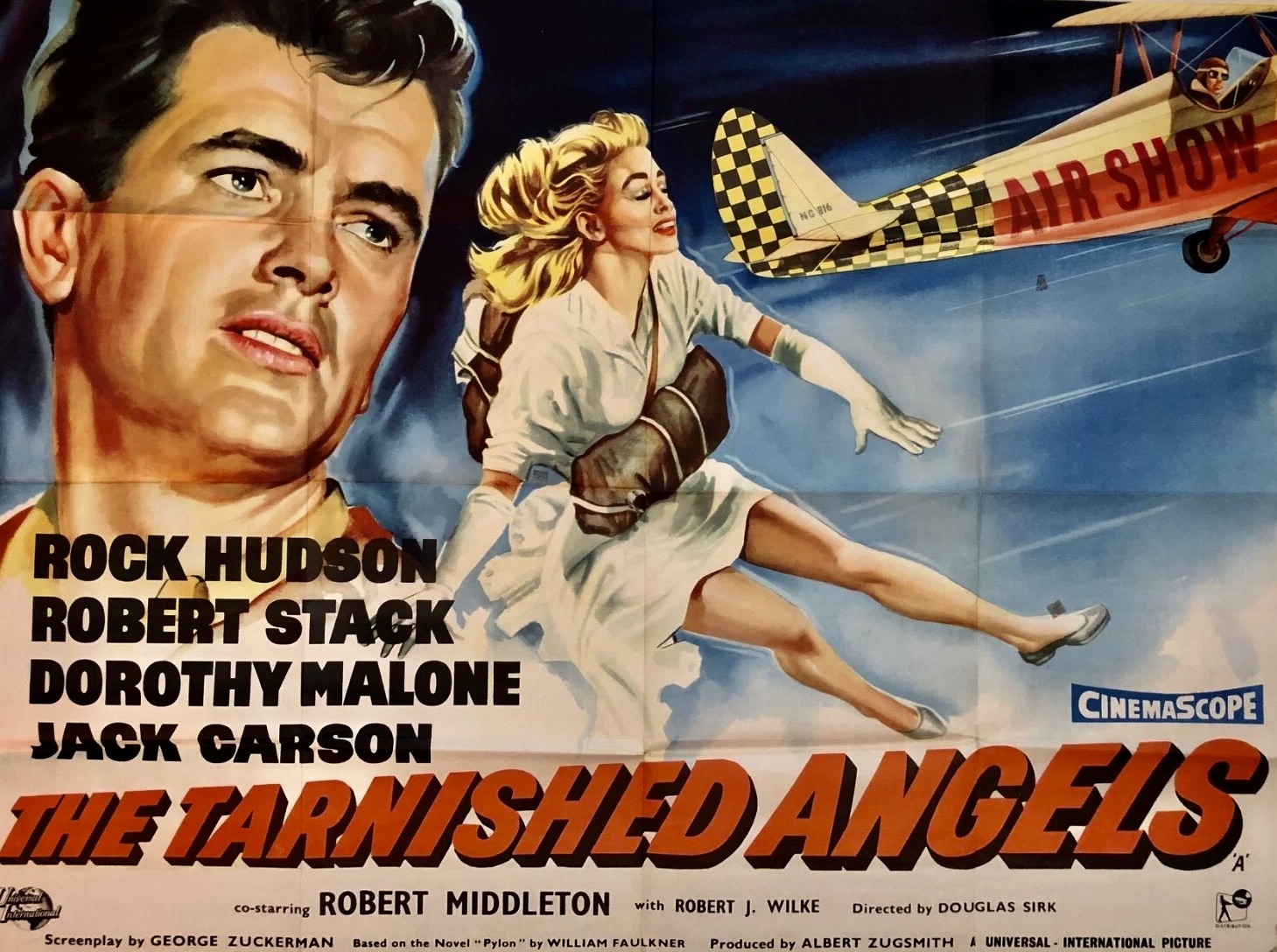
Among the many novels of William Faulkner, Pylon is less well known today than some of the author’s more critically acclaimed works such as The Sound and the Fury, Intruder in the Dust and The Reivers (a 1962 Pulitzer Prize winner). Yet, the novel, dismissed by most critics of its era as a tawdry melodrama, is a deeply personal work, reflecting Faulkner’s keen interest in flying while including autobiographical details from his own life. The 1957 film adaptation of Pylon entitled The Tarnished Angels and directed by Douglas Sirk was also unfairly dismissed by critics at the time with one reviewer calling it “…cheaply written…abominably played…and absurd” while another panned it as “mostly colorless…and lacking in punch.” Most surprisingly, The Tarnished Angels reunited three of the main actors from Sirk’s Academy Award nominated Written on the Wind from the previous year – Rock Hudson, Robert Stack and Dorothy Malone (who won the Best Supporting Actress Oscar) – but it was completely ignored by the Academy even though the movie is much more highly regarded now.
Continue readingTrue Love Transcends Everything

Sometimes an offscreen scandal can kill or severely hamper a career (Fatty Arbuckle, Ingrid Bergman, Rose McGowan, etc.) or help bolster it as in the case of Mary Astor, Hedy LaMarr or Elizabeth Taylor. But what if the scandal is the film itself as in The Moon is Blue (1953), Baby Doll (1956) or Last Tango in Paris (1972)? That kind of notoriety can play out in different ways affecting the careers of the featured stars in a negative or positive way. A famous example of the latter is Die Sunderin (English title: The Sinner, 1951), a West German melodrama from Viennese director Willi Forst in which two social outcasts embark on a love affair which brings them true happiness and spiritual redemption after years of misery. The film created a public outcry in Germany due to a nude scene featuring the popular female star, Hildegard Knef. It might seem much ado about nothing today but at the time the typically conservative German moviegoer was offended. More importantly, it didn’t hurt Ms. Knef’s career at all and may have helped launch her international career. She was invited back to Hollywood the same year (where she had previously been under contract), made a few high profile films, and then returned to Germany where she not only resumed her film career but also became a renowned chanson-singer in the style of Marlene Dietrich, a mentor and friend.
Continue readingIrene Dunne in a Sinclair Lewis World
Among the many film adaptations of Sinclair Lewis novels over the years, Ann Vickers (1933) is probably the least known of them all, and, it wasn’t among the most popular or critically acclaimed of Lewis’s novels either. Those would be Main Street (1920), Babbitt (1922), Arrowsmith (1925), Elmer Gantry (1927) and Dodsworth (1929). Yet, Ann Vickers is probably Lewis’s most fully developed female protagonist and the 1933 film version starring Irene Dunne and Walter Huston is a flawed but fascinating movie that provides an apt example of how the work of a great American writer can be completely altered, distorted or softened by Hollywood and the Production Code officials. Continue reading