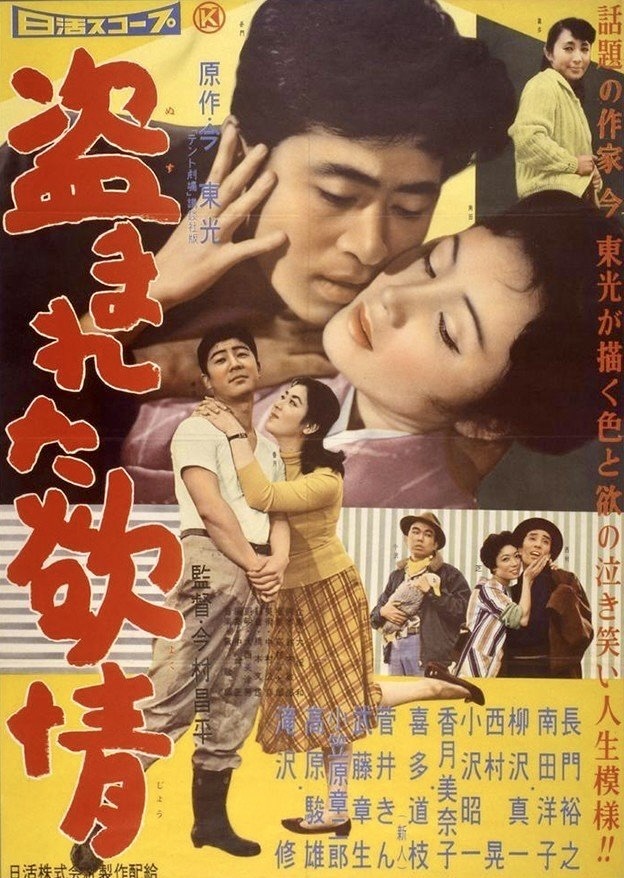
The Wandering Yamamura Theater Troupe

The Japanese film poster for STOLEN DESIRE (1958), directed by Shohei Imamura.

During the post-war years in Japan, a new generation of filmmakers began to address the changing social and political changes in their country which earned them the label of the Nuberu Bagu. Emerging around the same time as the French New Wave in the late 1950s/early 1960s, Masahiro Shinoda, Nagisa Oshima, Yoshishige Yoshida and Shohei Imamura were among the most famous directors in this radical new movement. Imamura, in particular, is an intriguing figure because he worked as an assistant director for Yasujiro Ozu on three of his films – Early Summer [1951], The Flavor of Green Tea Over Rice [1952], and Tokyo Story [1953]. Despite his respect for Ozu, Imamura became frustrated with the director’s rigid and idealized view of Japanese life and broke away to make his own kind of movies which dealt with the lower rung of society, especially outcasts, prostitutes and criminals – the kind of people Imamura lived among and empathized with during the late 1940s. None of this was blatantly obvious with the first films Imamura made for Nikkatsu Studios but you can still perceive a fondness and admiration for disenfranchised people in his feature film debut, Nusumareta Yokujo (English title: Stolen Desire, 1958). An episodic and picaresque tale of a ragtag theater troupe, the movie is an earthy, sensual comedy-drama and surprisingly upbeat in tone compared to Imamura’s later work.

Continue reading
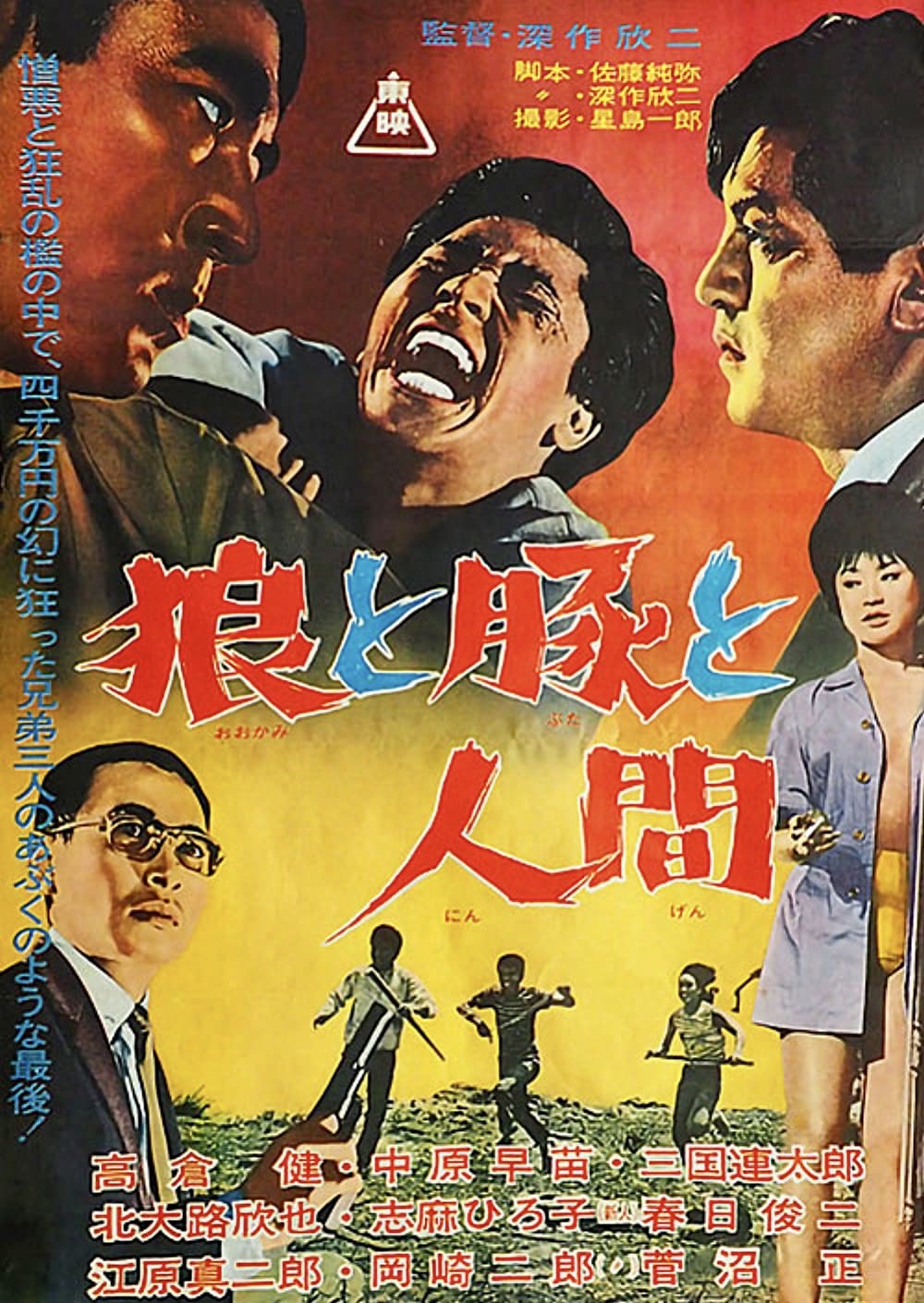
Wolves, Pigs and Men

The Japanese film poster for WOLVES, PIGS AND MEN (1964).

Among the many post-WW2 Japanese filmmakers who emerged in the 1960s and hit their stride in the seventies, Kinji Fukasaku was one of the most prominent and critically acclaimed directors in his own country but didn’t start to acquire a growing fan base in the U.S. until after 2000 when some of his masterworks began to appear on DVD such as the yakuza epic Battles Without Honor and Humanity aka The Yakuza Papers (1973), which launched a five-film franchise, and Battle Royale (2000), a controversial futuristic fable about institutionalized violence against problem teenagers. Over the years, Fukasaku has dabbled in numerous film genres from historical drama (Under the Flag of the Rising Sun, 1972) to sci-fi (Message from Space, 1978) and comedy (Fall Guy, 1982), but he is best known from his crime dramas, especially those which popularized the jitsuroku eiga genre. His documentary-like dramatizations based on real crimes often depicted yakuza figures as ruthless men operating without “honor and humanity” (in the title words of his breakthrough film). Even prior to his trend-setting crime thrillers of the mid-seventies, Fukasaku was turning out edgy, innovative work and Okami to Buta to Ningen (English title: Wolves, Pigs and Men) from 1964 is an explosive, nihilistic tale which qualifies as a rough-hewn, early masterpiece.

Continue reading

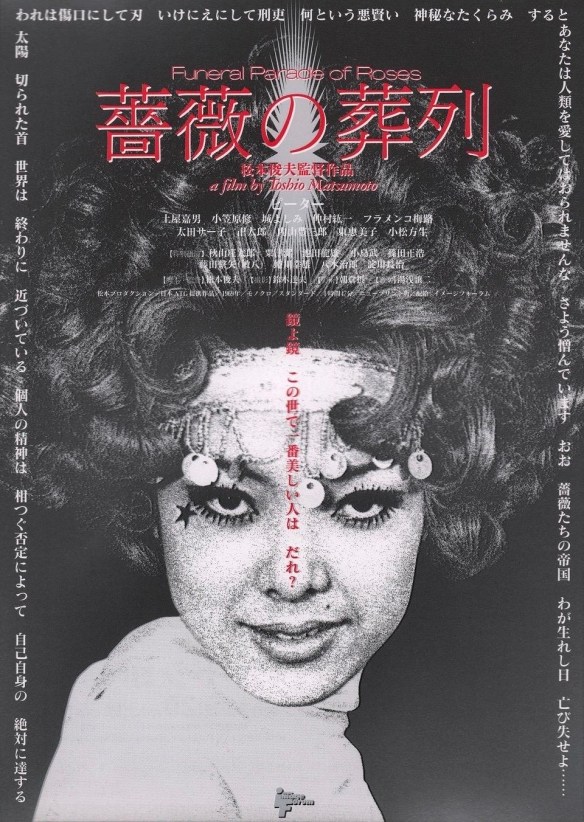
Oedipus Rex in Drag

Next to William Shakespeare, Sophocles is probably the most enduring and internationally renowned dramatist in terms of his work still being adapted for the stage, television and cinema and I doubt you will find a more bizarre or outre version of his Greek tragedy Oedipus Rex than Funeral Parade of Roses. Directed by Japanese avant-garde filmmaker Toshio Matsumoto, this revelatory 1969 movie – it was his first feature film after several experimental shorts – is just as fresh and startling today as it was when it first appeared over fifty years ago.    Continue reading