
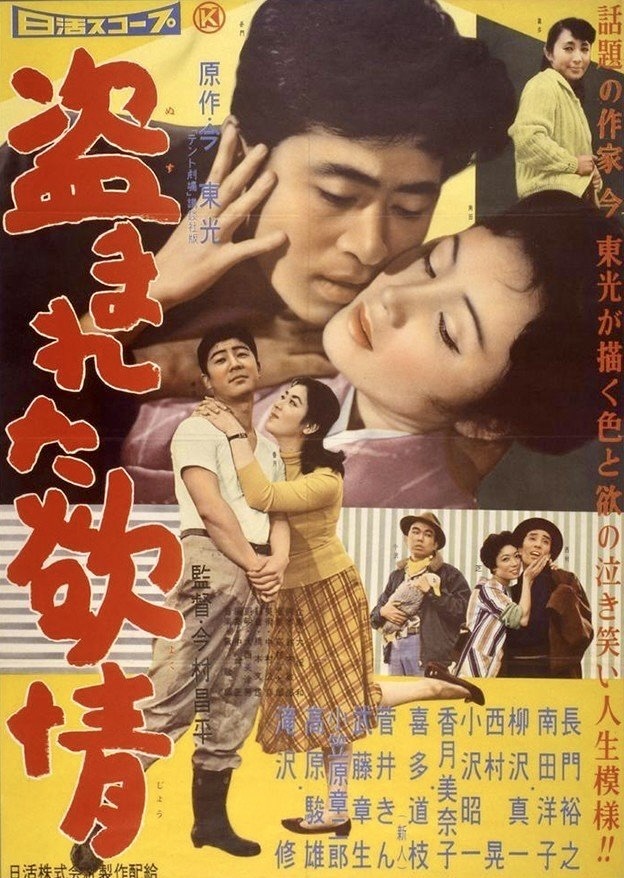
During the post-war years in Japan, a new generation of filmmakers began to address the changing social and political changes in their country which earned them the label of the Nuberu Bagu. Emerging around the same time as the French New Wave in the late 1950s/early 1960s, Masahiro Shinoda, Nagisa Oshima, Yoshishige Yoshida and Shohei Imamura were among the most famous directors in this radical new movement. Imamura, in particular, is an intriguing figure because he worked as an assistant director for Yasujiro Ozu on three of his films – Early Summer [1951], The Flavor of Green Tea Over Rice [1952], and Tokyo Story [1953]. Despite his respect for Ozu, Imamura became frustrated with the director’s rigid and idealized view of Japanese life and broke away to make his own kind of movies which dealt with the lower rung of society, especially outcasts, prostitutes and criminals – the kind of people Imamura lived among and empathized with during the late 1940s. None of this was blatantly obvious with the first films Imamura made for Nikkatsu Studios but you can still perceive a fondness and admiration for disenfranchised people in his feature film debut, Nusumareta Yokujo (English title: Stolen Desire, 1958). An episodic and picaresque tale of a ragtag theater troupe, the movie is an earthy, sensual comedy-drama and surprisingly upbeat in tone compared to Imamura’s later work.
Continue reading Cinema Sojourns