Shellshocked Romance

PTSD (Post-traumatic stress disorder) is a term that became prominent in 1980 when the American Psychiatric Association recognized it as a mental health diagnosis that was often used to describe Vietnam War veterans and Holocaust survivors. Although PTSD could also apply to survivors of violent crimes, natural disasters and other calamities, it is more often association with war victims. Shellshocked is an earlier term for this disorder and was common in describing afflicted soldiers returning from battle during World War I. The Return of the Soldier, Rebecca West’s debut novel (published in 1918), was unique for featuring a shellshocked war veteran whose return home exposed his fragile mental condition to those who knew him before he went to battle. West’s novel was also significant for addressing such prevalent concerns in the narrative as class differences, Freudian psychoanalysis (which was popular at the time) and the lives of women living in a patriarchal society. All of this was skillfully integrated into the overlooked 1982 film adaptation of The Return of the Soldier, which faithfully captures the spirit and central focus of West’s narrative, one that utilizes the shellshocked protagonist as a means to examine three important women in his life and their response to his war trauma.

Continue reading
Memories of the 2011 TCM Classic Film Festival

*This article originally appeared on Movie Morlocks, Turner Classic Movies’s official blog in May 2011 (The blog was discontinued years ago and is no longer available)

In the event-packed hurly burly of TCM’s second annual Film Festival in Los Angeles from April 28-May 1 of 2011, I didn’t have a chance to blog about all of the films or attending guests that I saw but here are a few that linger in the memory and deserve to be singled out –cinematographer/director Haskell Wexler, who participated in a Q&A with Leonard Maltin before a screening of Who’s Afraid of Virginia Woolf?(1966), Hayley Mills, who appeared after a screening of Whistle Down the Wind (1961) with interviewer/author Cari Beauchamp, a midnight screening of The Mummy (1932) introduced by Boris Karloff fan Ron Perlman, Buster Keaton’s The Cameraman (1928) accompanied by a live orchestra score by Vince Giordano and His Nighthawks, the MoMA restoration print showing of 1933’s Hoopla (Clara Bow’s final film) and the underrated Ernst Lubitsch Pre-Code delight Design for Living (1933).

Continue reading

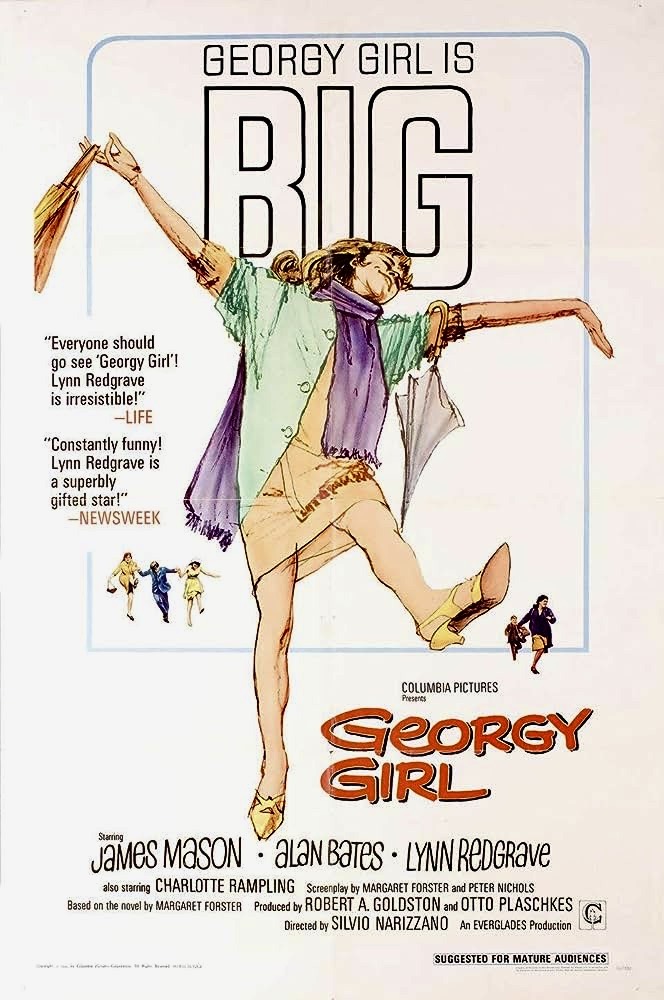
Swinging Down the Street So Fancy Free

A frumpy woman in her early twenties dreams of being loved but despite her continual attempts to have a romance finds herself observing life from the sidelines, barely noticed by those around her. Reduced to a one sentence description, Georgy Girl (1966) sounds dreary and depressing but on-screen this tale of a desperately lonely woman unfolds as a madcap, often irreverent farce which at times is cruelly indifferent to the sad-sack characters it parades before us. This is a film where tone is everything and Georgy Girl, directed by Silvio Narizzano, is distinctively different in this respect, standing out from countless other cinematic tearjerkers about ugly ducklings and lonely spinsters. The film also captures London at the height of the Swingin’ Sixties when everything seemed like a put-on or a come-on.

Continue reading

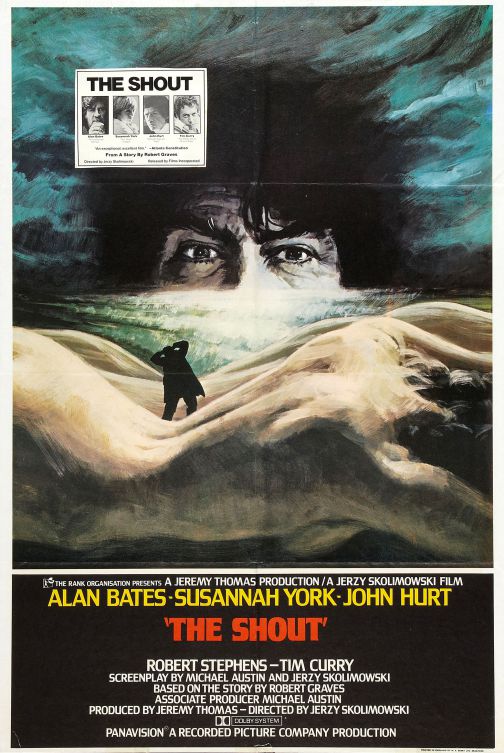
The Sound That Kills

Movies about people who murder with weapons or their bare hands are nothing out of the ordinary but what about a film where a man can kill with his voice? It might seem preposterous but The Shout (1978), directed by Jerzy Skolimowski, takes this concept and turns it into something that is both plausible and unsettling.   Continue reading