PTSD (Post-traumatic stress disorder) is a term that became prominent in 1980 when the American Psychiatric Association recognized it as a mental health diagnosis that was often used to describe Vietnam War veterans and Holocaust survivors. Although PTSD could also apply to survivors of violent crimes, natural disasters and other calamities, it is more often association with war victims. Shellshocked is an earlier term for this disorder and was common in describing afflicted soldiers returning from battle during World War I. The Return of the Soldier, Rebecca West’s debut novel (published in 1918), was unique for featuring a shellshocked war veteran whose return home exposed his fragile mental condition to those who knew him before he went to battle. West’s novel was also significant for addressing such prevalent concerns in the narrative as class differences, Freudian psychoanalysis (which was popular at the time) and the lives of women living in a patriarchal society. All of this was skillfully integrated into the overlooked 1982 film adaptation of The Return of the Soldier, which faithfully captures the spirit and central focus of West’s narrative, one that utilizes the shellshocked protagonist as a means to examine three important women in his life and their response to his war trauma.
Continue readingTag Archives: Julie Christie
Imaginary Lover
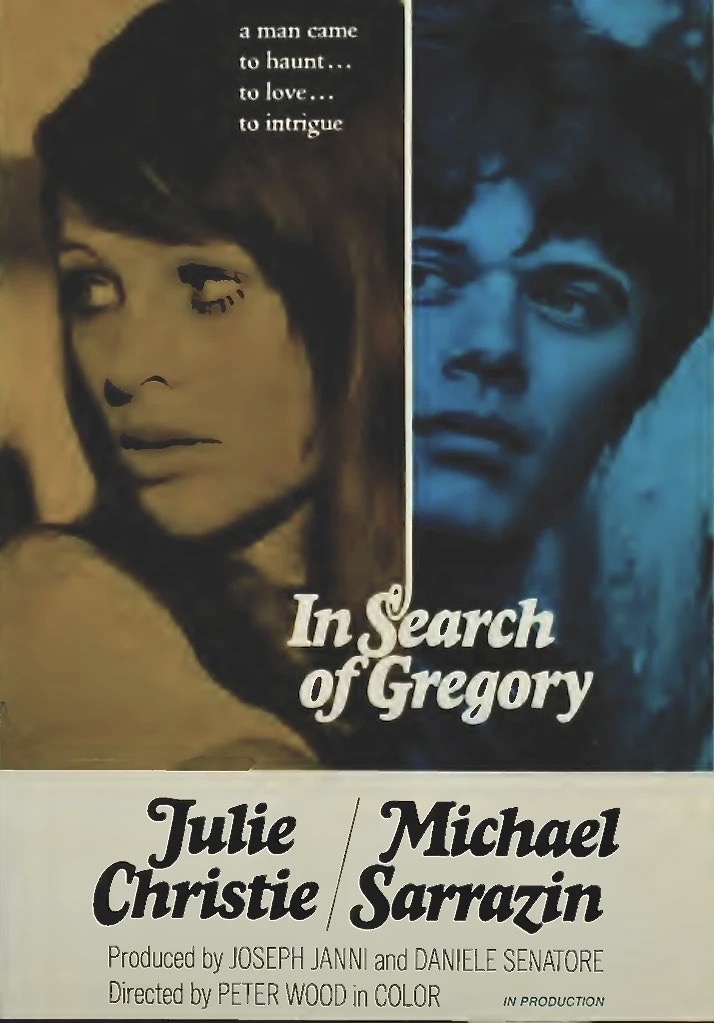
For better or worse, the 1960s was a time when commercial and experimental cinema occasionally collided, producing innovative, financially successful films such as Stanley Kubrick’s 2001: A Space Odyssey (1968) and Michelangelo Antonioni’s Blow-Up (1966), but more often high profile failures such as Tony Richardson’s The Sailor from Gibraltar (1967), Otto Preminger’s Skidoo (1968) and the unfortunate 1969 screen adaptation of Lawrence Durrell’s Justine. In Search of Gregory (1969), which was designed as a star vehicle for Julie Christie by producer Joseph Janni and followed her critically acclaimed performance in Petulia (1968), falls into the latter category.
Continue readingThe Hunter Gets Captured by the Game
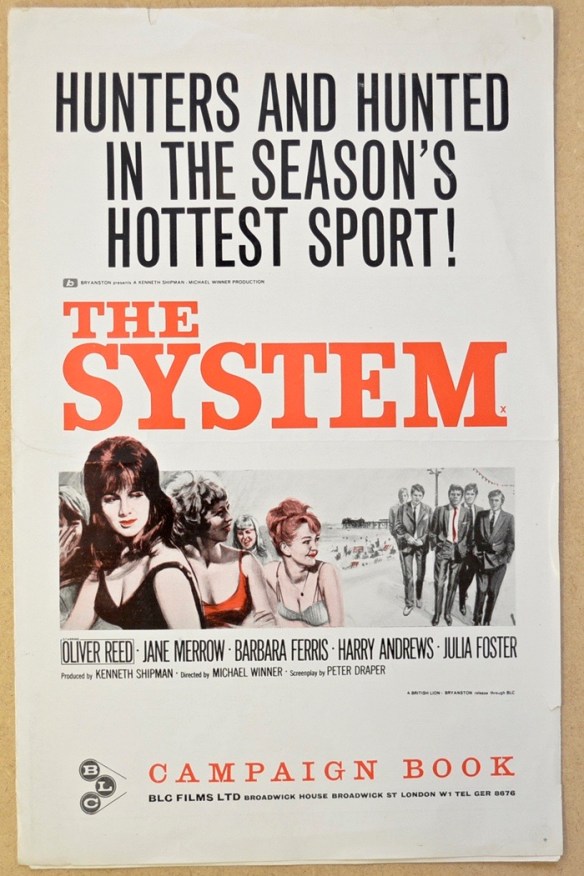
Released in the U.K. as The System and the U.S. as The Girl-Getters in 1964, this unheralded little gem of a film is not only a vivid snapshot of the swinging sixties but a surprisingly frank and intelligent treatment of sexual gamesmanship and barely disguised class warfare promoted as a typical youth exploitation picture in the style of a “Beach Party” movie by distributor American International Pictures. Continue reading
The Darling of Berlin

Eva Renzi makes her screen debut as an international model in Playgirl (1966), directed by Will Tremper.
A new kind of female protagonist emerged in the sixties who was free-spirited, independent, hedonistic and willing to exploit her beauty and charm for social advancement without being categorized as a typical prostitute. Audrey Hepburn certainly set the standard as the unconventional Holly Golightly in Breakfast at Tiffany’s (1961) but other famous examples include Julie Christie’s self-absorbed model in Darling (1965) and Genevieve Waite’s wide-eyed waif in Joanna (1968). Lesser known but a distinctly German variation on this prototype is 1966’s Playgirl (also known as That Woman in the U.S.) featuring Eva Renzi in her feature film debut. Continue reading