
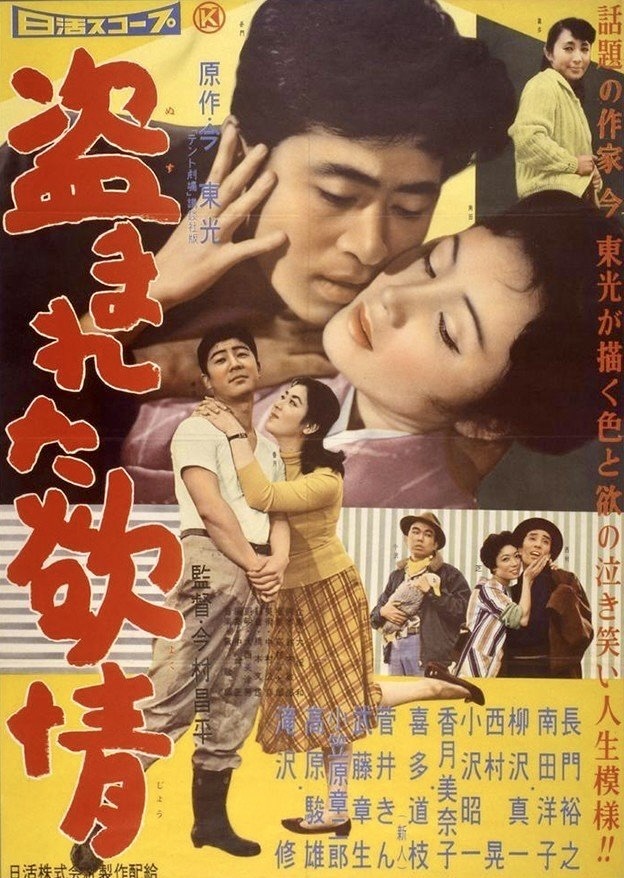
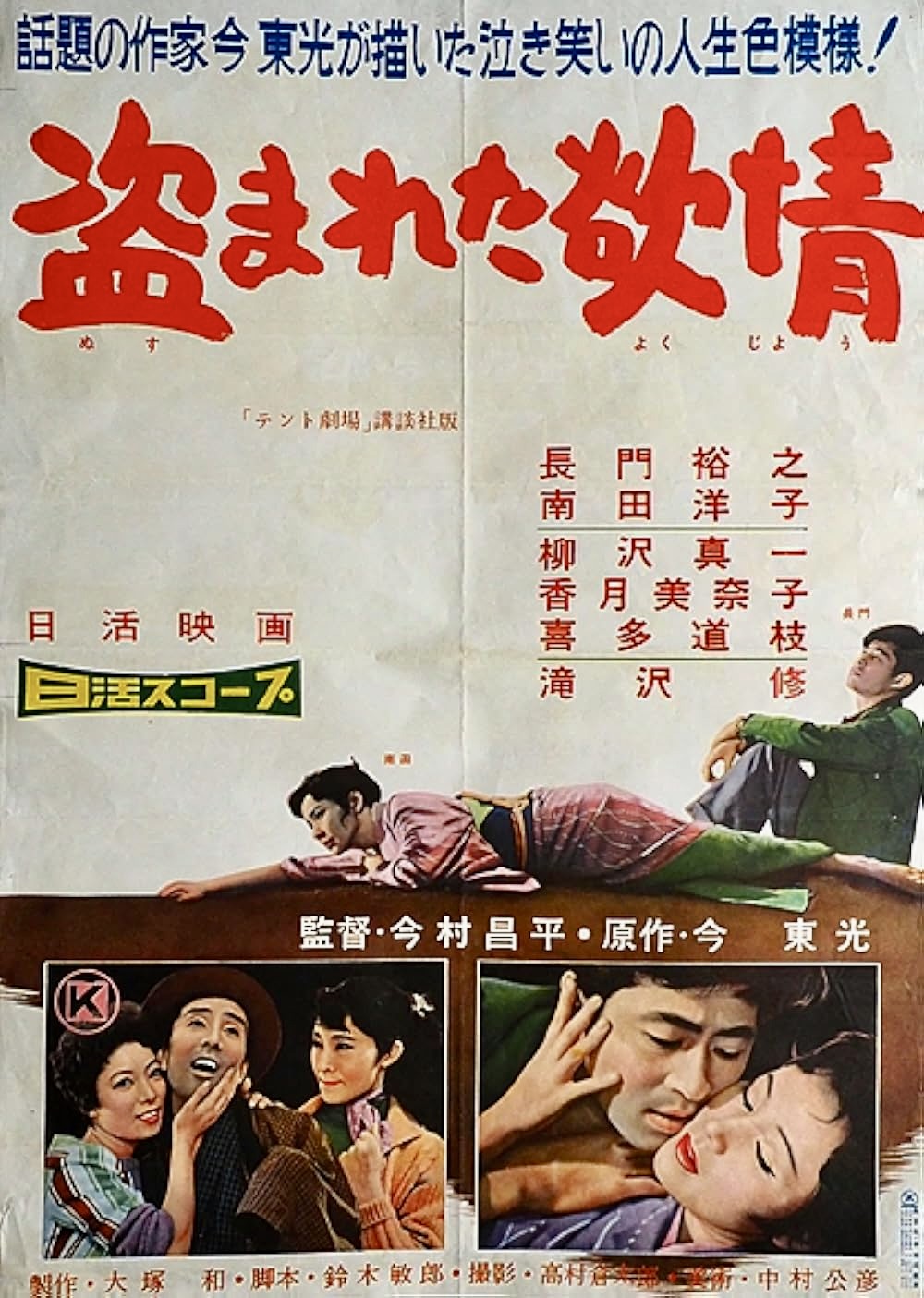
During the post-war years in Japan, a new generation of filmmakers began to address the changing social and political changes in their country which earned them the label of the Nuberu Bagu. Emerging around the same time as the French New Wave in the late 1950s/early 1960s, Masahiro Shinoda, Nagisa Oshima, Yoshishige Yoshida and Shohei Imamura were among the most famous directors in this radical new movement. Imamura, in particular, is an intriguing figure because he worked as an assistant director for Yasujiro Ozu on three of his films – Early Summer [1951], The Flavor of Green Tea Over Rice [1952], and Tokyo Story [1953]. Despite his respect for Ozu, Imamura became frustrated with the director’s rigid and idealized view of Japanese life and broke away to make his own kind of movies which dealt with the lower rung of society, especially outcasts, prostitutes and criminals – the kind of people Imamura lived among and empathized with during the late 1940s. None of this was blatantly obvious with the first films Imamura made for Nikkatsu Studios but you can still perceive a fondness and admiration for disenfranchised people in his feature film debut, Nusumareta Yokujo (English title: Stolen Desire, 1958). An episodic and picaresque tale of a ragtag theater troupe, the movie is an earthy, sensual comedy-drama and surprisingly upbeat in tone compared to Imamura’s later work.
The movie focuses on several characters in the troupe as their fortunes rise and fall due to their itinerant status but it is Shinichi Kunida (Hiroyuki Nagato) who becomes the main protagonist in the story. A college graduate, Kunida is working as a stage manager for theater director Yamamura (Osamu Takizawa) but he is treated more like a naïve idealist by the working class perfomers. All of his creative suggestions to try new plays and material are ignored in favor of just sticking to tried-and-true favorites. In fact, he spends most of his time opening and closing the curtain for the shows and settling disputes between squabbling actors.
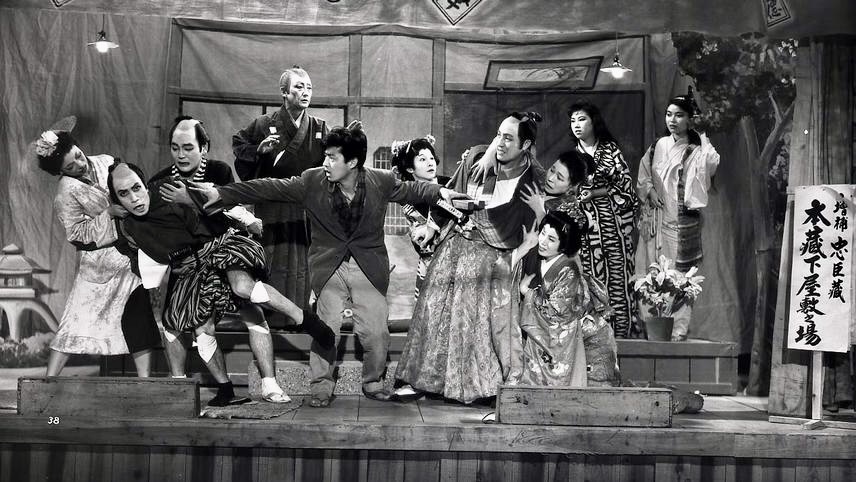
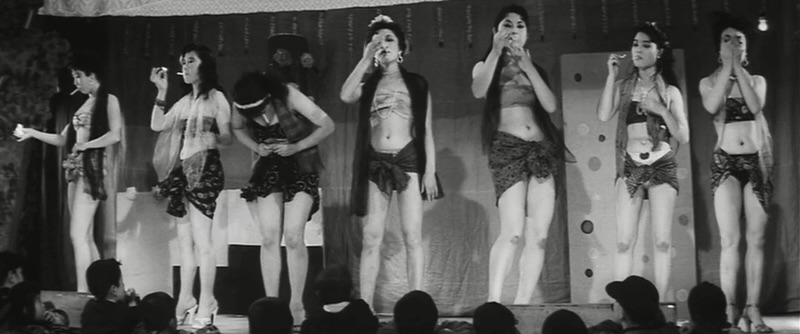
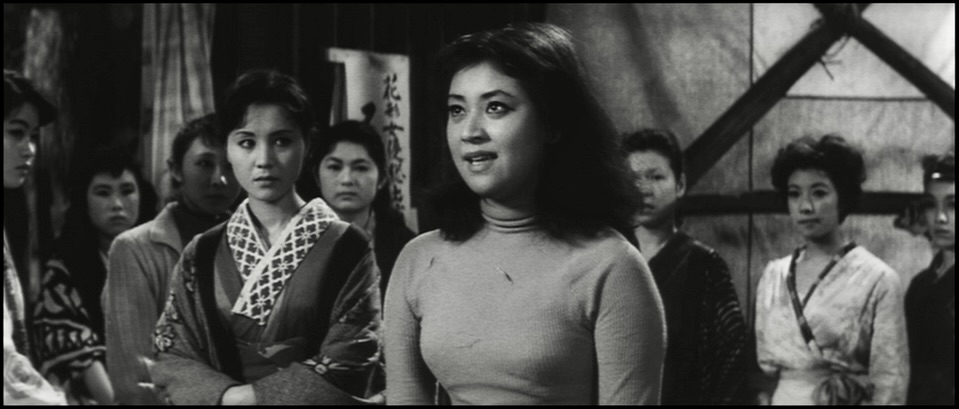
The Yamamura stage show is a lowbrow mix of sexy strippers who open the revue and popular kabuki plays performed in a broad style. When a former university friend of Kunida sees him working with the troupe, he tries to encourage his friend to aim higher and enter a more respectable profession like the medium of television. Kunida doesn’t pursue this but it does make him question why he loves theater work so much and what the future might hold for him.
Imamura would later state in interviews that Kunida was a stand-in for himself as he was full of indecision about his life when he was around the same age. Kunida’s insecurity about his role in the troupe is further complicated by his relationship with Yamamura’s two daughters, Chidori (Yoko Minamida), the wife of the headline performer Eizaburo (Shin’ichi Yanagisawa), and Chigusa (Michie Kita), Chidori’s younger sister. Chidori is secretly in love with Kunida but encourages him to date her sister in an effort to keep him from leaving the troupe for a better paying job. Kunida, however, is attracted to both women and his love life threatens to create problems for Yamamura’s entourage.
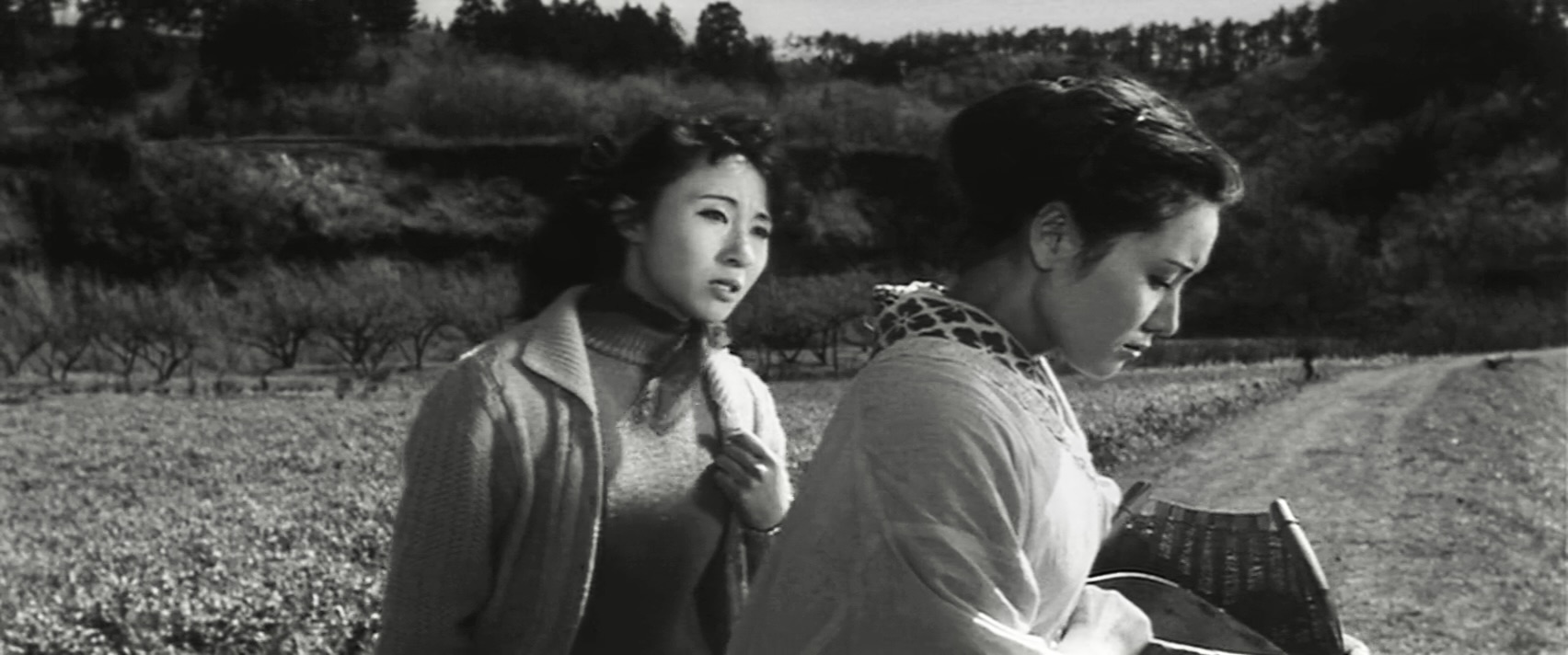
When financial difficulties force the actors to leave Osaka for the rural countryside, their luck changes for the better and they set up their tent theater in a village where the residents are starved for entertainment. Their good fortune has a revitalizing effect on the entire troupe but it also stimulates the local economy; some villagers profit from the situation by selling sushi, sweet cakes and homemade Coca-Cola (a mix of medical herbs and carbonated water) to the actors and audience while a few of the men become overly obsessed with the female performers.
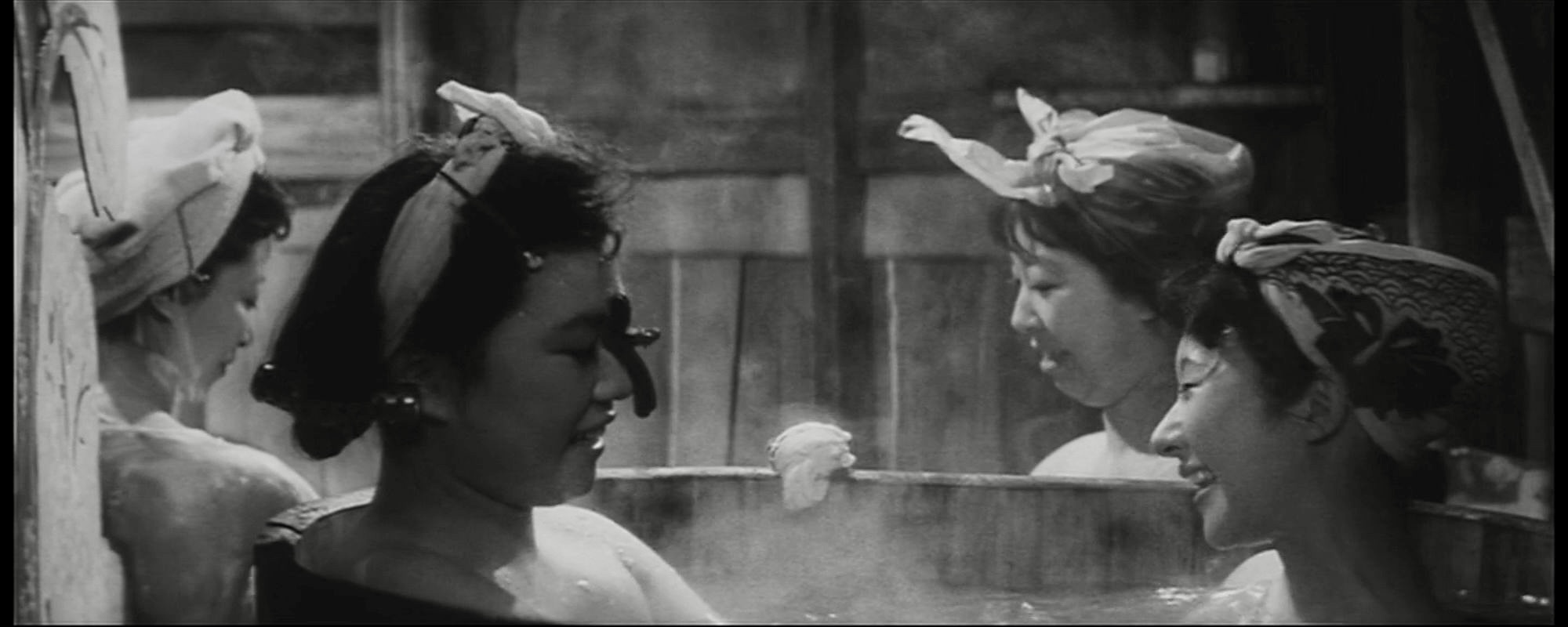
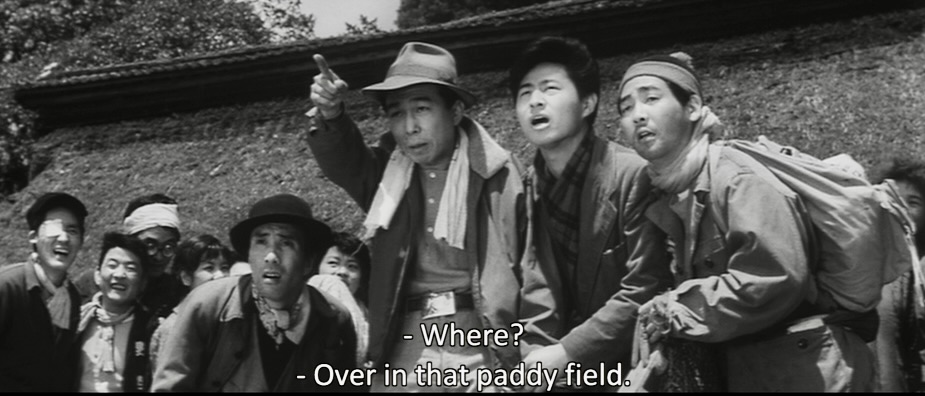
The sequences in the countryside are rambunctious and mostly played for broad comedy though there are darker undertones. A scene where Chigusa is kidnapped by five men and taken away in the night is treated like a schoolboy prank but the implications are fairly clear that Chigusa is going to be raped. Luckily she is rescued in the nick of time by some fellow actors but there are other glimpses of amoral behavior in the sticks. One local woman plots to marry Kato Eisuke (Toshio Takahara), one of the older actors, so she can take out a life insurance policy on him in the hopes that he will die early. Another village girl, Misako (Minako Katsuki), wants desperately to join the troupe but is subjected to a “casting couch” tryout by a sexually manipulative older actor. In an unexpected twist, she turns the tables on him and profits from her “initiation.”
In an interview with Imamura for the Nikon Cine Art website (https://eigageijutsu.blogspot.com/), the filmmaker commented on Stolen Desire, stating “At the time, I was really interested in a type of Japanese theatre that is very popular, a common theatre, a sort of “sub-Kabuki” aimed at the lower classes. It is a theatre of extraordinary vitality: this explains why I made Nusumareta Yokubo (Stolen Desire), a film about an itinerant troupe performing this kind of theatre. The intellectual boy in the leading role, Hiroyuki Nagato, who is quite interested in this theatre, is obviously in some way my double. For me, the vitality of this theatre recalls early Kabuki, back when Kabuki drew its subjects from daily life.” He also added, “I am very interested in people who have broken off from their families, their home-country – and I have noticed that most of the women who do this are obviously bar hostesses, actresses, prostitutes – just like actors in a traveling theatre troupe. It is these characters who interest me.” Inamura would go on to explore other outlier characters in Japanese society in The Pornographers (1966), Profound Desires of the Gods (1968), Vengeance is Mine (1979) and others.
Overall, Stolen Desire was designed as an audience pleasing B-movie and a lot happens to the Yamamura theater troupe in a brisk 92 minutes. It proved to be a popular success and won the Blue Ribbon Award for Best New Director (the award was first established in 1950 by the Association of Tokyo Film Journalists). Imamura would make two more professionally made genre entertainments for Nikkatsu Studios the same year – the screwball comedy Nishi Ginza Station and Endless Desire, a crime caper farce. But Imamura’s interest in the underbelly of Japanese culture and social outcasts would become more pronounced in his later work such as Pigs and Battleships (1961), which is generally acknowledged as his breakthrough film and the one which epitomizes his brash, confrontational approach and pessimistic view of human nature.

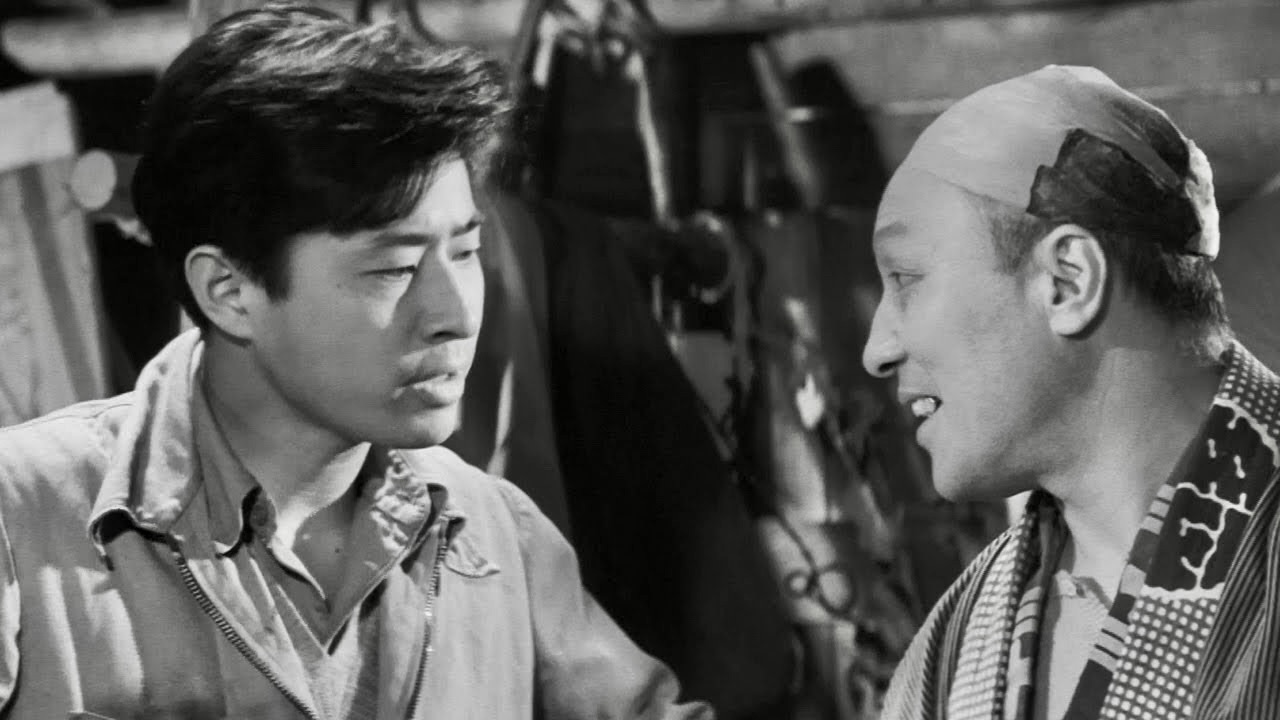
Fans of Japanese cinema will recognize many of the actors from Stolen Desire such as Hiroyuki Nagato in the starring role of Kunida. With over 250 film and TV credits, Nagato was popular with younger audiences and solidified his teen heartthrob fame playing rebellious anti-heroes in other Imamura films such as Pigs and Battleships and The Insect Woman (1963) but he was also seen in such infamous Sun Tribe efforts as Season of the Sun (1956) and The Warped Ones (1960).
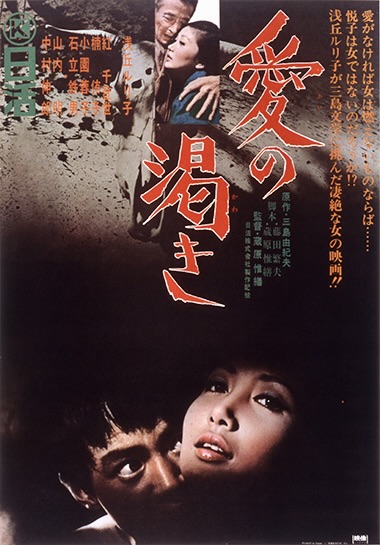
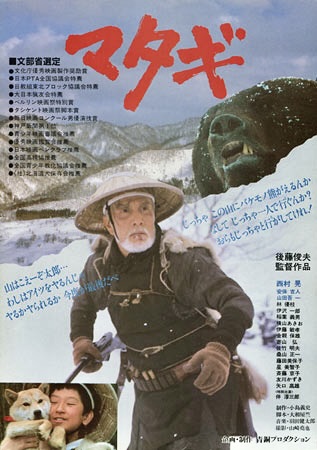
Another standout in the cast is Ko Nishimura as Kanji Takada, the resident troublemaker in the group as well as a cunning sexual opportunist. Nishimura is one of my favorite Japanese character actors and his versatility is truly remarkable. From playing a private detective in Kinji Fukasaku’s cult fantasy Black Lizard (1968) to a priest in Toshiya Fujita’s revenge actioner Lady Snowblood (1973) to a grizzled bear hunter in Toshio Goto’s Matagi (1982), Nishimura’s range is an inspiration to all aspiring character actors.
A review of Stolen Desire on the CineOutsider website best describes the movie’s appeal: “It’s an incident-busy tale told with the energy and bustle of a 1930s Hollywood backstage musical and is every bit as entertaining, with comedic elements that range from amusing one-liners to an exaggeration of reality that borders on farce. The champions of this are the lecherous male locals, who scuttle about in the dark to catch a peek of the bathing women like they’re auditioning for pantomime. It’s all great fun and was clearly never designed to be anything more, though that shouldn’t stop film scholars from reading between the gags and identifying the elements – and there are plenty here to find – that define this as an Imamura rather than a Nikkatsu film.”
There have been numerous other movies which focus on the lives of a traveling theater troupe. Among the more famous are Yasujiro Ozu’s A Story of Floating Weeds (1934) and his 1959 color remake Floating Weeds (which could have been used as the template for Stolen Desire). Let us not also forget Federico Fellini’s Variety Lights (1950), which he co-directed with Alberto Lattuada, Seijun Suzuki’s coming of age saga The Wind-of-Youth Group Crosses the Mountain Pass (1961), and Theodoros Angelopoulos’s epic Greek drama The Travelling Players (1975) but Stolen Desire is a worthy entry to the genre and recommended for fans of Imamura who are curious about his early work.

Stolen Desire is not currently available as a domestic release in the U.S. but if you own an all-region Blu-ray player you might want to check out the UK DVD/Blu-ray import from Eureka Entertainment’s Master of Cinema series which released Stolen Desire on a double feature disc with Pigs and Battleships in June 2011. An even better option is a new 6-disc UHD/Blu-ray set from Radiance Films which is scheduled to release mid-November 2026 – Radical Japan: Survival and Desire – Six Films by Shohei Imamura. The collection includes the director’s first three films starring with Stolen Desire plus Pigs and Battleships, The Insect Woman and Intentions of Murder.

Other links of interest:
https://theyshootpictures.com/imamurashohei.htm
https://www.jcablog.com/post/shohei-imamura-ozus-headstrong-apprentice
https://www.japanhouselondon.uk/read-and-watch/imamura-shohei-exposing-the-underbelly-of-japan
https://variety.com/2006/scene/markets-festivals/shohei-imamura-1200335349
https://eigageijutsu.blogspot.com/2011/01/interview-with-shohei-imamura.html
https://www.wsws.org/en/articles/2000/09/imam-s19.html

