It is hard to believe that Raoul Walsh, the man who directed The Roaring Twenties (1939), High Sierra (1941), They Died with Their Boots On (1941), Objective, Burma! (1945), White Heat (1949) and other classic genre films for Warner Brothers, never received an Oscar nomination. Film historian David Thomson pondered this in The New Biographical Dictionary of Film, writing, “Was it just that he was so reliable, so direct and “simple” an entertainer? Or was it a matter of not making the proper “big” pictures?” Even after his peak years at Warners, Walsh continued to make audience pleasing hits such as Battle Cry (1955), the fourth biggest box office success of its year. Even some of the B-pictures Walsh made during his final years in Hollywood look like A-pictures now such as the 1953 western, Gun Fury.
Continue readingTag Archives: Neville Brand
May the Kirlian Force Be With You!
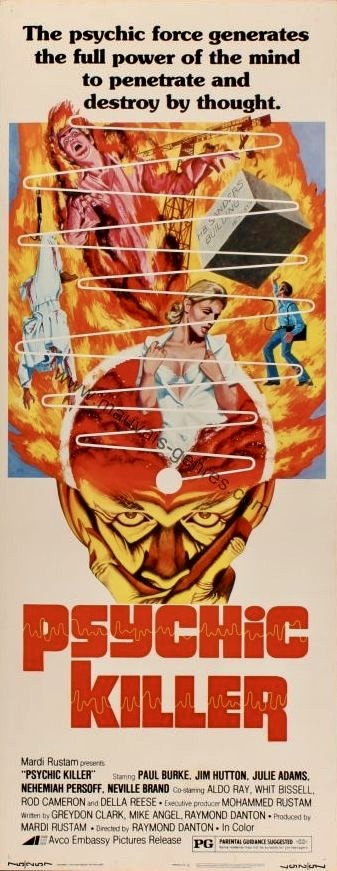
You may have heard of the term Kirlian. It is usually associated with photography and refers to a process where an image is created by applying a high-frequency electric field to a living object. The result captures a pattern of luminescence which is recorded on photographic film and represents a life force or energy field surrounding the living object. The concept has never been embraced by the scientific community but became popular in parapsychology and paranormal research in the mid-fifties. It even inspired a low-budget indie art house mystery called The Kirlian Witness (1978), directed by Jonathan Sarno, about a murder that is solved by a houseplant that witnessed the crime. Yet, even before this obscure, rarely seen feature, the concept of Kirlian energy provided an explanation for the behavior of the insane protagonist of Psychic Killer (1975 aka The Kirlian Force aka The Kirlian Effect), a trashy but consistently entertaining horror thriller featuring a cast of familiar Hollywood character actors and Jim Hutton as the unlikely title character in his final theatrical feature. If you’re looking for an offbeat, non-traditional horror movie for your Halloween viewing, this is a good choice.
Continue readingSturm und Drang Under Western Skies

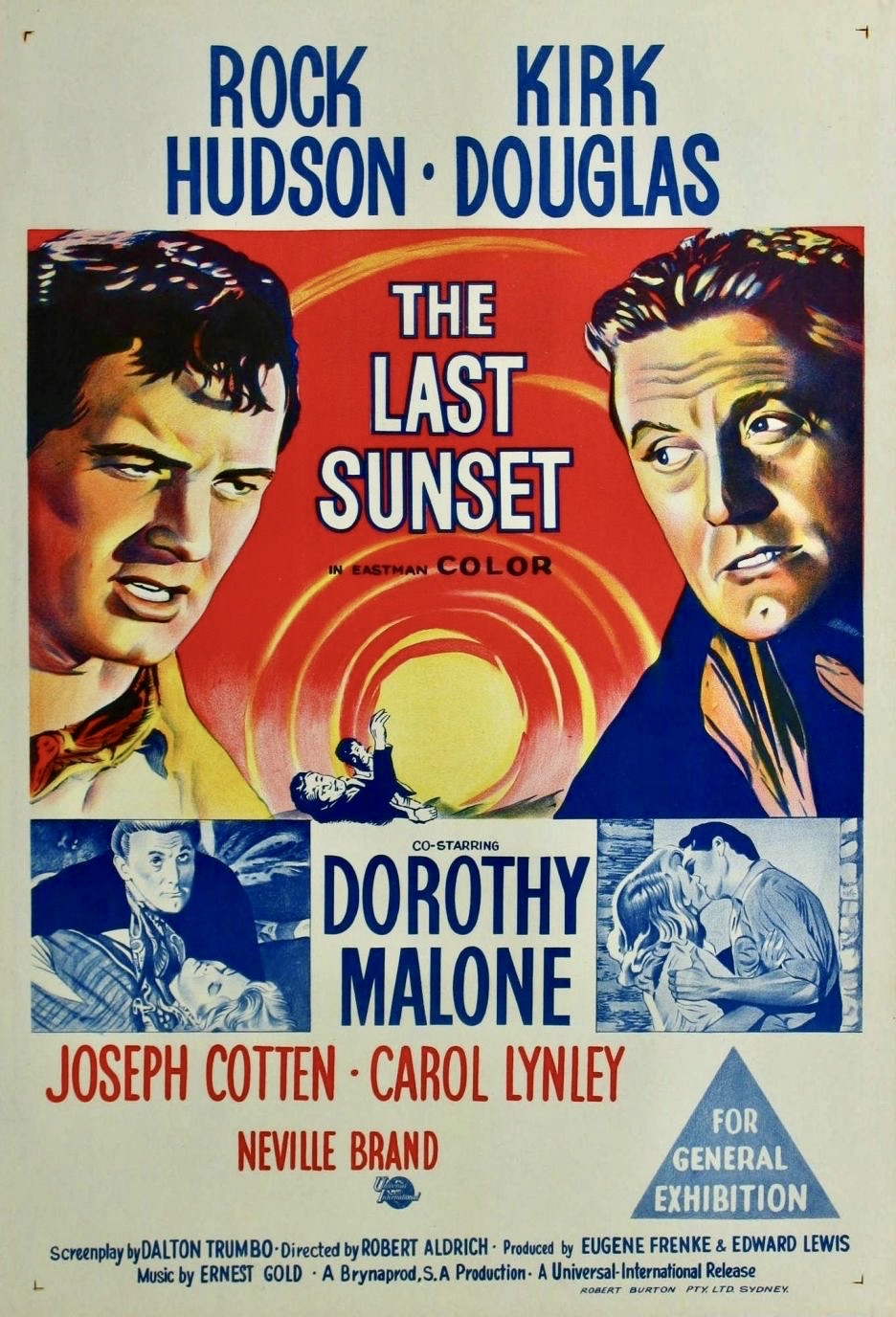
One of the more ambitious and offbeat Westerns of the early sixties, The Last Sunset (1961) is an odd duck that has its admirers and detractors with several participants of the film – director Robert Aldrich, screenwriter Dalton Trumbo and star Kirk Douglas – being the most vocal about its flaws and unrealized potential. For a frontier tale that attempts to emulate a Greek tragedy on the range, there is an abundance of plot twists and varying acting styles to keep you riveted to the sight of this often visually stunning box office failure. Themes of revenge, incest, and cowardice infused with an overarching cod psychology are baked in a heavy casserole that includes dust storms, a cattle stampede, quicksand, trigger-happy rustlers, embittered ex-Confederates in the post-Civil War years, marauding Indians and a natural phenomenon known as St. Elmo’s fire. Even Leonard Maltin in his capsule movie review for his popular guide calls it “Strange on the Range.”