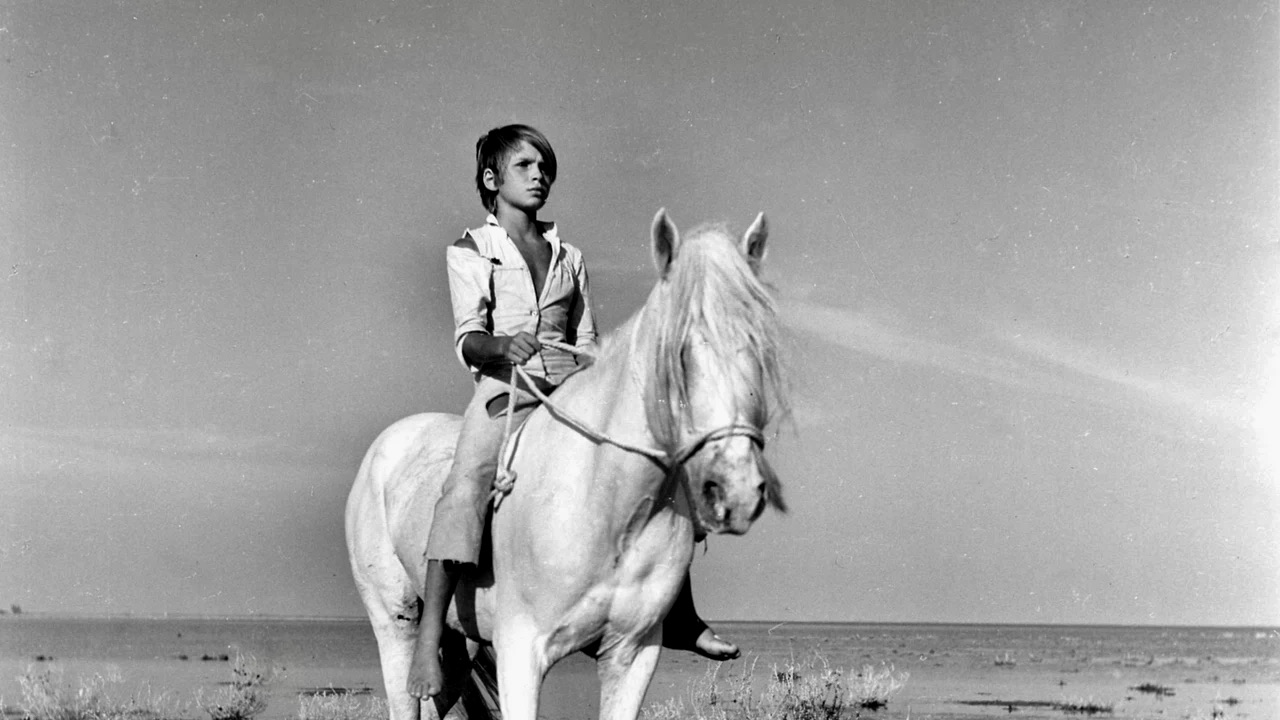
Some movie lovers may be familiar with the Camargue region in the south of France since it has figured prominently in a number of films, especially 1953’s Crin Blanc: Le Cheval Sauvage (English title, White Mane), Albert Lamorisse’s lyrical tale of a boy and the wild, untamed horse he befriends, and Maniac (1963), a psychological thriller from Hammer Studios. This unique expanse of marshlands and salt flats is located between the Mediterranean Sea and two arms of the Rhone River and is well known for its wildlife which includes the stocky, semi-feral horses of Camargue as well as the region’s bulls (the animals are bred and raised for “course camarguaise,” a bloodless form of bull fighting). It is in this stunning landscape that French Algerian director Emma Benestan has set her second feature film, Animale (2024). It is an impressionistic exploration of the area’s ancient traditions and folklore focusing on Nejma (Oulaya Amamra), a 22-year-old woman who is determined to master the art of bull-running, even though it has always been exclusively an all-male athletic competition.
Continue reading