Aerial Daredevils

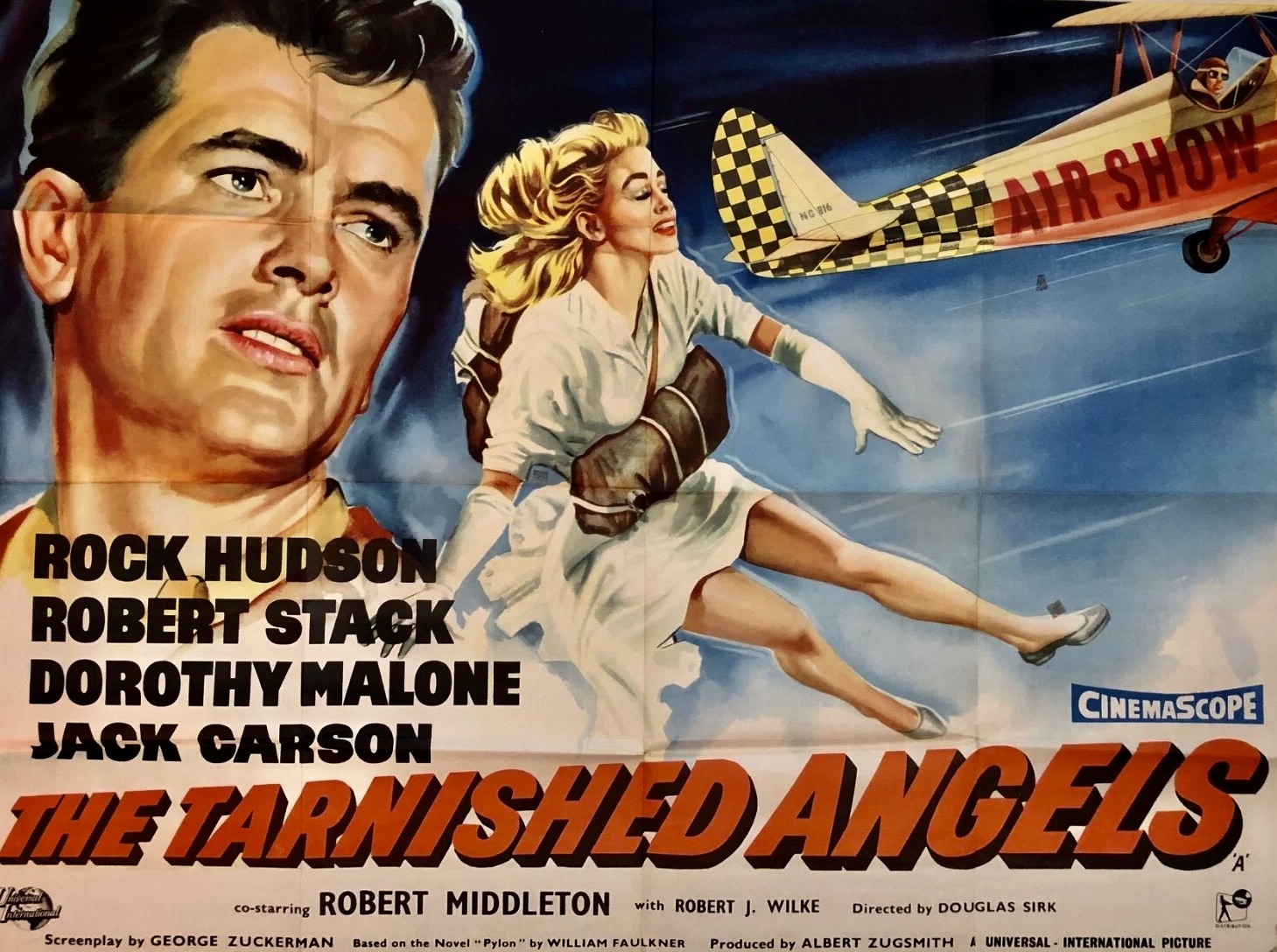
Among the many novels of William Faulkner, Pylon is less well known today than some of the author’s more critically acclaimed works such as The Sound and the Fury, Intruder in the Dust and The Reivers (a 1962 Pulitzer Prize winner). Yet, the novel, dismissed by most critics of its era as a tawdry melodrama, is a deeply personal work, reflecting Faulkner’s keen interest in flying while including autobiographical details from his own life. The 1957 film adaptation of Pylon entitled The Tarnished Angels and directed by Douglas Sirk was also unfairly dismissed by critics at the time with one reviewer calling it “…cheaply written…abominably played…and absurd” while another panned it as “mostly colorless…and lacking in punch.” Most surprisingly, The Tarnished Angels reunited three of the main actors from Sirk’s Academy Award nominated Written on the Wind from the previous year – Rock Hudson, Robert Stack and Dorothy Malone (who won the Best Supporting Actress Oscar) – but it was completely ignored by the Academy even though the movie is much more highly regarded now.

Continue reading
Going Bananas!

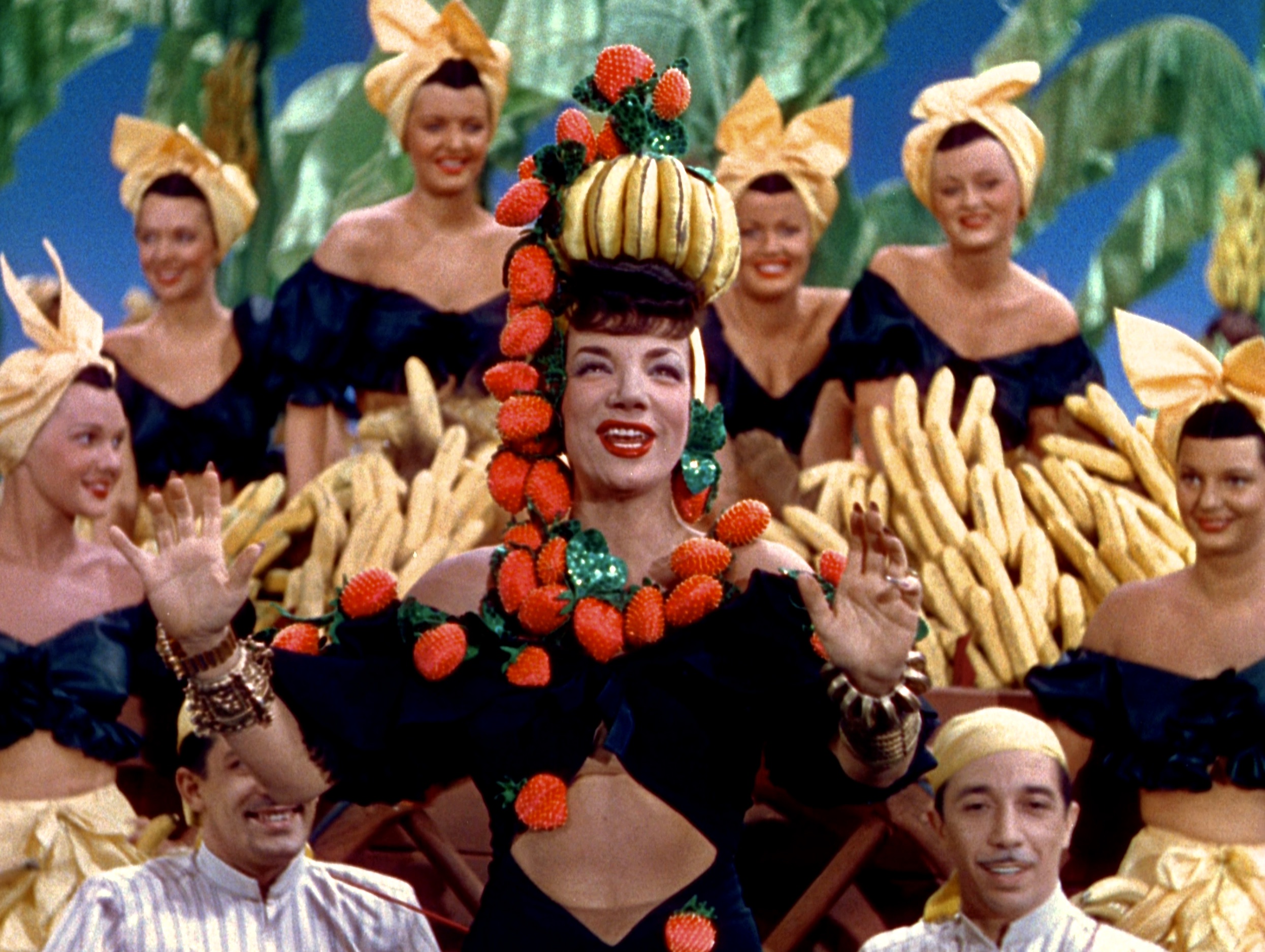
Carmen Miranda and chorus girls performing “The Lady in the Tutti Frutti Hat” from THE GANG’S ALL HERE (1943), directed by Busby Berkeley.

In the early 1970s midnight movies became a craze after the Elgin Theatre in New York discovered a surprise hit with Alejandro Jodorowsky’s El Topo (1970). Soon other theatres across the country launched their own midnight film series and movies like Night of the Living Dead (1968), Pink Flamingos (1972), The Harder They Come (1972) and Harold and Maude (1972) began to attract audiences that missed those movies during their limited initial release. Some of those early midnight movie choices were surprising and included Hollywood classics like Walt Disney’s Fantasia (1940), the rock ‘n’ roll satire The Girl Can’t Help It (1956) and the WW2 era musical The Gang’s All Here (1943). Yet, when you consider the fact that a lot of those early midnight movie screenings were attended by younger audiences, many high on pot or other substances, it starts to make sense. The Gang’s All Here, in particular, with its eye-popping dayglo Technicolor hues, surreal art direction and outlandish dance choreography is as psychedelic and mind-blowing as the “trip sequence” in Kubrick’s 2001: A Space Odyssey (1968).

Continue reading