
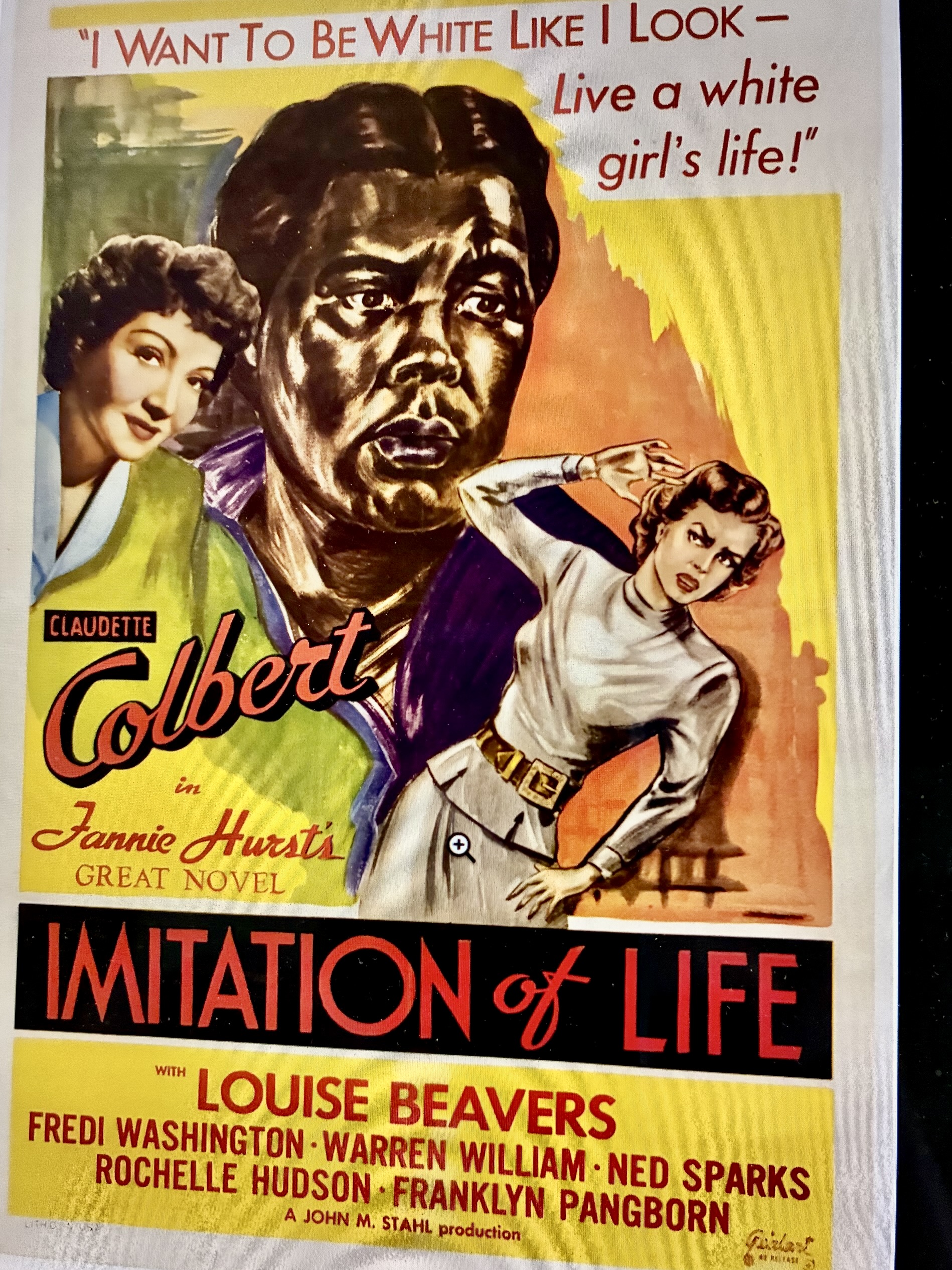
Crossing the Color Line

This film poster for IMITATION OF LIFE (1934) was an alternate version that was targeted toward black audiences.

“The only Hollywood movie of its era that even suggested the existence of such a thing as a race problem in America, the film set off sparks within the black community. Black ministers preached sermons about it while black intellectuals wrote about the film as well. And the movie acquired a legend of its own that still lives today.” – Donald Bogle on Imitation of Life (1934) in Blacks in American Films and Television: An Illustrated Encyclopedia

Less well known than the 1959 Douglas Sirk remake starring Lana Turner and Juanita Moore, the first film version of Imitation of Life, directed by John M. Stahl, is actually more faithful to the Fannie Hurst novel (except for the ending) and in many ways presents a much more socially progressive viewpoint than the Sirk version as noted in the below article.

Continue reading
Robot Riot

The Russian film poster for Gibel Sensatsii (English title: LOSS OF FEELING aka LOSS OF SENSATION, 1935).

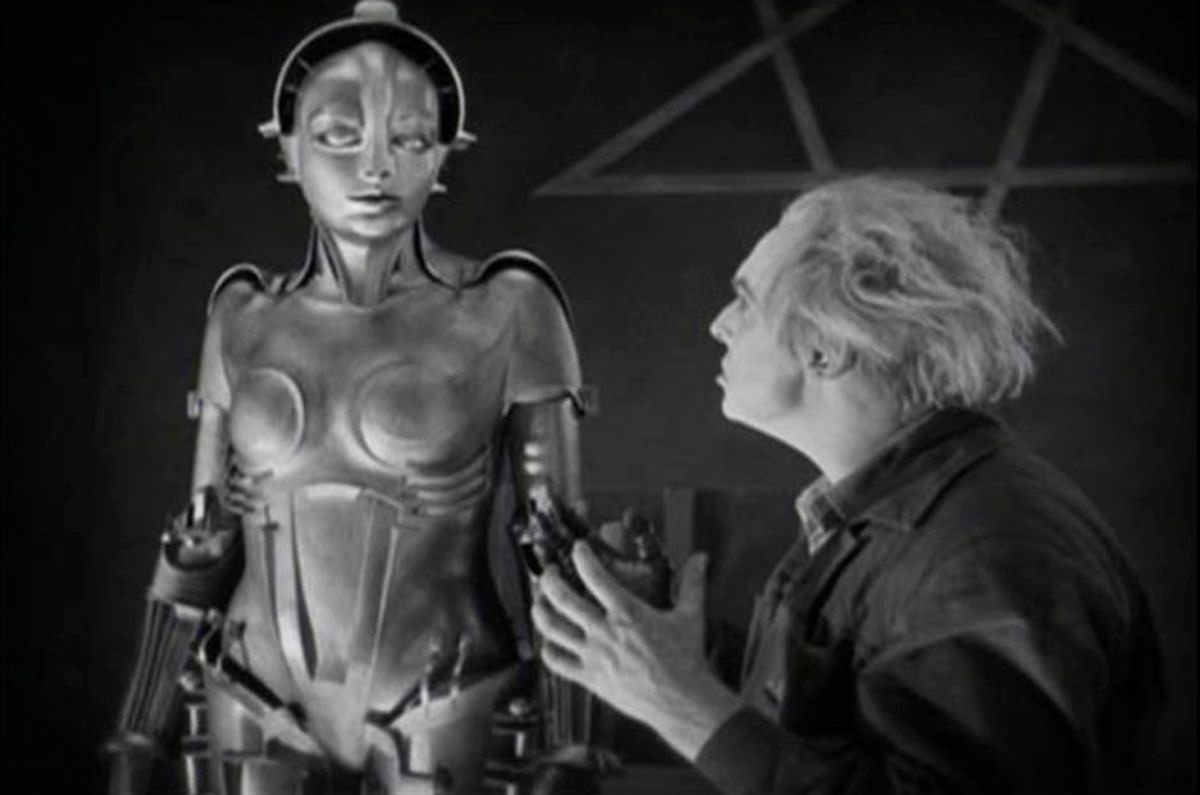
When I hear the word robot, I immediately think of Robby, the delightful and super intelligent creation of Dr. Morbius in Forbidden Planet (1956), one of the landmark sci-fi movies of the fifties. His barrel-shaped torso and high-tech design were so popular that he inspired countless toy collectibles for kids but he was a benign example of the form. For the most part, robots in science fiction films are generally viewed as a threat (see 1954’s Target Earth, 1957’s Kronos or 1958’s The Colossus of New York for examples). That was certainly the case in one of the first and most famous depictions of a robot – Fritz Lang’s silent sci-fi masterpiece, Metropolis (1927). Designed as a doppelganger for Maria, a revered female leader of factory workers, the false Maria preaches revolution to the working class, resulting in the sort of chaos that threatens to topple civilization (The False Maria’s robotic metal frame is disguised beneath her human façade).

The mad scientist Rotwing (Rudolf Klein-Rogge) and his robotic creation Maria before he gives her a human form in Fritz Lang’s METROPOLIS (1927).

Eight years later, robots were again viewed as a danger to the human race in the Russian film, Gibel Sensatsii (English title: Loss of Feeling aka Loss of Sensation aka Robots of Ripl, 1935) although these looked more like early prototypes of the walking oil can-shaped automatons seen in later serials like The Phantom Empire (1936) and The Mysterious Doctor Satan (1940).

Continue reading