
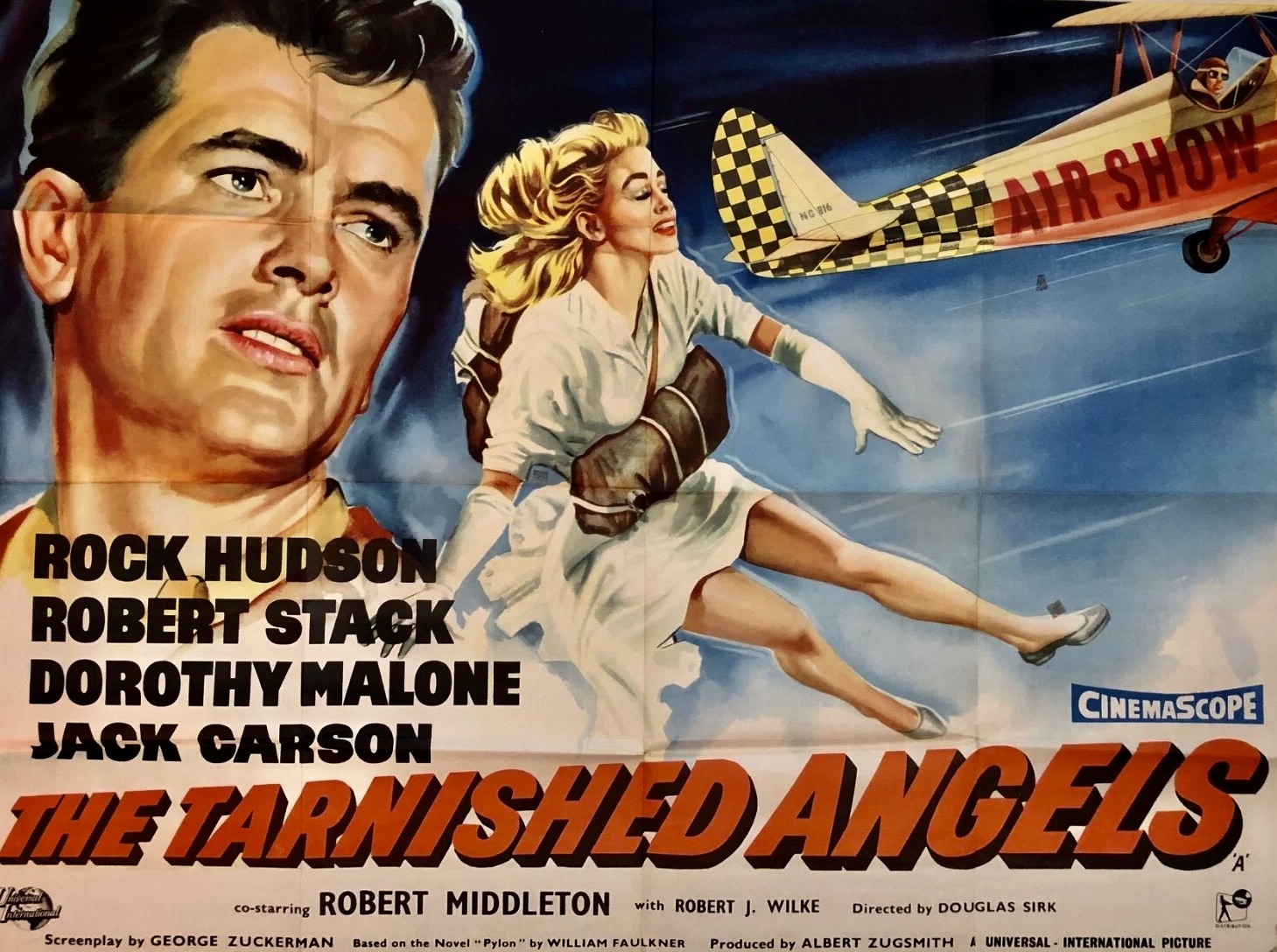
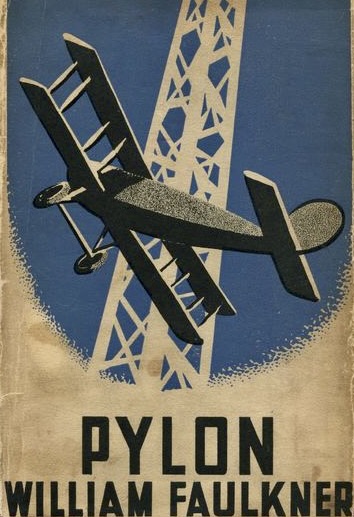
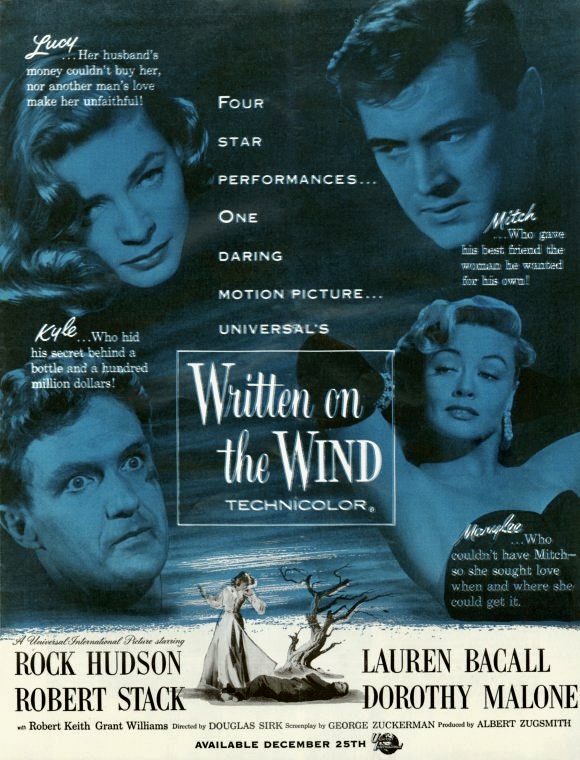
Among the many novels of William Faulkner, Pylon is less well known today than some of the author’s more critically acclaimed works such as The Sound and the Fury, Intruder in the Dust and The Reivers (a 1962 Pulitzer Prize winner). Yet, the novel, dismissed by most critics of its era as a tawdry melodrama, is a deeply personal work, reflecting Faulkner’s keen interest in flying while including autobiographical details from his own life. The 1957 film adaptation of Pylon entitled The Tarnished Angels and directed by Douglas Sirk was also unfairly dismissed by critics at the time with one reviewer calling it “…cheaply written…abominably played…and absurd” while another panned it as “mostly colorless…and lacking in punch.” Most surprisingly, The Tarnished Angels reunited three of the main actors from Sirk’s Academy Award nominated Written on the Wind from the previous year – Rock Hudson, Robert Stack and Dorothy Malone (who won the Best Supporting Actress Oscar) – but it was completely ignored by the Academy even though the movie is much more highly regarded now.
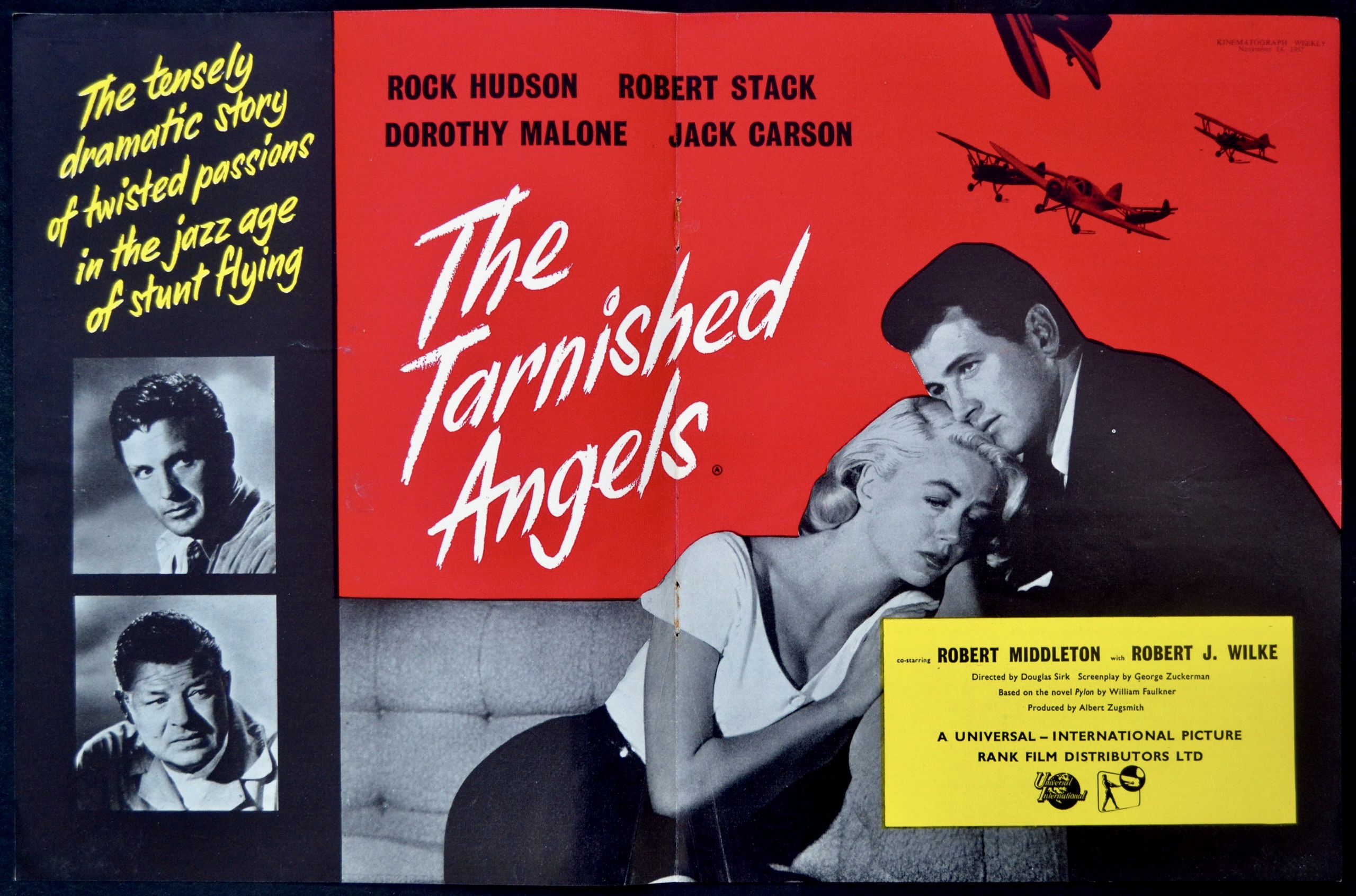
Inspired by a New Orleans flying circus, Pylon’s original narrative centers on a reporter who, while covering an air show, becomes fascinated with a daredevil pilot, his sexy, free-spirited wife and their gypsy lifestyle. According to biographers, Faulkner based Roger Shumann, the novel’s aviator hero, on Charles N. Kenily, a young pilot who died when his plane crashed into Lake Pontchartrain during an air carnival. Hermann Deutsch, a reporter friend of Faulkner’s who worked for the New Orleans Item, served as a model for the book’s roving journalist. The book’s tragic ending, with Shumann dying in an accident, would prove to be strangely prescient; Faulkner’s youngest brother Dean was killed in a biplane crash outside Pontotoc, Mississippi, just a few months after Pylon was published.
For years, various Hollywood studios toyed with the idea of making a film of Pylon but it was producer Albert Zugsmith who finally convinced Universal-International to buy the rights, even though the studio brass were unfamiliar with the Faulkner novel and thought the title referred to a snake. Allegedly, the author was paid $50,000 for the screen rights and Zugsmith asked Douglas Sirk to direct; they had just collaborated on Written on the Wind (1957).
According to the director in Sirk on Sirk, Zugsmith “was doing some lively work at the time, and we got on just great: for instance, he also produced Welles’s Touch of Evil, which Orson was shooting on the next stage at Universal when I was doing The Tarnished Angels. And Zugsmith was the first person in Hollywood who was willing to take on the Faulkner book, Pylon, this old project and favourite of mine. Zug was also the only producer I could persuade to reject a happy end.” Of course, the first thing to change was the problematic title. Zugsmith wanted to call it Sex in the Air but was overruled by the studio who came up with a more appropriate title, The Tarnished Angels.
In order to appease the censorship board, Zugsmith had to make some changes to the story before it could be approved, mainly eliminating the menage a trois that is so central to the book. As a result, the Jack Holmes character, who was having an affair with Shumann’s wife in the novel, becomes Jiggs, Holmes’s loyal mechanic. Sirk later stated “..in a way, The Tarnished Angels grew out of Written on the Wind. You had the same pair of characters seeking their identity in the follow-up picture; the same mood of desperation, drinking, and doubting the values of life, and at the same time almost hysterically trying to grasp them, grasping the wind. Both pictures are studies of failure. Of people who can’t make a success of their lives.”
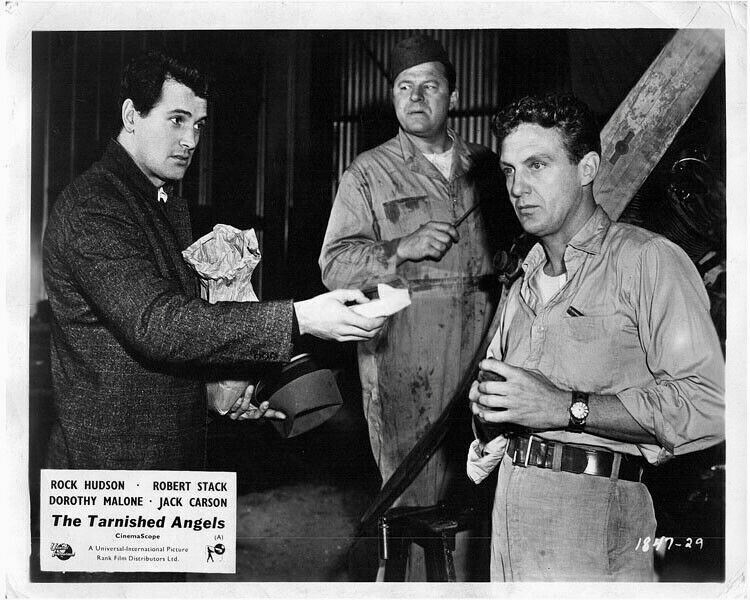
Rock Hudson was at the peak of his career when he made The Tarnished Angels; he had recently been nominated for a Best Actor Oscar for his work in Giant (1956) and he was just a year away from Pillow Talk (1959), the smash hit that firmly established him as a major leading man in romantic comedies. Despite the starring role, however, Hudson’s character, reporter Burke Devlin (he was unnamed in the novel), is not the focus of The Tarnished Angels. “‘You are not the prince in this movie,’ I told him – ‘that’s Stack.’ To my surprise, he understood, although he knew that this meant in a way he would have to play second fiddle,” Sirk recalled. Hudson would later express disdain toward the movie, stating that such sordid stories shouldn’t be presented to the American public. It would also be the last of eight films that Hudson made with Sirk for Universal-International Pictures.
The director saw Hudson’s character in The Tarnished Angels as “a neatly polished looking-glass held up to the crazy world of the flyers, these Indians of the air…At first he is wide-eyed, rather innocent, just reflecting events…But then his consciousness grows, it widens from a lame curiosity to fascination…And eventually he recognizes the gypsies of the air as having more solid ground under their feet than his own solid shoes are treading.”
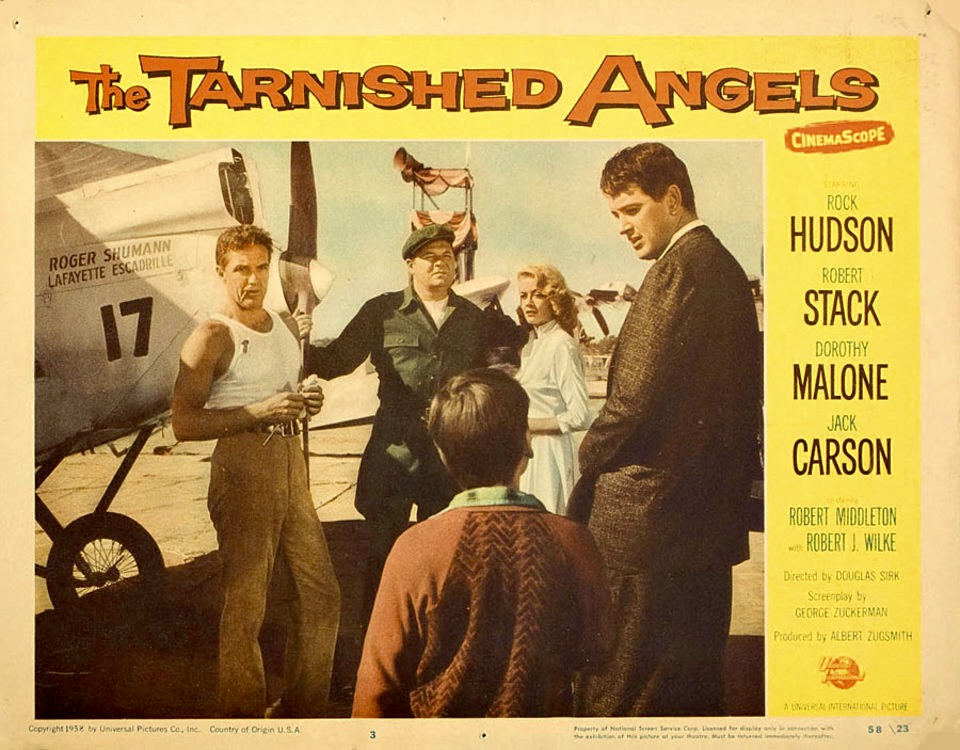
For the film, Sirk uses the Roger Schumann character (played by Robert Stack) to express some of the thematic concerns of Faulkner’s novel. Quoting from the book, Sirk said, ‘They have nothing but their plane…part of civilization has rooted them out of their soils…Their escape is in violence, in drinking, in fighting and praying.’ I think this sums up very well the world of Pylon.”
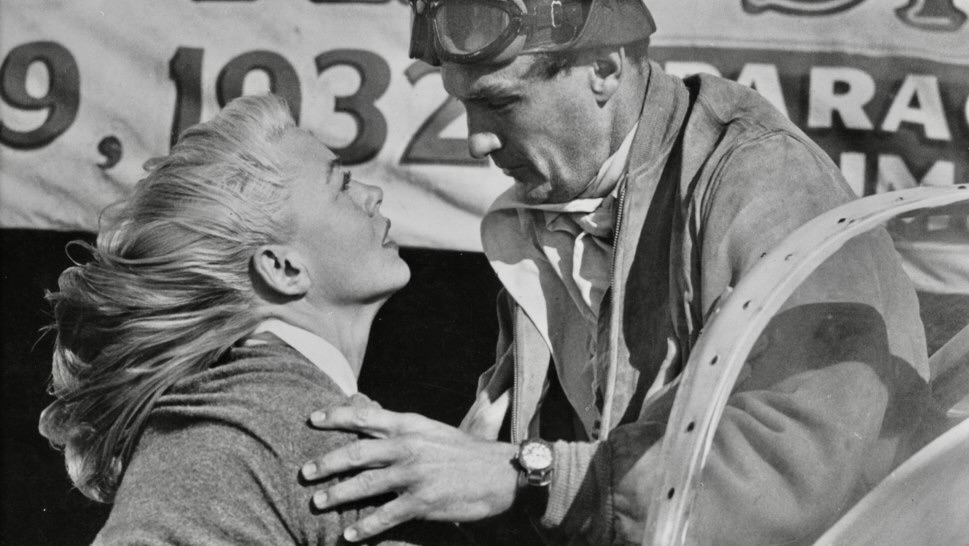
To help Stack understand his part, Sirk read him passages from T. S. Eliot’s poem, “The Waste Land,” with its many references to death by water, an image that takes on greater significance in the film. In fact, Eliot’s poetry figures prominently throughout Pylon, particularly his poem, “The Lovesong of J. Alfred Prufrock,” in which Prufrock, like Roger Schumann, is unable to find real meaning in his existence. Sirk also wanted to convey another idea from Faulkner’s book as well – the irony of heroism.
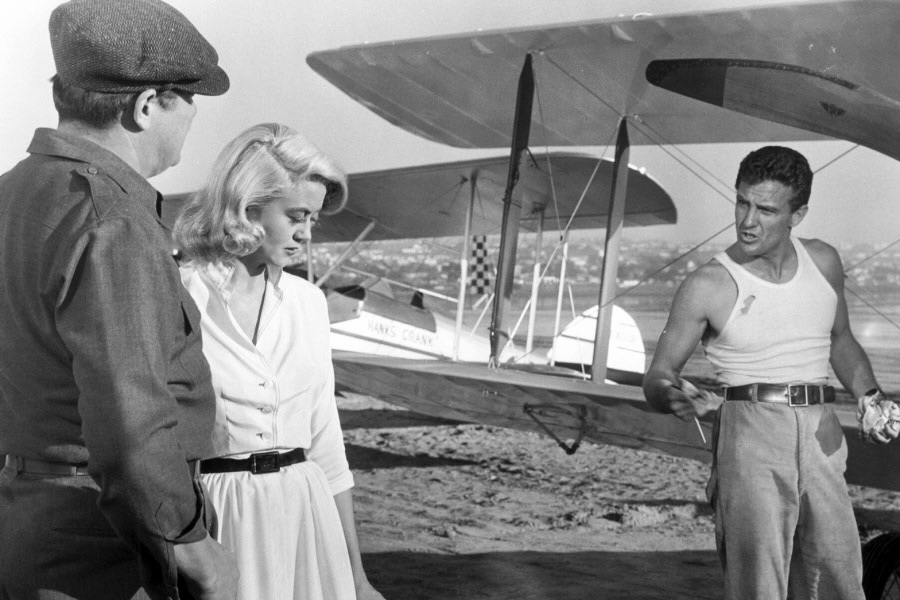
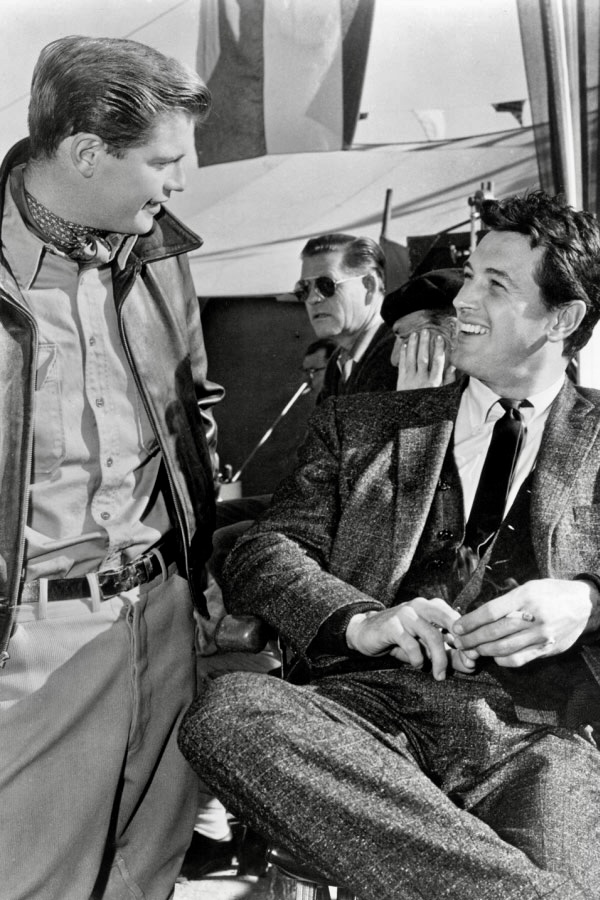
In his autobiography, Straight Shooting, Robert Stack wrote “my warmest memory of location shooting took place in a less-than-exotic location: sunny San Diego, California..we were shooting The Tarnished Angels…My head may have been devoted to the script, but my heart was really back home where Rosemarie was about to make me a papa for the first time. We were in the middle of a tense scene in which I gave Dorothy Malone away to a dirty old man (played with glee by Bob Middleton). Suddenly, the sound men began hollering. Out of nowhere an old plane was diving straight for the cameras; behind a tatty old banner proclaiming in letters four feet tall: It’s a Girl! Rock Hudson had arranged with the hospital to send word immediately when the baby was born. He had then hired a stunt pilot and gave him instructions to tow the appropriate message behind the plane. It’s a moment I’ve never forgotten. Anybody who tells me that Rock Hudson isn’t a first-class gent Had better put up his dukes.”
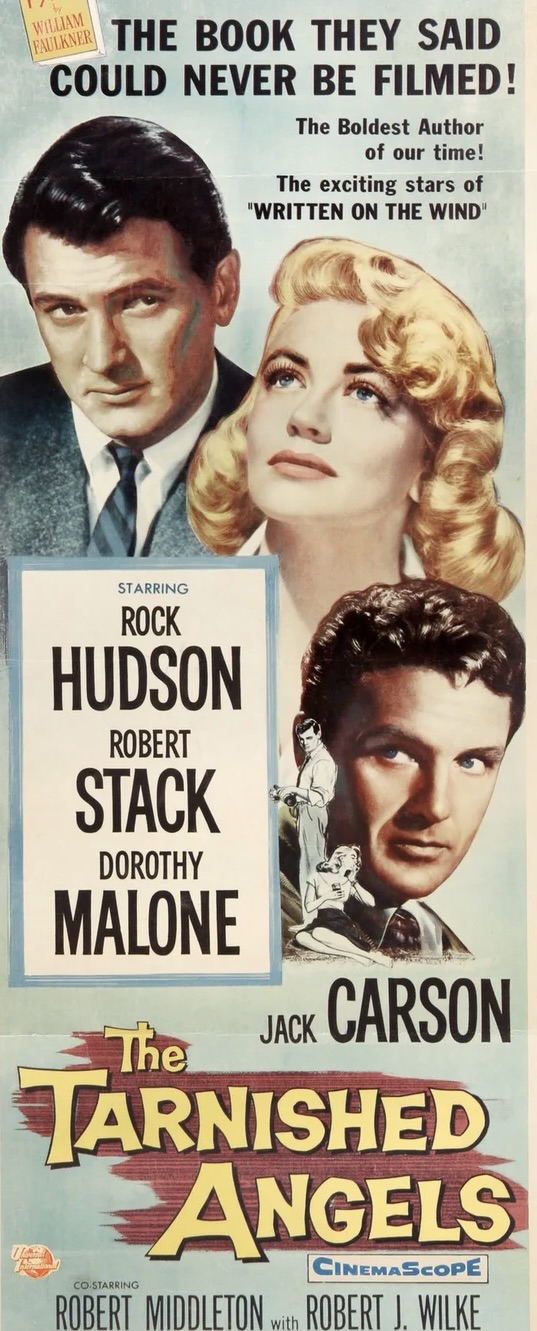
When The Tarnished Angels opened at theatres, it received the same mixed reactions as Faulkner’s Pylon did upon publication. Variety complained of “a generally inconsequential plot reaching no particular climax,” while The New York Times wrote “..the bulging picture bursts at the seams. The hot air pours from it in loud hisses, and it collapses like the empty thing it is.” Moviegoers didn’t flock to the film either, unlike Sirk’s glossy Technicolor soap operas Magnificent Obsession (1954) and All That Heaven Allows (1955), which were extremely popular with female audiences and were unabashedly romantic love stories with happy endings. In contrast, the main characters in The Tarnished Angels remain unfulfilled and emotionally alienated. However, the film’s reputation is considerably better today; renowned directors like Rainer Werner Fassbinder and Peter Bogdanovich have praised it as an influential work.
Critic David Thomson wrote in Have You Seen…?: A Personal Introduction to 1,000 Films that The Tarnished Angels is “..quite simply, the best attempt at Faulkner ever made by the movies…This is not a comfortable film (in the way Written on the Wind never hesitates over its own logic), but it is remarkable and beautiful…Hudson is far better than anyone had a right to expect, and there are fine supporting performances from Jack Carson and Robert Middleton. But still, the project seems so unlikely that the film’s grace and gloomy momentum have to be experienced to be believed. And nothing can explain the certainty we have that Sirk understood Faulkner.” The director must have agreed because he once stated in an interview, “Perhaps, after all, Tarnished Angels is my best film.”
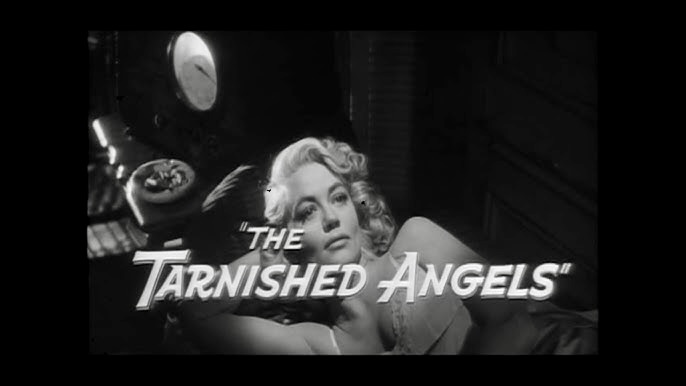
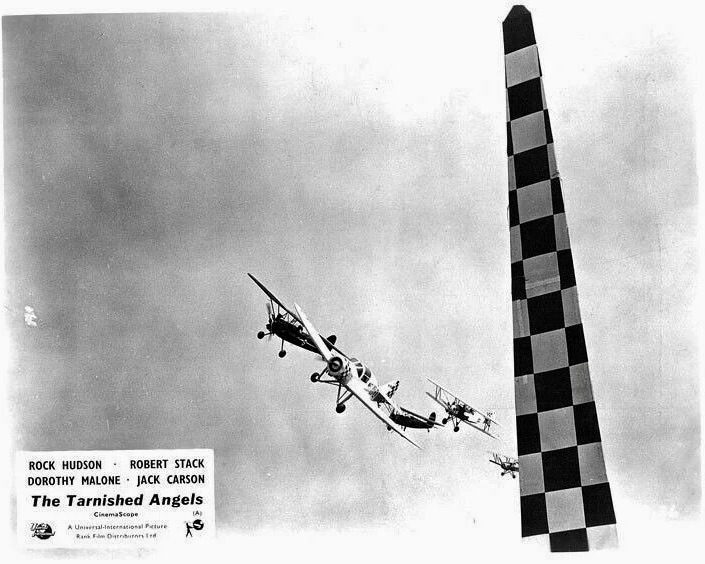
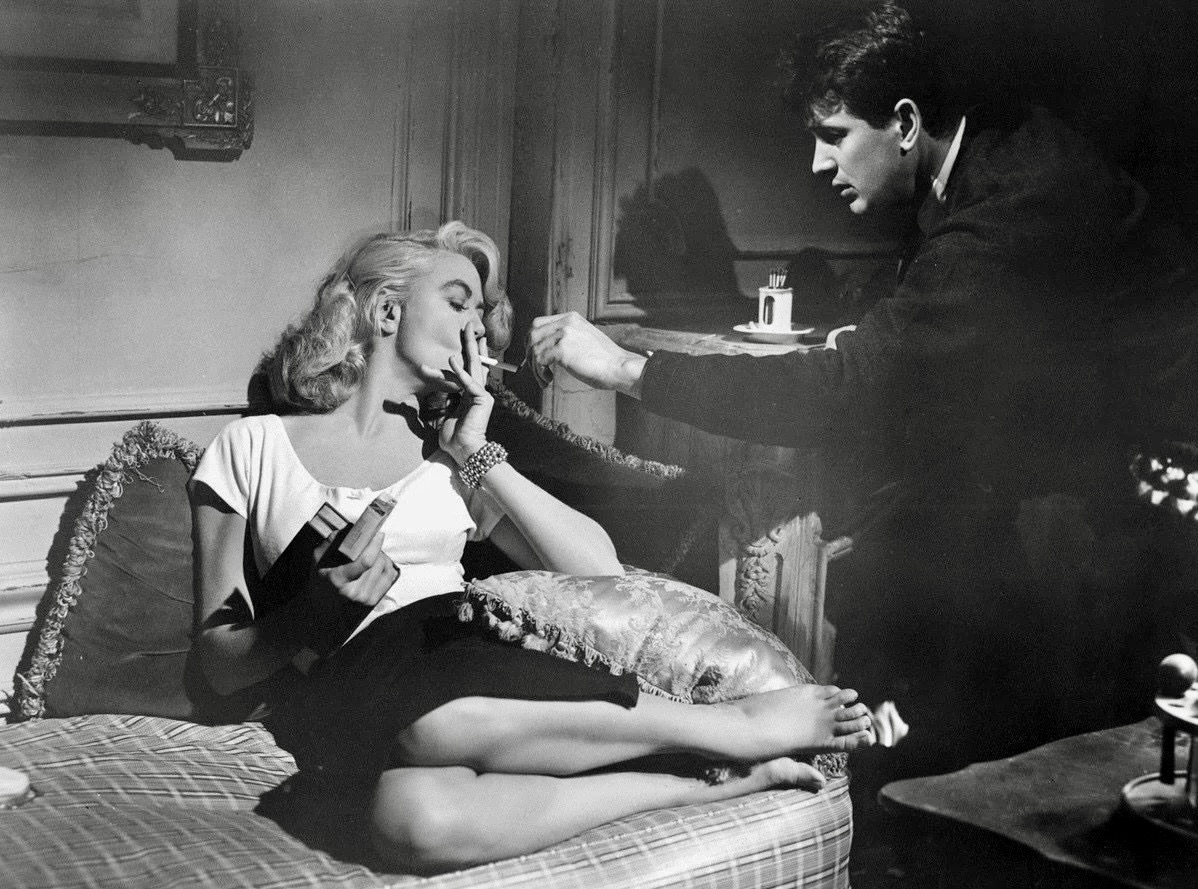
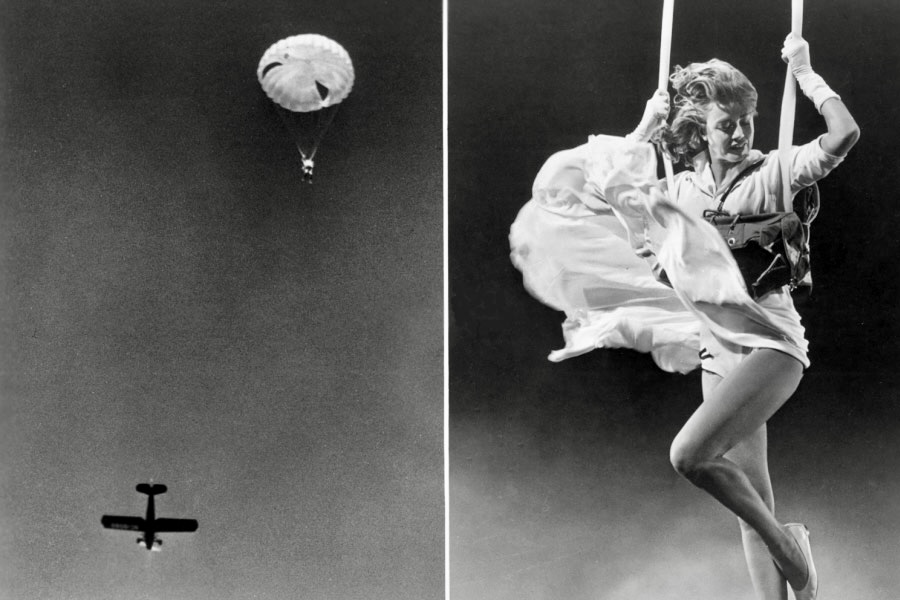
Classic film lovers who are only familiar with the eyepopping color schemes of Sirk’s Written on the Wind or All That Heaven Allows will be surprised to see that The Tarnished Angels is filmed in black and white by Irving Glassberg in a style that is closer to film noir than a period film set during the Depression. Allegedly Sirk did want to shoot the movie in color but the studio overruled him feeling that black and white was more appropriate to the downbeat narrative. Nevertheless, the Cinemascope lensing is eloquent and lovely to behold and there are other pleasures as well – the striking art direction by Alexander Golitzen and Alfred Sweeney, an emotionally intense music score by Frank Skinner plus exciting aerial stunts, which are well integrated into the studio footage. There is also the erotic allure of Dorothy Malone as the promiscuous parachutist and it is fun to spot up-and-coming teen heartthrob Troy Donahue in a minor role.
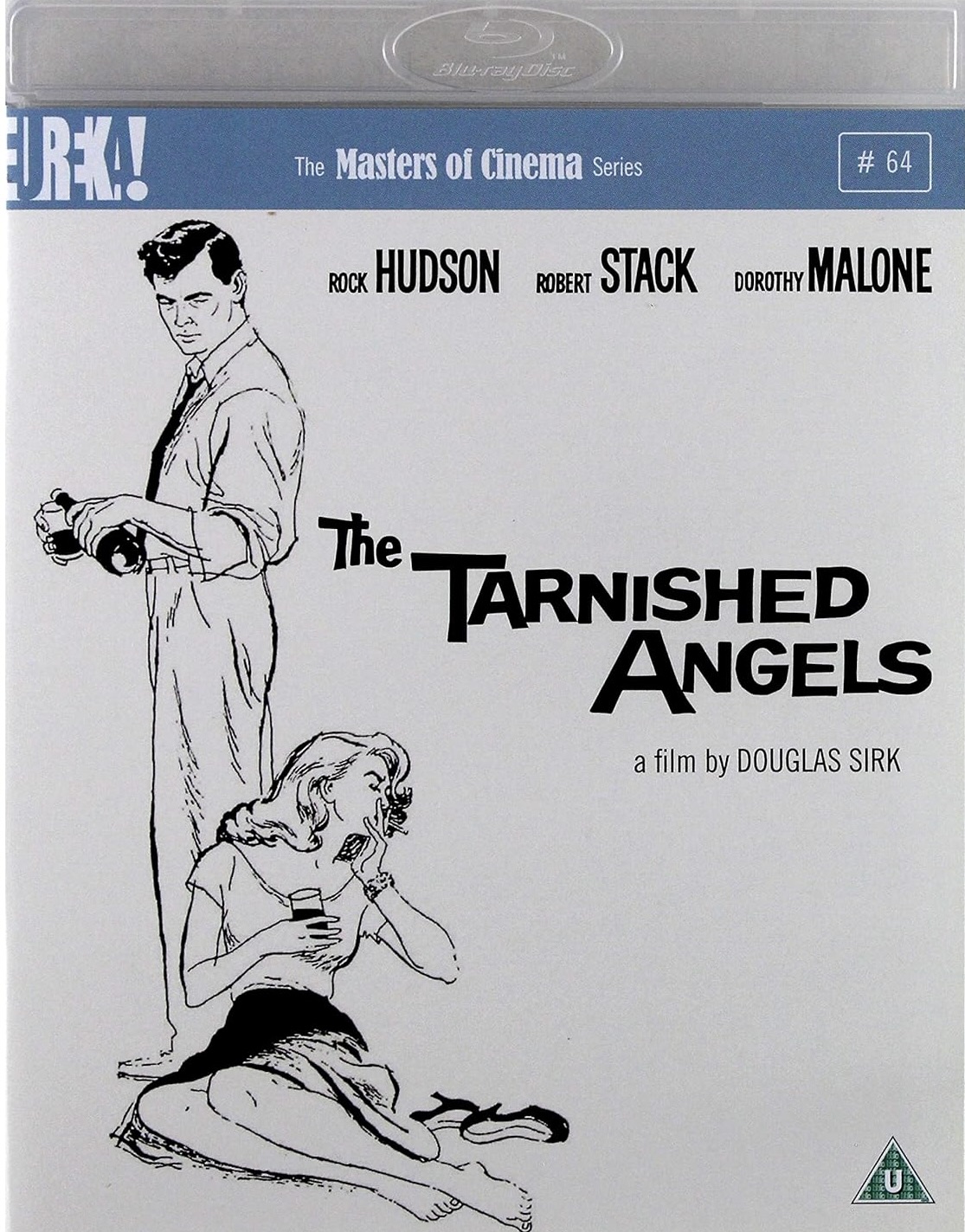
The Tarnished Angels has been released on various formats over the years including a TCM-branded DVD and a Kino Lorber Blu-ray from March 2019 with an audio commentary by film expert Imogen Sara Smith. Connoisseurs of the film, however, will probably want the Eureka’s Masters of Cinema Blu-ray from August 2013 which comes with a host of extra features including a featurette on Sirk, Zugsmith and Hudson, a video essay by Cashiers du Cinema writer Bill Krohn, an interview with character actor William Schallert, an audio commentary by Australian arts critic Adrian Martin and more (you will need an all-region player to view it).
Other links of interest:
https://brightlightsfilm.com/faulkner-film-noir/
https://brightlightsfilm.com/two-weeks-in-another-town-interview-with-douglas-sirk/
https://www.tshaonline.org/handbook/entries/maloney-dorothy-eloise-dorothy-malone

