
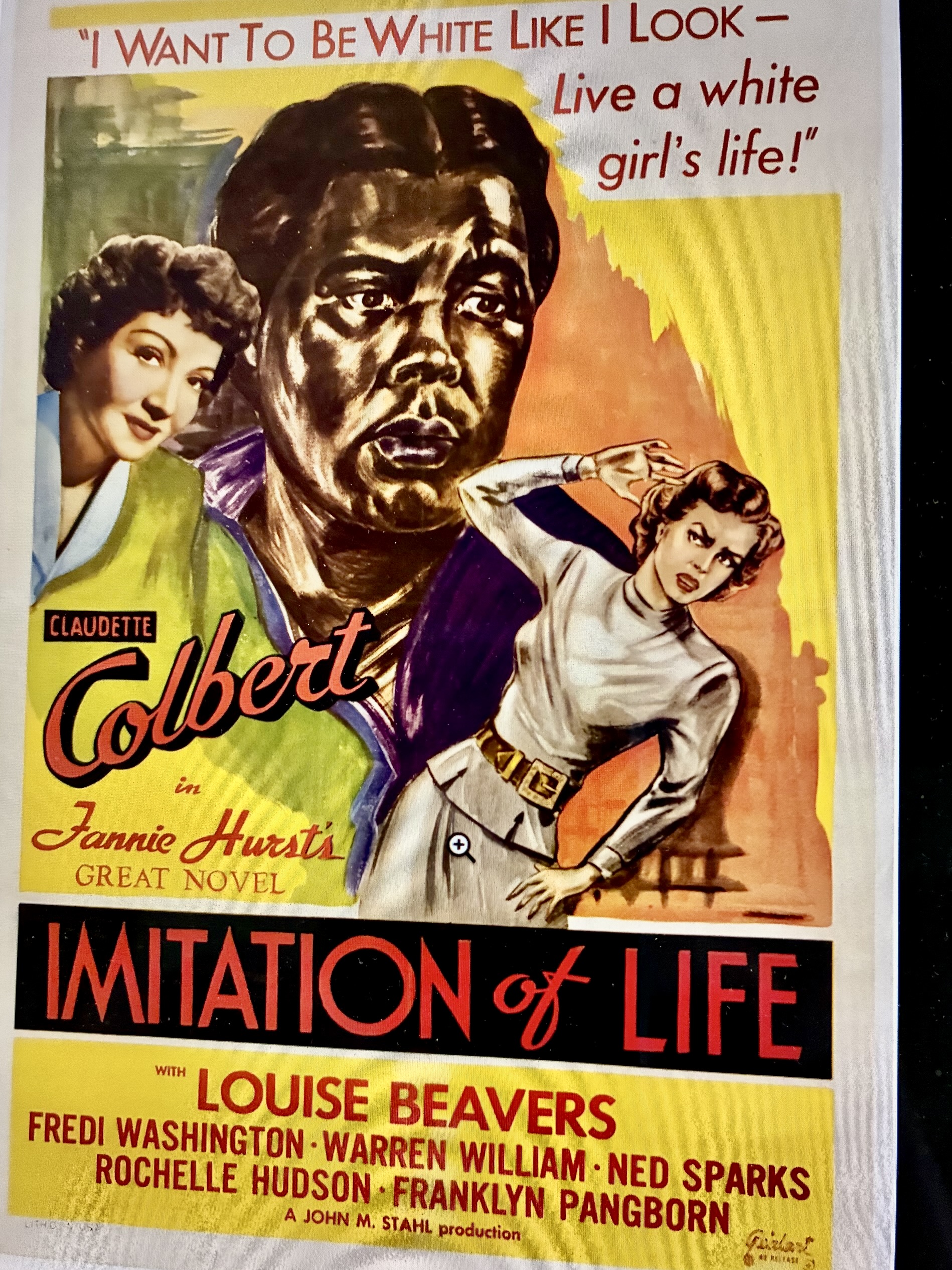
Crossing the Color Line

This film poster for IMITATION OF LIFE (1934) was an alternate version that was targeted toward black audiences.

“The only Hollywood movie of its era that even suggested the existence of such a thing as a race problem in America, the film set off sparks within the black community. Black ministers preached sermons about it while black intellectuals wrote about the film as well. And the movie acquired a legend of its own that still lives today.” – Donald Bogle on Imitation of Life (1934) in Blacks in American Films and Television: An Illustrated Encyclopedia

Less well known than the 1959 Douglas Sirk remake starring Lana Turner and Juanita Moore, the first film version of Imitation of Life, directed by John M. Stahl, is actually more faithful to the Fannie Hurst novel (except for the ending) and in many ways presents a much more socially progressive viewpoint than the Sirk version as noted in the below article.

Continue reading
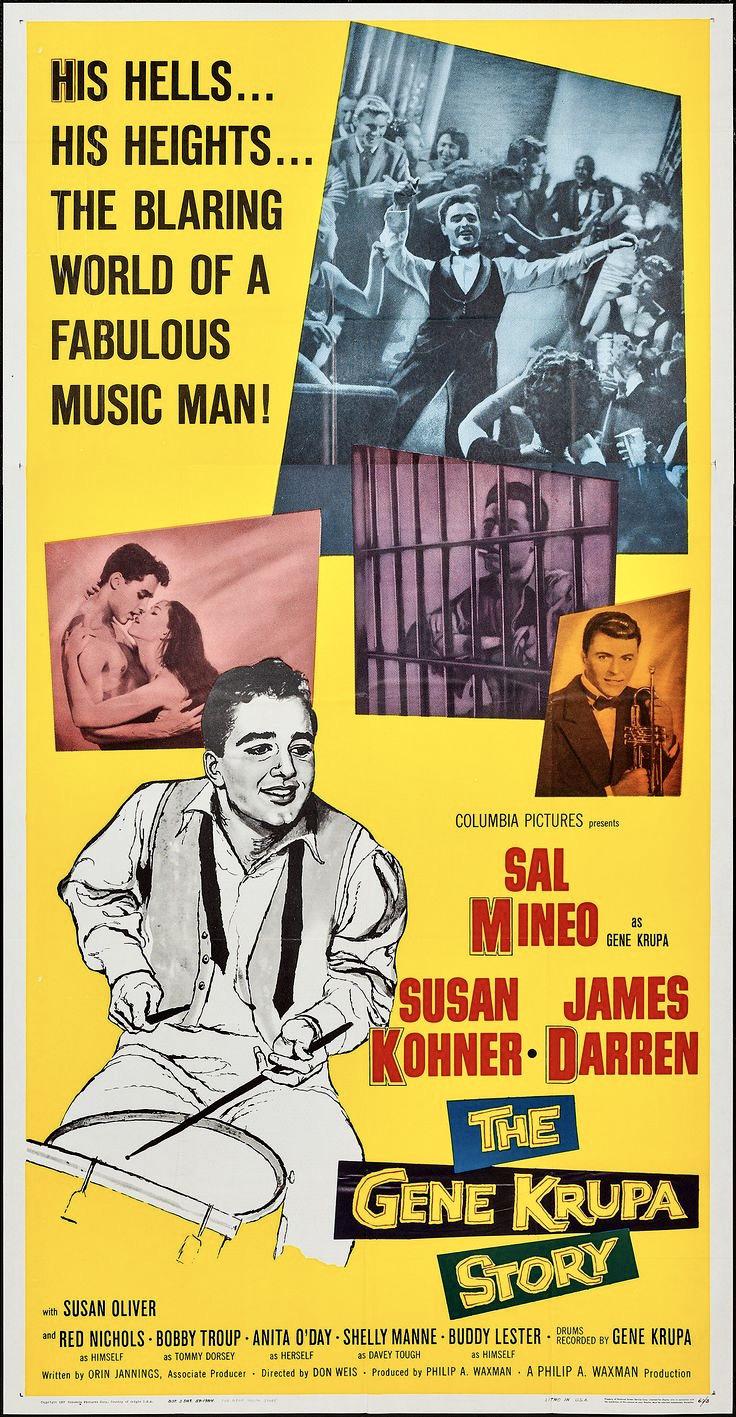
The Beat Goes On

Hollywood has churned out countless musical biographies on popular musicians, singers and songwriters over the years, jazz artists and their life stories have remained a virtually untapped genre with few exceptions (Bird, Clint Eastwood’s 1988 portrait of Charlie Parker, 2015’s Born to be Blue with Ethan Hawke as Chet Baker). There was a brief time in the fifties, however, where public interest in some of the big band legends and early jazz innovators resulted in a spate of high-profile biopics: The Glenn Miller Story [1953], The Benny Goodman Story [1955], and The Five Pennies [1959), starring Danny Kaye as jazz trumpeter Red Nichols. Coming at the end of the cycle was The Gene Krupa Story [1959] which featured Sal Mineo (twenty years old at the time) in his first adult screen role. 

Continue reading