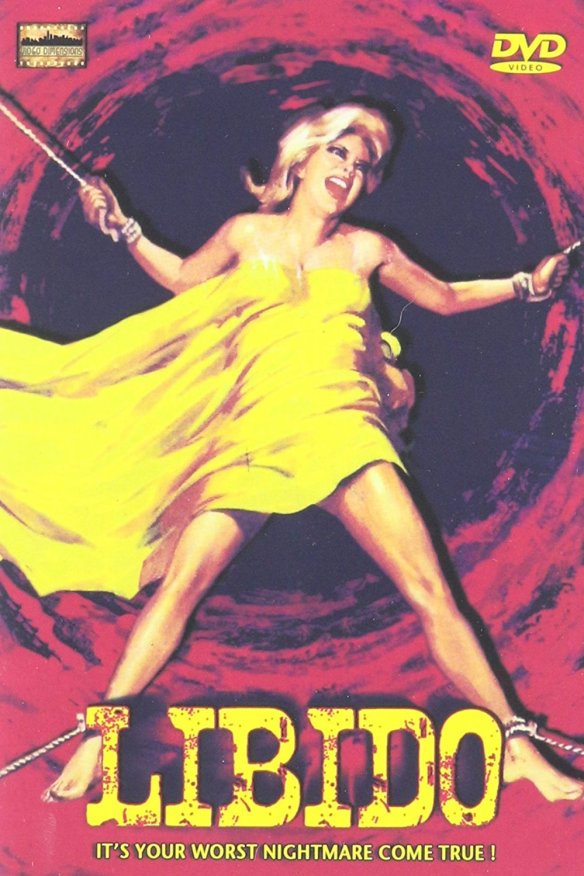
With a tumultuous background of waves crashing against a rocky coast, a descriptive statement from Sigmund Freud on the meaning of libido scrolls down the screen. Part of the Austrian psychoanalyst’s quotation defines libido as “the energy, regarded as a quantitative magnitude… of those instincts which have to do with all that may be comprised under the word ‘love.’” But the film that follows is not about love but rather the perversion of it starting with an opening sequence in which a child witnesses the aftermath of his father’s violent S&M session with a female companion, an incident that scars him for life. Continue reading
Egypt is No Place for a Satirist
What do you do when your government becomes a military dictatorship and forbids freedom of speech that is critical of the regime? You can fight back with the one non-violent weapon most bullies fear the most – satire. Heart surgeon turned comedian Bassem Youssef knows this is true because he became an overnight sensation in Egypt after launching his own YouTube web series (filmed in his laundry room) that poked fun at his government.
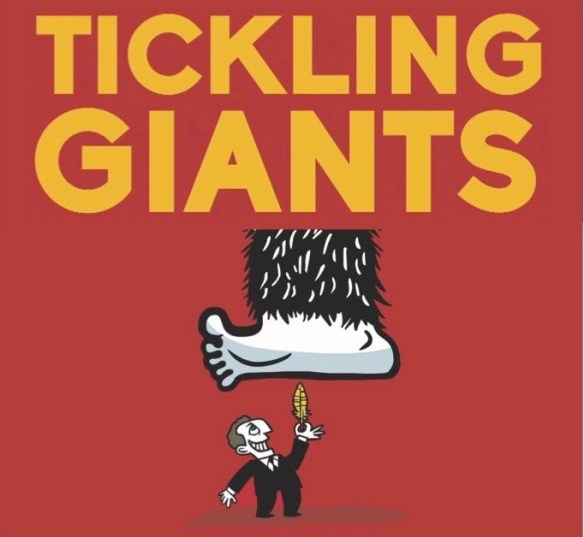
From these humble beginnings to the network launch of his satiric news show Al Bernameg in 2012, Youssef quickly earned a following of 30 million viewers per episode and was soon dubbed “The Egyptian Jon Stewart.” All of this and more is chronicled in the highly compelling documentary Tickling Giants, directed by Sara Taksler and currently in selected screenings across the U.S.
*This is a revised version of an article that originally appeared on ArtsATL.com Continue reading
Norman Lloyd: Hollywood’s Long Distance Runner, Part 2
*This is the second part of a revised and updated version of a Norman Lloyd interview which was first recorded in March 2010 just prior to the actor/director/producer’s appearance at the first Turner Classic Movies Classic Film Festival.
Here is the link to Part 1: https://cinemasojourns.com/2017/04/09/norman-lloyd-hollywoods-long-distance-runner/ Continue reading
Norman Lloyd: Hollywood’s Long Distance Runner, Part 1
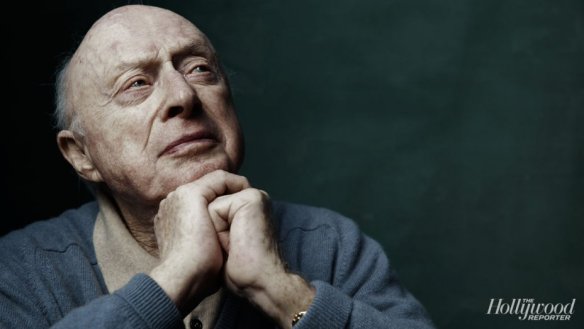
On November 8, 2017 Norman Lloyd will be 203 and he shows no signs of slowing down. In recent years, he has become the go-to historian for the American film industry’s golden era due to his friendship and working relationships with such cinema legends as Charlie Chaplin, Jean Renoir, Orson Welles, Alfred Hitchcock, John Garfield, Bernard Herrmann, John Houseman, Joseph Losey and others. Lloyd also continues to take acting roles (he has a nice cameo in the 2015 Judd Apatow comedy Trainwreck starring Amy Schumer) and appear as an interviewee in documentaries such as Marsha Hunt’s Sweet Adversity (2015) and Broadway: Beyond the Golden Age, which is currently in post-production.
*This is a revised and updated version of the original interview which was recorded in March 2010 just prior to Lloyd’s appearance at the first Turner Classic Movies Classic Film Festival. Continue reading
A $20 Million Cinematic Landmark to Slapstick
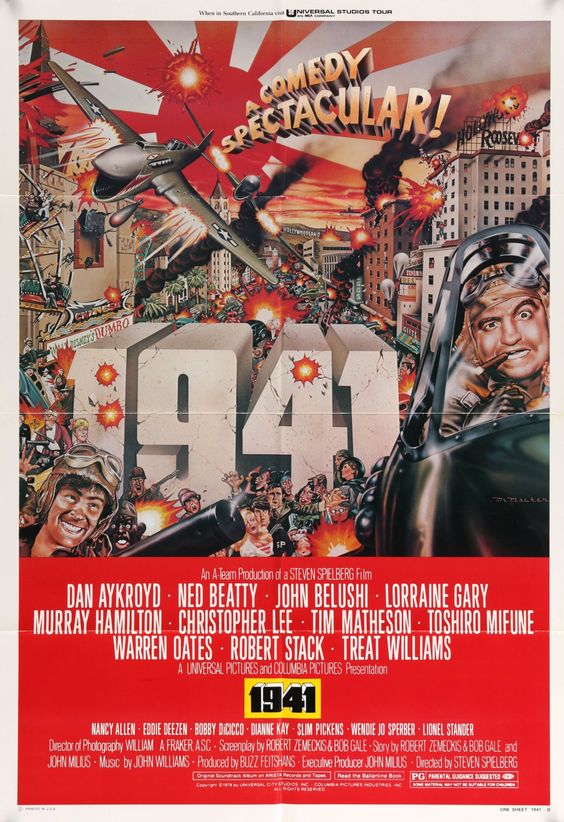
When Steven Spielberg’s 1941 opened in December 1979, it was mostly savaged by the critics though a few rose to its defense like Pauline Kael who wrote, “…the film overall is an amazing, orgiastic comedy, with the pop culture of an era compacted into a day and a night. There are such surprising slapstick payoffs that the film’s commercial failure in this country didn’t make much sense.” When I caught up with 1941 in a repertory screening in 1982, I had to concur with Kael that Spielberg’s comic epic was unfairly maligned and great fun if you just go with the chaotic flow of it. Continue reading
Jess Franco’s Attack of the Robots
Imagine a science-fiction influenced spy thriller about humanoid assassins directed by Jess Franco with a screenplay adaptation by Jean-Claude Carrière (a frequent collaborator with Luis Bunuel), a cool jazz score by Paul Misraki (Alphaville, Le Doulos, Les Cousins) and an international cast featuring Eddie Constantine, Fernando Rey and Francoise Brion. It sounds like a film buff’s fever dream but it actually exists. Released in 1966 during the height of the James Bond craze, Cartes sur table aka Attack of the Robots is a stylish and amusing entertainment that takes a standard world domination-by-madman scenario and infuses it with a cheeky sense of humor. The film will come as a surprise to those who only associate Jess Franco with Eurotrash favorites like 99 Women (1969), Vampyros Lesbos (1971) and Wanda, the Wicked Warden (1977).
Love Hurts
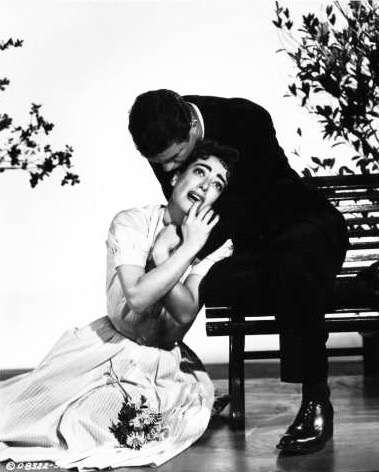
In 1956 directed Robert Aldrich surprised everyone by trying his hand at a “woman’s picture,” a melodramatic soap opera that on the surface appeared to be a complete departure from his previous work which included two westerns (Apache, Vera Cruz), a film noir (Kiss Me Deadly) and a drama (The Big Knife), whose emotional volatility equals the physical violence in the three preceding films. Continue reading
In the Shadows of the OAS
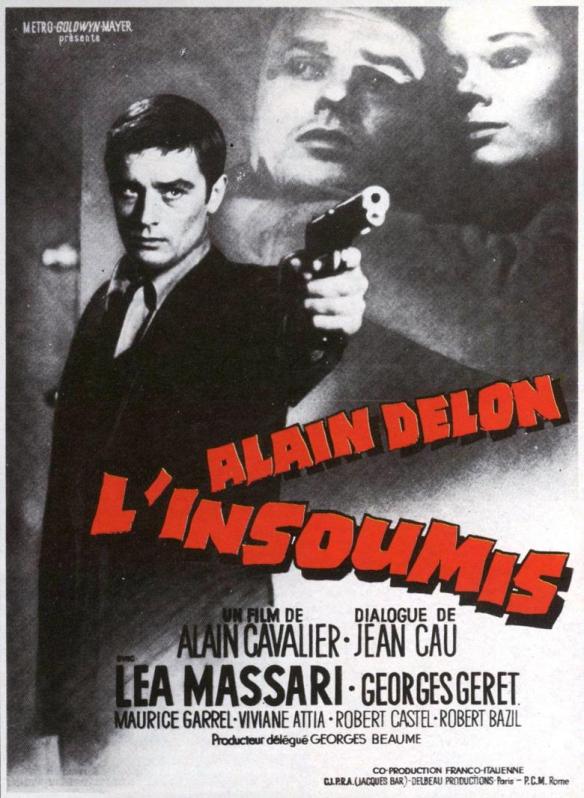
L’insoumis (1964) aka The Unvanquished is a relatively unknown but deeply compelling and haunting French film from director Alain Cavalier that aired several years ago on TCM in an English language version titled Have I the Right to Kill? (It was originally distributed by MGM in the U.S.) Shot in glorious black and white by master cinematographer Claude Renoir, the film plays like a politically-charged film noir and it could easily be the best of Alain Delon’s early performances. In the other key role, Lea Massari, the beautiful Italian actress who is best known as the warm, charismatic mother in Louis Malle’s Murmur of the Heart (1971), has rarely been more appealing. Continue reading
The Cinema Legend You Don’t Know

Robert Donat plays film pioneer William Friese-Greene in The Magic Box (1951), directed by John Boulting.
In the annals of forgotten inventors, unsung geniuses and visionaries who have fallen through the cracks of time, William Friese-Greene should be near the top of the list. Even though his gravestone bears the inscription, “The Inventor of Kinematography,” his reputation as an early film pioneer is still challenged by some movie scholars while others believe he was a victim of bad luck and deserved the credit and fame that others like Thomas Edison enjoy today. The Magic Box (1951), directed by John Boulting, favors the latter view and was one of the most prestigious productions of its year. It was produced exclusively for the Festival of Britain, a national exhibition that opened in London in May 1951 and marked the centenary of the 1851 Great Exhibition. Continue reading
Tinto Brass Directs a Spaghetti Western
If U.S. moviegoers are familiar with the name Tinto Brass at all, it is probably due to the infamous 1979 epic Caligula which featured world renowned actors (Peter O’Toole, Helen Mirren, John Gielgud, Malcolm McDowell, etc.) and hardcore sex scenes (which were later added by producer/Penthouse tycoon Bob Guccione against the wishes of Brass who disowned the film). Brass had already established himself as a master of art house erotica/perversity with 1976’s Salon Kitty about a brothel in WWII Berlin where the prostitutes were undercover spies. But after Caligula, Brass seemed much happier directing more modestly budgeted, softcore adaptations of literary works like The Key (1983, based on the novel by Jun’ichiro Tanizaki) and Paprika (1991, inspired by the novel Fanny Hill), which showcased his increasing obsession with shapely female bottoms.
In retrospect, his early career is a contemplation of the paths not taken: documentary (Ca ira, il fiume della rivolta aka Thermidor, 1964), avant-garde cinema (L’urlo aka The Howl, 1970) and eccentric genre offerings such as Col cuore in gola aka Deadly Sweet, 1967). Of the latter, Yankee (1966), the only spaghetti western ever directed by Brass, is definitely worth a look. Continue reading