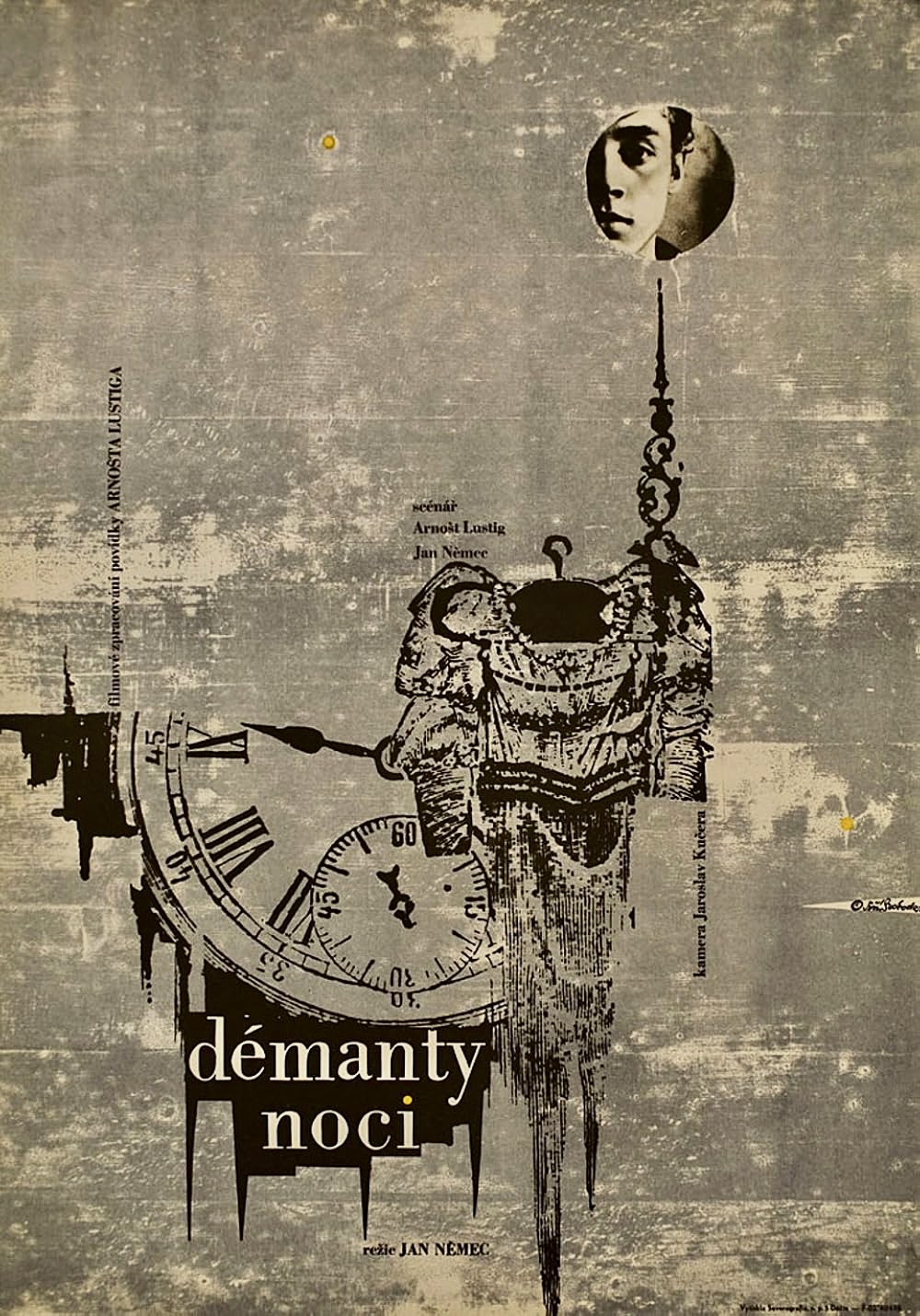
In what must be one of the most astonishing opening scenes in a movie, two young men jump off a moving train and flee into the surrounding woodlands, racing up a ravine, over mud, rocks and uneven ground. And the cameramen follow them both in their lunging, zigzag movements from the front, side and behind as they race deeper into the darkness accompanied by sounds of their heavy breathing, gun shots, cries of “Halt!” and a steam engine train chugging slowly into the distance. The viewer is immediately pulled into a grim tale of survival and human endurance which alternates between stark realism and dreamlike imaginings. Flashbacks from the escapees’ past life also interrupt the narrative to create a haunting and ambiguous portrait of two men on the run during the Nazi occupation of Czechoslovakia during WW2. Demanty Noci (English title, Diamonds of the Night, 1964) was the feature film debut of Jan Nemec and it remains one of the defining masterpieces of Czech New Wave cinema in the 1960s.
Continue readingTag Archives: Peter Cowie
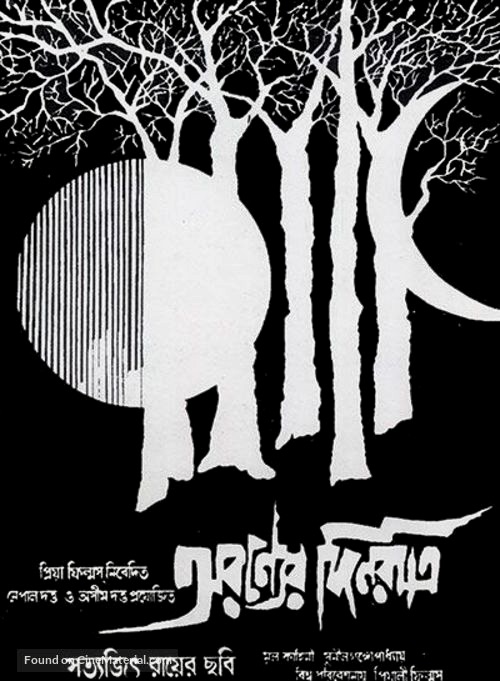
Satyajit Ray’s Days and Nights in the Forest
Four carefree middle class bachelors from Calcutta journey deep into the bucolic countryside for a break from city life and to enjoy drinking and partying with the local native women. What they end up experiencing in this unfamiliar locale is both a reflection of their own ignorance and colonialist attitudes inherited from their former British occupiers about the lives of people in rural India. This is the basic premise of Ananyer Din Ratri (English title: Days and Nights in the Forest, 1970), which many film scholars and critics consider a mid-career masterpiece from director Satyajit Ray. Admirers of the movie also cite the plays of Anton Chekhov and the films of Jean Renoir, especially his 1946 short Partie de Campagne (English title, A Day in the Country) as distinct influences on this social comedy with its amusing and sometimes harsh observations about human foibles and cultural differences.
Continue readingWitchcraft Through the Ages
How to best describe the 1922 Swedish film Haxan (also known as Witchcraft Through the Ages) by Danish director Benjamin Christensen? While not a conventional documentary by anyone’s standards, it is not a traditional narrative film either and straddles several genres in its exploration of witchcraft and the black arts from the Dark Ages up to 1921.
Continue readingThe Holy Bray

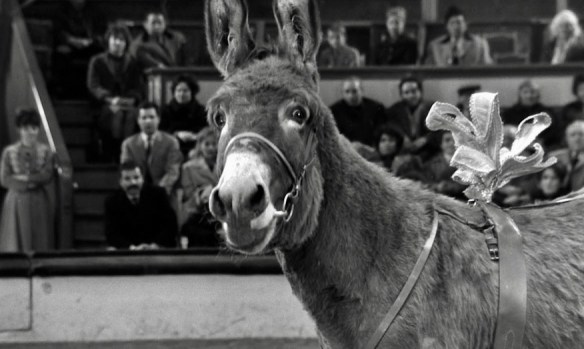
The title character of Robert Bresson’s Au Hasard Balthazar (1966) is a donkey who goes through a series of owners in his sad life as a beast of burden.
Films about animals or featuring them as the main protagonists are usually the province of Walt Disney and other family friendly productions such as Benji (1974) and March of the Penguins (2005). Other than the horror genre, though, there have been relatively few departures from the usual formulaic approach to this type of movie with Jerome Bolvin’s dark satire Baxter (1989) and the ethnographic Story of the Weeping Camel (2003) being two of the rare exceptions. Yet nothing can really compare with Au Hasard Balthazar (1966), directed by French filmmaker Robert Bresson, which stands alone as a profound and singular achievement in this category. Continue reading
All of Them Witches

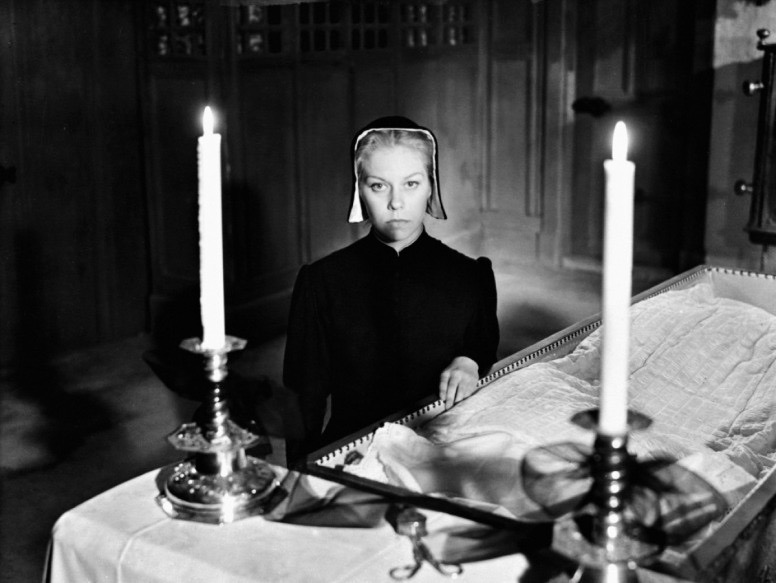
Lisbeth Movin stars as Anne Pedersdotter, a young widow accused of witchcraft in Carl Theodor Dreyer’s Day of Wrath (1943).
When social order breaks down, rational thought or common sense do not always follow. The result could be the kind of mass paranoia and hysteria that created the persecution of people as witches in Europe during the 13th to 15th century as well as in America (the Salem Witchcraft Trials of 1692). That shameful chapter in history has been the subject of numerous books and literary works such as Arthur Miller’s 1953 play The Crucible. As for the cinema, most movie critics seem to agree that the finest film to ever address this kind of aberrant phenomenon is Carl Theodore Dreyer’s Vredens dag (1943, English title: Day of Wrath). Continue reading
Love Hurts
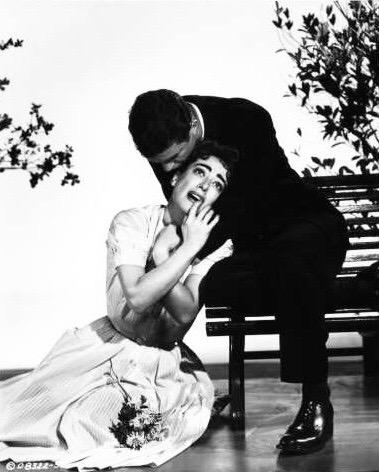
In 1956 directed Robert Aldrich surprised everyone by trying his hand at a “woman’s picture,” a melodramatic soap opera that on the surface appeared to be a complete departure from his previous work which included two westerns (Apache, Vera Cruz), a film noir (Kiss Me Deadly) and a drama (The Big Knife), whose emotional volatility equals the physical violence in the three preceding films. Continue reading