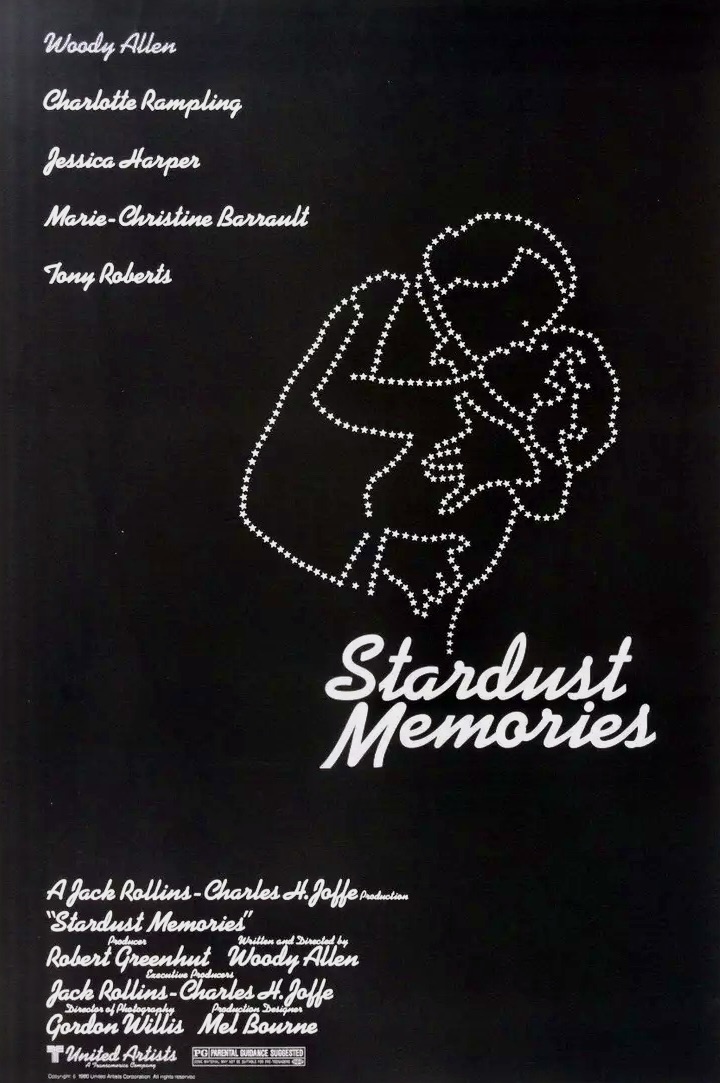
After directing more than fifty feature films including the three-part New York Stories (1989) with contributions from Francis Ford Coppola and Martin Scorsese and the re-edited/re-dubbed version of a Japanese spy thriller retitled, What’s Up, Tiger Lily? (1966), Woody Allen has one of the most impressive filmographies of any living director in Hollywood. Regardless of what you think about him as a person due to the controversy that surrounded his marriage to adopted stepdaughter Soon-Yi Previn, one can’t deny all of the critical acclaim he has amassed over the years, which includes 24 Oscar nominations, three of which won the Academy Award for Best Screenplay (Annie Hall, Hannah and Her Sisters and Midnight in Paris). Not all of his films have been box office hits and some have been minor efforts or polarizing like September (1987) or Deconstructing Harry (1997), but the true acid test for any fan or critic who loves Woody Allen movies is Stardust Memories (1980), his most misunderstood and generally maligned tenth feature about the downside of being famous.
Continue readingTag Archives: Pauline Kael
Rupert Pupkin’s Stand-Up Act
Some movies are prescient or ahead of their time but audiences and film critics often don’t notice until many years after the original release. Sidney Lumet’s Network (1976), written by Paddy Chayefsky, is one example, but so is The King of Comedy (1983), which unlike Network, was a major box office bomb for director Martin Scorsese and received mixed reviews from the critics. Yet, it seems more relevant than ever about the cult of celebrity and the public’s obsession with the rich and famous. Although The King of Comedy was promoted as a comedy, some critics and moviegoers found the film too dark and disturbing and felt Rupert Pupkin, the title character, was just as delusional and dangerous in his own way as Travis Bickle, the anti-hero of Scorsese’s Taxi Driver (1976).
Continue readingSatyajit Ray’s Days and Nights in the Forest
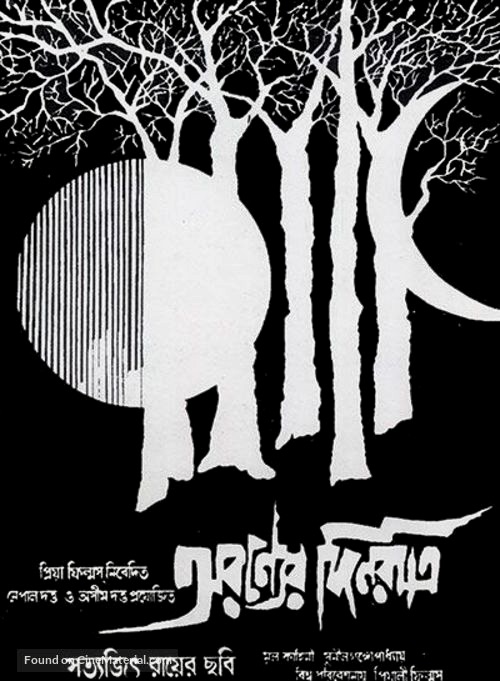
Four carefree middle class bachelors from Calcutta journey deep into the bucolic countryside for a break from city life and to enjoy drinking and partying with the local native women. What they end up experiencing in this unfamiliar locale is both a reflection of their own ignorance and colonialist attitudes inherited from their former British occupiers about the lives of people in rural India. This is the basic premise of Ananyer Din Ratri (English title: Days and Nights in the Forest, 1970), which many film scholars and critics consider a mid-career masterpiece from director Satyajit Ray. Admirers of the movie also cite the plays of Anton Chekhov and the films of Jean Renoir, especially his 1946 short Partie de Campagne (English title, A Day in the Country) as distinct influences on this social comedy with its amusing and sometimes harsh observations about human foibles and cultural differences.
Continue readingSwinging Down the Street So Fancy Free
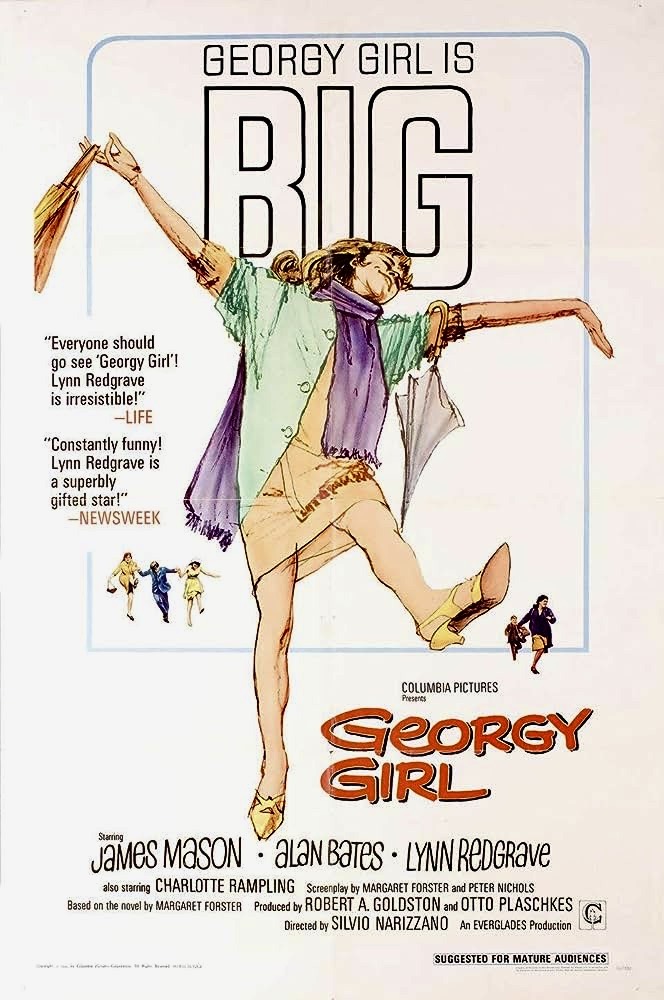
A frumpy woman in her early twenties dreams of being loved but despite her continual attempts to have a romance finds herself observing life from the sidelines, barely noticed by those around her. Reduced to a one sentence description, Georgy Girl (1966) sounds dreary and depressing but on-screen this tale of a desperately lonely woman unfolds as a madcap, often irreverent farce which at times is cruelly indifferent to the sad-sack characters it parades before us. This is a film where tone is everything and Georgy Girl, directed by Silvio Narizzano, is distinctively different in this respect, standing out from countless other cinematic tearjerkers about ugly ducklings and lonely spinsters. The film also captures London at the height of the Swingin’ Sixties when everything seemed like a put-on or a come-on.
Continue readingLily in Wonderland

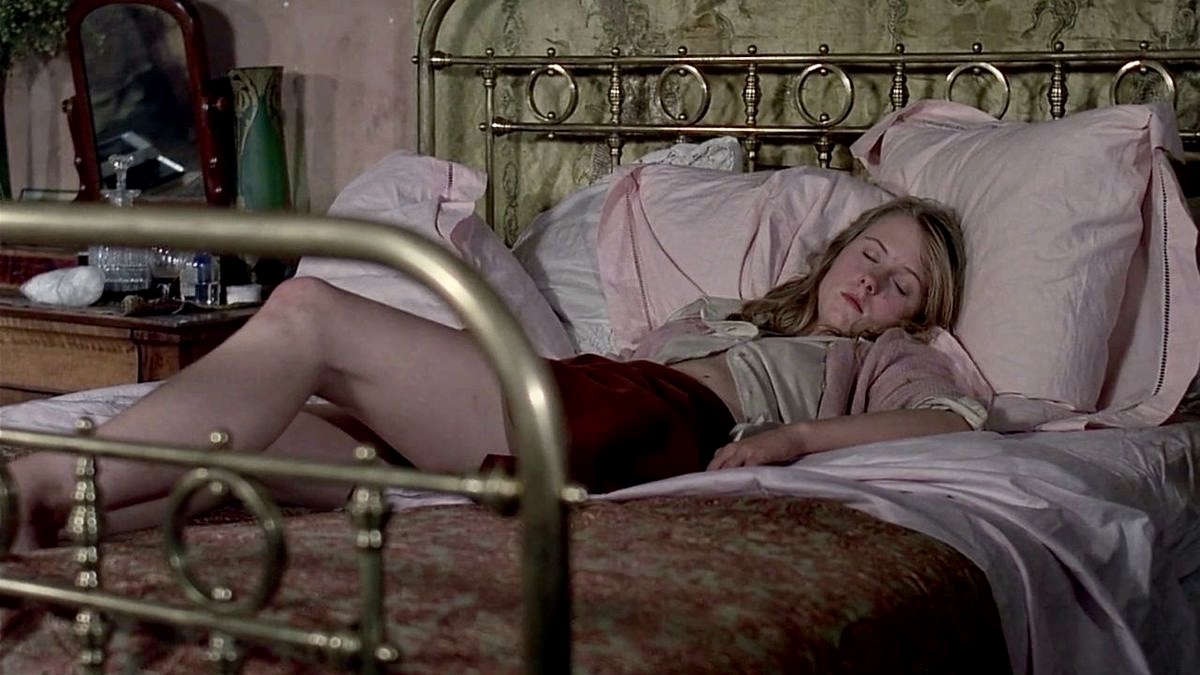
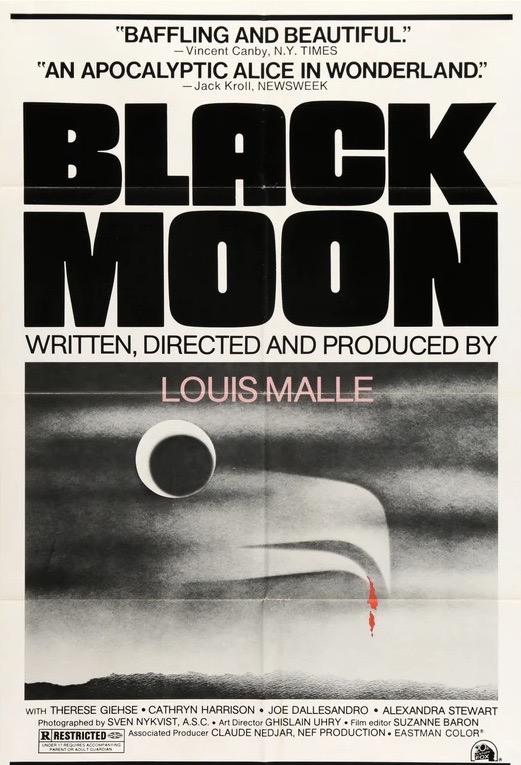
Louis Malle has never been the sort of filmmaker critics could easily pigeonhole in terms of his style and interests. He’s worked in practically every film genre (thriller, social satire, melodrama, documentary, etc.) and his restless curiosity has led him to explore a vast array of subjects from underwater life (The Silent World, 1956) to sexual liberation (The Lovers, 1958) to life under the Nazi occupation (Au Revoir, Les Enfants, 1987). Yet, for even an iconoclast like Malle, his 1975 film Black Moon is unlike anything he’s ever done before or since. “Opaque, sometimes clumsy, it is the most intimate of my films,” he once said. “I see it as a strange voyage to the limits of the medium, or maybe my own limits.”
Continue readingThe New Orleans Streetfighter
If you have never been tempted to see Charles Bronson in one of his many top-billed action vehicles, then you also probably wonder why he enjoyed superstar status on an international level. But put aside your skepticism for a moment and consider Hard Times (1975), a Depression-era tale about a mysterious drifter named Chaney who makes a living as a bare-knuckle streetfighter.
Continue readingLip-Syncing to a Different Tune
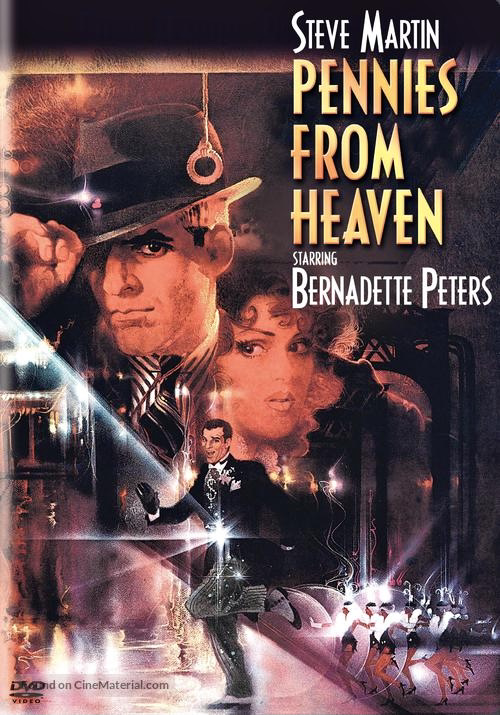
In the wake of Heaven’s Gate (1980), the $38 million dollar epic by director Michael Cimino that become one of the most expensive box office disasters in movie history, every studio in Hollywood began to carefully monitor their production costs. This was especially true at MGM, which had recently acquired United Artists, the producer and distributor of Heaven’s Gate. You would think in this financially conservative new climate, created by near-bankruptcy conditions, MGM would have steered clear of producing a risky commercial venture like Pennies From Heaven (1981), based on the critically acclaimed six-part British TV mini-series by Dennis Potter. Yet, despite the odds, the studio took a chance on this dark and disturbing tale of a traveling sheet music salesman who escapes the daily drudgeries of his job and miserable married life through fantastic daydreams set to popular songs.
Continue readingAboriginal Prophecies from Down Under
The rational versus the irrational always creates compelling conflicts in the best kind of fantasy/horror films where scientists and/or investigators are faced with trying to understand or explain supernatural events or mysteries of the occult. A denial of the paranormal fueled the chilling storyline of Jacques Tourneur’s Curse of the Demon (1957, released in the U.K. as Night of the Demon). A similar tone of skepticism is under attack in The Last Wave (1977), one of the rare Australian films to delve into Aboriginal mythology and superstitions but also one that addresses the environment on an apocalyptic level.
Continue readingLooking for Love in All the Wrong Places

Director John Cassavetes broke all the rules, inventing his own and then discarding them as he went along. He improvised and experimented with everything from the cinematography to the performances to the actual financing of the film. He even mortgaged his own home numerous times to subsidize his movies over the years and took on acting jobs purely for monetary reasons. His directorial debut Shadows (1958), with its jerky, hand-held camerawork, vivid location shooting on New York City streets and edgy subject matter involving an interracial romance, is one of the most influential films to emerge from the independent New York City cinema movement of the 1950s. Yet, it was just a warm-up for Cassavetes’s next film, Faces (1968), which was even more provocative and unconventional.
Continue readingThrough the Eyes of a Child
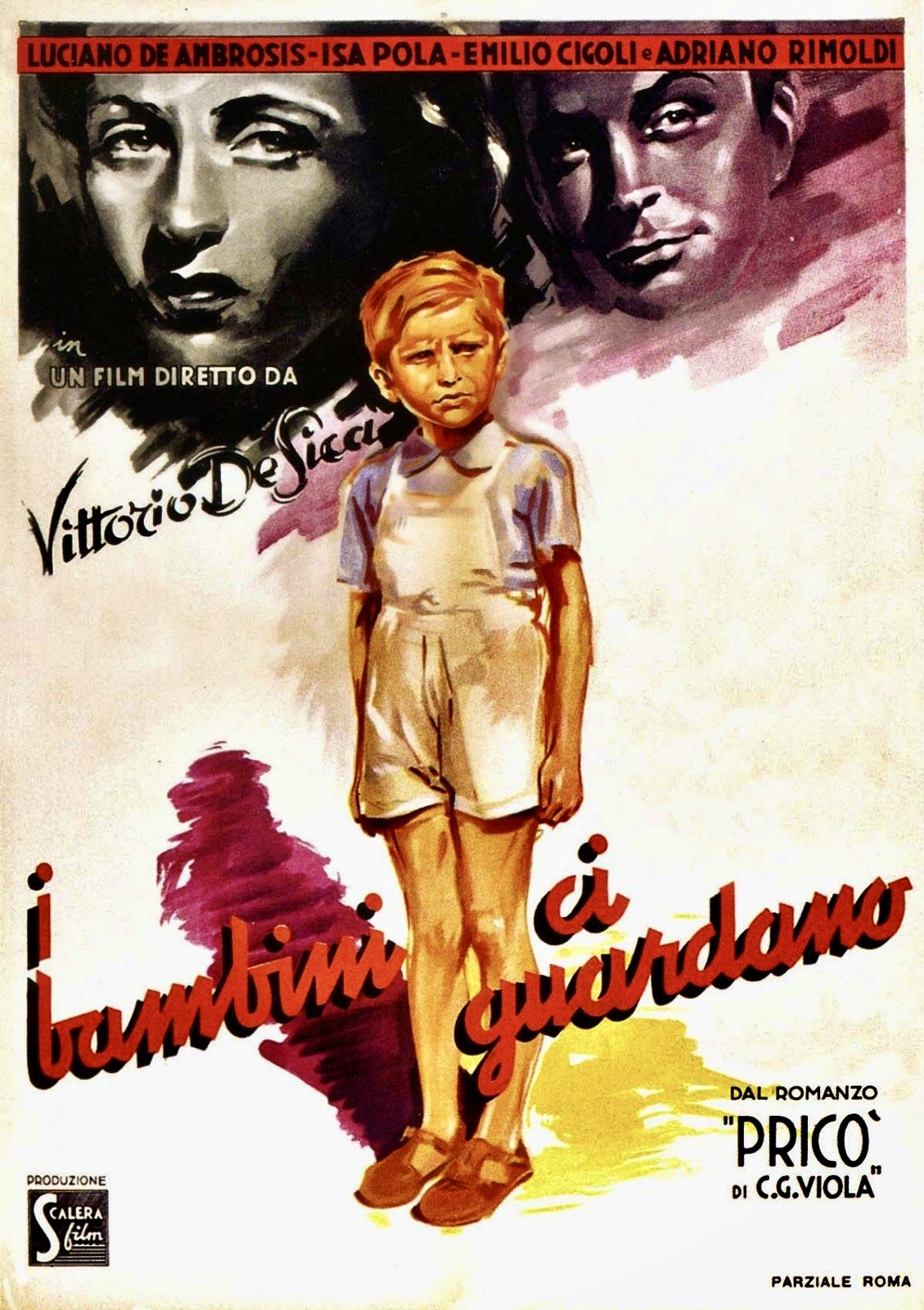
Roberto Rossellini’s Roma, Citta Aperta (Rome, Open City, 1945) is generally acknowledged as the film that ushered in the neorealism movement and set the tone and style for the postwar Italian films that followed. But the roots of neorealism can be traced back to Luchino Visconti’s Ossessione (1943) and Vittorio De Sica’s The Children Are Watching Us (1944, I bambini ci guardano), both of which were filmed in 1942 but encountered distribution problems upon their release in the fall of 1942 when the war finally came to Italy and the bombings began. Ossessione was also the victim of Fascist censorship which reduced the film to less than half of its original running time and for years it was denied distribution in the U.S. due to an infringement of copyright (it was an uncredited adaptation of the James M. Cain novel, The Postman Always Rings Twice). The Children Are Watching Us didn’t fare any better during its limited release and for years it was a difficult film to see in its original form, even in its own country.
Continue reading