Unknown's avatar

About JStafford

I am a writer for The Travel Channel, ArtsATL.com, Burnaway.org and other publications. I am also a film researcher for Turner Classic Movies and a member of the Atlanta Film Critics Circle. This blog is dedicated to overlooked, obscure or underrated movies and other cinema topics that I want to share.

Break Up the Dance and Other Film Shorts from Poland

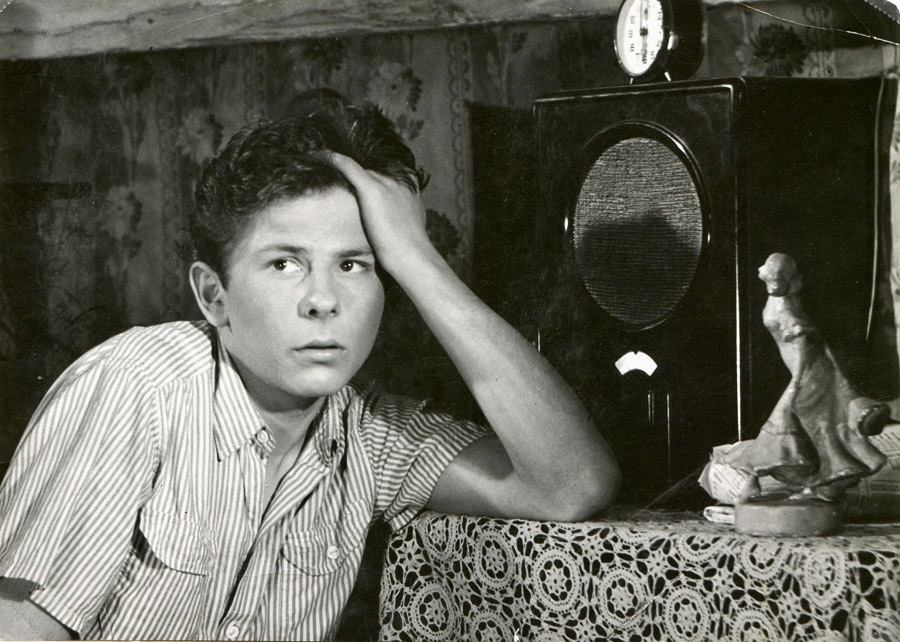
Polish film director Roman Polanski during his student years at the Lodz Film School.

At an early age Roman Polanski began to realize his true ambition to be a filmmaker with a series of short films which were made during his time as a student at Poland’s prestigious National Film School at Lodz. His debut film Morderstwo [English title, Murder aka The Crime, 1957] – a three minute short without dialogue about a senseless murder – and the one that followed it, the three-minute Usmiech Zebiczny [English title: Teeth Smile aka A Toothful Smile, 1957], about a peeping tom, were atmospheric studies in violence and voyeurism that disturbed his fellow filmmakers and raised speculations about the young filmmaker’s dark side. His third short, Rozbijemy Zabawe… [English title: Break Up the Party, 1957], however, aroused considerably more controversy over his directorial methods. 

Continue reading
Expect the Unexpected

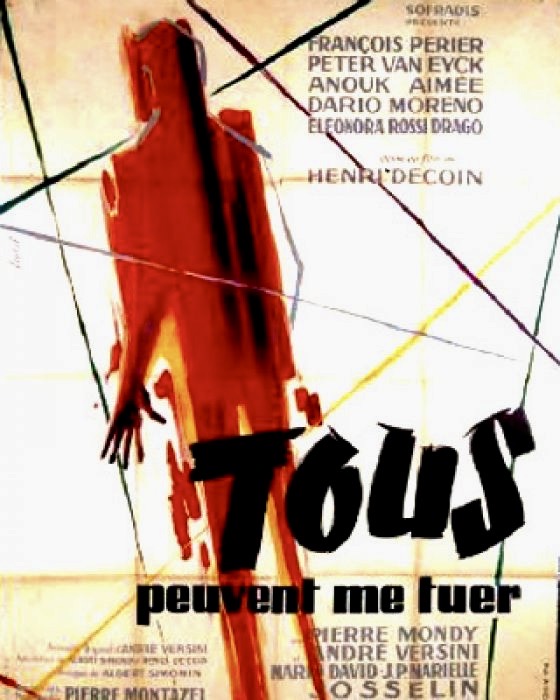
The French film poster for EVERYONE WANTS TO KILL ME (1957), directed by Henri Decoin.

When a movie refuses to fit snugly into a specific genre, that could be a sign that the filmmakers were either unable to capture the desired approach and tone or that the story/screenplay dictated a less conventional approach to the narrative. I suspect that the latter reason is why Tous Peuvent Me Tuer (English title, Everyone Wants to Kill Me, 1957), directed by Henri Decoin, is hard to place into any specific film category. If you were to watch the movie with the sound turned off, you would probably classify it as a brooding French noir. Yet, if you add in the music score and the animated performances, it comes across as an almost lighthearted crime caper flick. Add to this a segue into prison melodrama which soon becomes a whodunit murder mystery. And just to keep things off balance, stir in a romance, some comic relief and a wrap-up that positions the entire affair as a morality play. 

Continue reading

The Education of Miss Blum

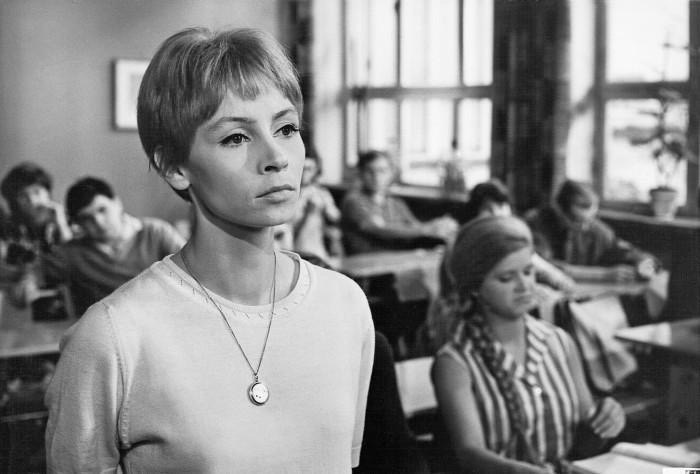
Karla (Jutta Hoffmann) has some doubts about her effectiveness as a teacher in the East Germany drama KARLA (1965), which was banned for many years.

There have been enough movies about teachers facing challenging classroom situations and unsympathetic staff and school board members to comprise a film genre of its own. And it is not limited to just classic flicks from Hollywood like Goodbye, Mr. Chips (1939), Bright Road (1953) The Blackboard Jungle (1955), Up the Down Staircase (1967), To Sir, With Love (1967), Stand and Deliver (1988) and Dead Poets’ Society (1989). Other countries have produced their own cinematic touchstones on the subject such as the U.K. (The Browning Version [1951], If… [1968], The Prime of Miss Jean Brodie [1969]), France (Zero for Conduct [1933], The Class [2008]), Japan (Twenty-Four Eyes [1955] or Russia (Village Teacher [1947]). All of these address numerous issues like juvenile delinquency, racism, illiteracy and the value of mentorship but few, if any, have presented the complex problems facing Karla, the heroine of Herrmann Zschoche’s 1965 East German drama which was extremely controversial in its day.

Continue reading

Monster Mash

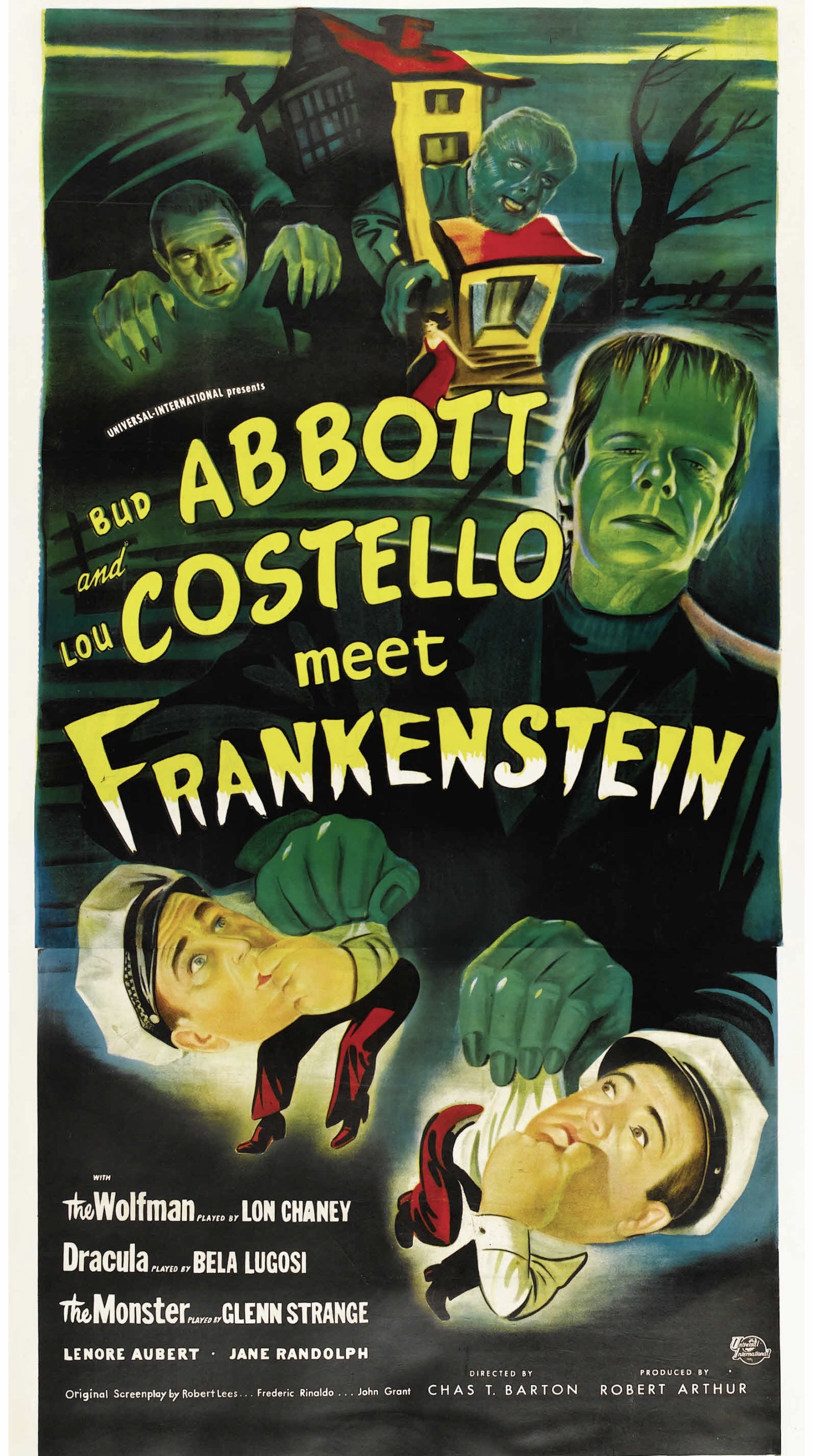
During the 1930’s and early forties, Universal Studios rode the crest of a horror film craze that made them rich and famously established them as the home of Frankenstein, Dracula, the Wolf Man, the Mummy and other screen monsters. But the fear factor was lost over time as their signature creatures were paraded through a series of inferior B-movie sequels. And in the minds of some horror film fans, the genre hit rock bottom with the release of Abbott and Costello Meet Frankenstein in 1948. Once capable of terrifying their audiences, the Universal monsters were now reduced to playing “straight men” to Abbott and Costello’s slapstick antics. Who could ever take them seriously again? Yet, Abbott and Costello Meet Frankenstein is both a first-rate horror-comedy that ranks as one of the comedy team’s finest efforts (and most profitable) and an affectionate homage to the screen horrors who gave us nightmares as kids.  

Continue reading

Senilità aka Careless (1962)

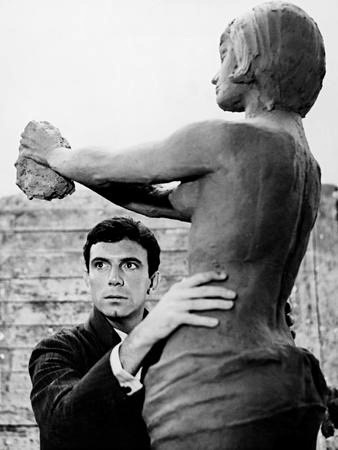
Anthony Franciosa plays a frustrated office worker pushing forty who develops an obsessive love for a young woman in SENILITA (1962), directed by Mauro Bolognini.

Italian novelist Italo Svevo was the pseudonym for Ettore Schmitz, a novelist and short story writer who was born in Trieste in 1861. After publishing two unsuccessful novels, he gave up writing until his English tutor James Joyce encouraged him to continue and he wrote a third novel in 1823, Confessions of Zeno (considered his masterpiece) and several short stories which were not published until after his early death from an automobile accident in 1928. Svevo never received the acclaim he deserved during his own lifetime but now he is considered one of Italy’s most famous authors and a pioneer of the psychoanalytical novel. His novels and some of his short stories were later adapted for film and television productions but the first one to hit the screen was Senelita (aka Careless, 1962), based on his second novel. The story of an insecure, self-absorbed office worker approaching forty who develops an obsessive love for a beautiful working class girl, the film was an impressive early masterwork for director Mauro Bolognini and helped launch Claudia Cardinale as an international star (The following year she appeared in Federico Fellini’s 8 ½, Luchino Visconti’s The Leopard and made her American film debut in The Pink Panther). 

Continue reading

The Black Sheep of the Family

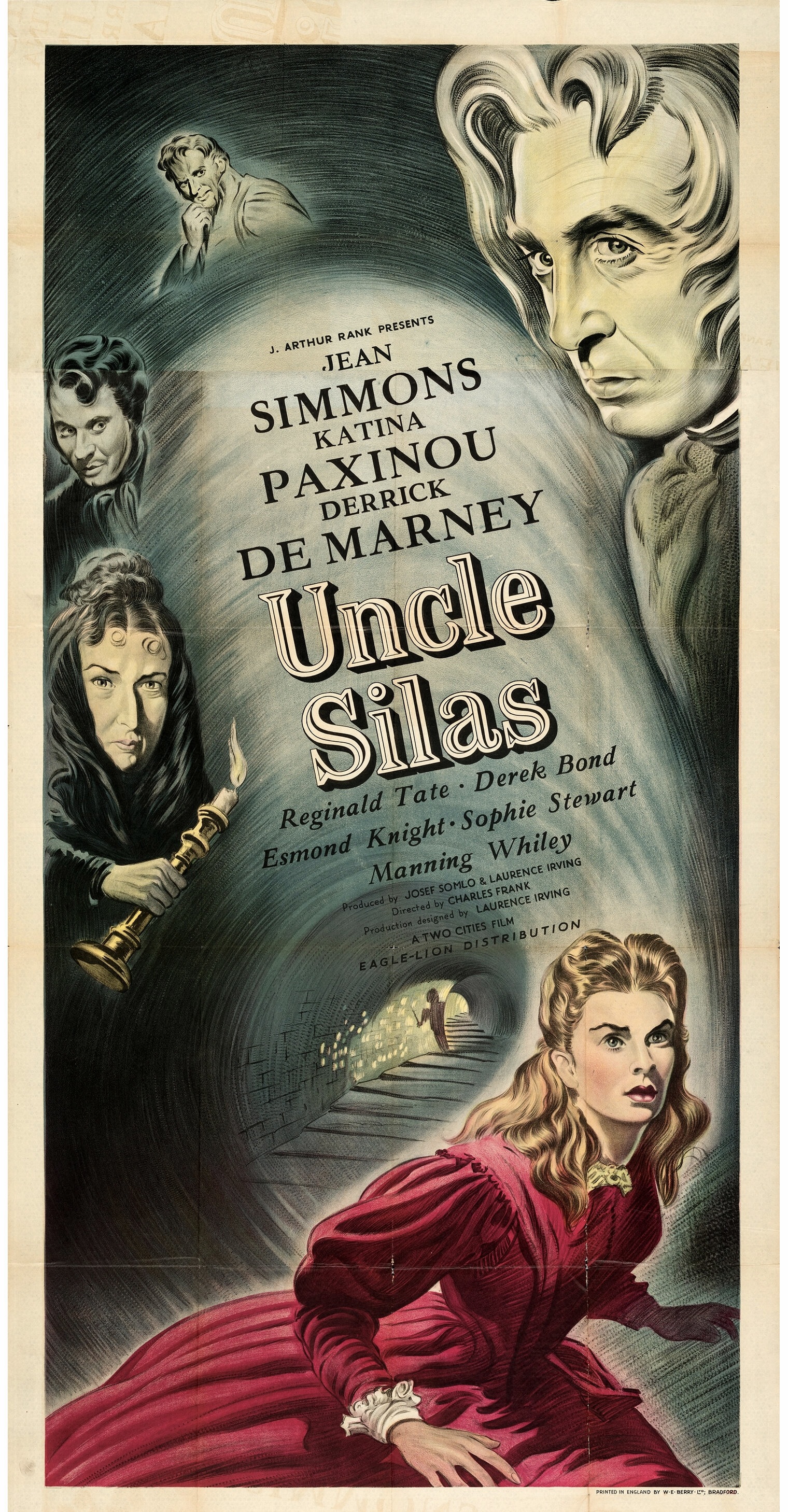
A relic from an earlier era when gothic Victorian melodramas were all the rage, Uncle Silas (1947, released in the U.S. as The Inheritance) is an adaptation of Irish writer J. Sheridan Le Fanu’s novel which was actually an elaboration of his 1851 short story, “A Passage in the Secret History of an Irish Countess.” As you can surmise from the title, Le Fanu’s story was an earlier form of the Harlequin romance genre, steeped in an atmosphere of old dark houses, decadent aristocrats and mysterious locked rooms. Le Fanu is best known for his vampire novella, Camilla, which has enjoyed numerous film adaptations, but Uncle Silas (published in 1864) was a popular page-turner for its era.

Continue reading

To Dream is To Fly

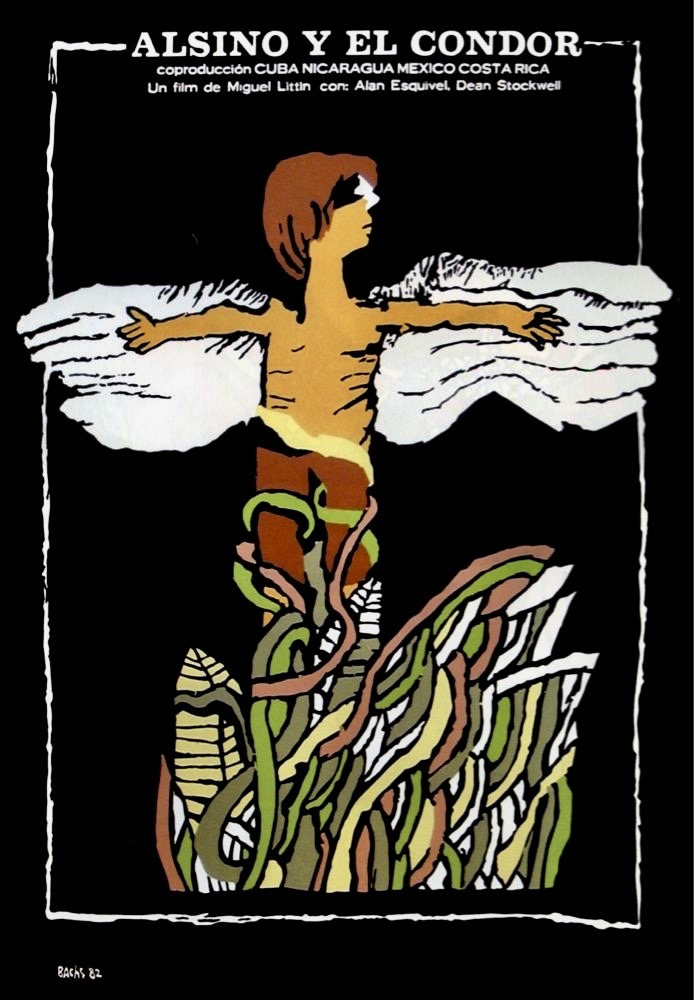
The international film poster for the Nicaragua feature film ALSINO AND THE CONDOR (1982).

In 1979, the Somoza dictatorship of Nicaragua was overthrown by the FSLN (Sandinista National Liberation Front) and it led to a decades long war with the country’s National Guard and the U.S. backed Contras aligned against the left wing Sandinista forces. The conflict raged until 1990 and it was a terrible time for the people of Nicaragua, especially the peasants and native communities like the Miskito in rural areas. Although several documentaries have been made on the subject over the years such as Werner Herzog’s Ballad of the Little Soldier (1984), there have been few high-profile dramatic features about the conflict. One of the rare exceptions is Under Fire (1983), Roger Spottiswoode’s intense drama about three journalists (Nick Nolte, Gene Hackman and Joanna Cassidy) covering the final days of the corrupt Somoza regime. Another worthy contender is Alsino and the Condor (1982), directed by Miguel Littin, which was filmed on location in Nicaragua and was Oscar nominated for the Best Foreign Language Film. Unlike the more realistic approach of Under Fire, Alsino and the Condor functions more as an allegory and was loosely based on Pedro Prado’s famous 1920 novel Alsino about a young boy who dreams of flying like a bird.

Continue reading

A Poor Man’s Grand Prix

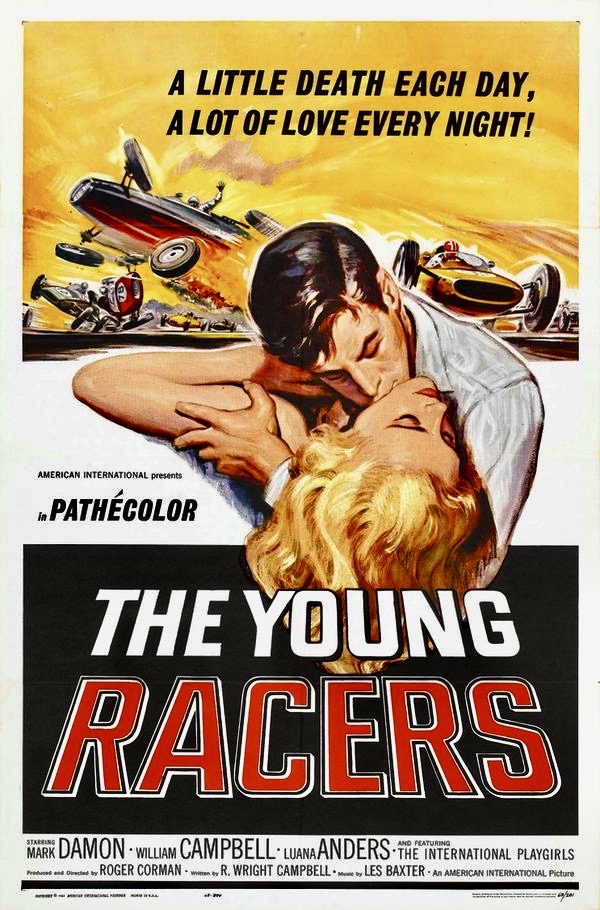
In 1966 director John Frankenheimer, a race car enthusiast, was able to realize a long-cherished dream: to make a film about the Grand Prix racing circuit focusing on several drivers and their personal lives off the track. The result, Grand Prix, is still considered the ultimate racing film, due to its spectacular cinematography that puts the viewer in the driver’s seat with its Cinerama format, split-screen technique and immersive audio. According to the director, it cost about $10.5 million to make, was a box office hit and garnered three Oscars for Best Sound, Best Film Editing and Best Sound Effects. What many people failed to notice was that director Roger Corman had already made a film about the Grand Prix racing circuit three years earlier entitled The Young Racers (1963), which was made on location in Europe like Frankenheimer’s epic with exciting racing footage from Monte Carlo, Monaco, Rome, Rouen (France) and Spa (Belgium) and it cost less than half a million to make. Sure, it was a B-movie from American International Pictures (AIP) but it had a glossy, big budget look to it unlike the typical AIP product and it added some invocative twists to a formulaic genre film that often seemed influenced by the aesthetics of the French New Wave (Corman has always been a fan of European art cinema).

Continue reading

Lily in Wonderland

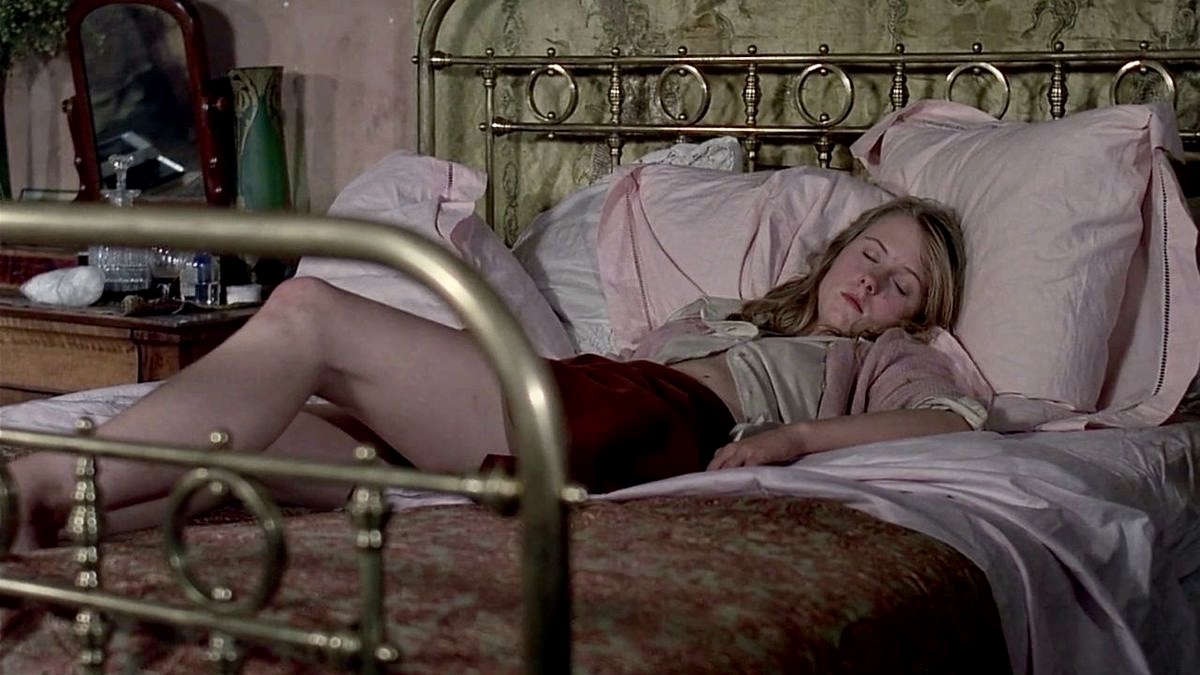
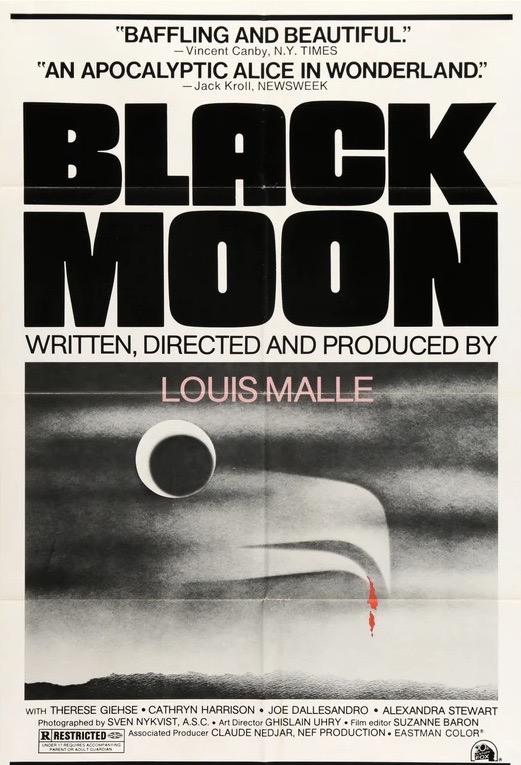
Lily (Cathryn Harrison) flees a global conflict and finds refuge in a mysterious country estate in the 1975 fantasy BLACK MOON, which is partly inspired by Lewis Carroll’s ALICE IN WONDERLAND.

Louis Malle has never been the sort of filmmaker critics could easily pigeonhole in terms of his style and interests. He’s worked in practically every film genre (thriller, social satire, melodrama, documentary, etc.) and his restless curiosity has led him to explore a vast array of subjects from underwater life (The Silent World, 1956) to sexual liberation (The Lovers, 1958) to life under the Nazi occupation (Au Revoir, Les Enfants, 1987). Yet, for even an iconoclast like Malle, his 1975 film Black Moon is unlike anything he’s ever done before or since. “Opaque, sometimes clumsy, it is the most intimate of my films,” he once said. “I see it as a strange voyage to the limits of the medium, or maybe my own limits.” 

Continue reading

Kiju Yoshida’s Escape from Japan

The Japanese poster for ESCAPE FROM JAPAN (1964)

The Japanese New Wave of the late 1950s/early 1960s introduced the world to a number of rising directors who are now icons of cinema like Nagisa Oshima, Hiroshi Teshigahara, Shohei Imamura and Masahiro Shinoda but it has only been in recent years that Yoshishige Yoshida aka Kiju Yoshida has started to receive the belated acclaim he deserves. His 220-minute masterpiece Eros + Massacre (1969), which told the parallel stories of two student activists and Sakae Osugi, an anarchist and free love advocate, startled critics with its radical take on sex and politics, not to mention a fragmented narrative approach with unusual camera compositions of widescreen black and white imagery. Long before that, Yoshida learned his trade at Shochiku Studio at a time when the company began making films about the disaffected post-war generation such as Oshima’s Cruel Story of Youth (Seishun Zankoku Monogatari, 1960) and Good-for-Nothing (Rokudenashi, 1960), Yoshida’s debut film about an aimless youth and his attraction to the secretary of a rich friend’s father. The director would eventually part ways with Shochiku over creative differences and start his own production company in 1964 but his final movie for the studio, Escape from Japan (Nihon Dasshutsu, 1964), shows Yoshida imposing his own aesthetic and stylistic approach to what is essentially a B-movie melodrama.

Continue reading