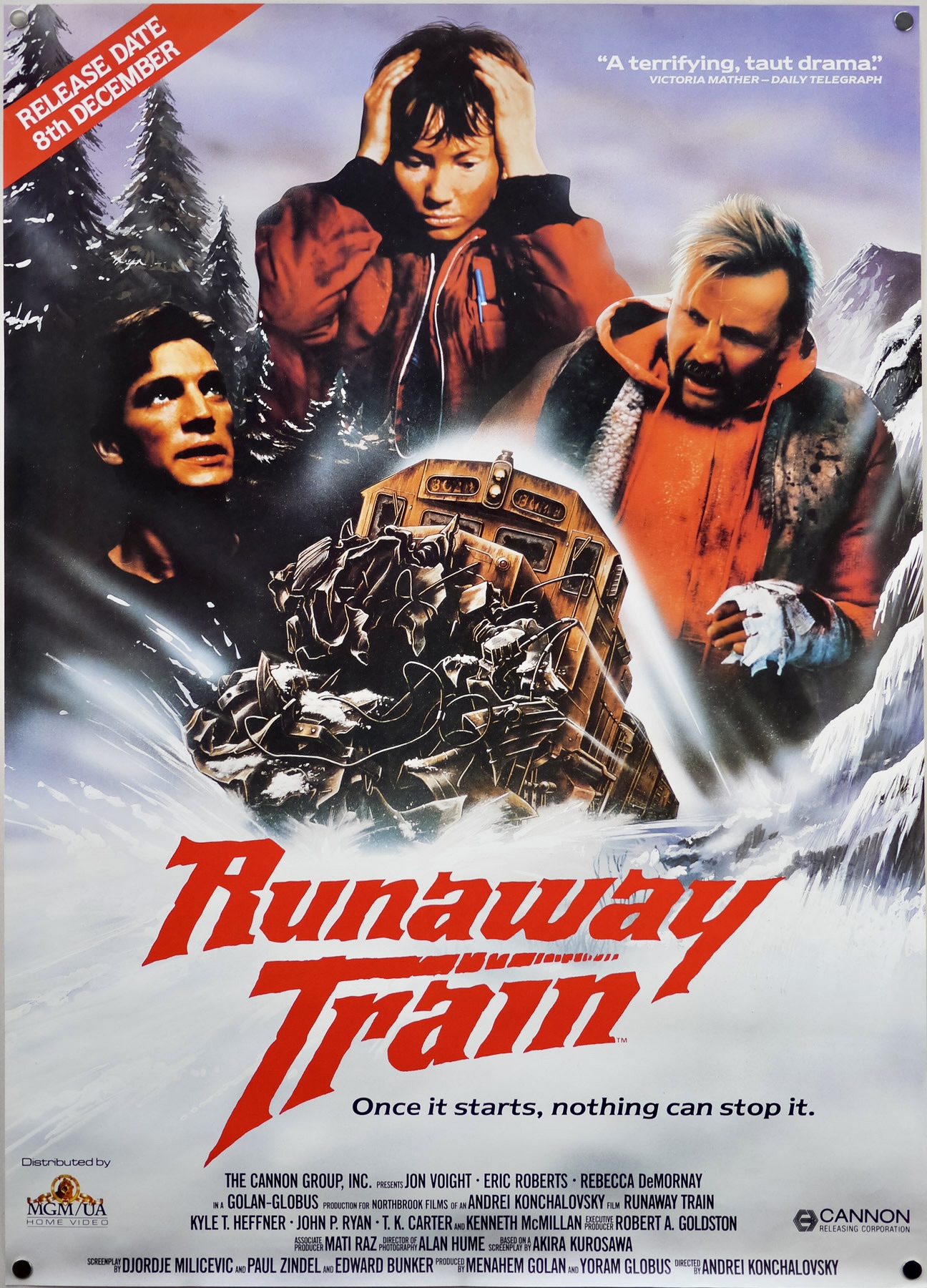
There was a brief time in the 1980s when the international production/distribution company Globus-Golan, managed by Israeli mogul Yoram Globus and his cousin Menachem Golan, garnered and generated more press coverage than box office receipts or critical acclaim for their movies. Their legendary deal-making and oversized egos were part of the film industry’s fascination with the Globus-Golan partnership and the duo had a good run from 1978 through 1988, which were the prime years for their company. Most of their major successes were star-driven action vehicles like Charles Bronson in Death Wish II (1982) and its sequels, The Delta Force (1984) starring Chuck Norris) and Sylvester Stallone as a Los Angeles cop in Cobra (1986). They also had some surprise hits in music/dance and teen sexploitation categories like Breakin’ (1984) and The Last American Virgin (1982). Globus-Golan even tried to crack the arthouse market with smaller indie productions like That Championship Season (1982), Fool for Love (1985), Barfly (1987), and the Jean-Luc Godard directed King Lear (1987) with Woody Allen, Norman Mailer and Molly Ringwald but only a few were successful like Runaway Train (1985), directed by Andrei Konchalovsky. Utilizing tropes from prison breakout flicks and man-made disaster films, Runaway Train was a weird hybrid that worked as a straight-ahead action adventure but also as a psychological character study unfolding in an extreme setting – the icy tundra of the Alaskan wilderness.
Continue reading