
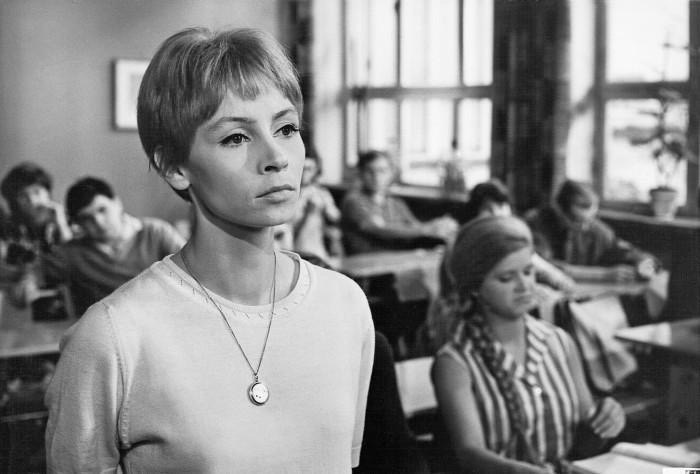
There have been enough movies about teachers facing challenging classroom situations and unsympathetic staff and school board members to comprise a film genre of its own. And it is not limited to just classic flicks from Hollywood like Goodbye, Mr. Chips (1939), Bright Road (1953) The Blackboard Jungle (1955), Up the Down Staircase (1967), To Sir, With Love (1967), Stand and Deliver (1988) and Dead Poets’ Society (1989). Other countries have produced their own cinematic touchstones on the subject such as the U.K. (The Browning Version [1951], If… [1968], The Prime of Miss Jean Brodie [1969]), France (Zero for Conduct [1933], The Class [2008]), Japan (Twenty-Four Eyes [1955] or Russia (Village Teacher [1947]). All of these address numerous issues like juvenile delinquency, racism, illiteracy and the value of mentorship but few, if any, have presented the complex problems facing Karla, the heroine of Herrmann Zschoche’s 1965 East German drama which was extremely controversial in its day.
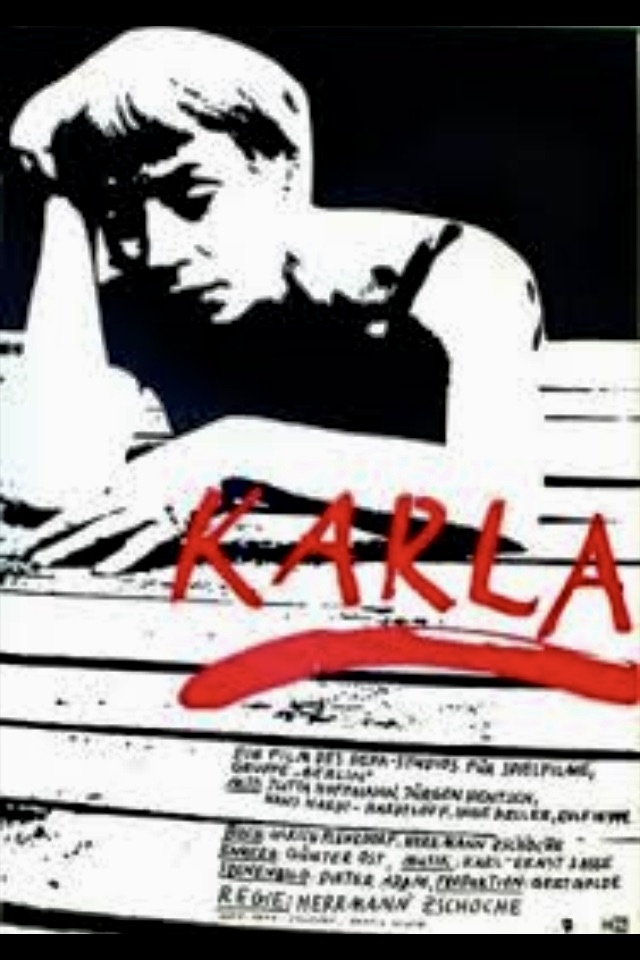
For those who have little or no awareness of what it would be like to live in a totalitarian society, Karla takes place in a real but Kafka-like world (East Germany in the 1960s) where your every action and words could be misinterpreted as subversive by those with more power than you. It all begins on an optimistic note when Karla Blum (Jutta Hoffmann), a recent school graduate, accepts her first teaching job in a rural area of Brandenberg, Germany, far from the more cosmopolitan city of Berlin. When she arrives, the school is already closed for the day and Karla can’t find Alfred Hirte (Hans Hardt-Hardtloff), the school principal, who has her orientation information. Since there are no hotels in town, Karla is faced with nowhere to sleep for the night until she meets Kaspar (Jurgen Hentsch), a sawmill worker who invites her to stay in his rustic lakeside shack. This initial meeting will soon blossom into an on-again, off-again romance with both Karla and Kaspar living in separate rooms in a cheap apartment building in town.

From the beginning, Karla seems caught in the middle of a marked divide between the older teaching staff and the younger students. Principal Hirte and his peers including the by-the-book school administrator Ms. Janson (Inge Keller) feel Karla might be too naïve and inexperienced to handle the job and critique her every decision. The students are equally judgmental and test the new teacher in various ways from challenging her knowledge to playing pranks in class.
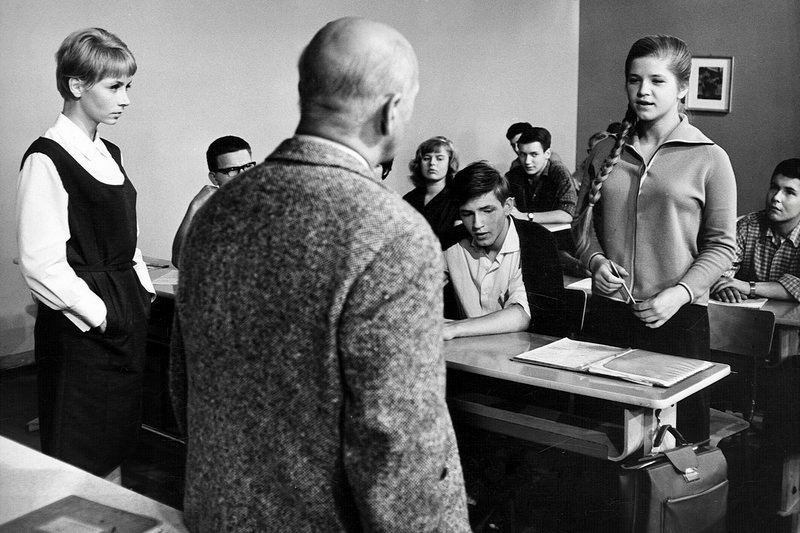
The rigid line between her job and personal life is spelled out early on when Janson learns Karla spent the night in Kaspar’s fishing shack (which was an innocent, non-sexual encounter). The official warns her “Miss Blum, you’re a teacher and bear certain moral responsibilities…we’re all human but please keep your relationships discrete.” But a more troubling situation occurs when Karla tries to encourage acquiring knowledge, discussing new ideas or allowing her students some freedom in changing the order of the established curriculum. She quickly finds herself battling an old guard ideology (dictated by Soviet party policy), which is vehemently opposed to change or the opinions of the country’s young, future generation.
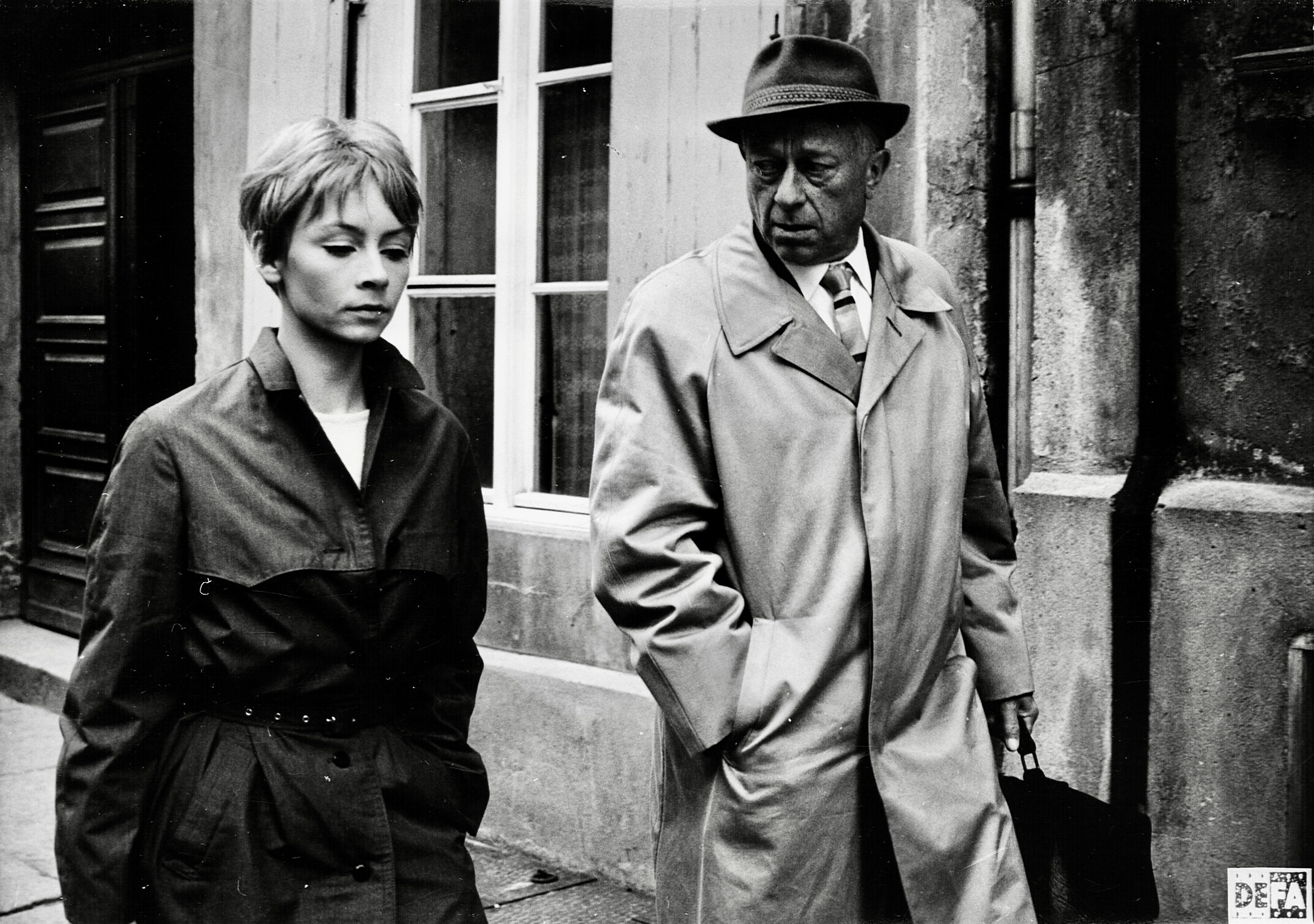
Karla traces its young heroine’s progress through her first year at the school as she goes from being an energetic and motivated role model to being a beaten down conformist who is eventually rewarded for being a obliging tool of the system. Along the way we see how her disillusionment has been influenced by Kaspar, who gave up a promising career as a journalist to work as a common laborer due to the death of Stalin and the resulting “cult of personality” reactions against his former regime and policies. Regarding this, Kaspar states, “I quoted him, others praised him as a great sage, but when the truth came out, that was it for me…I decided to become mistrustful and questioning.”
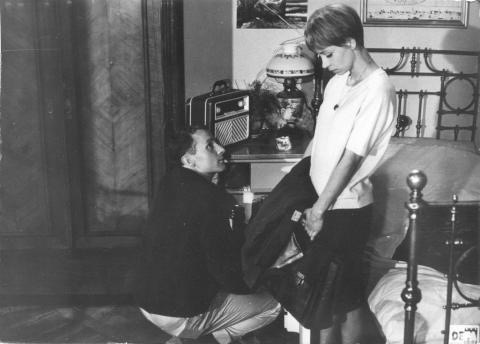
Other incidents that lead to Karla’s “re-education” include the disturbing revelation that Principal Hirte had been an active member of the Nazi party during WWII (“I had to do it on party orders,” he confesses) and a classroom discussion (with Hirte present) in which some students reveal the vast disparity between their world view and that of their elders. At issue is the race between Russian and the U.S. to land the first man on the moon. Rudi (Jorg Knochee), the class intellectual and the most rebellious, explains why the first space probe to Mars didn’t work. By doing this, he openly acknowledges that he listens to western broadcasts on radio and TV (which is against party policy) in order to understand both sides of the situation. Yet, it is not this revelation that gets Karla in trouble with Hirte and her peers but the fact that she allowed Rudi to present his presentation of the facts. What she should have done, Hirte tells her, was to interrupt Rudi and take control of the situation, offering the official party line on the subject. “They should learn from you, not you from them,” Hirte says in anger. So much for encouraging the students to think on their own.
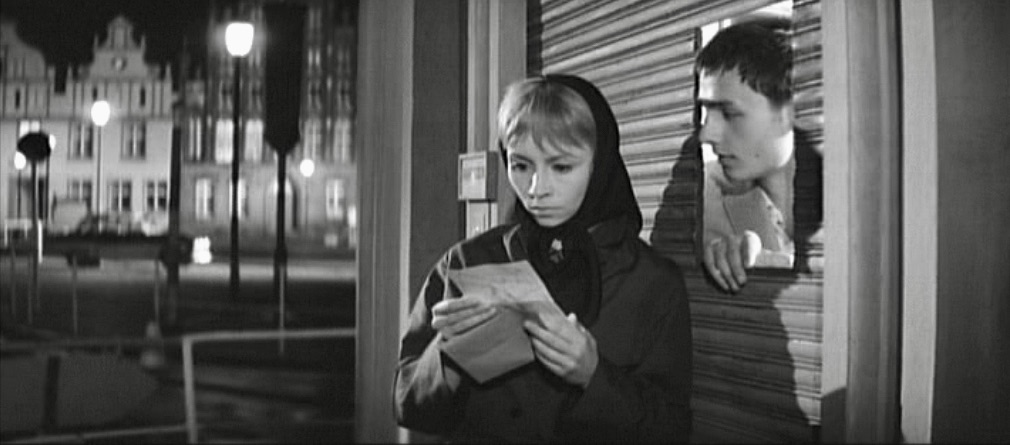
Situations like the above result in Karla becoming almost paralyzed to make any decision without fear of reprisal but just when it seems like she has become a total pod person, she reclaims her individuality and self-respect by having the students write an essay on “What the School Means to Me.” The results are surprising to everyone and culminate in Karla’s dismissal from the school but the reason for her expulsion is not on ideological grounds. Instead, she is transferred to another school district because of a rumored affair between her and Rudi (It was an innocent flirtation on his part and nothing came of it). What could have been a grim ending, however, closes on a sadder-but-wiser, bittersweet note. Karla goes off with her recent husband Kaspar to a new teaching post and the students are left with admiration respect for their former instructor.
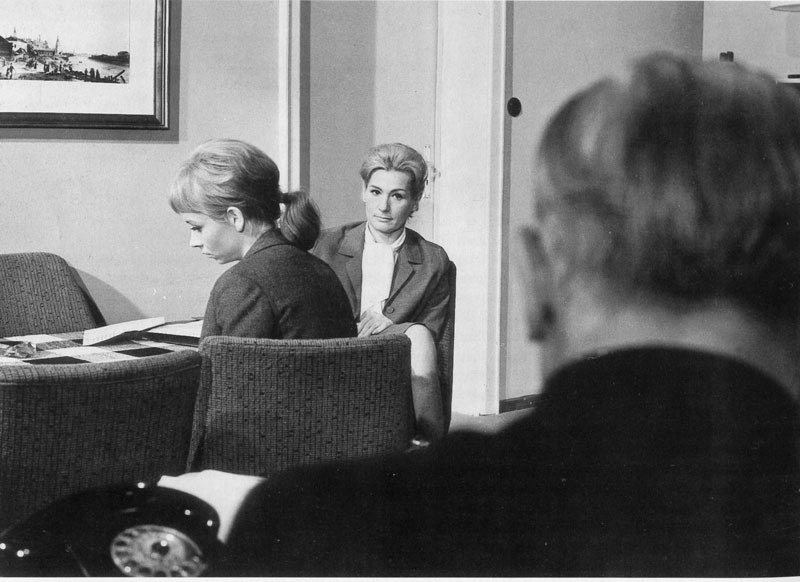
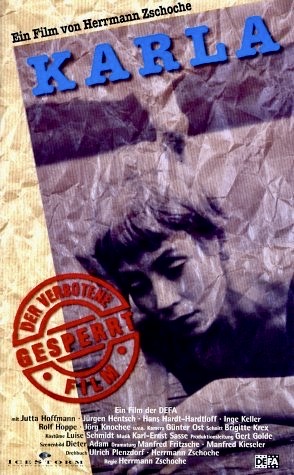
Karla is one of the great lost films from East Germany in the mid-sixties and was first cut and redubbed upon its initial release before being banned outright in 1966 for being “nihilistic and hostile”. It wasn’t until 1990 that a restored version of the uncensored film premiered at the Berlin International Film Festival where it won two awards and garnered critical acclaim (the restored print was supervised under the director of the film’s cinematographer Gunther Ost). Unfortunately, the film got Herrmann Zschoche blacklisted for three years rise but he later managed to continue making theatrical films through 1991 before switching over to German TV productions. He directed the offbeat sci-fi adventure Eolomea in 1972 and one of his most acclaimed later films is Burgschaft fur ein Jahr (1981), the story of a divorced mother fighting for the custody rights of her three children after neglecting them for years.

Unlike most American films dealing with teachers and classrooms, Karla is a sobering and often maddening portrait of academic life in a totalitarian state. If most Americans feel dazed and confused by conspiracy theorists, the LGBT movement and WOKE advocates, imagine how they would fare with the subtle and contradictory intricacies of Soviet party politics during the Khrushchev era. Despite the crisp and occasionally innovative black and white cinematography, Karla is anything but a pretty picture. The bleak rural setting, with the exception of a nearby lake and forest, depicts an economically-depressed town where ugly, pre-fab apartments dot a landscape without grass or trees. The school and classrooms are about as distinctive and inviting as a hospital room and the dress mode is as drab and impersonal as a uniform. Still, there are brief glimpses of life underneath the claustrophobic environment such as Karla seeing the ocean for the first time or a scene at a student party where the teenagers participate in a Hully Gully ring dance.
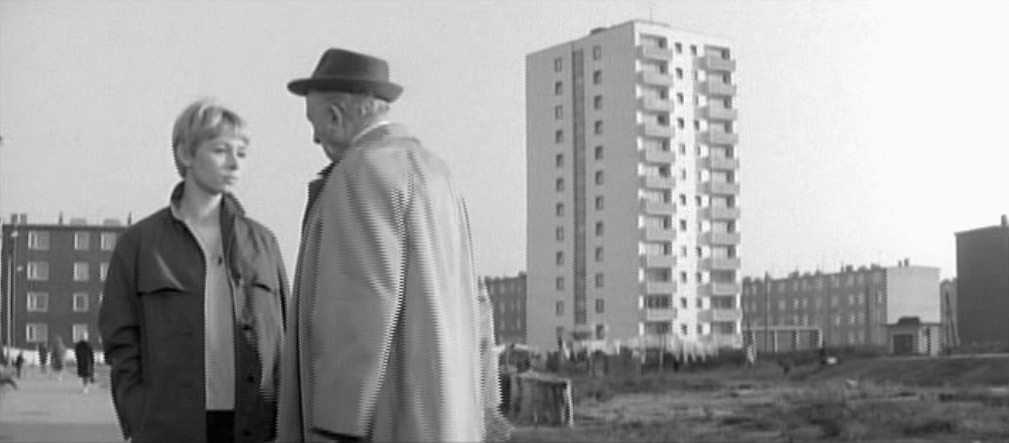
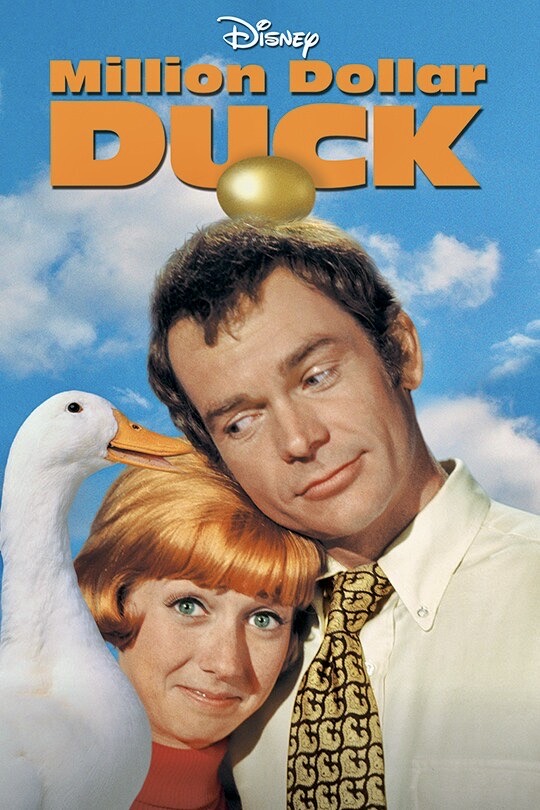
Jutta Hoffman also deserves kudos for her subtle and moving performance as Karla. When the film begins, she looks like some spunky Hollywood ingenue with a pixie cut who is not much older than her pupils. One young student – Uwe (Klaus-Peter Plebow) – even mistakes her for a girl his age when he first sees her at the community center and asks her to dance. But after a year on the job, Karla looks decidedly older with her now long hair pulled back tight and wearing glasses like some stern librarian. In some ways, Hoffman looks like a more down-to-earth, less whimsical version of U.S. actress Sandy Duncan, the petite, elfin-like star of such Walt Disney films as Million Dollar Duck (1971) and The Cat from Outer Space (1978). Hoffman would go on to win numerous awards for such later theatrical releases like the 1997 German musical drama Bandits and TV series like Motzki (1993).
Karla is not currently available on any format in the U.S. but, if you own an all-region DVD player, you might still be able to find the German DEFA import version, released on DVD in July 2017, from online
Other links of interest:
https://www.wsws.org/en/articles/2011/08/cine-a03.html
https://www.umass.edu/defa/people/428
https://filmstarpostcards.blogspot.com/2023/03/jutta-hoffmann.html
https://www.deutsche-kinemathek.de/en/visit/festivals-symposiums/germany-1966-redefining-cinema

