The Watcher and the Watched

The Polish film poster for A SHORT FILM ABOUT LOVE (1988)

A lonely nineteen-year-old boy watches his neighbor Magda (Grazyna Szapolowska) through binoculars as she moves about her apartment across the courtyard in her underwear. Tomek (Olaf Lubaszenko) has been spying on this alluring older woman for almost a year and he has his routine down to a fine science, which includes setting his alarm clock to go off at the time she comes home from work so he won’t miss a thing. He soon graduates from binoculars to a telescope he stole from a local school. He also calls her up occasionally on the telephone but never has the nerve to say anything. His obsession, however, has come to the point where he requires more direct contact and so he begins to manipulate some face to face encounters with Magda through his work as a postal clerk and a milk delivery man for the apartments. While this basic premise for Polish filmmaker Krzysztof Kieslowski’s Krotki Film o Milosci (English title: A Short Film About Love,1988) sounds like the set-up for a creepy voyeur thriller in the vein of Rear Window (1954), Psycho (1960), or Peeping Tom (1960), the movie that unfolds goes in a completely different direction, depicting two lonely souls – one cynical, the other naïve – who forge a unique connection through unlikely circumstances.

Continue reading
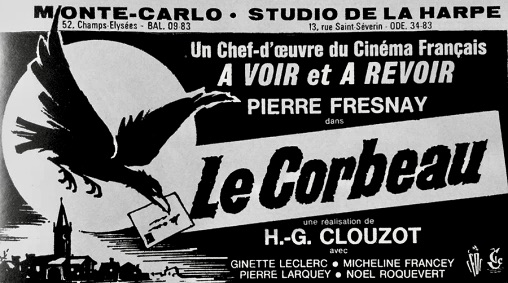
Henri-Georges Clouzot’s Le Corbeau

In a small village in rural France, an anonymous writer sends a series of poison-pen letters to selected residents. Signed with the mysterious name of “Le Corbeau”, the letters accuse the new physician in town, Dr. Remy Germain (Pierre Fresnay), of adultery and performing abortions. While the townspeople are scandalized by this information, it soon becomes apparent that Dr. Germain is not the only target of this vicious character assassination and that other respected members of the community will soon be victimized, their most shameful secrets exposed to all by “The Raven.” Soon, the villagers begin turning on each other, creating an atmosphere of increasing paranoia and mistrust that culminates in murder, suicide and an angry mob scene. There might not be a more misanthropic view of humanity than Le Corbeau (aka The Raven, 1943), directed by Henri-Georges Clouzot (The Wages of Fear, 1953), but the movie is not only a dark, brilliantly conceived melodrama which unfolds like a suspense thriller but a cautionary character study of how fear of others brings out the worst in everyone.

Continue reading

Fate, Coincidence and Missed Opportunities

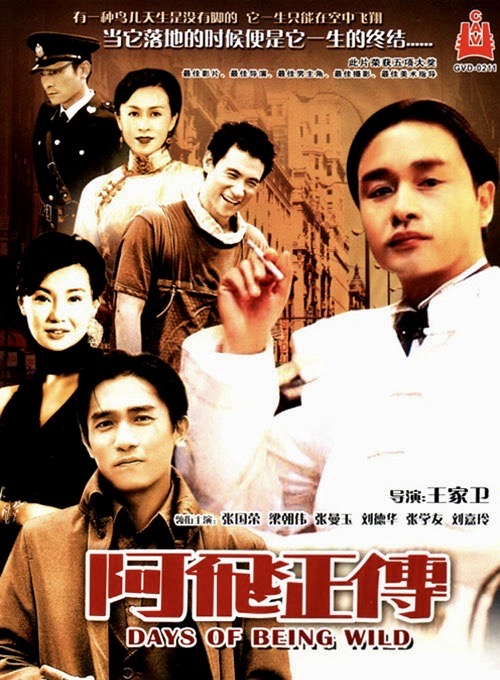
Most cinephiles remember the first time they saw a film by Hong Kong director Wong Kar-Wai. For me it was Ah Fei Jing Juen (English title: Days of Being Wild, 1990), which I rented on VHS from Blast-Off Video in Atlanta, Georgia. The owner, Sam Patton, encouraged me to watch it and it was a revelation, not like his usual recommendations which were more likely to be softcore exploitation films like Doris Wishman’s Deadly Weapons (1974) starring Chesty Morgan and her 73 inch bust or a bizarre obscurity like The Manipulator aka B.J. Lang Presents (1971) with Mickey Rooney at his most demented. What I saw was nothing like what I had seen coming out of the Hong Kong film industry at that time – mostly martial arts action films and kinetic crime thrillers such as John Woo’s The Killer (1989). No, Days of Being Wild is a lush, sensual cinematic poem, a visually innovative tale of unrequited longing, one-sided relationships and melancholy reflections on life as it was in Hong Kong in 1960, the year the movie takes place. 

Continue reading

A Twist of Dickens

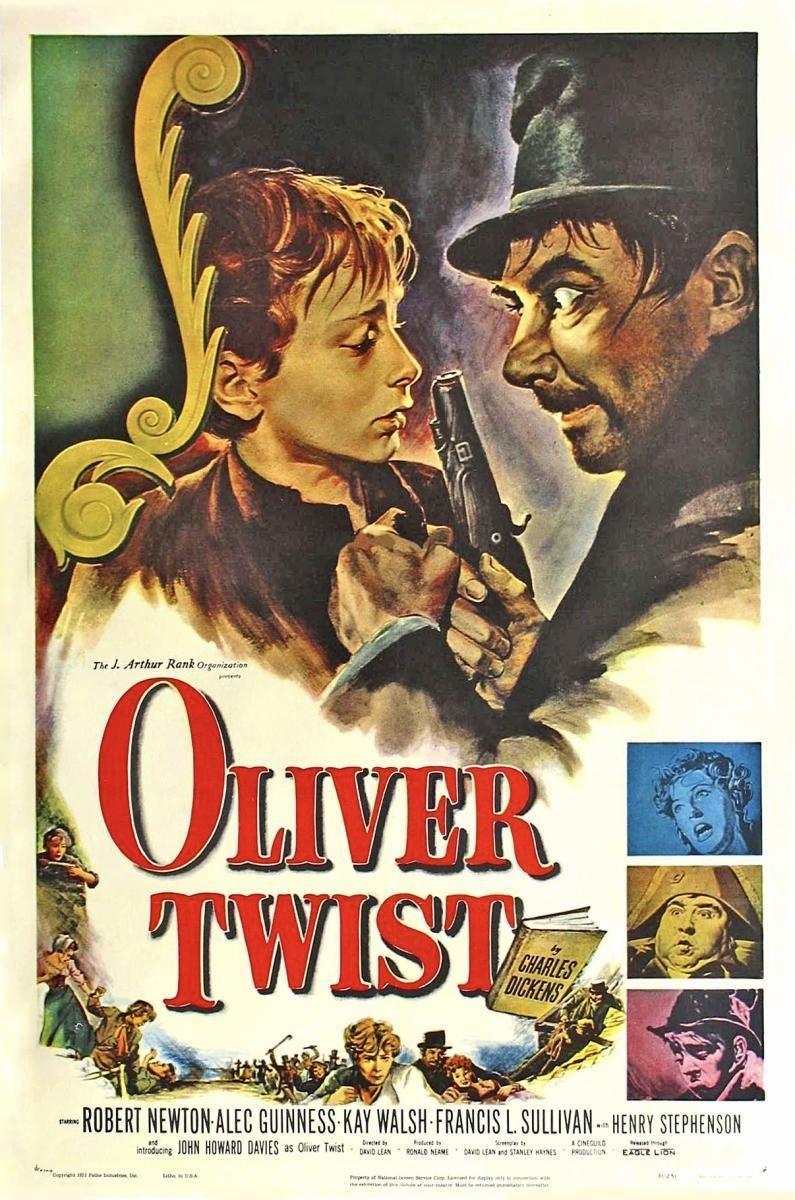
With the release of Brief Encounter in 1945, David Lean became the preeminent British director of his generation. But the critical and popular success of that bittersweet postwar romance (it won the Grand Prize at the Cannes Film Festival and garnered three Oscar nominations) was overshadowed by an even greater achievement, his film adaptation of Charles Dickens’s Great Expectations (1946). The latter secured his reputation on an international scale and received five Oscar nominations, winning statuettes for Best Art Direction and Best Cinematography. What to do for an encore? Instead of moving in a new direction, Lean surprised everyone by agreeing to do another Charles Dickens adaptation – a film version of Oliver Twist (1948).

Continue reading

A City or a Labyrinth?

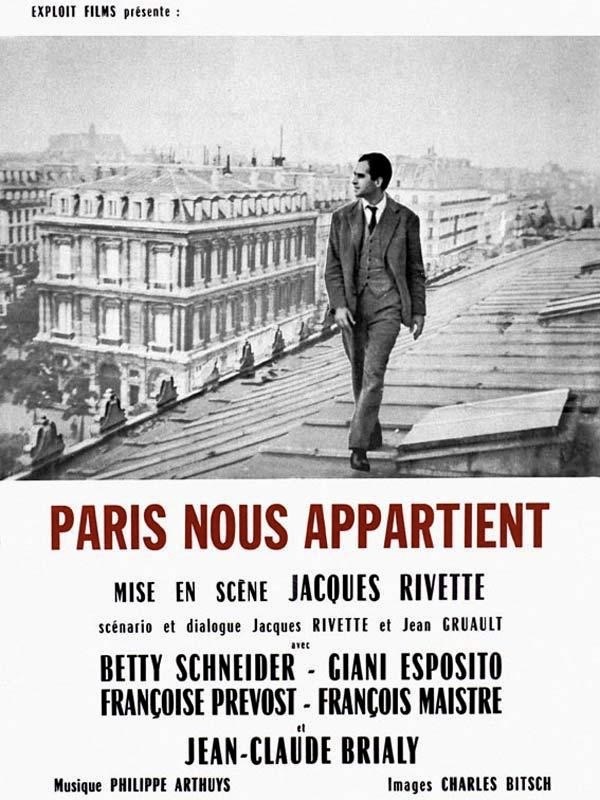
Whether by accident or design, French filmmaker Jacques Rivette is probably the least known member of the influential Nouvelle Vague movement of the late fifties though, like Jean-Luc Godard, Francois Truffaut, Eric Rohmer, and Claude Chabrol, he too was a former writer and film critic for Cashiers du Cinema. He even started production on his first feature length film, Paris Belongs to Us (French title: Paris Nous Appartient), in 1957, before Chabrol, Truffaut and Godard began work on what would become their universally acclaimed debuts of, respectively, Le Beau Serge (1958), The 400 Blows (1959) and Breathless (1960). Yet, despite the artistic and liberating impact the latter three films had on world cinema, Paris Belongs to Us might be the most ambitious, challenging and intellectually provocative film of the whole movement. It is also the darkest, waltzing toward an imagined or possibly real oblivion. The Homeland Security System would give it a code orange classification.       

Continue reading

Aboriginal Prophecies from Down Under

The rational versus the irrational always creates compelling conflicts in the best kind of fantasy/horror films where scientists and/or investigators are faced with trying to understand or explain supernatural events or mysteries of the occult. A denial of the paranormal fueled the chilling storyline of Jacques Tourneur’s Curse of the Demon (1957, released in the U.K. as Night of the Demon). A similar tone of skepticism is under attack in The Last Wave (1977), one of the rare Australian films to delve into Aboriginal mythology and superstitions but also one that addresses the environment on an apocalyptic level.

Continue reading

Looking for Love in All the Wrong Places

Director John Cassavetes broke all the rules, inventing his own and then discarding them as he went along. He improvised and experimented with everything from the cinematography to the performances to the actual financing of the film. He even mortgaged his own home numerous times to subsidize his movies over the years and took on acting jobs purely for monetary reasons. His directorial debut Shadows (1958), with its jerky, hand-held camerawork, vivid location shooting on New York City streets and edgy subject matter involving an interracial romance, is one of the most influential films to emerge from the independent New York City cinema movement of the 1950s. Yet, it was just a warm-up for Cassavetes’s next film, Faces (1968), which was even more provocative and unconventional. 

Continue reading

The Cunning Inspector Cockrill

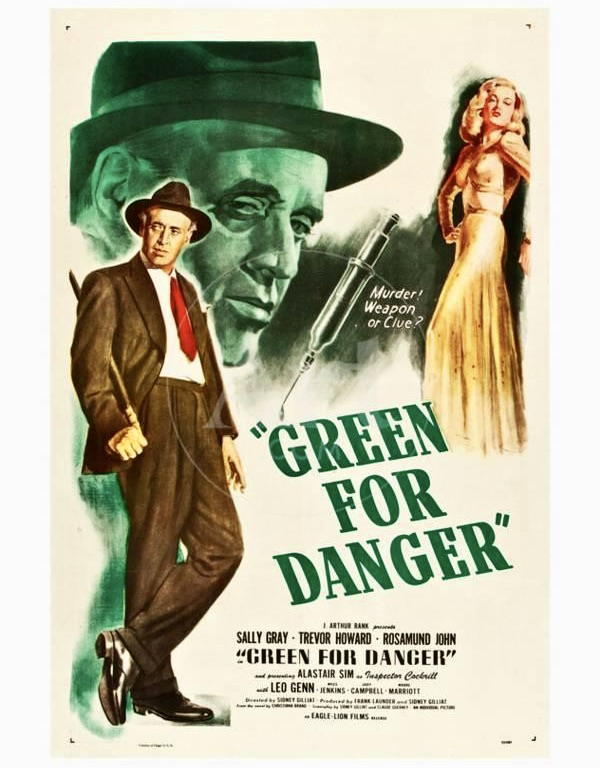
Classic movie lovers in the U.S. probably know Alastair Sim as Ebenezer Scrooge in the perennial holiday favorite, A Christmas Carol, the 1951 version. He is also memorable for his supporting role in Alfred Hitchcock’s Stage Fright (1950) but, more importantly, British comedy fans adore Sim specifically for his eccentric comedic characters in such popular films as The Happiest Days of Your Life (1950), Laughter in Paradise (1951) and Innocents in Paris (1953). Less familiar to American audiences but guaranteed to turn you into an Alastair Sim fanatic if you’re not one already is Green for Danger, a 1946 suspense thriller starring Sim as the sly-as-a-fox Inspector Cockrill.

Continue reading

Identity Disintegration

A wealthy chemist who was disfigured in an explosion undergoes plastic surgery in the 1966 Japanese film, The Face of Another.

What would happen if you lost the face you recognize as your own and had to replace it with a new one? Would you have an identity crisis or simply become a different person? Japanese director Hiroshi Teshigahara ponders this unusual dilemma in The Face of Another (1966, Japanese title: Tanin no kao). Continue reading

Othello, King of Bebop

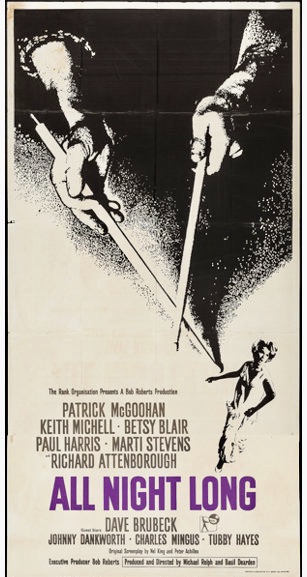
Attempts to bring Shakespeare to the masses can be ill-advised and most film adaptations of the Bard’s work are either faithful copies of the stage plays such as Laurence Olivier’s Henry V (1944) and Richard III (1955) that preserve the language of the original or creative interpretations that either result in a broader appeal (Baz Luhrmann’s Romeo + Juliet, 1996) or earn the wrath of the Shakespeare purists without appealing to anyone else. All Night Long (1962), which updates Othello to London’s West End in the early sixties and transforms the Moor of Venice into a renowned jazz pianist known as Aurelius Rex (Paul Harris), falls into the latter category.      Continue reading