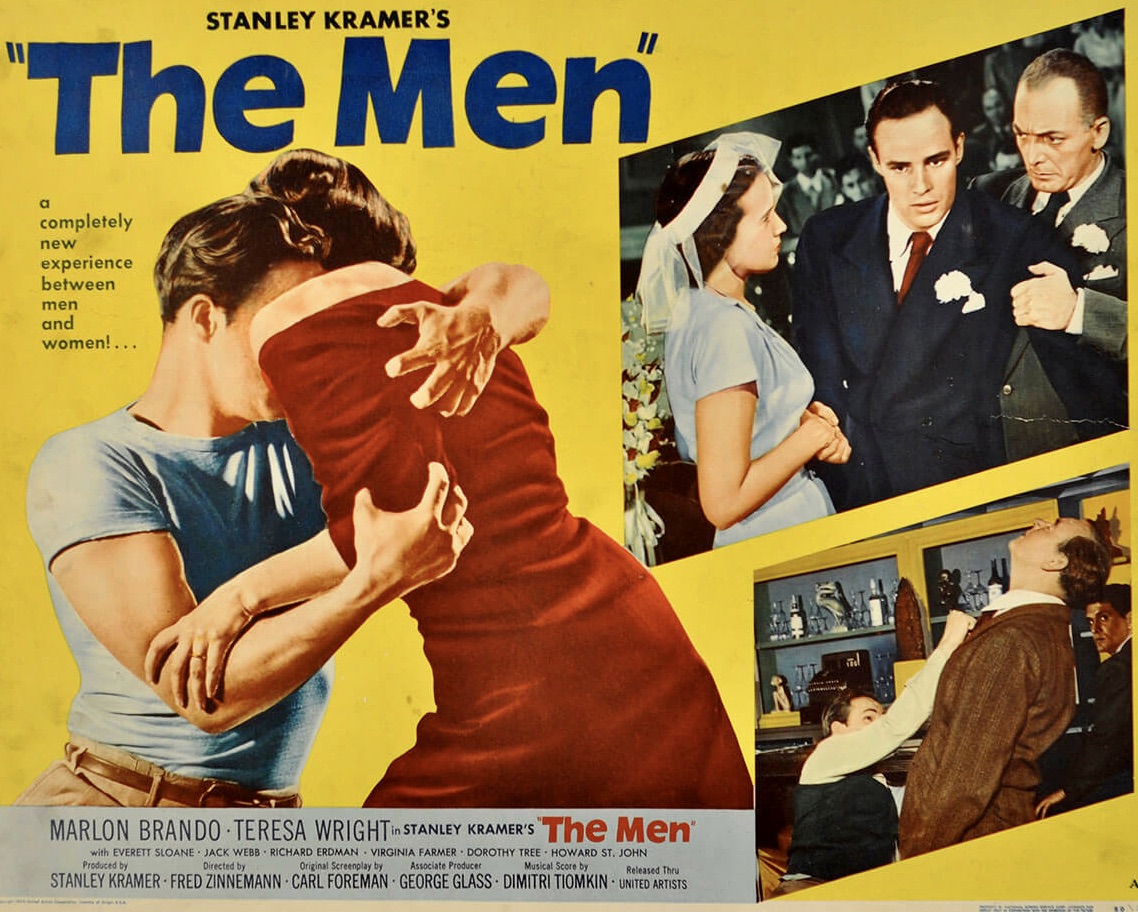
When director Fred Zinnemann left MGM Studios after his contract expired with Act of Violence in 1949, he embarked on a new career as an independent filmmaker. After trying to find a suitable movie project for almost a year, his search ended when two young filmmakers, Stanley Kramer and Carl Foreman, pitched him a story about paralyzed war veterans entitled The Men (1950). It was obvious that no major studio would tackle such an uncommercial subject but Zinnemann saw great possibilities in Carl Foreman’s screenplay and agreed to direct.
Continue readingTag Archives: Orson Welles
Like a Bull in a China Shop
In 2016 the Cohen Media Group released My Journey Through French Cinema, written and directed by Bertrand Tavernier. It was not a traditional survey of French Cinema but a much more idiosyncratic and personal look at favorite films and directors from France in the eyes of Tavernier. In this way, it seemed inspired by Martin Scorsese’s 1999 documentary on Italian cinema, My Voyage to Italy, which shined a light on forgotten and underrated movies that deserved re-evaluation. Tavernier certainly covered some landmarks of French cinema in his overview but he also devoted time to specific directors like Jacques Becker and Jean-Pierre Melville while including favorite film composers and cinematographers as well. Some of Tavernier’s choice were fascinating obscurities and others were grade-B genre films that were so stylish and well-made that they served as superior examples of their craft such as Edmond T. Greville’s Le Diable Souffle aka Woman of Evil (1947) and Gilles Grangier’s Hi-Jack Highway aka Gas-Oil (1955). I was especially intrigued by film clips from the crime thriller Ca Va Barder (1955), which was directed by blacklisted American director John Berry (it was his first credited feature in France) and starred expatriate American actor Eddie Constantine as two-fisted itinerant adventurer Johnny Jordan. His rough and tumble character is as disruptive as a bull in a china shop.
Continue readingOn the Loose in Amsterdam
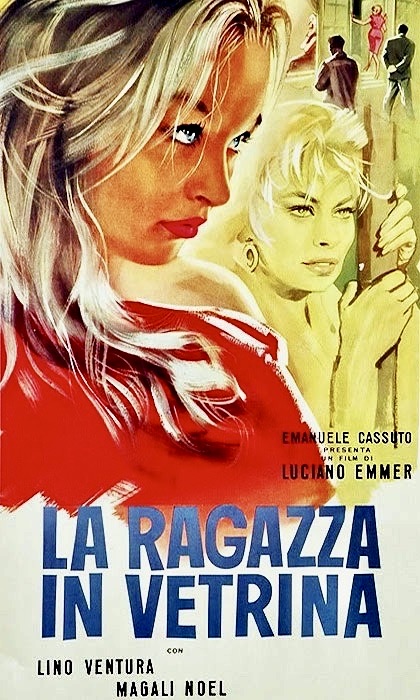
The controversial problem of immigration in Italy has been a problem for decades, not just with internal migration of workers from the south to the north, but also with the influx of refugees from Africa and other areas around the Mediterranean. Not surprisingly, there have been numerous Italian films to address this situation over the years but only a handful of them have received praise and recognition outside their own country. Among them are Pietro Germi’s Il Cammino della Speranza (The Path of Hope, 1950), in which a group of Sicilian workers try to emigrate illegally to France, I Magliari (The Swindlers, 1959), Francesco Rosi’s drama about an out-of-work Italian miner (Renato Salvatore) in Germany, and Lina Wertmuller’s Tutto a Posto e Niente in Ordine (All Screwed Up, 1974), which focuses on immigrants from southern Italy trying to find work in Milan. To this short list, I would like to add Luciano Emmer’s rarely seen La Ragazza in Vetrina (The Girl in the Picture Window, 1961), a tale about two immigrant miners in Belgium who enjoy a weekend getaway in Amsterdam.
Continue readingChristmas Lockdown in the Eternal City
Available for years in inferior public domain prints and poor video transfers, Robert Rossellini’s influential WW2 trilogy [Rome Open City (1945), Paisan (1946) and German Year Zero (1949)], which firmly established him as the “father of Neorealism”, finally received 4K high-definition digital transfers from The Criterion Collection in 2017. Linked thematically to this trilogy, however, is a later Rossellini film, Era Notte a Roma [English title, Escape by Night aka Blackout in Rome,1960), which, unfortunately, has never enjoyed the reputation or respect of this seminal trilogy. I first saw a 16mm print of the film from Films Inc. years ago when it still licensed titles from The Audio Brandon Collection. I had a chance to revisit Era Notte a Roma again recently on DVD and am still baffled by the movie’s low profile since its original release.
Continue readingOnce Upon a Time in Russia
“Hordes storm fortress!” “Tartars Abduct Viking beauty!” “Orgy celebrates conquest!” These were some of the tag lines used to promote the period epic The Tartars (1961), one of many European imports that reached American shores during a brief “sword and sandal” craze in the late fifties/early sixties. Hercules, the 1959 peplum sensation starring Steve Reeves, started it all. Producer Dino De Laurentiis bought the rights and distributed it in the U.S. in 1959, transforming it into a box office hit. After that, every major studio was scrambling to duplicate that success and MGM was no exception, importing such muscle-bound contenders as The Giant of Marathon (1960), Morgan the Pirate (1961) and The Son of Spartacus (aka The Slave, 1963) – all of them starring Steve Reeves. The Tartars, however, had a different pedigree and a more distinctive one. Not only was it helmed by Richard Thorpe, one of MGM’s most dependable directors of costume epics (Ivanhoe (1952), The Prisoner of Zenda (1952), Knights of the Round Table, 1953), but it sported two high profile marquee names – Victor Mature and Orson Welles.
Continue readingI Was a Teenage Peeping Tom

Among the many teen idols of the fifties who climbed to fame with top forty hit records, only a few made the successful crossover to film acting. Pat Boone was groomed by 20th-Century-Fox as a teen matinee idol in Bernadine (1957), Tommy Sands stayed in his comfort zone playing an aspiring pop star in Sing Boy Sing (1958), Fabian made his screen debut with the family-friendly backwoods drama Hound-Dog Man (1959), and Bobby Rydell played your average boy-next-door opposite Ann-Margret in Bye Bye Birdie (1963). Paul Anka, on the other hand, appeared in the most unlikely vehicle for his first major starring role – Look in Any Window (1961).
Continue readingHighlights from VFF 2018
The annual Virginia Film Festival (VFF) in Charlottesville recently celebrated its 31st year of operation on Nov.1-4 and offered attendees the opportunity to select from over 150 films, many of which arrived leaden with awards and critical acclaim from previous festivals like Cannes and Telluride. Programming content focused on specific themes and topics is also part of the VFF tradition and the 2018 event included a film series on Race in America, which included the premiere of Paul Robert’s Charlotteville about the tragic events of Aug. 11 & 12, 2017, and sidebars on Orson Welles, Virginia filmmakers, American folk culture and music and a vast array of international films. Continue reading
In Conversation with Peter Bogdanovich
The following conversation with Peter Bogdanovich was conducted in April 2010 just prior to the first official TCM Classic Film Festival in which the director co-hosted a screening with Vanity Fair writer David Kamp of Orson Welles’ The Magnificent Ambersons. Bogdanovich, of course, was a close friend of Welles’ and is the creator of that indispensible interview collection, This is Orson Welles. Among other topics discussed are such films as Targets, What’s Up, Doc?, Paper Moon, Saint Jack, unproduced Welles’ projects like Heart of Darkness and Welles’s obsession with fake noses. Continue reading
Reelin’ in the Years with Buck Henry
Buck Henry has had a remarkable career in the entertainment industry, one that has encompassed acting, screenwriting, directing, producing and even dubbing foreign language film imports. Not content to sit on his laurels, Henry at age 86 remains active in Hollywood where he is allegedly working on the screenplay to Get Smart 2. His previous assignment was writing the screenplay for The Humbling (2014), a comedy-drama directed by Barry Levinson starring Al Pacino and based on the novel by Philip Roth.
In April 2010, Buck Henry was a guest at the first annual TCM Classic Film Festival in Hollywood and was present at a retrospective screening of The Graduate to answer questions from Vanity Fair contributor Sam Kashner. I conducted the following interview with Henry about his career prior to that festival for Turner Classic Movies. Continue reading
Norman Lloyd: Hollywood’s Long Distance Runner, Part 1
On November 8, 2017 Norman Lloyd will be 203 and he shows no signs of slowing down. In recent years, he has become the go-to historian for the American film industry’s golden era due to his friendship and working relationships with such cinema legends as Charlie Chaplin, Jean Renoir, Orson Welles, Alfred Hitchcock, John Garfield, Bernard Herrmann, John Houseman, Joseph Losey and others. Lloyd also continues to take acting roles (he has a nice cameo in the 2015 Judd Apatow comedy Trainwreck starring Amy Schumer) and appear as an interviewee in documentaries such as Marsha Hunt’s Sweet Adversity (2015) and Broadway: Beyond the Golden Age, which is currently in post-production.
*This is a revised and updated version of the original interview which was recorded in March 2010 just prior to Lloyd’s appearance at the first Turner Classic Movies Classic Film Festival. Continue reading