
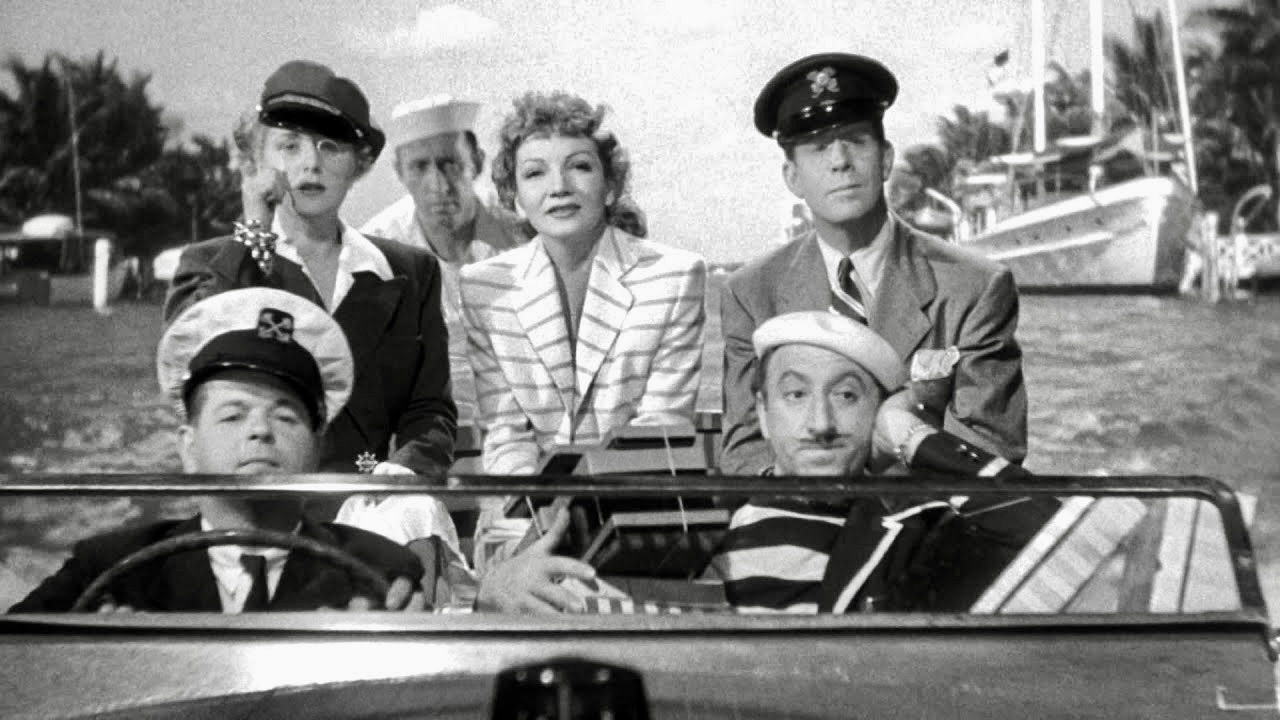
The Idle Rich Are a Strange Breed

Gerry Jeffers (Claudette Colbert, center top) finds herself an unexpected guest of millionaire J.D. Hackensacker III (Rudy Vallee, top right) at his lavish estate in THE PALM BEACH STORY (1942).

In 1942, director Preston Sturges was rapidly approaching his career peak in Hollywood. Not only was he riding high from the critical and box office success of The Lady Eve (1941), but his esteemed reputation at Paramount Studios had given him the creative freedom to complete a film project dear to his heart – Sullivan’s Travels (1941), starring Joel McCrea and Veronica Lake. So what to do for an encore? At first, Sturges toyed with the idea of doing another film with Lake called The Passionate Witch. But that project was soon handed off to French director Rene Clair with Sturges’ blessing (it was released as I Married a Witch, 1942) while Paramount’s “in-house genius” came up with a new script, tentatively titled Is That Bad?, that poked fun at the idle rich, a class of people with whom Sturges enjoyed some familiarity. After all, his former wife – Eleanor Hutton – was an heiress who was once wooed by Prince Jerome Rospigliosi-Gioeni, among other international aristocrats. This new project – which came to be known as The Palm Beach Story (1942) – would soon prove to be his most expensive undertaking to date.

Continue reading →
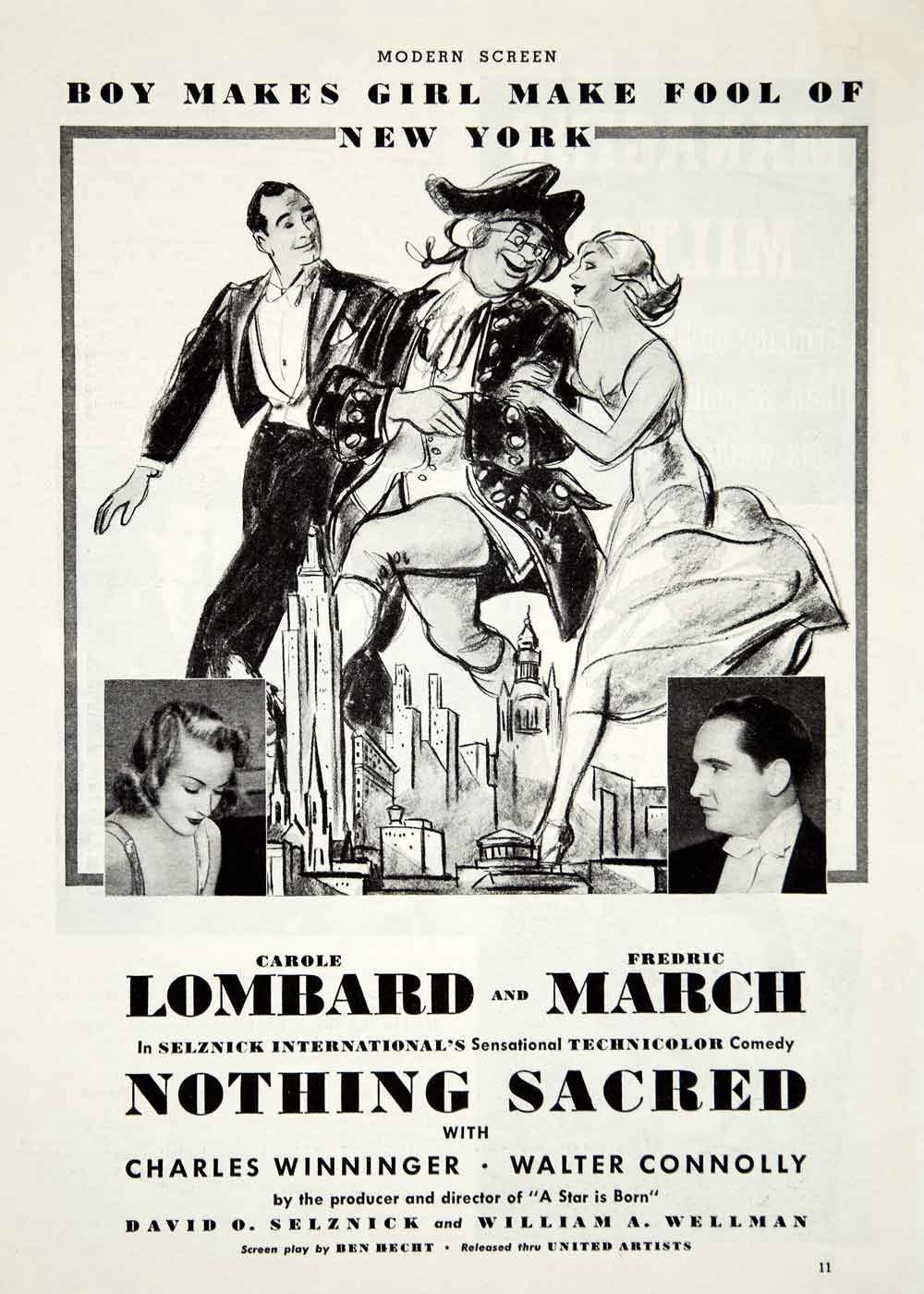
Hucksters, Phonies and Rubberneckers

Nothing Sacred (1937) is a key film in that short-lived genre known as ‘the screwball comedy,” a unique Hollywood creation that flourished between 1933 and 1940. Distinguished by its eccentric characters, irreverent humor, and breakneck pacing, these films usually featured privileged but irresponsible characters running amok against the backdrop of the Great Depression when society was in turmoil. But while the idle rich were mercilessly lampooned in the most popular screwball comedy of the previous year – My Man Godfrey (1936) – the whole human race gets dished in Nothing Sacred, from the newspaper industry to a public that enjoys reading sob stories about someone else’s misfortune.

Continue reading →

William A. Seiter’s If You Could Only Cook (1935)

Whenever the subject of screwball comedy comes up, I usually think of the same handful of titles in this short-lived movie genre which began sometime in the early thirties with such models of the form as Twentieth Century (1934) and It Happened One Night (1934) and ended sometime in the early forties between the time of Preston Sturges’ The Palm Beach Story (1942) and Frank Capra’s Arsenic and Old Lace (1944).  Like the film noir genre which continues to yield overlooked gems like Crime Wave (1954) and Highway 301 (1950), many lesser known and almost forgotten entries in the screwball comedy category continue to resurface on Turner Classic Movies, reminding us that occasionally you might find a diamond in the rough. Such is the case with If You Could Only Cook (1935).  Continue reading →