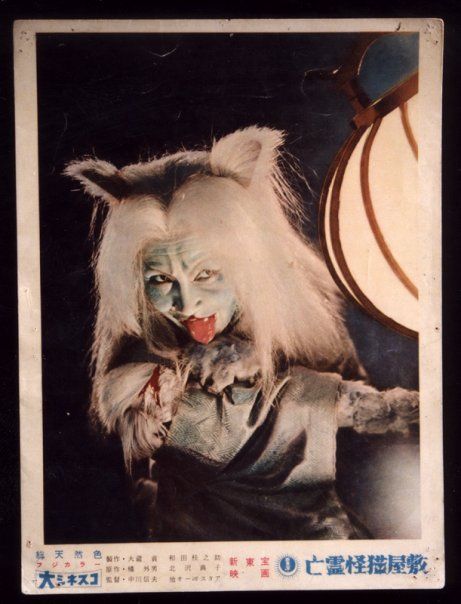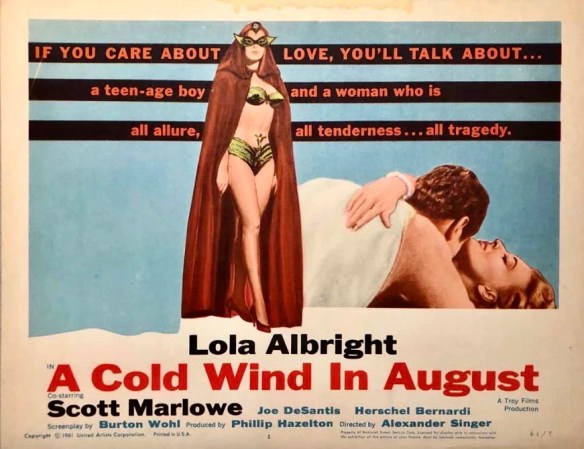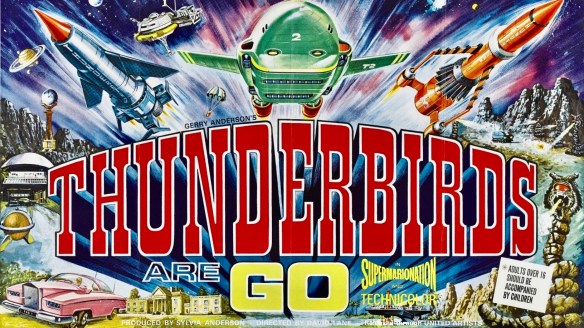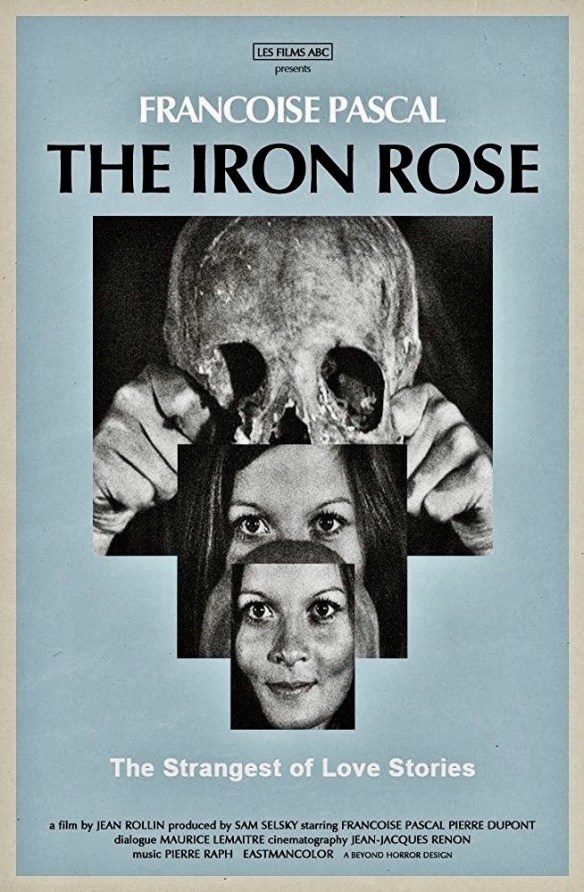
Among the many peculiar assemblages of cast and crew in Hollywood history, Pretty Maids All in a Row (1971) is in a class by itself. A black comedy set in a California high school where someone is murdering female students, the film marked the U.S. film debut of French director Roger Vadim (Barbarella, 1968) with Star Trek creator Gene Roddenberry producing and writing the screenplay. Mix in a number of seasoned Hollywood professionals (Rock Hudson, Angie Dickinson, Roddy McDowall, Keenan Wynn, William Campbell) with a hip, younger cast of aspiring actors and starlets. Top it off with a music score by Lalo Schifrin (Mission: Impossible, 1996) and a theme song co-written by Christian music mogul Mike Curb and sung by The Osmonds. And the result is a delicious guilty pleasure for some and a cringe-inducing embarrassment for others. There is no middle ground here unless you choose to view the film as a sociology experiment. Continue reading
Reggae Roots 101
When it comes to feature length documentaries on music that had a theatrical release and weren’t concert films, ska and reggae music are sadly missing in the mix. Sure, there have been some highly influential cult movies fueled by reggae music – The Harder They Come (1972), Rockers (1978) and Babylon (1980) – but no first-rate documentaries on the subject. Certainly Rudeboy: The Story of Trojan Records (2018) is an admirable attempt to correct this situation and, for those who know little about the famous record label or the rise of ska and reggae music in the mid-sixties, it is a great place to start. Continue reading
John Ford’s Up the River
If someone used the expression “up the river” in the early part of the 20th century, they usually weren’t referring to a location or direction; they meant prison time for some fool. Although there is nothing funny about going to jail, director John Ford decided to take a lighthearted approach to the topic in Up the River (1930), one of his earliest sound features. Continue reading
Monkey Repellers Wanted!
If someone told you that repelling monkeys was a profession in some countries, you’d probably think it was a joke but in New Delhi, India it is not only a legitimate occupation but a much-needed service. In recent years, the macaque monkey population has increased and grown increasingly aggressive in their search for food, invading government offices, private businesses and public spaces. Their constant presence has become a major nuisance and sometimes a physical threat to local residents and tourists (they carry the herpes B virus). As a result, New Delhi officials have employed a number of professional monkey repellers to try to control the situation and Anjani (Shardul Bhardwaj), a new recruit from the provinces, finds the situation overwhelming in Prateek Vats’s feature film, Eeb Allay Ooo! Continue reading
Oedipus Rex in Drag
Next to William Shakespeare, Sophocles is probably the most enduring and internationally renowned dramatist in terms of his work still being adapted for the stage, television and cinema and I doubt you will find a more bizarre or outre version of his Greek tragedy Oedipus Rex than Funeral Parade of Roses. Directed by Japanese avant-garde filmmaker Toshio Matsumoto, this revelatory 1969 movie – it was his first feature film after several experimental shorts – is just as fresh and startling today as it was when it first appeared over fifty years ago. Continue reading
Irish Ghostbusters
Can you name five great paranormal comedy movies released in the past decade? I’m drawing a blank. By my estimation, two of the best comedies about the spirit world were released back in the eighties – Ghostbusters (1984) and Beetlejuice (1988) – and there has been nothing to really rival them since then. Of course, if we were to broaden the search to include best horror comedies of the past decade then I would have to pick the 2014 vampire satire What We Do in the Shadows, written and directed by Jemaine Clement and Taika Waititi, and their subsequent FX TV series based on the film. If you are fans of those, you will probably get a kick out of Extra Ordinary (2019), a paranormal comedy from Ireland that is almost as witty, twisted and silly as anything the Clement-Waititi team can conjure up. Continue reading
Jack Webb: Drill Instructor
“I AM NOT YOUR MOTHER!” – Sergeant Jim Moore
One of the more popular releases in the Warner Archives Collection, The D.I. (1957) was not a box office smash upon its original release but the cult of Jack Webb has grown considerably since then and The D.I. is undiluted, industrial-strength Webb; the star/director/producer is on the screen almost the entire time during this 106 minute marine training drama. Continue reading
Abattoir Blues
“I wanted to do something that reflected the way people in the community would see themselves. Coming from another place, you can see a much larger picture. But when you’re in a well, you can only see the narrow light above. If you’ve been living like that for a long time, it can have an unproductive effect on you in many ways. So it wasn’t my personal conflicts. It was the conflict of the community.” – Director Charles Burnett in an interview with Filmmaker Magazine about his film Killer of Sheep.
After more than 42 years, Charles Burnett’s Killer of Sheep (1977) is now recognized as a seminal film in the indie film movement of the ‘70s even though it didn’t receive a wide release until 2007 via Milestone Films. In fact, Burnett never really intended for the film to have a theatrical release; he made it as his thesis film at UCLA. But retrospective screenings of the film and the resulting critical acclaim culminated in Killer of Sheep winning the Forum of New Cinema prize at the 1981 Berlin International Film Festival. Other accolades followed such as being selected by the National Film Registry in 1990 for film preservation and winning a special award from the New York Film Critics Circle in 2007. Not bad for a movie shot on 16mm and made for a rock bottom budget of $10,000 from film grants. Continue reading
The Working Woman’s Dilemma
By 1935 Kay Francis was at the peak of her film career and the highest paid actress on the Warner Bros. lot. While her image as a chic and stylishly dressed sophisticate eventually worked against her, obscuring her genuine talent as an actress, Francis was amazingly prolific in the early sound era, averaging four to five movies a year opposite such dashing leading men as Ronald Colman (Raffles, 1930), William Powell (Ladies’ Man, 1931), Joel McCrea (Girls About Town, 1931), Fredric March (Strangers in Love, 1932), and Herbert Marshall (Trouble in Paradise, 1932).
Despite the often clichéd and formulaic scripts she was given by the studio, which were mostly soap operas, tearjerkers and romantic dramas, Francis still managed to display her versatility in a variety of films that deserve to be better known today such as the delightful caper comedy Jewel Robbery (1932), the exotic Pre-Code melodrama Mandalay (1934) and the offbeat espionage thriller British Agent (1934). But there are plenty of lesser known efforts in her filmography that deserve rediscovery and one of the most intriguing is Stranded (1935), a curious blend of romance, New Deal optimism, and crime drama directed by Frank Borzage and pairing Francis with George Brent, who first appeared with the actress in The Keyhole (1931). (Brent would soon become Bette Davis’s leading man of choice at Warner with that actress replacing Francis as the queen of the lot). Continue reading
Wuhan Noir: The Wild Goose Lake
Zenong Zhou (Ge He) is a marked man on the run. He operates a motorcycle theft ring in a designated section of Wuhan but his rivals are itching to take over his turf. The conflict escalates into gang warfare and Zhou is forced to flee the city after accidentally killing a cop. Hunted by both underworld enemies and the police, the fugitive realizes his days are numbered but tries to arrange for his ex-wife Shujun (Regina Wan) to collect the large bounty on his head. Instead, a mysterious woman named Aiai (Lun-Mei Kwei) shows up as a go-between to help facilitate Zhou’s request but can he trust her? This uncertainty drives the narrative of The Wild Goose Lake, the fourth feature film from Chinese director Yi’nan Diao. Continue reading