In the Land of Mah-Na Mah-Na

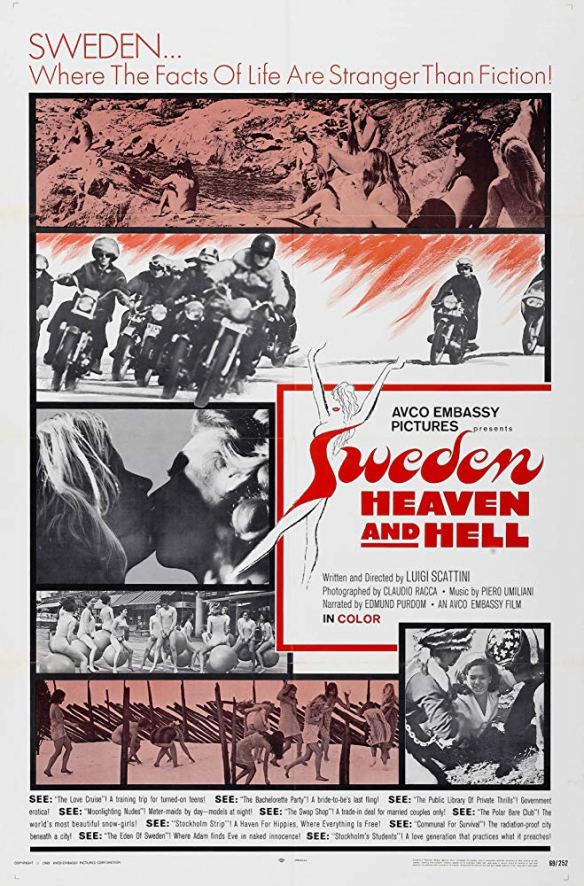
Between 1967 and 1974 Sweden emerged as the most progressive and liberal nation in the world due to a government that supported a wide variety of social and political interests such as women’s rights, anti-war advocacy and the environmental movement along with a relaxed attitude about sex. Films like Mac Ahlberg’s I, a Woman (1965), Vilgot Sjoman’s I Am Curious (Yellow) from 1967, and Joseph Sarno’s Inga (1968) also helped confirm Sweden’s image as an epicenter of sexual freedom so it was inevitable that such a situation would inspire a moralistic backlash. What no one expected was that it would come from Italy in the form of a Mondo Cane-like documentary directed by Luigi Scattini entitled Sweden: Heaven and Hell (1968).  Continue reading

The Lost Colony of Dalton’s Ferry

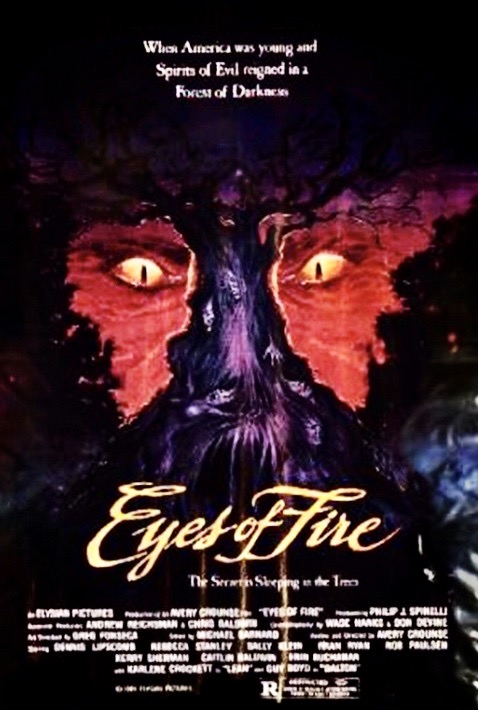
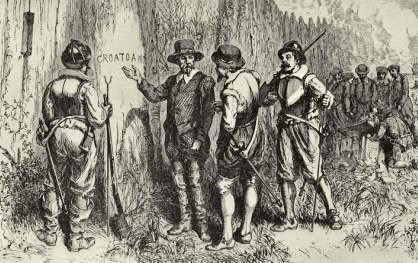
For the early settlers of this country, the New World offered freedom as well as the unknown. This was certainly true of the first colonists who had no idea what awaited them on these strange, new shores. The story of The Lost Colony, a settlement on Roanoke Island that was sponsored by Sir Walter Raleigh, was one of those childhood history lessons that stuck in my mind as a creepy unsolved mystery. Sometime between the years of 1585 and 1587, numerous attempts were made to establish a permanent base for English immigrants in the Virginia territory. Then supplies for the Roanoke community were cut off for three years during the Anglo-Spanish War so when John White, whose daughter and granddaughter were among the colonists, was able to return from England with aid, he found the settlement deserted with no trace of the people, only the cryptic word “Croatoan” carved into a tree. Much speculation but no evidence has emerged over the fate of The Lost Colony. Some say sickness and starvation killed them off, others say they were captured and assimilated into the local native tribes, either the Croatan or Hatteras. A few historians theorized that the survivors attempted to return to England and were lost at sea. There was also a theory that cannibalism may have decimated their ranks as it did the infamous Donner party.   Which brings me to Eyes of Fire (aka Cry Blue Sky), a little known, independent film from 1983 that has obvious connections to The Lost Colony in its tale of a band of settlers driven from their community and forced to find shelter in the wilderness. There they find themselves at the mercy of hostile tribal groups, the elements and….something much more insidious.   

Continue reading

Carole Lombard: Shady Lady

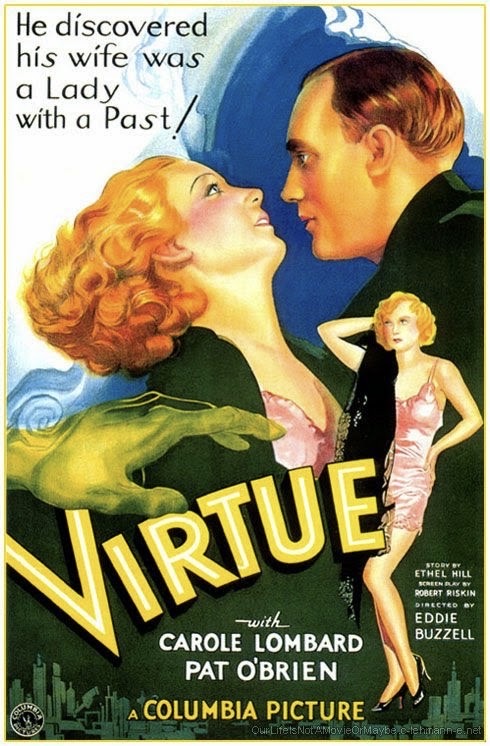
Prior to her breakout role opposite John Barrymore in the screwball comedy Twentieth Century (1934), Carole Lombard was a struggling young contract player at Paramount Pictures where her talent was often squandered in mediocre projects and B-pictures like It Pays to Advertise (1931), No One Man (1932) and Supernatural (1933). There were exceptions, of course, and one of the better examples is Virtue (1932), which confirms Lombard’s promise as an actress in her pre-stardom years.   Continue reading

The Holy Bray

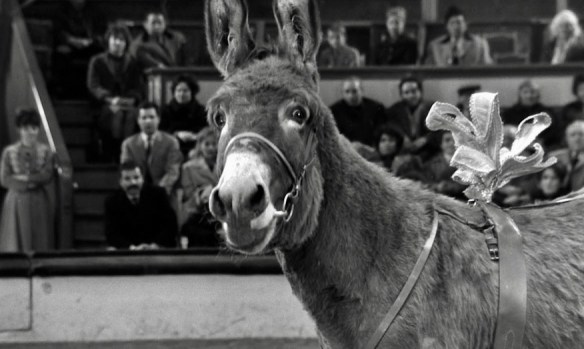
The title character of Robert Bresson’s Au Hasard Balthazar (1966) is a donkey who goes through a series of owners in his sad life as a beast of burden.

Films about animals or featuring them as the main protagonists are usually the province of Walt Disney and other family friendly productions such as Benji (1974) and March of the Penguins (2005). Other than the horror genre, though, there have been relatively few departures from the usual formulaic approach to this type of movie with Jerome Bolvin’s dark satire Baxter (1989) and the ethnographic Story of the Weeping Camel (2003) being two of the rare exceptions. Yet nothing can really compare with Au Hasard Balthazar (1966), directed by French filmmaker Robert Bresson, which stands alone as a profound and singular achievement in this category.   Continue reading

Tone Deaf

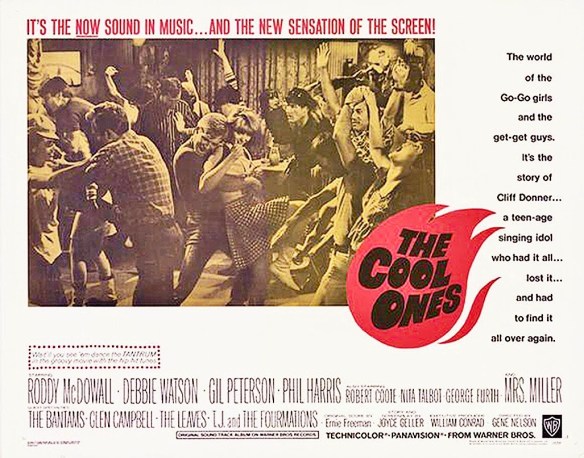
Everyone loves a good satire and the music industry always makes a great target with such superior examples of the form as The Girl Can’t Help It (1956), Head (1968) and This Is Spinal Tap (1984). The Cool Ones (1967), the story of a has-been pop idol and an aspiring singer teaming up to become the next big thing, certainly deserves credit for taking a lighthearted, broadly comic approach to the world of greedy record executives, egomaniacal producers, opportunistic promoters and wildly ambitious musicians. But the film is so hopelessly out of step with its intended audience and played at such a manic pitch that it approaches the infamous badness of Skidoo (1968), Otto Preminger’s mind-boggling mashup that pits gangsters against hippies.  Continue reading

Karl Loves His Work

Popular Czech actor Rudolf Hruskinsky is the demonic central character in Juraj Herz’s The Cremator (1969).

One of my favorite movements of the 20th century in cinema was the emergence of the Czech New Wave. Out of this creative period, which lasted from roughly 1962 through 1970, the film world was introduced to such innovative filmmakers as Milos Forman (Loves of a Blonde, 1964), Ivan Passer (Intimate Lighting, 1965), Jiri Menzel (Closely Watched Trains, 1966), Vera Chytilova (Daisies, 1966) and Jan Nemec (A Report on the Party and the Guests, 1966). In recent years, other Czech directors have been reappraised and elevated in stature thanks to the proliferation of DVD and Blu-ray restorations of such movies as The Sun in a Net (1961) by Stefan Uher, Pavel Juracek’s Case for a Rookie Hangman (1970) and Valerie and Her Week of Wonders from Jaromil Jires (1970). We can now add to that list The Cremator (1969), Juraj Herz’s macabre fable, which is finally being recognized as one of the key films from the Czech New Wave.   Continue reading

Woody Allen’s Comedy Experiment

By today’s standards, it doesn’t seem like such a novel movie concept — take a low-budget film, re-dub the soundtrack adding new dialogue, music and sound effects, and create an entirely new experience. You can trace pioneers in this technique back to the syndicated TV series Fractured Flickers hosted by Hans Conried in the early sixties and maybe even before that (Fractured Flickers took silent movies and gave them new soundtracks with voices, sound effects and music). Certainly one of the more famous practitioners of this idea is Woody Allen, who explored the possibilities of redubbing found footage – in his case, a Japanese spy movie – with What’s Up, Tiger Lily? (1966).  Continue reading

Ned Kelly Rides Again

In 2011, Justin Kurzel, an Australian director, first attracted attention for his feature film debut, The Smalltown Murders, which was based on the crimes of serial killer John Bunting in South Australia. For his follow-up film, he went to Scotland and made a savage, stylized interpretation of MacBeth (2015) starring Michael Fassbinder, which was nominated for the Palme d’Oro at the Cannes Film Festival. Then Kurzel graduated to the major leagues for Assassin’s Creed (2016), a big budget fantasy adventure filmed in Malta, Spain and the UK and based on the popular video game series. The critics savaged it, moviegoers were indifferent, and it was considered one of the biggest bombs of 2016. After that, Kurzel returned to his homeland and decided to focus on a folk hero who is still a polarizing figure in his country’s history – Ned Kelly. The subsequent film, True History of the Kelly Gang (2019), is a visually dynamic and emotionally chaotic biopic which might be the most unusual interpretation yet of Australia’s infamous outlaw.   Continue reading

The Prince and the Peasant

Will there be a happy ending for Prince Rodrigo (Omar Sharif) and Isabella Candeloro (Sophia Loren) in More Than a Miracle (1967), directed by Francesco Rosi.

Imagine, if you can, a rustic Neapolitan fairy tale directed by Francesco Rosi in the docudrama style of his post-neorealism films of the early sixties like The Moment of Truth (1965), shoot it in Technicolor and Techniscope, add a lush musical score by Piero Piccioni and you get More Than a Miracle (1967), a zesty Southern Italian fantasy-romance that was more appropriately titled Cinderella, Italian Style in Europe.   Continue reading

Climb Every Mountain

Luis Trenker – Alpinist, film director, architect, actor. photographer: Atelier Binder – property of Ullstein Bild – Atelier Binder/Everett Collection

Rarely seen in the U.S. and not one of the better known films about a famous mountain-climbing expedition, The Challenge (1938) is an intriguing bridge between the German mountain films of Arnold Fanck (White Hell of Pitz Palu, 1929) and contemporary man-against-nature survival tales such as Philipp Stozl’s Northface (2008), where two Germans and two Austrians try to scale the Eiger in Switzerland, and Kevin Macdonald’s documentary reenactment Touching the Void (2003), the ill-fated trek by Joe Simpson and Simon Yates up the face of the Siula Grande in the Peruvian Andes. Luis Trenker, one of the stars of The Challenge, was honored in person at the Telluride Film Festival in 1983 at age 90 and Turner Classic Movies aired the film in one of their Telluride programming tributes in 2010. The Challenge was also offered on The Criterion Channel.   Continue reading