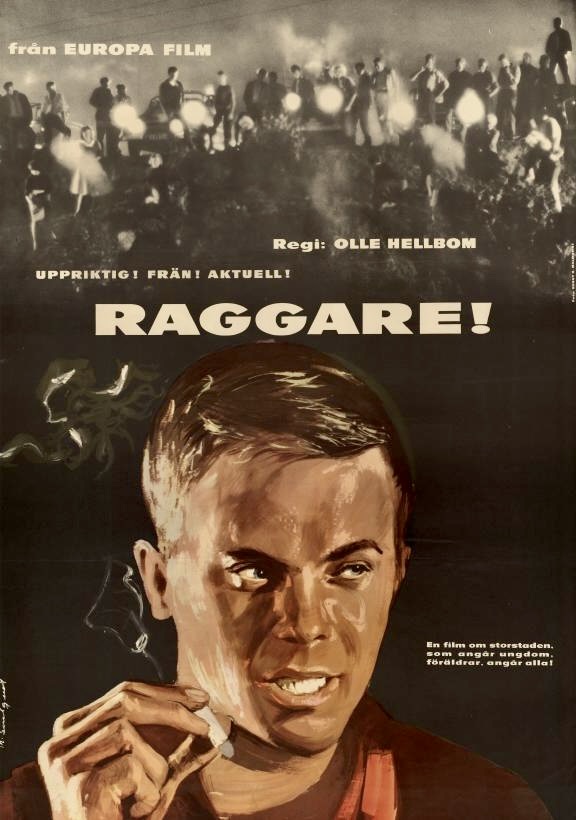
In America during the mid-1950s there was a backlash against conservatism and conformity which was fueled by the rise of rock ‘n’ roll and a pervasive mood of rebelliousness and frustration among teenagers. Much of this was reflected in the pop culture of the era, especially movies such as The Wild One (1953), Rebel Without a Cause (1956), and Blackboard Jungle (1956). Yet, this social change was not exclusive to America and was happening simultaneously all around the world. Juvenile delinquency, gang warfare, wild, alcohol-fueled parties and sexually promiscuous behavior were typical of the kinds of anti-social behavior on display in films as diverse as Die Halbstarken (English title: Teenage Wolfpack, 1956) from West Germany, Kurutta Kajitsu (English title: Crazed Fruit, 1956) from Japan, and Violent Playground (1958) from Great Britain. One of the lesser-known entries in this category is Raggare! (1959) aka Blackjackets, which stirred up considerable controversy in its native Sweden but didn’t attract much attention outside Scandinavia (It never received a theatrical release in the U.S.). There are also hardly any black leather jackets on display and most of the characters don’t share any physical similarities with the cast of Grease.
Continue readingTag Archives: Stockholm
Music Can Change Your Life

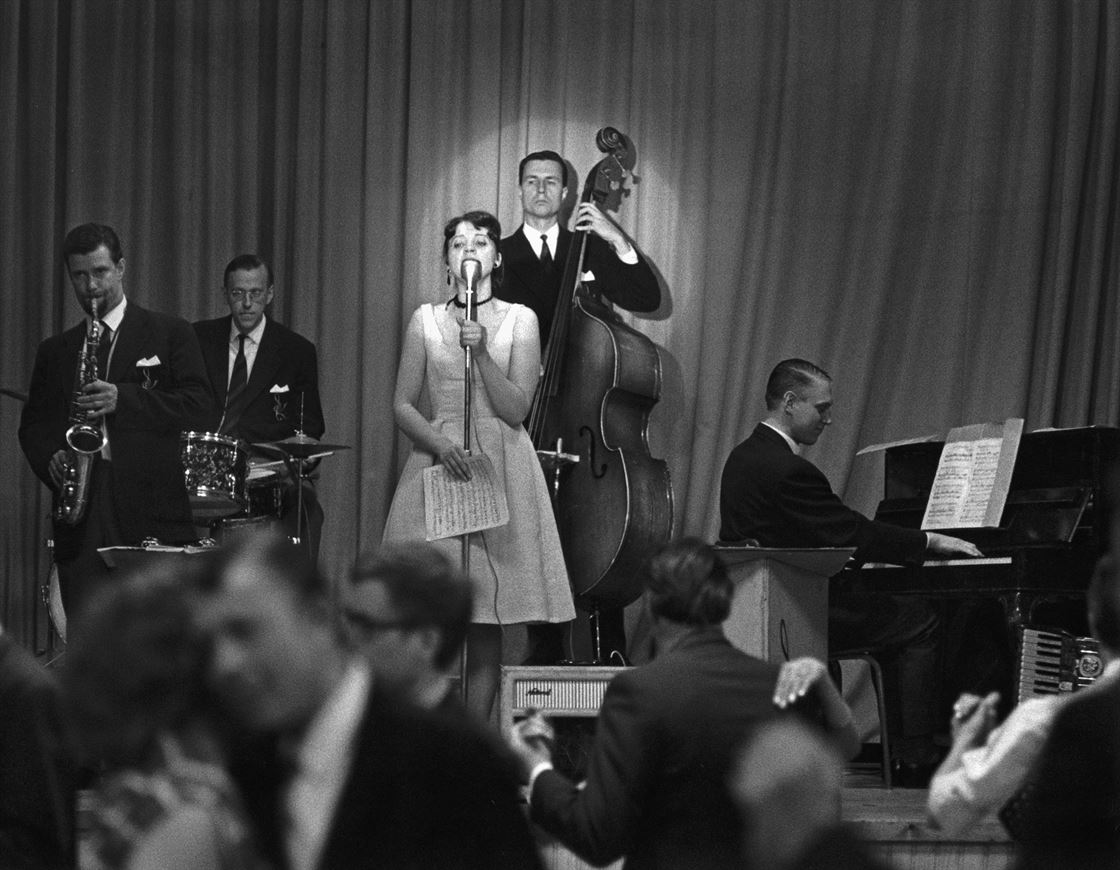
Group dynamics are always a fascinating topic for stories, especially when the focus is the workplace or some social situation. Consider this scenario, for instance, involving a small traveling band that specializes in Dixieland-style dance numbers and popular big band favorites. When a new musician joins their group with innovative musical ideas and the talent to execute them, not everyone is going to be immediately smitten. Such is the case with Sven Klang’s Combo (aka Sven Klangs Kvintett, 1976), a Swedish film by Stellan Olsson, which follows a fateful year in the life of a provincial quintet. They lose a member but gain a hip, new saxophone player from the big city who is heavily influenced by the bebop sounds of Charlie Parker, Dizzy Gillespie and others. The result is a bittersweet but often amusing look at how some bands either make the decision to go professional (if they are good enough) or content themselves playing for fun the rest of their lives.
Continue readingIn the Land of Mah-Na Mah-Na
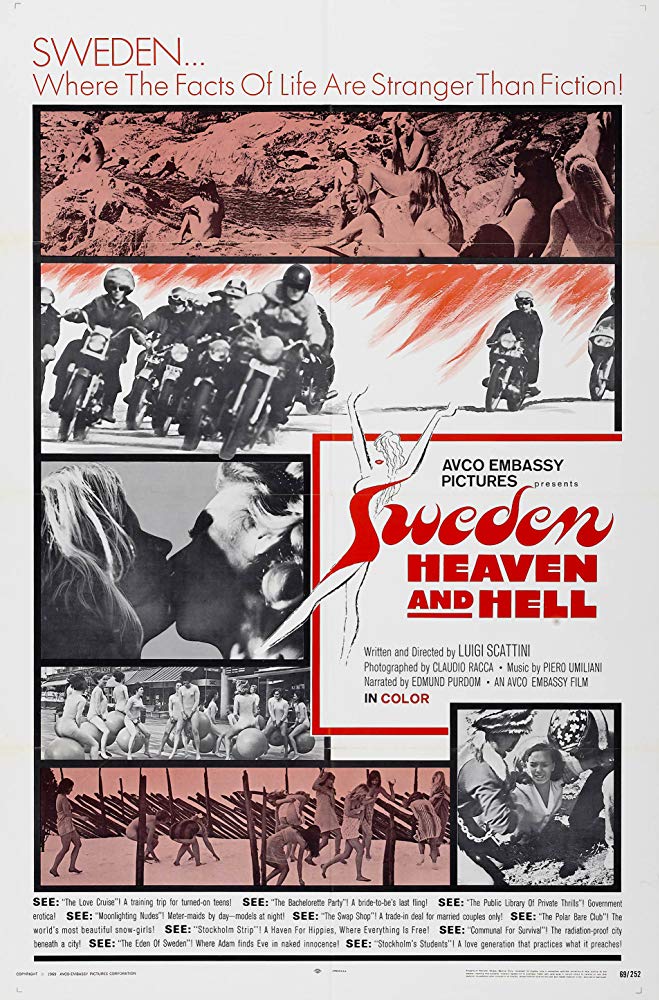
Between 1967 and 1974 Sweden emerged as the most progressive and liberal nation in the world due to a government that supported a wide variety of social and political interests such as women’s rights, anti-war advocacy and the environmental movement along with a relaxed attitude about sex. Films like Mac Ahlberg’s I, a Woman (1965), Vilgot Sjoman’s I Am Curious (Yellow) from 1967, and Joseph Sarno’s Inga (1968) also helped confirm Sweden’s image as an epicenter of sexual freedom so it was inevitable that such a situation would inspire a moralistic backlash. What no one expected was that it would come from Italy in the form of a Mondo Cane-like documentary directed by Luigi Scattini entitled Sweden: Heaven and Hell (1968). Continue reading