Once Upon a Time in Russia

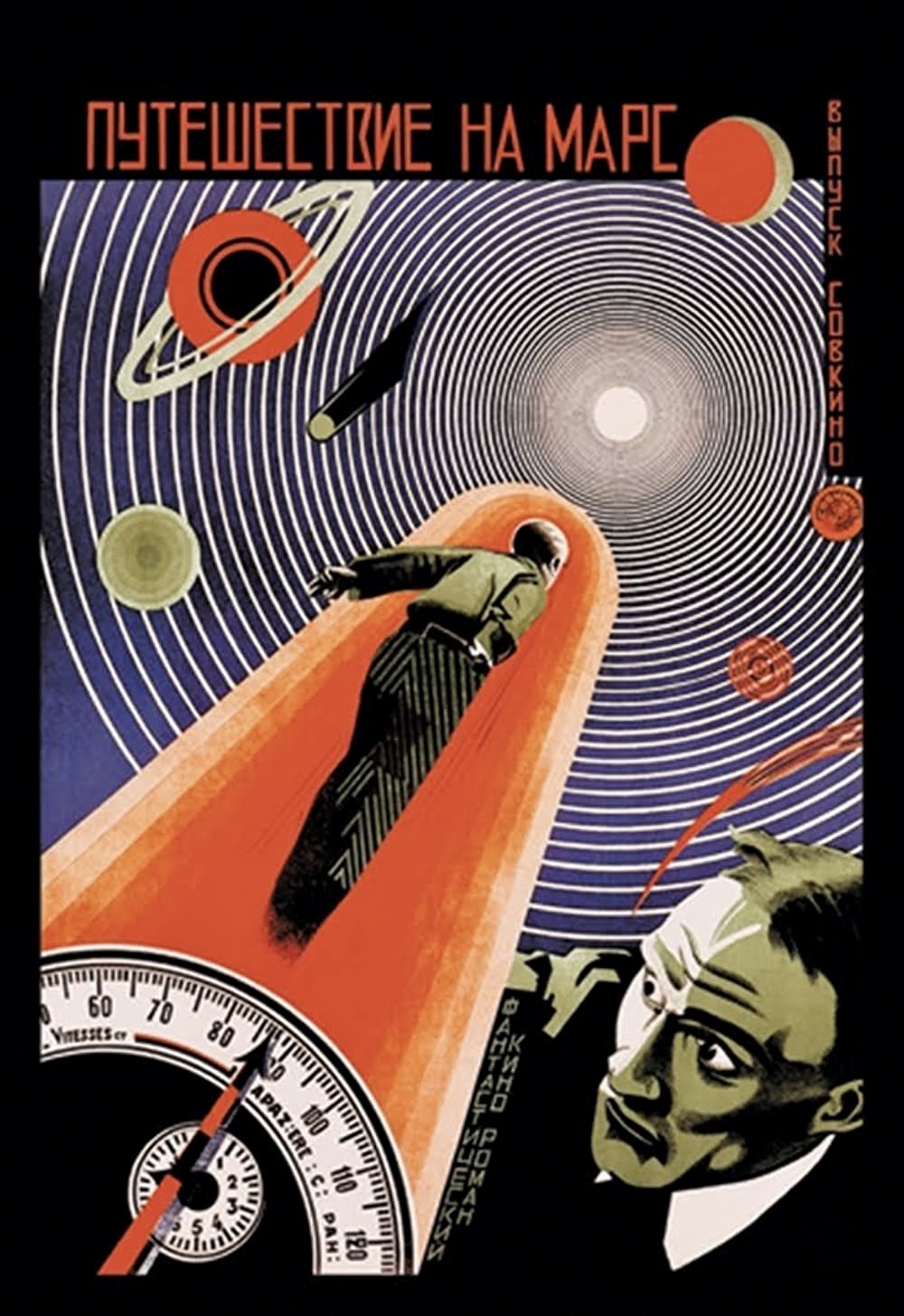
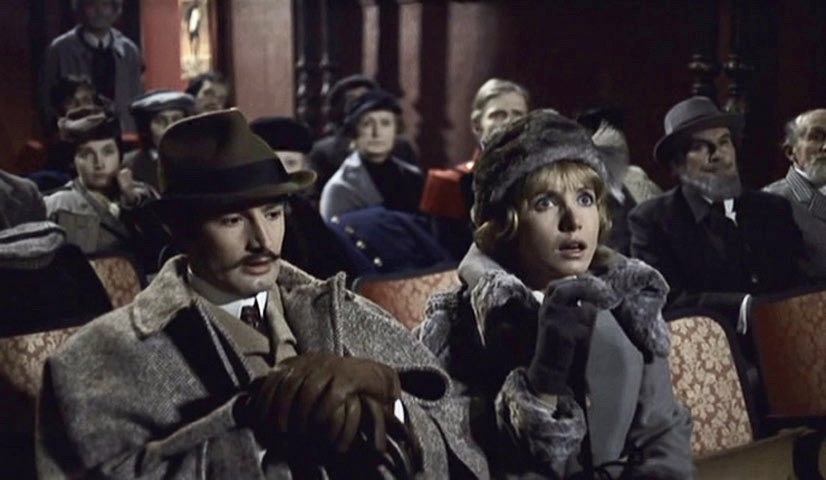
“Hordes storm fortress!” “Tartars Abduct Viking beauty!” “Orgy celebrates conquest!” These were some of the tag lines used to promote the period epic The Tartars (1961), one of many European imports that reached American shores during a brief “sword and sandal” craze in the late fifties/early sixties. Hercules, the 1959 peplum sensation starring Steve Reeves, started it all. Producer Dino De Laurentiis bought the rights and distributed it in the U.S. in 1959, transforming it into a box office hit. After that, every major studio was scrambling to duplicate that success and MGM was no exception, importing such muscle-bound contenders as The Giant of Marathon (1960), Morgan the Pirate (1961) and The Son of Spartacus (aka The Slave, 1963) – all of them starring Steve Reeves. The Tartars, however, had a different pedigree and a more distinctive one. Not only was it helmed by Richard Thorpe, one of MGM’s most dependable directors of costume epics (Ivanhoe (1952), The Prisoner of Zenda (1952), Knights of the Round Table, 1953), but it sported two high profile marquee names – Victor Mature and Orson Welles.  

Continue reading

Guilty Bystanders

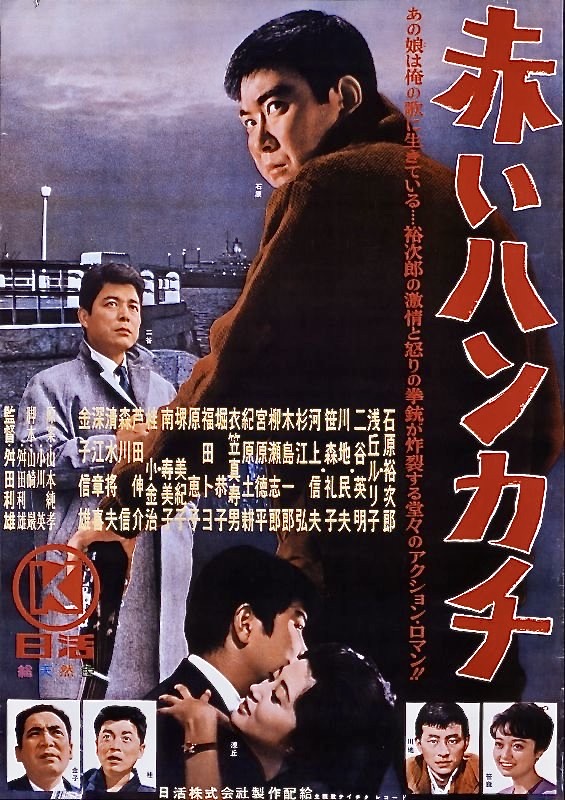
The Japanese film poster for Mikkai aka THE ASSIGNATION (1959), directed by Ko Nakahira.

A young couple are enjoying a romantic rendezvous in a hidden grove at a city park at twilight. It turns out to be an illicit affair. The woman is the married wife of a law professor and her lover is one of his students. Their privacy is interrupted by the arrival of a speeding taxi that crashes into an embankment nearby. Inside the driver is seen struggling with the backseat occupant. It ends badly with the driver murdered and his body dragged into the bushes. The killer flees and the young couple are faced with a dilemma. Should they go to the police and risk exposing their affair or remain silent? This is the pressing issue that drives the narrative of The Assignation (Japanese title: Mikkai, 1959), directed by Ko Nakahira. 

Continue reading

Class Clowns

College life and the behavior of students and facility alike has been a source of inspiration for countless satires and parodies on the subject from the silent era (Harold Lloyd in The Freshman [1925], Buster Keaton in College [1927]) and early sound period (Laurel & Hardy in A Chump at Oxford [1939]) on up to more contemporary examples such as National Lampoon’s Animal House [1978], Van Wilder [2002] and Accepted [2006]. Certainly one of the funniest and most memorable of all is Horse Feathers (1932), a madcap burlesque of university life starring The Marx Brothers in which the institution of higher education is held up for ridicule and satirized mercilessly.  

Continue reading

Udo Kier’s First Feature Film

Udo Kier plays a rising gang leader in the bleak 1968 crime expose SHAMELESS (German title: Schamlos).

Long before Udo Kier became the go-to eclectic supporting actor who stole his scenes in films such as Gus Van Sant’s My Own Private Idaho (1991), the sci-fi fantasy Johnny Mnemonic (1995), Wim Wenders’ The End of Violence (1997) and numerous films by Lars von Trier, the German actor was already firmly established as a cult film icon from the 1970s. In addition to playing the lead in two Andy Warhol productions, Flesh for Frankenstein (1973) and Blood for Dracula (1974), he starred in the sadistic period piece The Mark of the Devil (1970), Just Jaeckin’s S&M erotica The Story of O (1975), Dario Argento’s Suspiria (1977) and R.W. Fassbinder’s The Third Generation (1979). Kier, who was born in 1944, is still going strong today at age 78 with more than 250 film and TV series in his filmography and a rare leading role in Swan Song (2021), in which he plays a retired hairdresser who agrees to perform one last makeover on a deceased client. But if you want to see him at the beginning of his career, look no further than his debut feature film Shameless (German title, Schamlos, 1968), in which he plays a ruthless young gangster who tries to muscle in on his rival’s business operations in Vienna, Austria.

Udo Kier has a rare starring role in the bittersweet comedy-drama SWAN SONG (2021).
Continue reading

Space Oddity

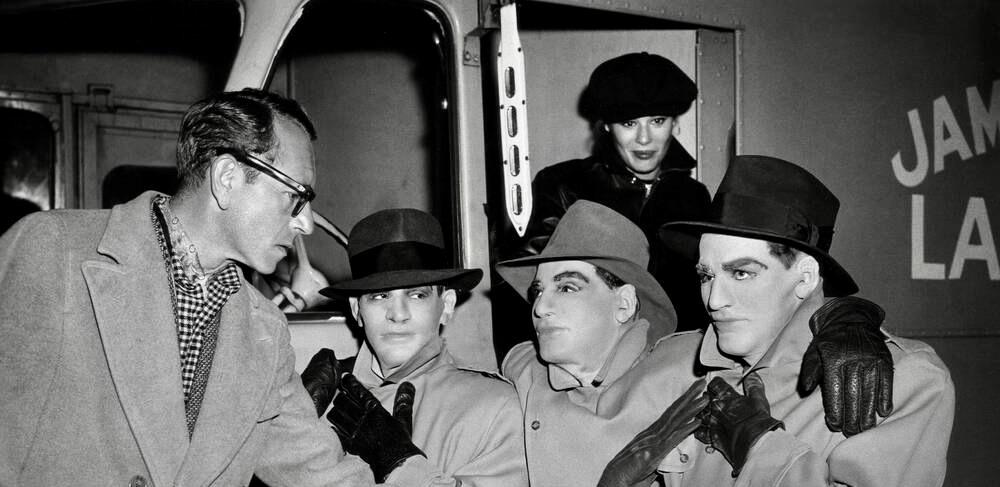
Androids with four arms! Curvaceous, lifelike inflatable women! Bald interplanetary kidnappers dressed in dark raincoats and wearing shades! Human mutants and laboratory rejects! A bizarre space-age cabaret where all of the performers are dressed as giant butterflies! These are just a few of the sights you’ll see on The Wild, Wild Planet (1966), a groovy Italian science-fiction adventure directed by Antonio Margheriti. 

Continue reading

A City or a Labyrinth?

Whether by accident or design, French filmmaker Jacques Rivette is probably the least known member of the influential Nouvelle Vague movement of the late fifties though, like Jean-Luc Godard, Francois Truffaut, Eric Rohmer, and Claude Chabrol, he too was a former writer and film critic for Cashiers du Cinema. He even started production on his first feature length film, Paris Belongs to Us (French title: Paris Nous Appartient), in 1957, before Chabrol, Truffaut and Godard began work on what would become their universally acclaimed debuts of, respectively, Le Beau Serge (1958), The 400 Blows (1959) and Breathless (1960). Yet, despite the artistic and liberating impact the latter three films had on world cinema, Paris Belongs to Us might be the most ambitious, challenging and intellectually provocative film of the whole movement. It is also the darkest, waltzing toward an imagined or possibly real oblivion. The Homeland Security System would give it a code orange classification.       

Continue reading

Second Sight

The gift of clairvoyance and the ability to predict the future is a plot device that has been well mined in the cinema from It Happened Tomorrow (1944) to Nightmare Alley (1947) to The Night My Number Came Up (1955). But one of the earliest and most intriguing presentations of this phenomenon can be found in the rarely seen 1934 release, The Clairvoyant (aka The Evil Mind). Made at an early stage in Claude Rains’ career when he was still accepting film work in both Hollywood and England and was not yet a contract player at Warner Bros., The Clairvoyant provides an excellent showcase for the actor as Maximus, the mind reader.

Continue reading

No Man’s Land

The Hungarian poster for THE RED AND THE WHITE (1967).

Imagine a life during wartime where your country is invaded by foreign forces and your friends and neighbors have either joined the resistance or sided with the enemy in order to save their own skins. The lines were more clearly drawn during the American Civil War where geography, uniforms and flags were the distinguishing physical differences but in Europe, wars and revolutions were much more complicated and confusing for the opposing sides. Consider, for example, The Red and the White (Hungarian title: Csillagosok, Katonak, 1967), directed by Miklos Jancso, in which Hungary collapses into chaos in the aftermath of the Russian Revolution. As depicted by Jansco, the landscape becomes a no man’s land where the roles of the oppressors and the oppressed are constantly switching and non-partisan peasants are caught in the middle with no control over their fates. The result is a visually mesmerizing, almost absurdist view of power changing hands almost as rapidly as gamers in an interactive duel.

Continue reading

Michael Powell’s Penultimate Film

Peeping Tom, the 1960 psychological thriller about a homicidal cinematographer who uses his camera to capture the death throes of the models he murders, is regarded today as one of director Michael Powell’s masterpieces. At the time of its release, however, it was universally reviled by most critics and brought an abrupt halt to Powell’s career. Some even mistakenly believed it was his last film and even Powell wondered if he’d ever work again. But the celebrated director would go on to helm four more feature films, a made-for-TV production of Bela Bartok’s opera Herzog Blaubarts Burg (aka Bluebeard’s Castle, 1963) and the documentary Return to the Edge of the World (1978). Among his post-Peeping Tom work, Age of Consent (1969), his penultimate feature, is an underrated delight and features Helen Mirren in her first starring role.

Continue reading

I Was a Teenage Peeping Tom

Craig Fowler (Paul Anka) is a lonely, insecure teenager who likes spying on his female neighbors in LOOK IN ANY WINDOW (1961).

Among the many teen idols of the fifties who climbed to fame with top forty hit records, only a few made the successful crossover to film acting. Pat Boone was groomed by 20th-Century-Fox as a teen matinee idol in Bernadine (1957), Tommy Sands stayed in his comfort zone playing an aspiring pop star in Sing Boy Sing (1958), Fabian made his screen debut with the family-friendly backwoods drama Hound-Dog Man (1959), and Bobby Rydell played your average boy-next-door opposite Ann-Margret in Bye Bye Birdie (1963). Paul Anka, on the other hand, appeared in the most unlikely vehicle for his first major starring role – Look in Any Window (1961).   

Continue reading