Edwardians at Play

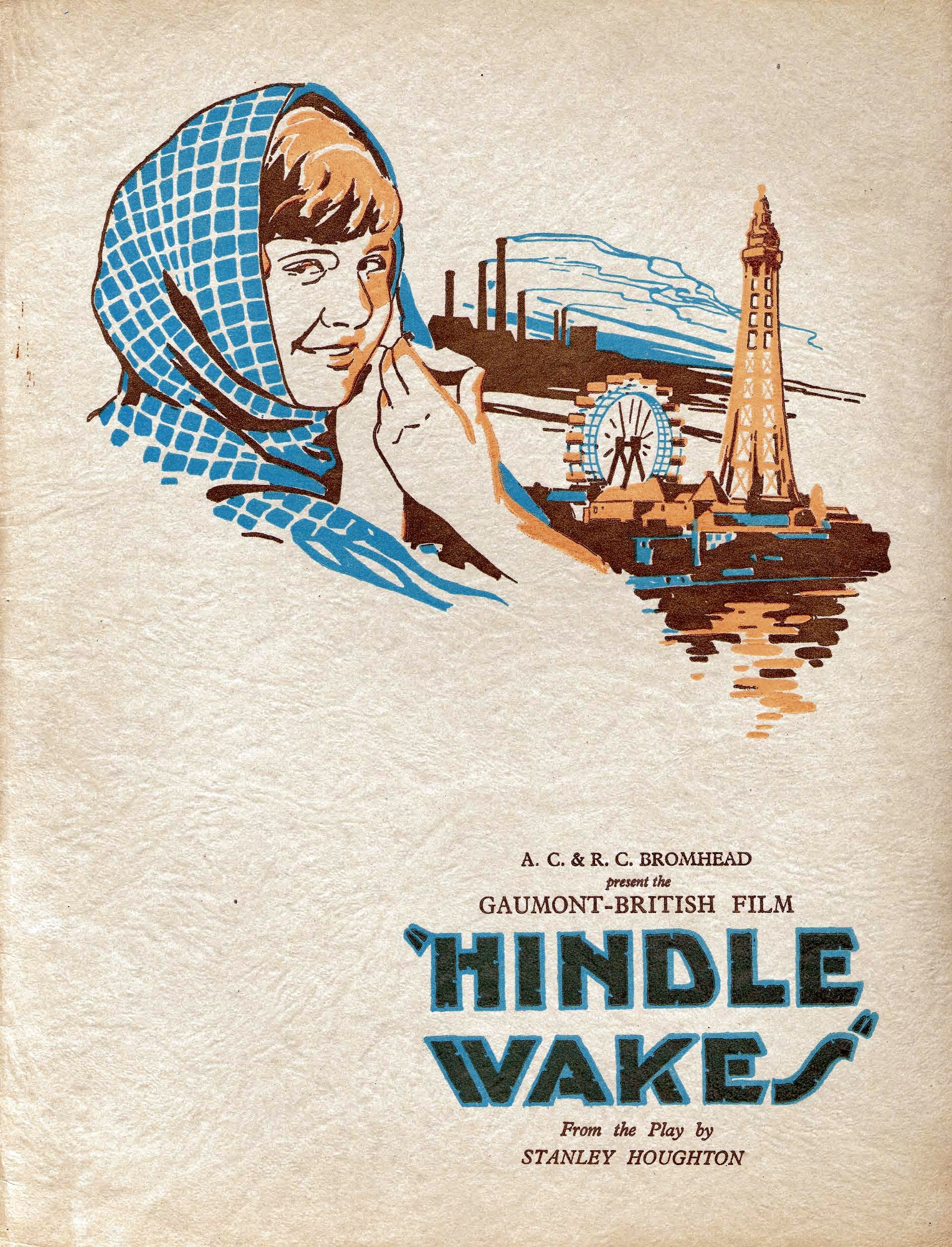
The year is 1910 and you work in a factory in the North West region of England where you are given a week off every year. So where do you take your vacation? During the Edwardian era, most working class people preferred to spend their leisure time at the seashore and Blackpool was one of the most popular resort towns for the working class. Frolicking in the surf, fairground rides, penny arcade amusements, live entertainment/musical revues, and the famous lights of Blackpool were all part of the attraction along with affordable lodgings and restaurants. It was only natural that such a popular destination would become the setting for one of the most famous British plays of the 20th century. Hindle Wakes, written by Stanley Houghton, was first performed on the stage in 1912 and would go on to enjoy numerous film and TV adaptations in the subsequent decades. Maurice Elvey would direct two silent versions (one in 1918, the other in 1927), a 1931 sound version was directed by Victor Saville and a remake entitled Holiday Week appeared in 1952 while TV versions premiered in 1947 (featuring Wendy Hiller as the heroine), 1950, 1957 and 1976 (co-directed by June Howson and Laurence Olivier). Of all the versions, however, most film critics and movie historians tend to favor Hindle Wakes aka Fanny Hawthorne, the 1927 adaptation spotlighting American actress Estelle Brody in possibly her most famous role.

Continue reading
Second Sight

The gift of clairvoyance and the ability to predict the future is a plot device that has been well mined in the cinema from It Happened Tomorrow (1944) to Nightmare Alley (1947) to The Night My Number Came Up (1955). But one of the earliest and most intriguing presentations of this phenomenon can be found in the rarely seen 1934 release, The Clairvoyant (aka The Evil Mind). Made at an early stage in Claude Rains’ career when he was still accepting film work in both Hollywood and England and was not yet a contract player at Warner Bros., The Clairvoyant provides an excellent showcase for the actor as Maximus, the mind reader.

Continue reading

The Next Wonder of the World

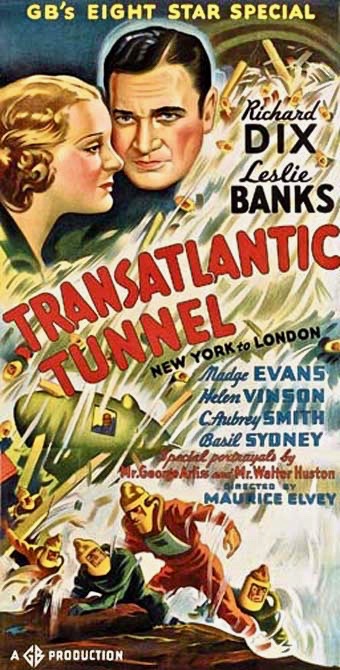
Imagine a tunnel under the Atlantic that connected the United States with Europe and provided a high speed form of transportation between the two points. It’s certainly not an unrealistic expectation for the near future when you consider that the undersea rail known as the Channel Tunnel (aka the Chunnel) that currently connects Folkestone, Kent in England to Coquelles, France has been in operation since 1994. But that remarkable feat of engineering is only 50.5 km. compared to the 5,000 km. that would be the more likely distance of an undersea rail that connected New York City with London. Still, proposed plans for under-the-sea travel connectors between countries separated by water continue to surface in news reports and may happen in the near future. What’s most remarkable is the fact that Transatlantic Tunnel (aka The Tunnel), a 1935 British film, envisioned the same thing and some of that movie’s futuristic art direction and design is not that far removed from some of the models you can view on the interest today (just do a search for undersea rail systems).       Continue reading