
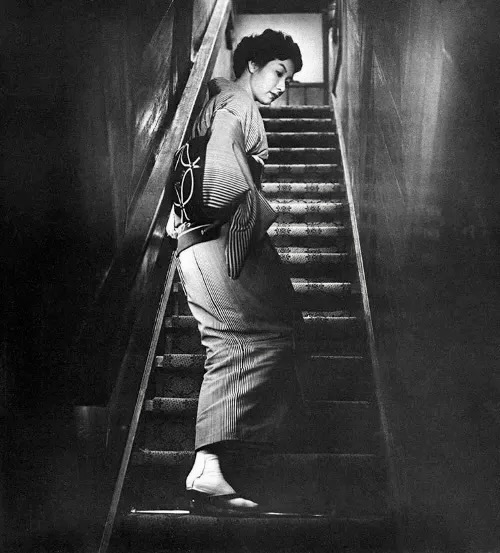
The Bar Hostess of Ginza

Keiko (Hideko Takamine) prepares to go to work at a bar on the second floor of a popular male destination in WHEN A WOMAN ASCENDS THE STAIRS (1960).

Most fans of Japanese cinema know that the Ginza district of Tokyo is often featured as a setting in films with its vibrant nightlife, intimate bars and fashionable shops, particularly in contemporary movies. Although the district dates back to the Edo period in the 16th century, the area has seen major changes over the years including a devastating fire in 1872 and widespread damage from aerial attacks during WWII. Yet, it always seemed to reinvent itself after every major setback and, by the end of the 1950s, it had become a prosperous symbol of Japan’s post-war recovery with its mix of upscale shoppers, modern buildings and cultural hotspots. It is against this colorful backdrop that Mikio Naruse’s Onna ga Kaidan wo Agaru Toki (English title: When a Woman Ascends the Stairs, 1960) takes place and the central focus is Keiko Yashiro (Hideko Takamine), one of the most popular bar hostesses in the Ginza sector.

Continue reading
The Sociopath’s Playbook

The Japanese film poster for THE BEAST SHALL DIE (1959), directed by Eizo Sugawa.

According to the Oxford Dictionary, a sociopath is a person who has a personality disorder which causes them to behave in an aggressive, violent or unpleasant way towards other people. The general opinion among psychiatrists is that sociopaths are not born that way, which is usually the case with psychopaths. Instead, sociopaths are shaped by their environment and experiences. A classic example of this is profiled in Eizo Sugawa’s Yaju Shisubeshi (English title: The Beast Shall Die). The protagonist of this 1959 psychological thriller is Date Kunihiko (Tatsuya Nakadai), a quiet, well-mannered graduate student who is exceptionally gifted as a writer and athlete. Behind his benign façade, however, is a cunning sociopath with a plan that slowly reveals itself as the film unfolds. As portrayed by Nakadai, Date is a truly chilling figure and one of his least known but most potent early performances. It deserves to be included with his more celebrated work in such Japanese masterpieces as Masaki Kobayashi’s The Human Condition (1959-1961), Kihachi Okamoto’s The Sword of Doom (1966) and numerous collaborations with Akira Kurosawa such as Sanjuro (1962), High and Low (1963) and Kagemusha (1980).

Continue reading

Guilty Bystanders

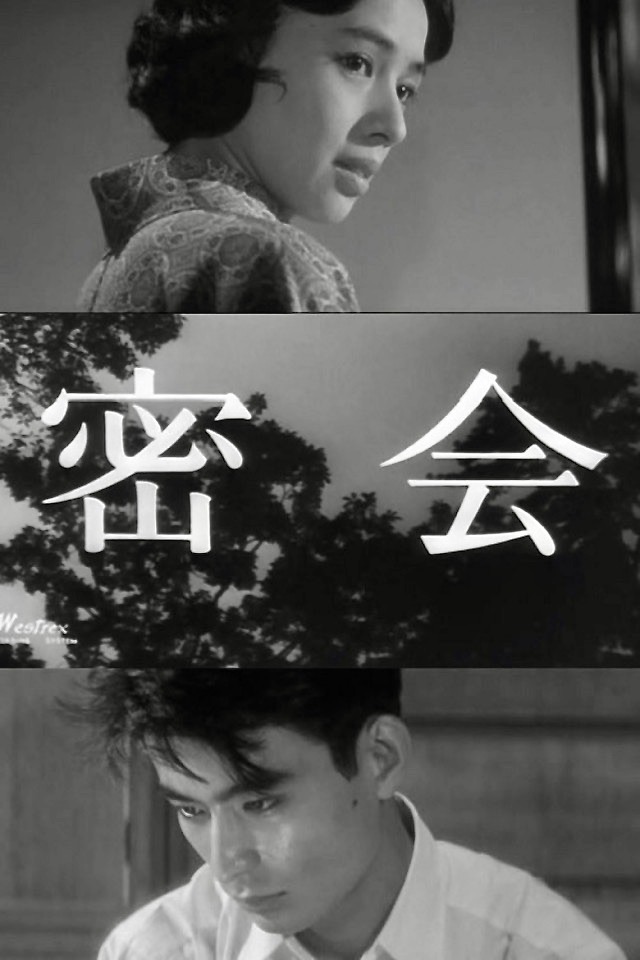
The Japanese film poster for Mikkai aka THE ASSIGNATION (1959), directed by Ko Nakahira.

A young couple are enjoying a romantic rendezvous in a hidden grove at a city park at twilight. It turns out to be an illicit affair. The woman is the married wife of a law professor and her lover is one of his students. Their privacy is interrupted by the arrival of a speeding taxi that crashes into an embankment nearby. Inside the driver is seen struggling with the backseat occupant. It ends badly with the driver murdered and his body dragged into the bushes. The killer flees and the young couple are faced with a dilemma. Should they go to the police and risk exposing their affair or remain silent? This is the pressing issue that drives the narrative of The Assignation (Japanese title: Mikkai, 1959), directed by Ko Nakahira. 

Continue reading