The Runaway Nuclear Physicist

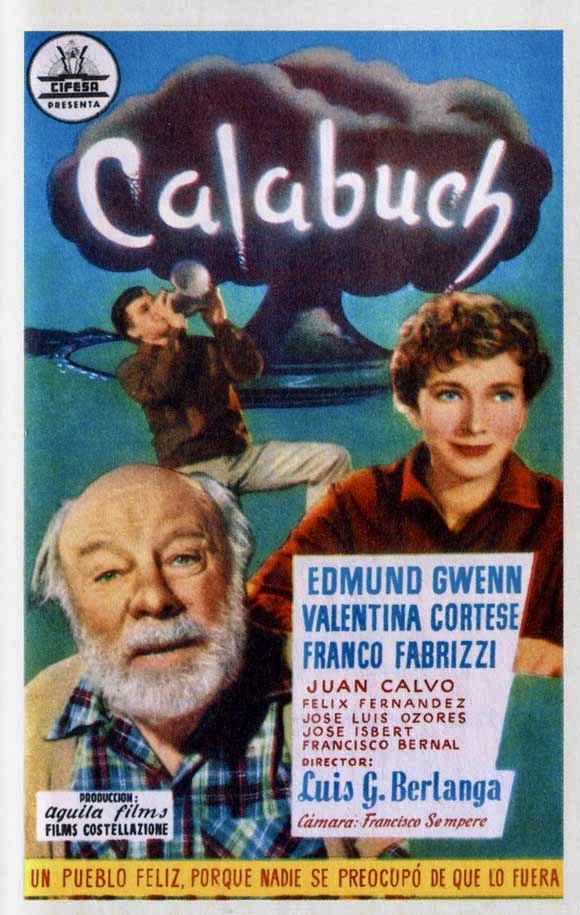
Often considered alongside Luis Bunuel as one of the most important and influential Spanish film directors of the 20th century, Luis Garcia Berlanga (1921-2010) and his work is still being discovered in the U.S. Bienvenido, Mister Marshall! (Welcome, Mr. Marshall, 1953), Berlanga’s post-WW2 satire of the European Recovery Plan aka the Marshall Plan, was the first of his films to receive wide distribution at art houses in America and went on to win the International Prize for Best Comedy Film at Cannes. Placido (1961), a black farce in which a homeless man is invited to a Christmas Eve dinner sponsored by a cookware corporation, was nominated for a Best Foreign Language Film Oscar. And El Verdugo (The Executioner, 1963) might be his most famous triumph with Nino Manfredi as an undertaker who is pressured into taking over his father-in-law’s profession as an executioner. The Criterion Collection released a special edition of it on Blu-ray and DVD in 2016, which helped introduce Berlanga’s satiric masterwork to new audiences. Less well known today but praised by critics during its original release in 1956 is Calabuch aka The Rocket from Calabuch, a seemingly gentle but subversive satire about life in a rustic seaside village which is disrupted by the arrival of an amiable but mysterious stranger.

Continue reading →
Head Hunter at Large

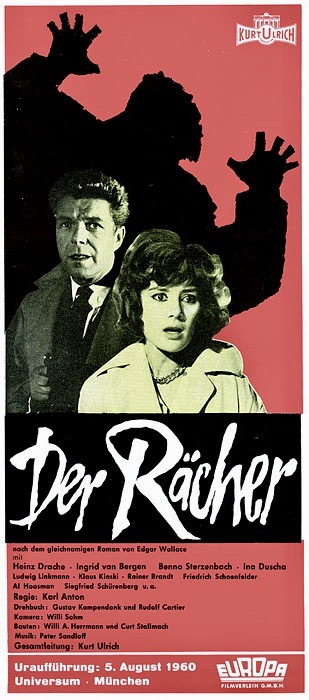
The German film poster for THE AVENGER (1960), based on an Edgar Wallace pulp novel.

A speeding sedan races down a deserted road at night. Suddenly a package is thrown from the vehicle as it speeds away. The next morning two matronly women on bicycles notice the package on the side of the road and decide to investigate in case there is something of value inside. Eagerly opening the crudely tied box, they look inside and scream at the sight of a severed head. Thus begins the 1960 German mystery thriller, Der Rasher (English title: The Avenger), one of the earliest but almost forgotten entries among the cinematic adaptations of Edgar Wallace crime novels that enjoyed a revival in Germany in the late 1950s. 

Continue reading →

Who Has the Last Laugh?

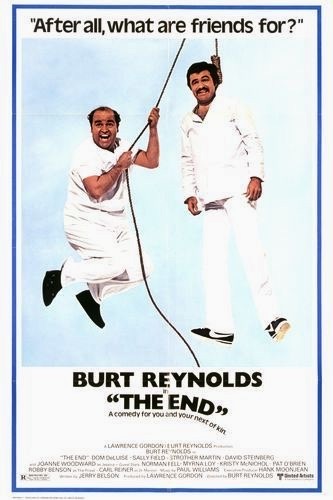
By 1978 Burt Reynolds was approaching the peak of his popularity which would begin to taper off in the mid-eighties as he approached the age of 50. He had just completed two huge box office hits, Smokey and the Bandit and Semi-Tough (both 1977) and was in a position to choose and develop any project he fancied. But instead of rushing into a sequel to Smokey and the Bandit or some other big budget vehicle that exploited his good ole boy blend of machismo, charm and sex appeal, Reynolds chose to make a risky, offbeat black comedy about a man dying of a terminal condition who contemplates suicide as a solution to a slow, agonizing death. In addition, the popular leading man would direct and star in it and cast his girlfriend at the time Sally Field in a prominent role. Released as The End in 1978, the film was not what moviegoers or critics expected from Reynolds or even wanted. 

Continue reading →

In Praise of Tarkovsky

When he died in Paris on July 29, 2012, filmmaker Chris Marker left behind more than 60 short films and features, most of which were experimental cinema essays and documentaries. Many were political in nature but he also dabbled in other favorite subjects such as cats (Cat Listening to Music, 1988), Japan (The Koumiko Mystery, 1965) and the contemplation of memory (Immemory, an interactive CD-Rom from 1997). His work rarely found an outlet in commercial cinema venues but was often celebrated at film festivals and archival/repertory mainstays. If his name sounds familiar to you, it is due to his landmark science fiction short, La Jetee (1962), which remains influential today for its innovative approach to visual narrative. What many don’t know, however, is that Marker directed several highly accessible tributes to favorite film figures such as Yves Montand (La Solitude de Chanteur de Fond, 1974), Akira Kurosawa (A.K., 1985) and Simone Signoret (Memoires pour Simone, 1986) and one of his finest achievements is One Day in the Life of Andrei Arsenevich (1987). 

Continue reading →

Music Can Change Your Life

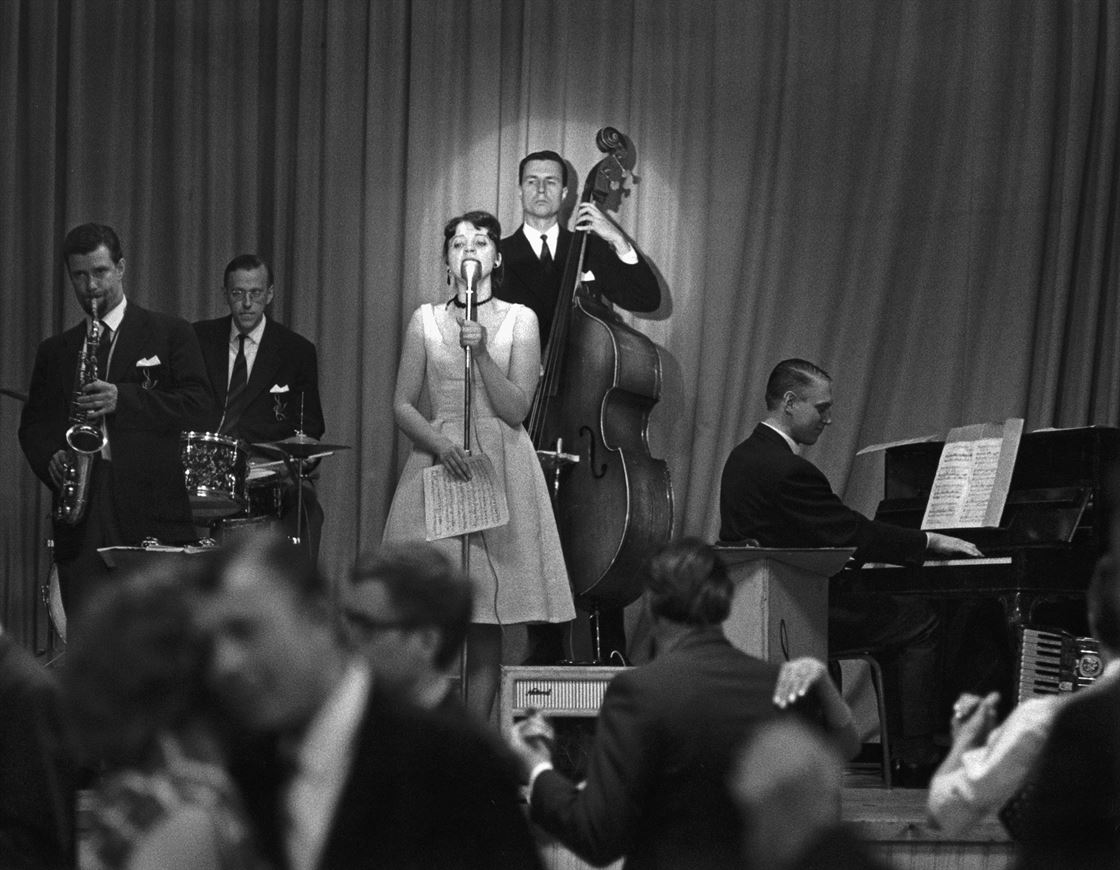
Gunnel (Eva Remaeus) serenades a dance hall with her accompanying musicians in SVEN KLANG’S COMBO, a 1976 Swedish film about a small town Dixieland band.

Group dynamics are always a fascinating topic for stories, especially when the focus is the workplace or some social situation. Consider this scenario, for instance, involving a small traveling band that specializes in Dixieland-style dance numbers and popular big band favorites. When a new musician joins their group with innovative musical ideas and the talent to execute them, not everyone is going to be immediately smitten. Such is the case with Sven Klang’s Combo (aka Sven Klangs Kvintett, 1976), a Swedish film by Stellan Olsson, which follows a fateful year in the life of a provincial quintet. They lose a member but gain a hip, new saxophone player from the big city who is heavily influenced by the bebop sounds of Charlie Parker, Dizzy Gillespie and others. The result is a bittersweet but often amusing look at how some bands either make the decision to go professional (if they are good enough) or content themselves playing for fun the rest of their lives. 

Continue reading →

Sin City Mercenaries

Las Vegas aka Sin City, the gambling mecca of the world, might be a symbol of capitalism at its worse but it makes an irresistible location for a movie with its dazzling neon lights and nightlife diversions from extravagant musical revues to strip clubs to glittering casinos. The intoxicating atmosphere has been featured prominently before in musicals like Meet Me in Las Vegas (1956) and Viva Las Vegas (1964) as well as comedies (Honeymoon in Vegas [1992], Fear and Loathing in Las Vegas [1998]) and dramas (Leaving Las Vegas [1995], Casino [1995). But I especially enjoy the crime caper films set in Sin City such as Ocean’s 11 (1960) and the remakes it inspired years later starting with Steven Soderbergh’s Ocean’s Eleven (2001). To this list, I have to add an often overlooked but superior genre entry from 1968 – They Came to Rob Las Vegas. 

Continue reading →

Vincent Price is Matthew Hopkins

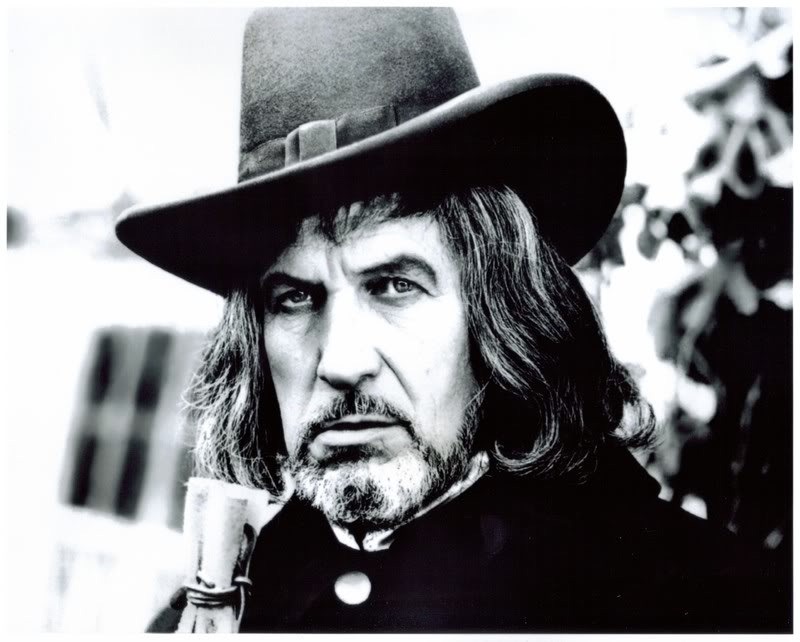
Vincent Price as the infamous, real life witch hunter Matthew Hopkins in THE CONQUEROR WORM (1968), released in the U.K. as WITCHFINDER GENERAL.

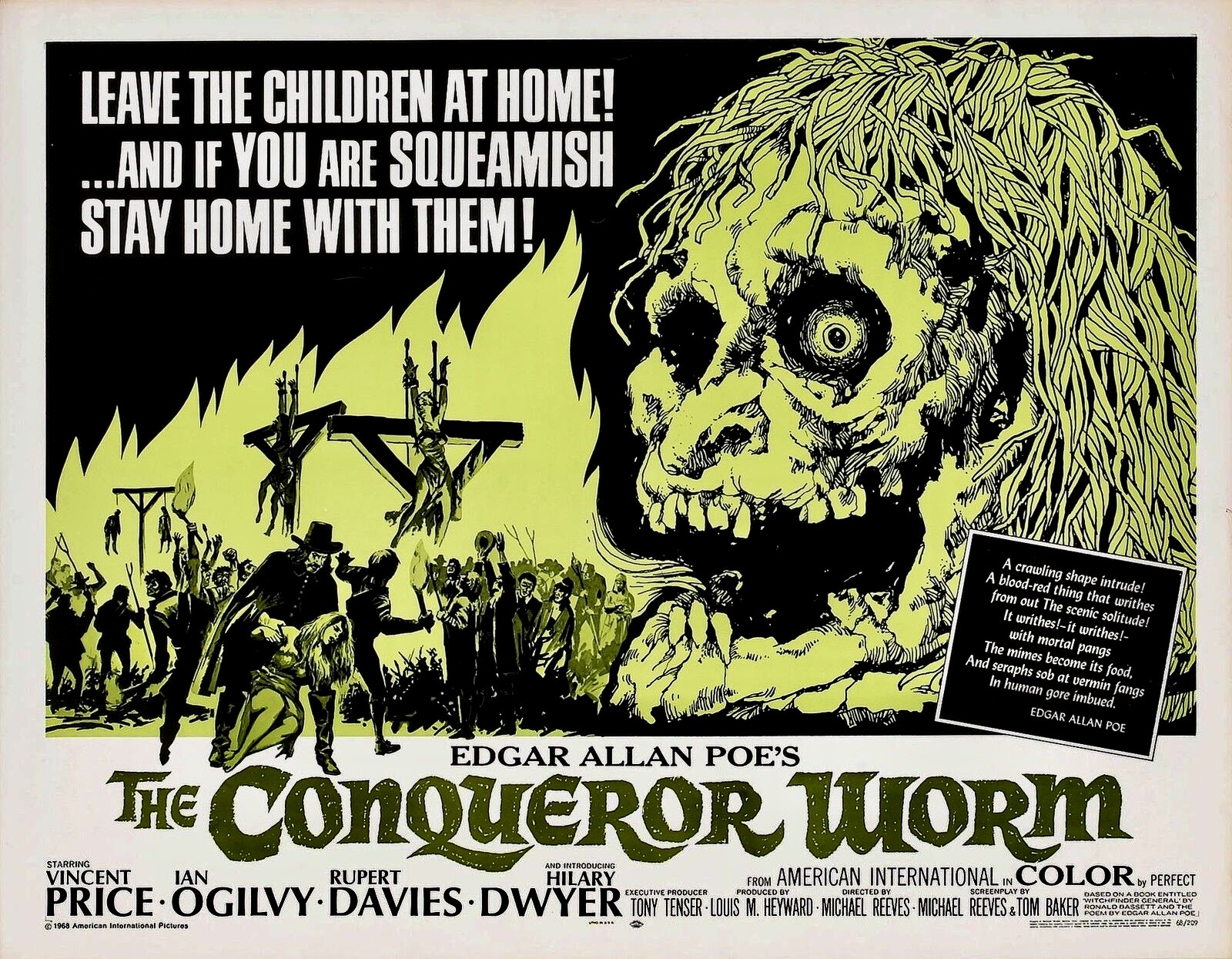
Vincent Price has always been associated with the horror genre even though he appeared in all kinds of other films during his career such as film noir (Laura), comedy (Champagne for Caesar), westerns (The Baron of Arizona), historical drama (The Private Lives of Elizabeth and Essex), science fiction (The Invisible Man Returns) and more. But his particular brand of villainy in horror films tend to be almost tongue-in-cheek with a macabre sense of humor and campy flourishes as in House on Haunted Hill (1959), The Tingler (1959), Diary of a Madman (1963) or Theater of Blood (1973), to name a few. His performance as infamous witch hunter Matthew Hopkins in The Conqueror Worm, however, was something else entirely – a genuinely chilling portrayal that was like nothing else he had ever done or would ever do again. Even today the intensity of his evil is the stuff of nightmares and he seems to be channeling the malevolent spirit of Hopkins in what is still a timely snapshot of political and religious persecution in the 17th century.

Continue reading →

Queen of Karate

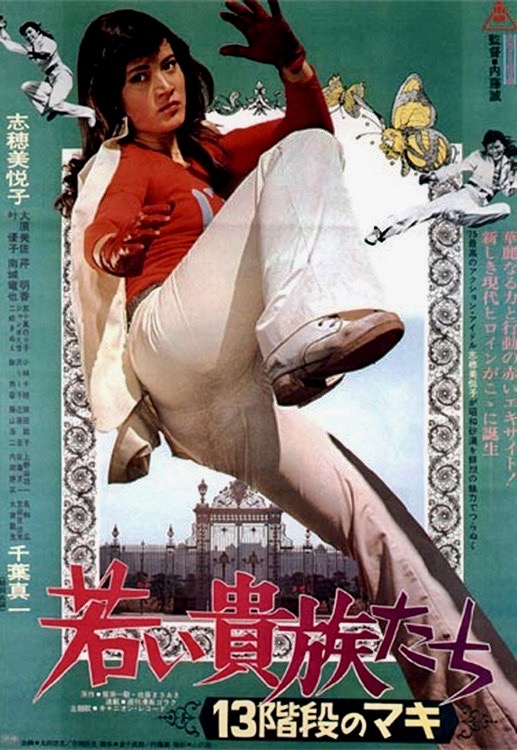
The Japanese poster for the 1975 film 13 STEPS OF MAKI: THE YOUNG ARISTOCRATS.
The Japanese poster for the 1975 film 13 STEPS OF MAKI: THE YOUNG ARISTOCRATS starring Etsuko Shihomi.

Most of the famous icons of Japanese action cinema of the 1970s are usually male stars but there are a few exceptions. The best known is easily Meiko Kaji, who enjoyed a double career as a popular singer and film actress whose most famous movies inspired Quentin Tarantino’s Kill Bill Vol. 1 (2003) and Vol. 2 (2004). She built up a cult following with a quintet of girl gang features – the Stray Cat Rock franchise (1970-71) – and then moved on to greater success in the Female Prisoner Scorpion series (1972-73) and two genre classics, Lady Snowblood (1973) and Lady Snowblood 2: Love Song of Vengeance (1974).

The Japanese poster for the 1970 film STRAY CAT ROCK: DELINQUENT GIRL BOSS starring Meiko Kaji.

The only other Japanese actress from the same period to rival Kaji’s track record is probably Etsuko Shihomi, who first attracted attention in a supporting role in The Street Fighter (1974) opposite martial arts legend Shin’ichi Chiba aka Sonny Chiba. Shihomi followed this up with her breakthrough feature Sister Street Fighter (1974), which proved to be such a hit that she made four sequels to it while appearing in other action flicks with her mentor Chiba. But probably Shihomi’s wildest and least seen movie is Wakai Kizoku-tachi: 13-Kaidan no Maki (English title: 13 Steps of Maki: The Young Aristocrats, 1975), which should have spawned a series but also feels like a homage to Kaji’s Stray Cat Rock series.

Continue reading →

You Don’t Know What You’ve Got Till It’s Gone: Filmhouse in Edinburgh

One of the theaters housed inside Filmhouse, a 3-screen art house complex in Edinburgh, Scotland that was recently closed (photo by Ian Grundy).

Friday, October 7, 2022 was a black day for film lovers in Edinburgh and for anyone who has ever visited Filmhouse, a fantastic three-screen movie venue that also hosted the annual Edinburgh International Film Festival for years. Without warning, the Centre for the Moving Image (CMI), a charity which receives annual grants for the operation, abruptly closed its doors and laid off more than 100 employees. The shutdown also includes the Belmont Filmhouse in Aberdeen and the annual Edinburgh International Film Festival (EIFF), which was launched in 1947. The financial difficulties that led to this decision are only part of the problem. The impact of COVID on moviegoing in recent years plus the proliferation of so many entertainment streaming choices for the family household has taken a toll on attendance at movie chains but especially independent venues like Filmhouse. In the U.S., we have already seen the closure of the Cinerama Dome and the 14-screen ArcLight Hollywood in Los Angeles, the Lincoln Plaza Cinemas and Landmark’s Sunshine Cinema in New York City and so many others are in danger of vanishing like Facets in Chicago. If you care about the communal experience of a big screen movie experience, then please support your favorite film venue or risk losing it. The Filmhouse was certainly a world renowned shrine to cinema and here are my own memories of the venue from over twelve years ago.

*2026 update (Filmhouse has officially reopened as of June 27, 2025)

Continue reading →

From Socialite to Streetwalker

There have been some terrific Pre-Code dramas that were set in the Depression and were actually playing in movie theaters at the time but, for obvious reasons, were not box office hits because audiences wanted escapism, not a reminder of their problems. Still, several of these social problem dramas like William Wellman’s Heroes for Sale (1933) and Wild Boys of the Road (1933) were championed by film critics and today provide an invaluable window into that era. Faithless (1932), directed by Harry Beaumont (Dance, Fools, Dance) and based on the novel Tinfoil by Mildred Cram, also belongs in that category, even if it was poorly received at the time, and deserves a revival for its unusual mixture of soap opera, social issues and adult themes like prostitution.

Continue reading →