That was how Preston Sturges described his screenplay for Remember the Night (1940), directed by Mitchell Leisen. Overlooked and underrated for years, this small scale but intimate romantic drama has become a Christmas favorite in recent years thanks to frequent airings on TCM and its availability on DVD.
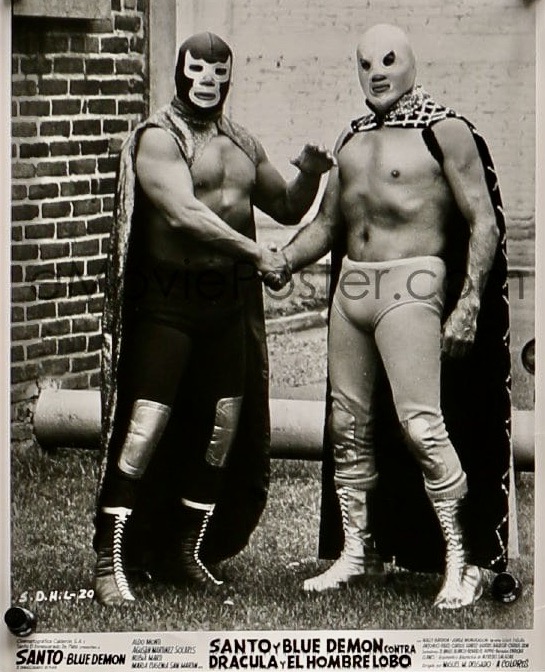
For American moviegoers weaned on comic books and superheroes like Superman, Batman and The Hulk, the names El Santo and Blue Demon might not be as familiar. But in Mexico, they are major cultural icons. They were the main attractions in a popular film genre known as the lucho libre (wrestling hero movies) but had first established themselves as bona-fide professional wrestlers. In real life, Santo and Blue Demon were often rivals in the ring but they teamed up on the screen nine times and two of their most representative features together are Santo y Blue Demon vs. Dracula y el Hombre Lobo (Santo and Blue Demon vs. Dracula and the Wolf Man, 1973) and Santo y Blue Demon contra el Doctor Frankenstein (Santo and Blue Demon vs. Dr. Frankenstein, 1974), which are good entry points for beginners.
Out of distribution for years, Hondo (1953), one of the key Westerns starring “The Duke,” was finally restored by the John Wayne Society in 1995 and made available for viewings again. It was said to be Wayne’s personal favorite of all of his Westerns and the storyline has a classic simplicity which captures the true spirit of the frontier: a cavalry scout (Wayne) comes to the aid of a homesteader (Geraldine Page) and her son (Lee Aaker) when the Apaches go on a rampage. Based on a novel by Louis L’Amour, Hondo was also surprisingly liberal in its attitude toward Native-Americans for its time and subtly addressed racial issues through the romance between the half-breed scout and the white heroine.
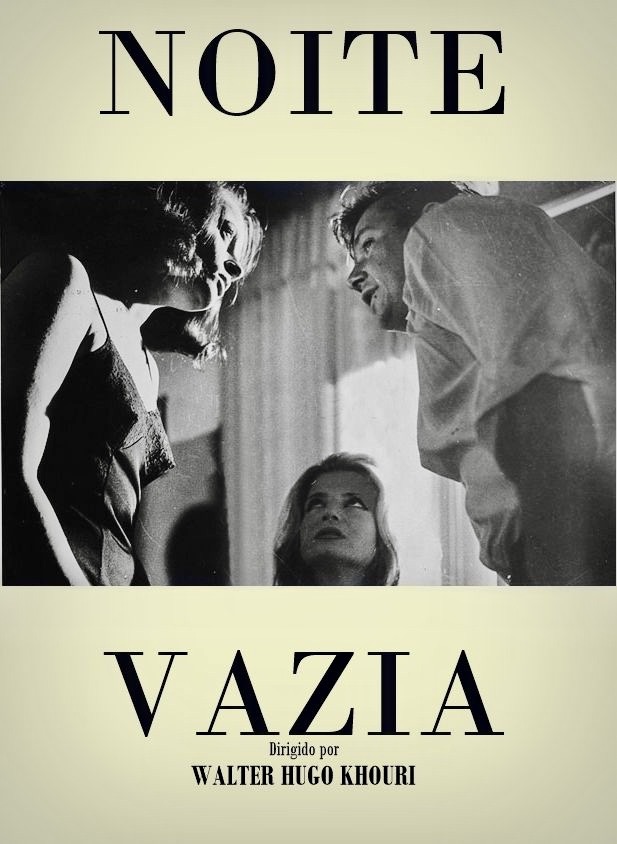
Long Day’s Journey into Night is the title of Eugene O’Neill’s Pulitzer Prize winning 1956 play but it could also serve as a succinct capsule description of numerous movies from the 1960s that were clearly influenced by Michelangelo Antonioni’s L’avventura (1960) and its themes of alienation and existential despair. Some examples include Giuseppe Patroni Griffi’s Il Mare (1962) which follows three strangers on the isle of Capri during a bleak winter season as they try to connect with each other. Jean-Luc Godard’s Alphaville (1965) depicts a dystopian futuristic society in which a detective finds himself out of place in a modernistic Paris controlled by an oppressive artificial intelligence. And Jacques Demy’s Model Shop (1969) uses the urban sprawl of Los Angeles and its smog-creating car culture as a backdrop to an unemployed architect’s search for meaning in his life. Yet, the most Antonioni-like film of all and the least known is probably Noite Vazia (1964) by Brazilian director Walter Hugo Khouri, which traces a dusk-to-down encounter between two men and two women amid the sterile cityscapes of modern Sao Paulo.
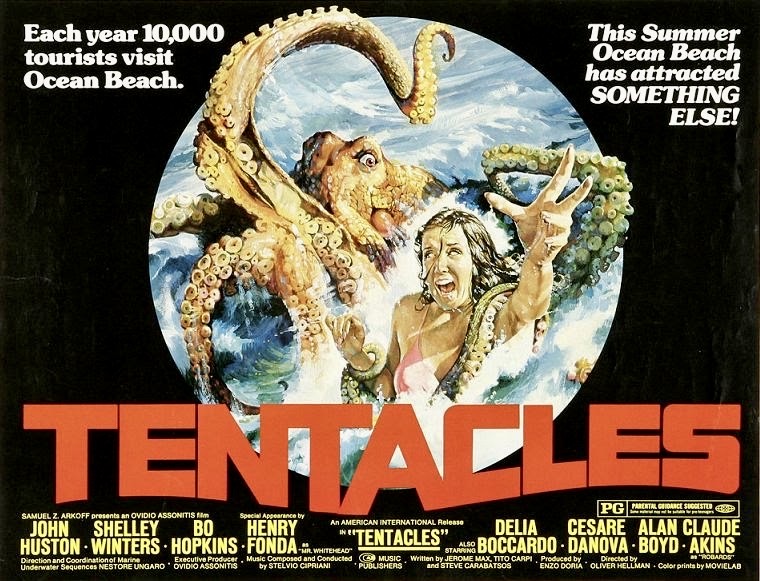
After purposely avoiding it for years due to its terrible reputation, my curiosity finally got the best of me when TCM aired Tentacles (Italian title: Tentacoli, 1977) earlier in 2022, and I finally watched it from start to finish. One of several ill-conceived and pathetic attempts to cash in on the box office success of Jaws, the Italian produced Tentacles is a perversely entertaining nature run amok thriller that stands out from the other killer shark imitations like Mako: The Jaws of Death (1976) and Tintorera: Killer Shark! (1977) by substituting a more elusive title menace – a giant octopus.
A young boy from the Danish West Indies (Jimmy Sterman) and his pet fox hide from villagers in his new home near Copenhagen in PAW (1959) aka Boy of Two Worlds.
Prior to the 1960s, it was unusual to encounter more than a few women film directors working in Europe, much less the U.S. One of the rare exceptions was Astrid Henning-Jensen, who is considered one of first female directors in the Danish film industry to achieve international recognition. Two other female contemporaries of Henning-Jensen, Bodil Ipsen and Alice O’Frederick, were equally famous in their native Denmark but Henning-Jensen is the only one to enjoy wider recognition in America due to her 1959 film, Paw aka Boy of Two Worlds, which was an Oscar nominee for Best Foreign Language Film that year (It lost to Black Orpheus).
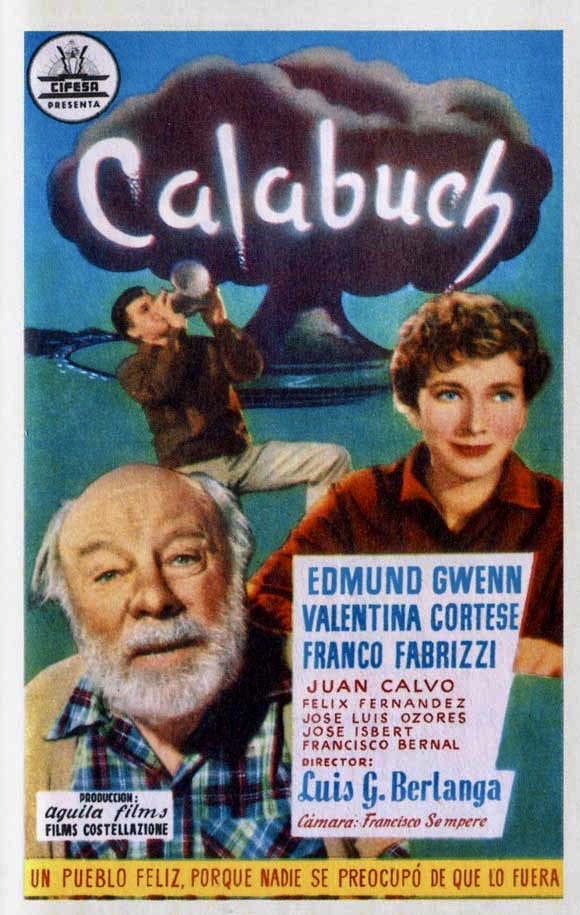
Often considered alongside Luis Bunuel as one of the most important and influential Spanish film directors of the 20th century, Luis Garcia Berlanga (1921-2010) and his work is still being discovered in the U.S. Bienvenido, Mister Marshall! (Welcome, Mr. Marshall, 1953), Berlanga’s post-WW2 satire of the European Recovery Plan aka the Marshall Plan, was the first of his films to receive wide distribution at art houses in America and went on to win the International Prize for Best Comedy Film at Cannes. Placido (1961), a black farce in which a homeless man is invited to a Christmas Eve dinner sponsored by a cookware corporation, was nominated for a Best Foreign Language Film Oscar. And El Verdugo (The Executioner, 1963) might be his most famous triumph with Nino Manfredi as an undertaker who is pressured into taking over his father-in-law’s profession as an executioner. The Criterion Collection released a special edition of it on Blu-ray and DVD in 2016, which helped introduce Berlanga’s satiric masterwork to new audiences. Less well known today but praised by critics during its original release in 1956 is Calabuch aka The Rocket from Calabuch, a seemingly gentle but subversive satire about life in a rustic seaside village which is disrupted by the arrival of an amiable but mysterious stranger.
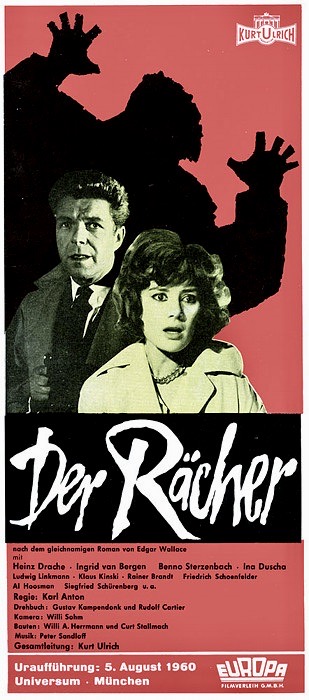
The German film poster for THE AVENGER (1960), based on an Edgar Wallace pulp novel.
A speeding sedan races down a deserted road at night. Suddenly a package is thrown from the vehicle as it speeds away. The next morning two matronly women on bicycles notice the package on the side of the road and decide to investigate in case there is something of value inside. Eagerly opening the crudely tied box, they look inside and scream at the sight of a severed head. Thus begins the 1960 German mystery thriller, Der Rasher (English title: The Avenger), one of the earliest but almost forgotten entries among the cinematic adaptations of Edgar Wallace crime novels that enjoyed a revival in Germany in the late 1950s.
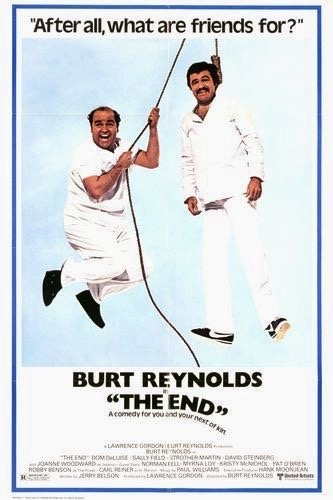
By 1978 Burt Reynolds was approaching the peak of his popularity which would begin to taper off in the mid-eighties as he approached the age of 50. He had just completed two huge box office hits, Smokey and the Bandit and Semi-Tough (both 1977) and was in a position to choose and develop any project he fancied. But instead of rushing into a sequel to Smokey and the Bandit or some other big budget vehicle that exploited his good ole boy blend of machismo, charm and sex appeal, Reynolds chose to make a risky, offbeat black comedy about a man dying of a terminal condition who contemplates suicide as a solution to a slow, agonizing death. In addition, the popular leading man would direct and star in it and cast his girlfriend at the time Sally Field in a prominent role. Released as The End in 1978, the film was not what moviegoers or critics expected from Reynolds or even wanted.
When he died in Paris on July 29, 2012, filmmaker Chris Marker left behind more than 60 short films and features, most of which were experimental cinema essays and documentaries. Many were political in nature but he also dabbled in other favorite subjects such as cats (Cat Listening to Music, 1988), Japan (The Koumiko Mystery, 1965) and the contemplation of memory (Immemory, an interactive CD-Rom from 1997). His work rarely found an outlet in commercial cinema venues but was often celebrated at film festivals and archival/repertory mainstays. If his name sounds familiar to you, it is due to his landmark science fiction short, La Jetee (1962), which remains influential today for its innovative approach to visual narrative. What many don’t know, however, is that Marker directed several highly accessible tributes to favorite film figures such as Yves Montand (La Solitude de Chanteur de Fond, 1974), Akira Kurosawa (A.K., 1985) and Simone Signoret (Memoires pour Simone, 1986) and one of his finest achievements is One Day in the Life of Andrei Arsenevich (1987).