Tarot Cards, Talismans, Seances and Telekinesis

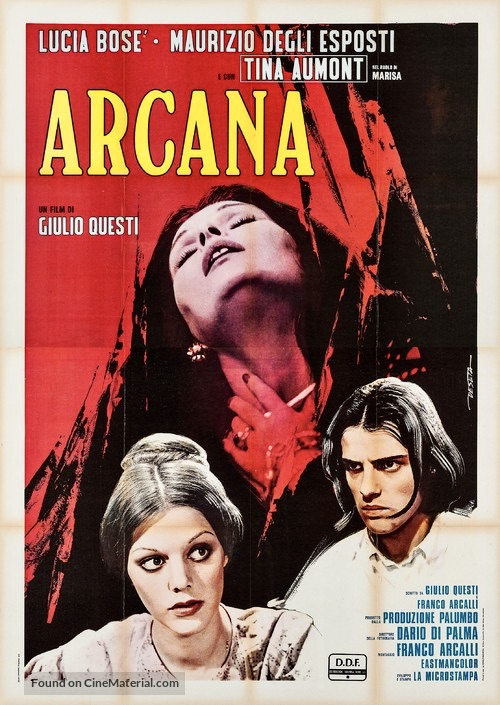
People usually have certain expectations when they invest the time to watch a movie, especially if it has been advertised as a genre film like a western, sci-fi or horror thriller. This must have been a perplexing problem for the distributors of Arcana (1972), Guilio Questi’s mysterious tale of a widow and her brooding son who use fortune telling, tarot cards and seances to con a gullible clientele. The film dabbles in the supernatural but it also flirts with other topics like voyeurism, incest, Macedonian rituals, neglected children, middle class despair and inept bureaucracies. Some critics have pigeonholed Arcana as a horror film and it is certainly horrific in tone and attitude but don’t expect the movie to conform to genre conventions. The director even issues a disclaimer at the beginning: “To the watchers: This movie is not a story but a game of cards. For this reason both its start and the epilogue are not believable. You are the players. Play smartly and you’ll win.” Make of that what you will, I think Arcana works best as a puzzle, even if it is an often inscrutable and unsolvable one that is presented in two acts. Continue reading

The Family Mole

If you are a post-WW2 baby boomer, you are probably familiar with the term ‘the Red Scare,’ which refers to a time in the late forties-early fifties when anti-communist sentiment in the U.S. was at its height (The “red” refers to the color of the Soviet flag). This Cold War era paranoia was not just reflected in American politics and daily news stories but he popular culture as well, especially movies. Some of the more famous examples are the Howard Hughes’ produced noir I Married a Communist (1949 aka The Woman on Pier 13), the 1951 tabloid-style expose I Was a Communist for the F.B.I. and John Wayne as an undercover commie hunter in Big Jim McLain (1952). Yet, of all the cinematic depictions of Communist infiltration in America, few are as blatant or as infamous as My Son John (1952), which was released when the House Committee on Un-American Activities (HUAC) was at the height of its power and Senator Joseph McCarthy was still fanning the flames of a political witch hunt that had already taken its toll on the entertainment industry.

Continue reading

Party Out of Bounds

Tired of reading about new DVD/Blu-ray releases that are being released in other parts of the world but are not viewable here because they are produced in a different broadcast format? (The U.S. standard is NTSC; PAL is common in Europe and the U.K. and SECAM is prevalent in China and the USSR). If so, why not consider the purchase of an all-region Blu-Ray player. They are relatively inexpensive and will allow you to finally purchase and view films you’ve always wanted to see or dreamed about revisiting. To give you some idea of what you’re missing, especially if you are an anglophile, I point to BFI Flipside, a classy underdog in the world of DVD/Blu-Ray distribution, who launched this label in 2009 with the following explanation on all of their box art: “The Flipside: rescuing weird and wonderful British films from obscurity and presenting them in new high-quality editions.”

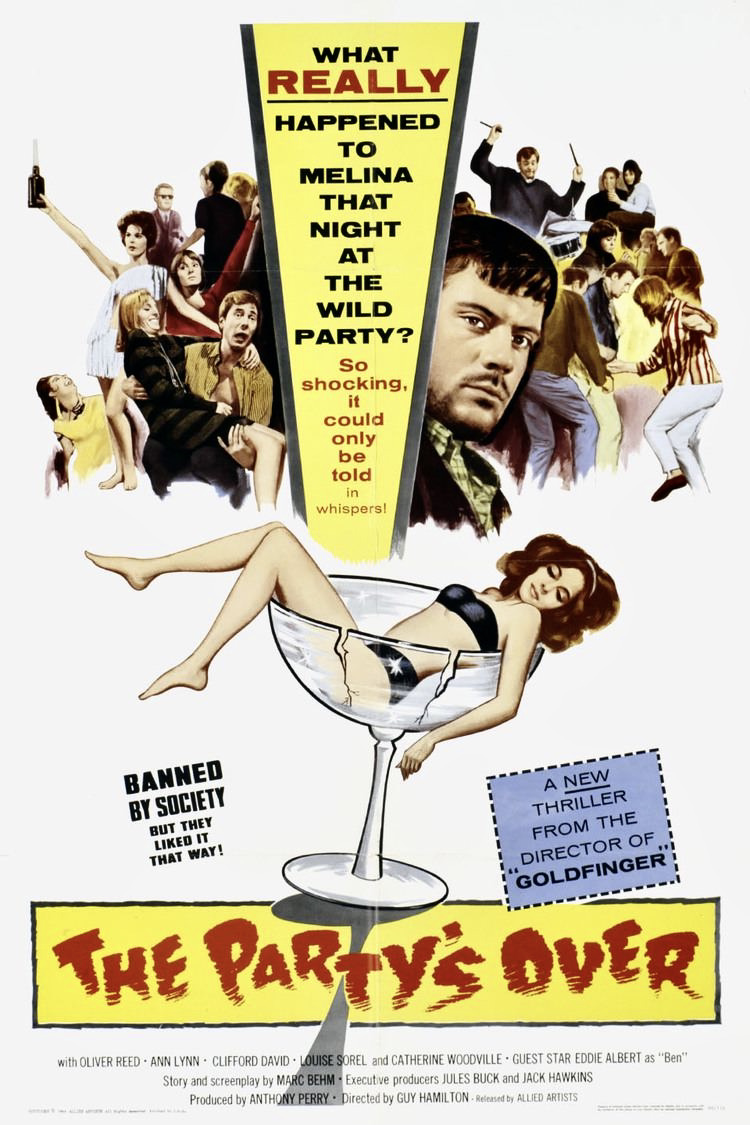
Earlier releases have included Bill Forsyth’s debut feature That Sinking Feeling (1979), a comedy about a quartet of working class lads with a dubious black market scheme, Gerry O’Mara’s The Pleasure Girls (1965) a Swinging London soap opera starring Francesca Annis, Suzanna Leigh, Ian McShane and Klaus Kinski, and Don Levy’s Herostratus (1967), an avant-garde curio with a surprising cameo by a young, undressed Helen Mirren, who has never been one to complain about nude scenes. One of my favorite releases from BFI Flipside is The Party’s Over (1965), a stylish and edgy study of some bohemian Londoners during the mod sixties with a scene-stealing performance by Oliver Reed and enough disturbing elements to make the censors froth at the mouth. In fact, their negative reactions, prevented the film, which was filmed in 1962, from receiving a theatrical release until 1965. During the interim, the film was subjected to numerous rounds of cuts and revisions before finally being slapped with a ‘X’ certificate – a rating that spelled box-office poison for exhibitors.      

Continue reading

A Marriage of Convenience?

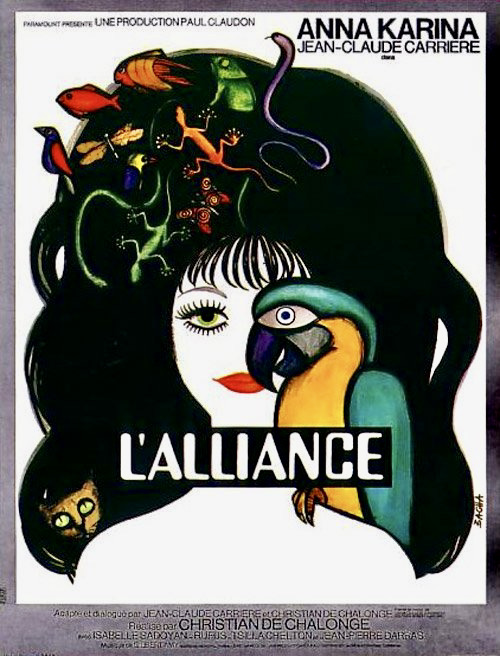
Almost everyone has a good reason for why they want to get married but for Hugues, there is a very specific need. He wants to find a woman with a place of her own, preferably one with ample square footage that includes a sitting room and a large, walk-in closet. Love or companionship isn’t a main objective. Nor does he have any particular preferences concerning the woman’s appearance or personality as long as she is close to the same age. Strangely enough, Hugues finds the ideal candidate through the Duvernet Agency, a professional matchmaker. Jeanne is not only lovely and charming, if a bit elusive, and she has never been married before. Plus, she resides in a sprawling ground floor apartment once owned by an uncle. What could be better?  So begins 1970’s L’Alliance (also known as The Wedding Ring), an exceedingly peculiar tale that slowly lures the viewer down a rabbit hole.

Continue reading

Off the Grid

The Swedish film poster for The Outlaw and His Wife (1918).

A master of 20th century cinema, the Swedish director and actor Victor Sjöström is best remembered for his moving performance as the elderly physician reflecting on his life in Wild Strawberries (1957). As a director, his highly acclaimed 1921 adaptation of Selma Lagerlöf’s novel The Phantom Carriage convinced MGM mogul Louis B. Mayer to bring him to America where Sjöström directed the prestigious projects He Who Gets Slapped (1924), with Lon Chaney, and two starring Lillian Gish, The Scarlet Letter (1926) and The Wind (1928), arguably the pinnacle of his Hollywood tenure. While The Outlaw and His Wife (1918) is not as well known, it is considered by many film historians to be Sjöström’s silent-era masterpiece and, nearly a century after its release, is enjoying a revival that should elevate its stature in the director’s pantheon.

Continue reading

Identity Disintegration

A wealthy chemist who was disfigured in an explosion undergoes plastic surgery in the 1966 Japanese film, The Face of Another.

What would happen if you lost the face you recognize as your own and had to replace it with a new one? Would you have an identity crisis or simply become a different person? Japanese director Hiroshi Teshigahara ponders this unusual dilemma in The Face of Another (1966, Japanese title: Tanin no kao). Continue reading

The Harmonious Sounds of Franco De Gemini

You might not know the name but you have probably heard his music and the unmistakable sound of his harmonica on countless Italian film scores. The plaintive wail of his instrument on Once Upon a Time in the West (1968) was used as a musical motif for Charles Bronson’s avenging angel, who was identified simply as “the man with the harmonica” in Sergio Leone’s landmark film. Yet that nickname really belongs to Franco De Gemini who has brought his distinctive sound from the background to the foreground in more than 800 movie scores in his lifetime.  His talent for expressing conflicting emotions through his music in both minimalist and operatic arrangements is this composer’s secret weapon.

Continue reading

Fear of Flying

Consider this as a possible scenario. You are on a flight from Lisbon, Portugal to New York City and, in the dead of night over the middle of the Atlantic Ocean, the pilot’s voice on the intercom suddenly jolts you awake with these words, “Can I have your attention please. This is Captain Williams. We’re in an emergency situation. We may have to ditch.” You might be able to ditch your girlfriend, boyfriend or spouse but it’s not so easy to ditch a plane as demonstrated by the principles of Crash Landing (1958).         

Continue reading

Musicals from Behind the Iron Curtain

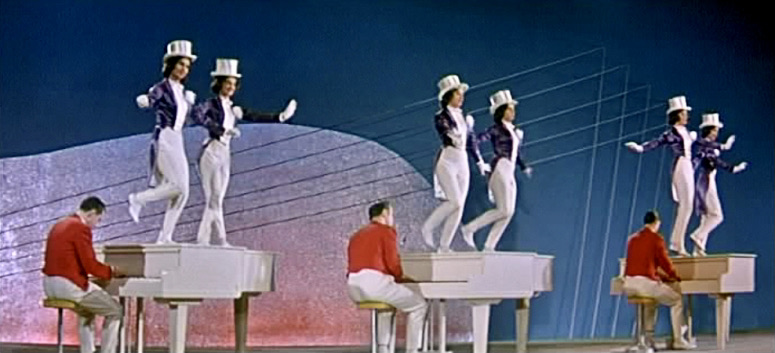
An unexpected top hat and tails dance number performed on piano tops is featured in the 1962 film from East Germany, Midnight Revue.

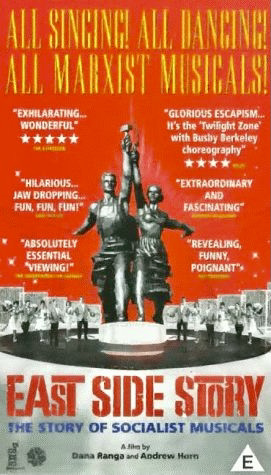
If you are a dedicated fan of movie musicals, you have probably been tempted to venture beyond the realm of Hollywood’s golden era to explore classic musicals from other countries like France (The Umbrellas of Cherbourg, 1964), Germany (The 3 Penny Opera, 1931) or England (Evergreen, 1934). You would certainly have no trouble discovering top rated favorites from India which produces between 1,500 to 2,000 Bollywood movies a year, most of which include at least three to five musical numbers. It might be harder though to dig up a famous film musical from countries as diverse as…say, Sweden, Japan or Egypt…but they definitely exist and there are more than you would think. What you probably haven’t seen is a socialist musical from Russia or any of its satellite countries during the Communist regime. There’s a reason for that. Those films weren’t exported outside Iron Curtain countries during that era but you can experience a highly entertaining sampler of the genre in East Side Story, a documentary on Marxist musicals that premiered in U.S. theaters in 1997.

Continue reading

Sean Connery as a Gypsy Grifter

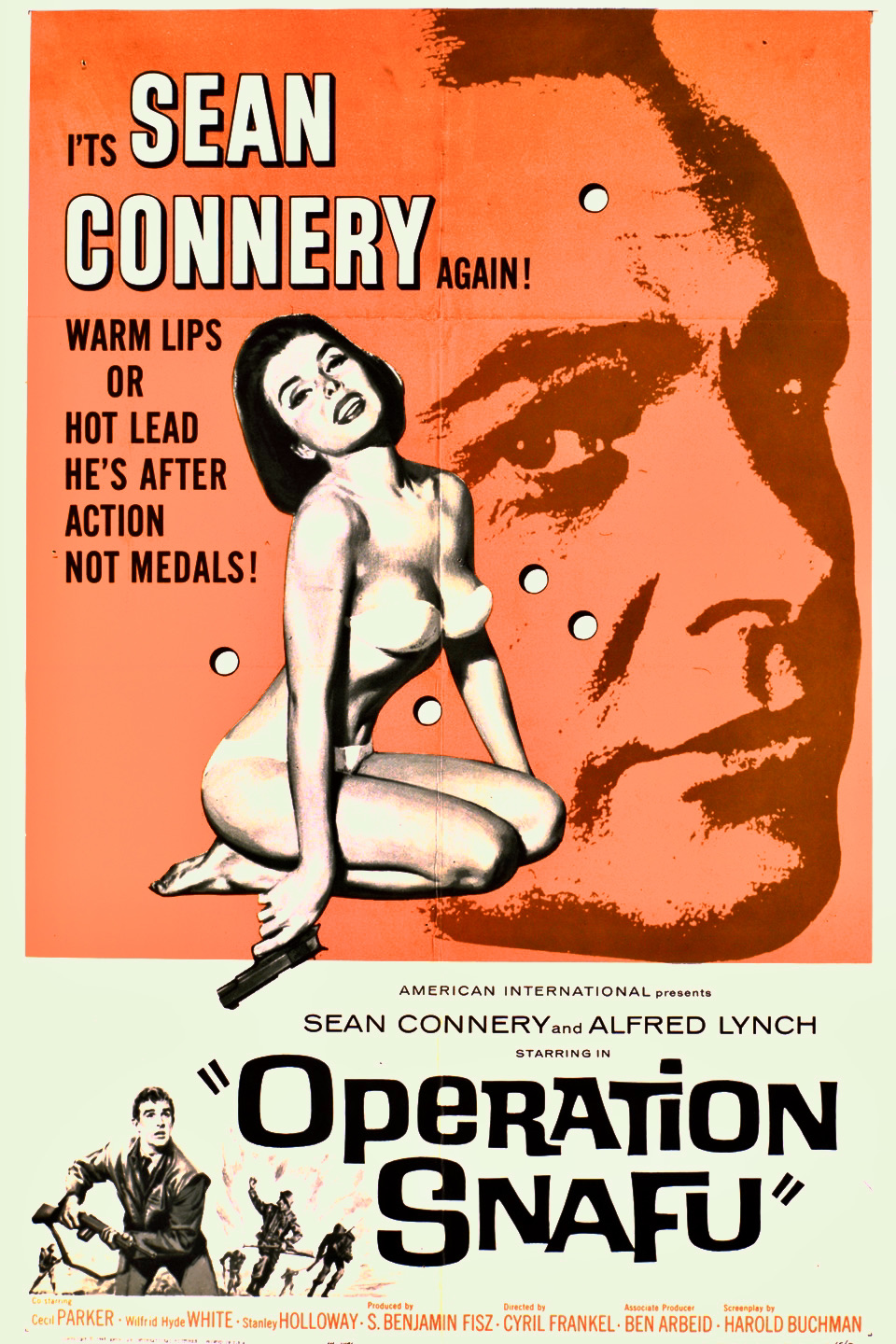
What’s your favorite Sean Connery role before he became famous as James Bond. This question might stump the average movie-goer but film buffs would probably choose one of his menacing villain roles in either Hell Drivers (1957) or Tarzan’s Greatest Adventure (1959) or possibly his dashing romantic hero opposite Janet Munro in Walt Disney’s Darby O’Gill and the Little People (1959), where he actually gets to sing. The latter is easily my favorite with the Irish mythology of leprechauns, pookas and banshees giving it the edge but there is something quite appealing about Connery trying his hand at comedy in the lesser-known British B-movie Operation Snafu (1961), which was released in the U.K. as On the Fiddle (It was also known as Operation War Head).  

Continue reading