
Searching for Closure

Have you seen any good Lithuanian films lately? I have to admit that I know nothing about the cinema of Lithuania and not that much about the country which borders Latvia at the north, Belarus on the southeast and Russia and Poland to the southwest. I only know that Lithuania was an independent country for centuries until it was occupied by the Soviet Union from 1944 to 1990, the year its independence was restored. The country does have a rapidly growing film industry and studios like HBO and Netflix have utilized the region for film locations as in the 4th season of Stranger Things and the 2019 mini-series Chernobyl. But the only Lithuanian filmmakers I can name are Jonas and Adolfas Mekas, brothers who immigrated to the U.S. in 1949 and became major figures in New York’s experimental film scene along with fellow peers like Ken Jacobs, Hollis Frampton, Jack Smith and Andy Warhol. Piligrimal (English title: Pilgrims, 2021) is the first Lithuanian movie I can recall seeing but it presents a refreshing and rarely used approach to the storytelling process that requires the viewer to play detective as the story begins four years after a terrible crime has been committed and details about the case emerge slowly in bits and pieces.

Continue reading
Roll with the Punches

The Japanese poster for THE BOXER (1977) aka Bokusa.

Movies about boxers often seem to break down into four categories; the most popular are the ones where the underdog fighter overcomes all odds to become a champion (Rocky [1976], Million Dollar Baby [2004], Cinderella Man [2005]). Then there are true-life biopics like Somebody Up There Likes Me (1956), Raging Bull (1980) and Ali (2001), downbeat character portraits of boxers past their prime (Requiem for a Heavyweight [1962], Fat City [1972]) and noir dramas that highlight the corrupt aspects of the profession like The Set-Up (1949) or The Harder They Fall (1956). Bokusa (English title: The Boxer (1977), a Japanese film directed by Shuji Terayama, has elements of some of the above but it is decidedly different from any American film in the boxing genre.

Continue reading

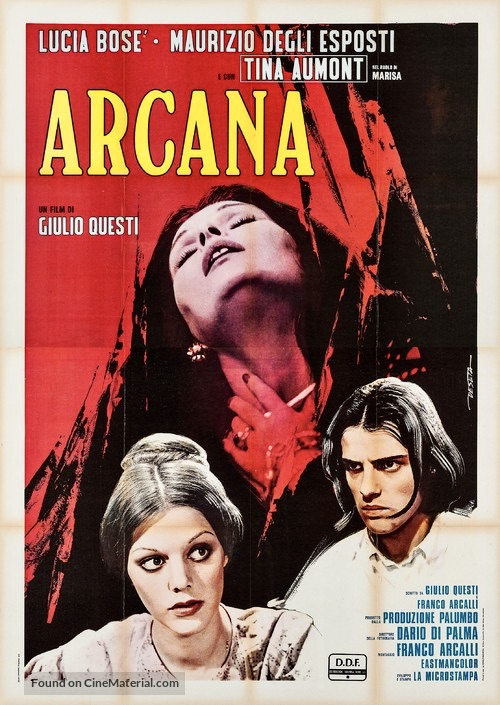
Tarot Cards, Talismans, Seances and Telekinesis

People usually have certain expectations when they invest the time to watch a movie, especially if it has been advertised as a genre film like a western, sci-fi or horror thriller. This must have been a perplexing problem for the distributors of Arcana (1972), Guilio Questi’s mysterious tale of a widow and her brooding son who use fortune telling, tarot cards and seances to con a gullible clientele. The film dabbles in the supernatural but it also flirts with other topics like voyeurism, incest, Macedonian rituals, neglected children, middle class despair and inept bureaucracies. Some critics have pigeonholed Arcana as a horror film and it is certainly horrific in tone and attitude but don’t expect the movie to conform to genre conventions. The director even issues a disclaimer at the beginning: “To the watchers: This movie is not a story but a game of cards. For this reason both its start and the epilogue are not believable. You are the players. Play smartly and you’ll win.” Make of that what you will, I think Arcana works best as a puzzle, even if it is an often inscrutable and unsolvable one that is presented in two acts. Continue reading