The Dark Side of Robert Young

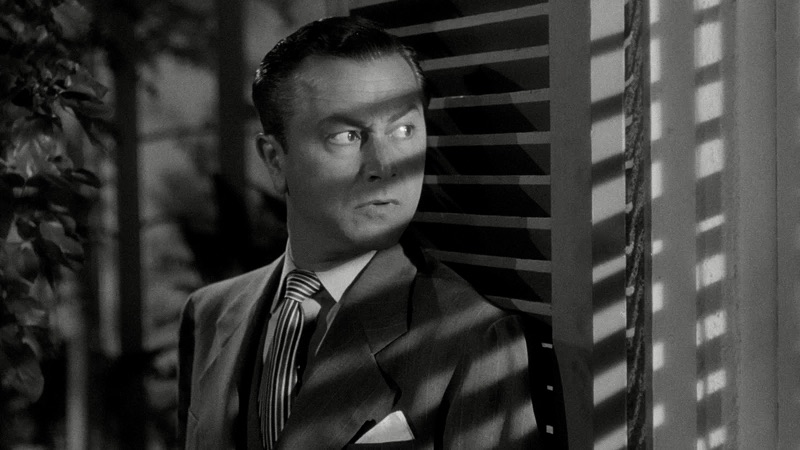
Robert Young plays an embezzler and a womanizer whose luck runs out in THEY WON’T BELIEVE ME (1947), an underrated film noir.

When most baby boomers think of actor Robert Young, they probably recall his popular TV medical series Marcus Welby, M.D. (1969-1976) where he was the epitome of the kind, compassionate doctor or they remember Jim Anderson, the perfect dad in the all-American family sitcom Father Knows Best (1954-1960). He was also typecast as “Mr. Nice Guy” in most of his Hollywood films, playing cheerful romantic leads or the leading man’s best friend or some other debonair, noble or well-intentioned character who rarely made a strong impression compared to more assertive male leads like Clark Gable, Gary Cooper or Spencer Tracy. But there were several occasions when Young discarded his good guy image by playing shadowy characters, outright villains, or damaged human beings.  Among these atypical casting choices, Young is most memorable in Alfred Hitchcock’s Secret Agent (1936) as an undercover spy, a budding fascist in The Mortal Storm (1940), a shellshocked and physically maimed war veteran in The Enchanted Cottage (1945), a complete cad and accused murderer in the underrated film noir They Won’t Believe Me (1947), directed by Irving Pichel, and an architect who is suspected of being a dangerous criminal in The Second Woman (1950).
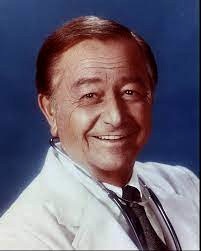
Robert Young as the star of the popular TV series, MARCUS WELBY, M.D. (1969-1976).
Continue reading

Kay Kyser Meets the Three Horror Men

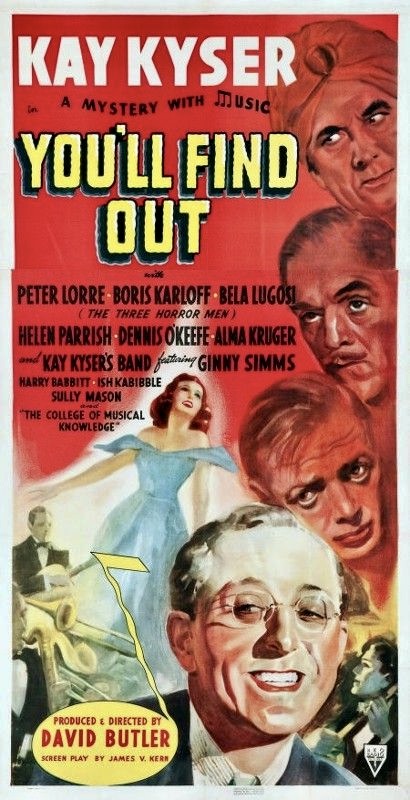
It’s hard to imagine what moviegoers today would make of Kay Kyser and his Kollege of Musical Knowledge, but during the late thirties and early forties the big band conductor was one of the most popular entertainers in America. Thanks to the medium of radio (which was at the height of its popularity during the WWII era), Kyser built up a huge fan base through his novelty act, a winning combination of music, humor and “kollege brainbuster questions” with a cash prize for the winner. Sporting wire-rim glasses, mortarboard and academic gown, Kyser created an eccentric bookworm persona for himself and surrounded himself with equally outlandish “colleagues,” one of the more famous being Ish Kabibble (the alter ego of musician M.A. Bogue). It was only a matter of time before Kyser took his act to Hollywood and, in 1939, RKO produced his first film, That’s Right, You’re Wrong. Its success led to a more ambitious second feature, You’ll Find Out (1940), which paired the bandleader with the triple threat team of Boris Karloff, Bela Lugosi and Peter Lorre.

Continue reading

Roll the Credits

An example of Stephen Frankfurt’s iconic title treatment for the 1962 film TO KILL A MOCKINGBIRD.

In their increasing eagerness to capture a wider viewing audience for their annual awards ceremony, you would think the Academy of Motion Picture Arts & Sciences would create a few more categories that could generate some genuine interest with the average moviegoer. How about Best Title Credits? It’s an art form in its own right. Graphic designer Saul Bass certainly proved that years ago with his innovative opens for the films of Otto Preminger (Carmen Jones, The Man With the Golden Arm, Saint Joan, Bonjour Tristesse, Anatomy of a Murder, Advise and Consent, Exodus, The Cardinal and several more) and Alfred Hitchcock (Vertigo, North by Northwest, Psycho). Other title designers you might recognize are Stephen Frankfurt (To Kill a Mockingbird, Rosemary’s Baby), Pablo Ferro (Dr. Strangelove, Being There) and Maurice Binder (Dr. No, Charade). Even before them, opening title credits were a key component of the film, often setting the tone and even encapsulating the movie’s theme or storyline into a compact visual nugget.

Continue reading

True Love Transcends Everything

Marina (Hildegard Knef) and Alexander (Gustav Frohlich) make a final toast to their eternal love for each other in Die Sunderin (English title: THE SINNER, 1951), a West German romantic tragedy directed by Willi Forst.

Sometimes an offscreen scandal can kill or severely hamper a career (Fatty Arbuckle, Ingrid Bergman, Rose McGowan, etc.) or help bolster it as in the case of Mary Astor, Hedy LaMarr or Elizabeth Taylor. But what if the scandal is the film itself as in The Moon is Blue (1953), Baby Doll (1956) or Last Tango in Paris (1972)? That kind of notoriety can play out in different ways affecting the careers of the featured stars in a negative or positive way. A famous example of the latter is Die Sunderin (English title: The Sinner, 1951), a West German melodrama from Viennese director Willi Forst in which two social outcasts embark on a love affair which brings them true happiness and spiritual redemption after years of misery. The film created a public outcry in Germany due to a nude scene featuring the popular female star, Hildegard Knef. It might seem much ado about nothing today but at the time the typically conservative German moviegoer was offended. More importantly, it didn’t hurt Ms. Knef’s career at all and may have helped launch her international career. She was invited back to Hollywood the same year (where she had previously been under contract), made a few high profile films, and then returned to Germany where she not only resumed her film career but also became a renowned chanson-singer in the style of Marlene Dietrich, a mentor and friend.

Continue reading

The American Dream Gone Wrong

Hungarian immigrant Janos Szabo (Peter Lorre) contemplates what his life might have been like if he hadn’t been the victim of unfortunate circumstances in THE FACE BEHIND THE MASK (1941).

Films about the immigrant experience in the United States often run the gamut from comedy (Coming to America, Moscow on the Hudson) to historical depictions (Hester Street, The New Land) to autobiographical dramas (Elia Kazan’s America, America) and even horror films such as Netflix’s 2021 thriller, No One Gets Out Alive. Still, one of my favorite movies about a foreigner’s adventures on these shores is The Face Behind the Mask (1941), which stars Peter Lorre as an Eastern European refugee looking to start a new life in New York City.

Continue reading

A Concert Pianist’s Worst Nightmare

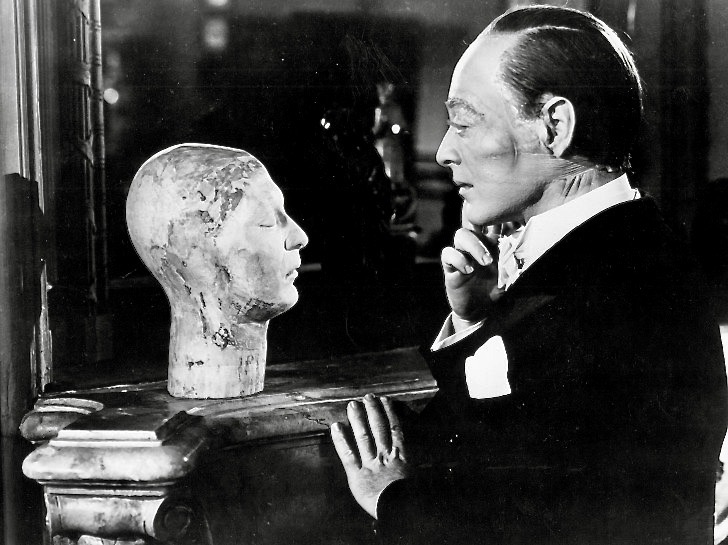
The German film poster for the 1924 silent classic THE HANDS OF ORLAC.

What is the worst thing that could happen to a celebrated world class pianist? It would have to be something that destroyed his famous hands, wouldn’t it? The Hands of Orlac, based on a novel by Maurice Renard, has been adapted for the screen numerous times but the 1924 version by German director Robert Wiene remains a masterpiece of silent horror cinema.

Continue reading

No Exit

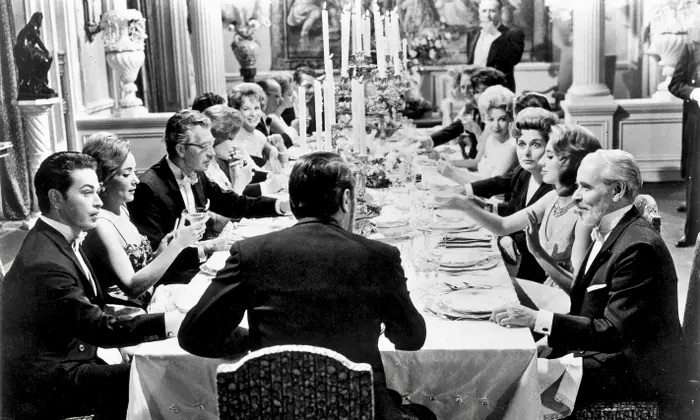
The dinner guests in Luis Bunuel’s THE EXTERMINATING ANGEL (1962) are in for an unpleasant surprise in this strange mixture of surrealism and black comedy.

Almost everyone has attended a dinner party at some point in their lives that was mandatory as well as a memorably bad experience. Maybe it was a communal meal with the boss and co-workers or a formal affair with an annoying in-law or relative. Just be glad you were able to leave the event when it became convenient. The assembled guests in Luis Bunuel’s surreal satire, The Exterminating Angel (1962), don’t have that option but the reasons for their entrapment are never clear.

Continue reading

The Case of the Fake MD

Most medical dramas focus on storylines about the inner workings of a hospital, rivalries between staff members, patients in crisis situations or maybe all of the above. Bedside (1934) is unique in that the main character, Dr. J. Herbert Martell aka Bob Brown, isn’t a real doctor at all. He’s only an X-ray technician posing as a MD and his motivation has nothing to do with the Hippocratic Oath. He’s a dirty rotten scoundrel and you know he’s up to no good from the start because he is played by Warren William, a familiar face in films of the Pre-Code period.

Continue reading

Ernesto Gastaldi’s Seminal Giallo

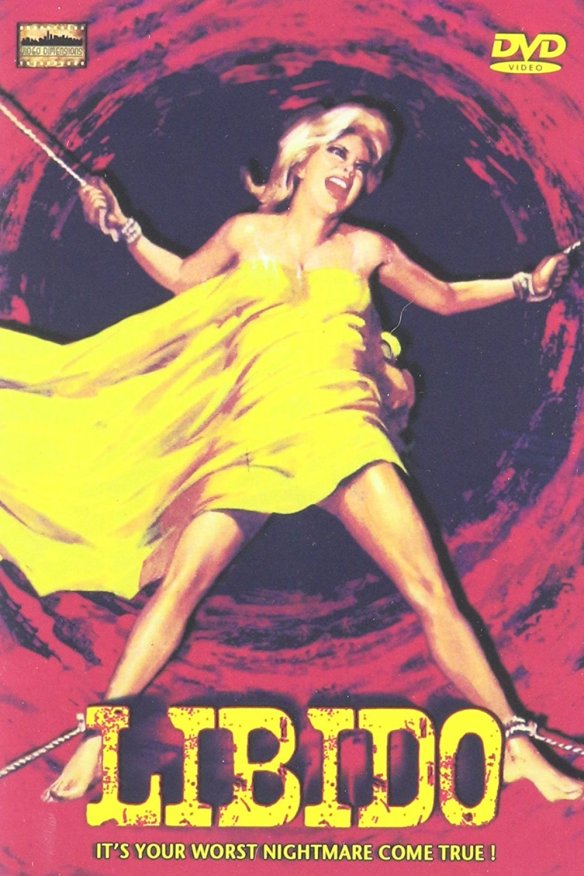
With a tumultuous background of waves crashing against a rocky coast, a descriptive statement from Sigmund Freud on the meaning of libido scrolls down the screen. Part of the Austrian psychoanalyst’s quotation defines libido as “the energy, regarded as a quantitative magnitude… of those instincts which have to do with all that may be comprised under the word ‘love.’” But the film that follows is not about love but rather the perversion of it starting with an opening sequence in which a child witnesses the aftermath of his father’s violent S&M session with a female companion, an incident that scars him for life.     Continue reading

Norman Lloyd: Hollywood’s Long Distance Runner, Part 2

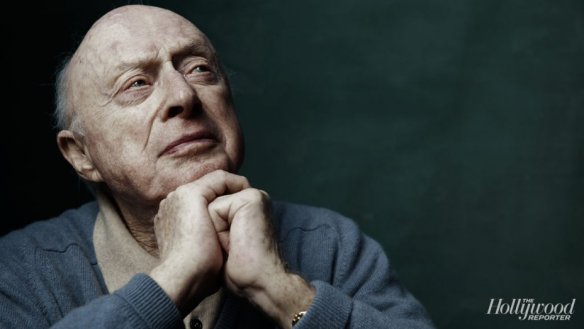
Actor/Director/Producer Norman Lloyd, born 1914.

*This is the second part of a revised and updated version of a Norman Lloyd interview which was first recorded in March 2010 just prior to the actor/director/producer’s appearance at the first Turner Classic Movies Classic Film Festival.

Here is the link to Part 1: https://cinemasojourns.com/2017/04/09/norman-lloyd-hollywoods-long-distance-runner/     Continue reading