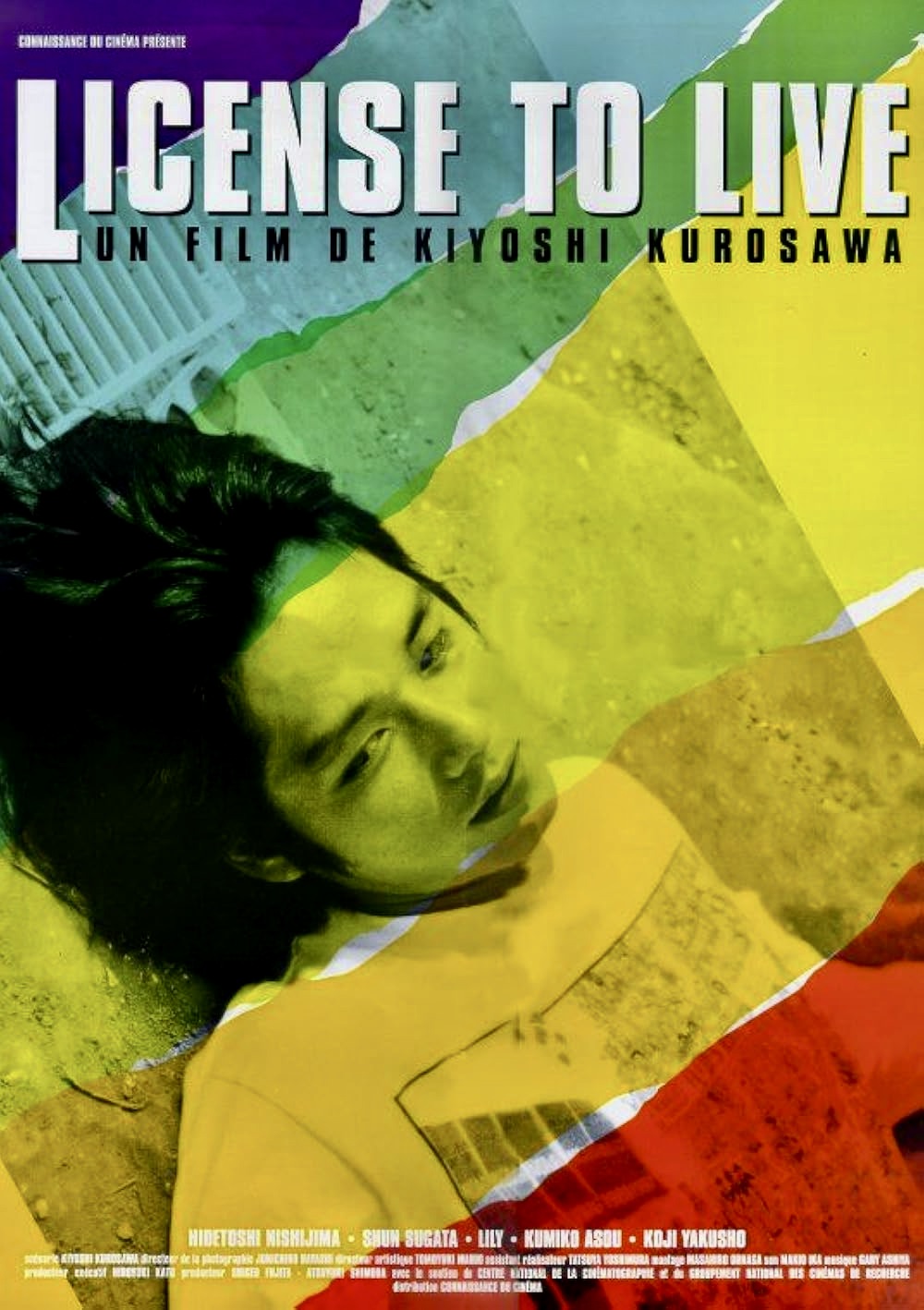
Yutaka Yoshii (Hidetoshi Nishijima) is a twenty-four-year-old man who suddenly wakes up from a coma after ten years and has to readjust to a new world. This is the basic set-up of Ningen Gokaku (English title: License to Live, 1998), a decidedly change-of-pace effort from Japanese director Kiyoshi Kurosawa, who is better known for creepy occult/psychological thrillers like Sweet Home (1989), Cure (1997) and Pulse (2001). You can only imagine what an American film studio would do with this simple concept – it would either become a rom-com like While You Were Sleeping (1995) or a horror flick such as The Dead Zone (1983) – but Kurosawa takes an approach that probably surprised even his most fervid fans. License to Live turns out to be a low-key, observational series of vignettes that slowly culminate in a moving meditation on the things that make the life of a human being worth living.
A Japanese film poster for the 1952 film DOBU aka The Ditch aka Gutter.
One of the most famous Japanese directors of his generation (1912-2012) to emerge from the post-WW2 years was Kaneto Shindo but, outside of a handful of films, most of his work remains largely unseen in the U.S. That is a shame because much of his filmography provides a fascinating glimpse into the lives and mindsets of Japanese people, especially the working class, in the difficult years following the country’s defeat in the war. One of his earliest and most provocative depictions is Dobu (1954), which is also known as The Ditch, but is more accurately translated as The Gutter. And the main protagonist of the film is Tsuru (Nobuko Otowa), who could easily claim to be the most memorable guttersnipe of all time. When the film opens, she is a filthy, wandering beggar on the verge of starvation who collapses in a shantytown known as Kappunuma and here she will remain for the rest of her brief life.
The Japanese film poster for YOKOHAMA BJ BLUES (1981).
BJ is not a typical private detective by anyone’s standards. He doesn’t own a car and walks or jogs everywhere. Nor does he carry a gun (although he might steal one from any thug that threatens him) or play the tough guy in the brutal manner of Mike Hammer (Ralph Meeker in Kiss Me Deadly). In fact, when he is first introduced in Yokohoma BJ Blues, directed by Eiichi Kudo, he seems like some eccentric drifter who occasionally moonlights as a singer in an after-hours club, where he works for tips. But working as a private detective is his main gig and this 1981 feature is certainly one of the most offbeat and low-key detective dramas you will probably ever see and, even for Japanese viewers, it could be an endurance test or a fascinating hybrid.
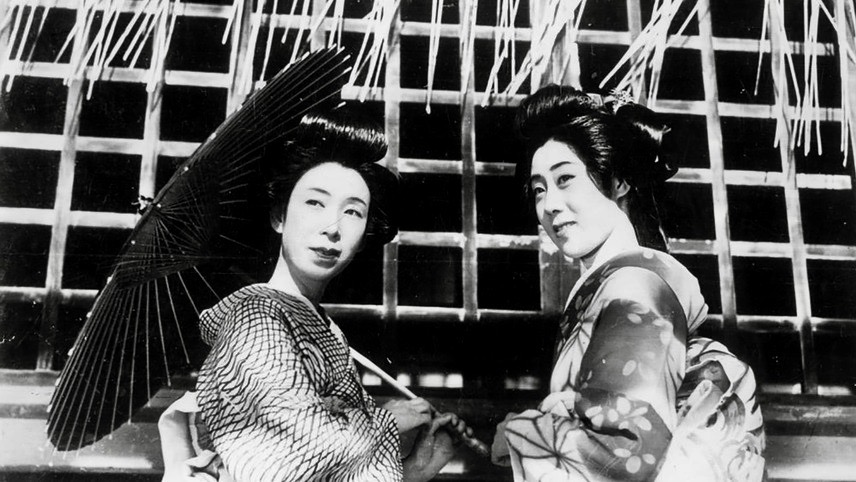
Umekichi (Yoko Umemura, left) and Omocha (Isuzu Yamada) are two sisters enmeshed in the geisha life in Kyoto but couldn’t be more different from each other in Kenji Mizoguchi’s SISTERS OF THE GION (1936).
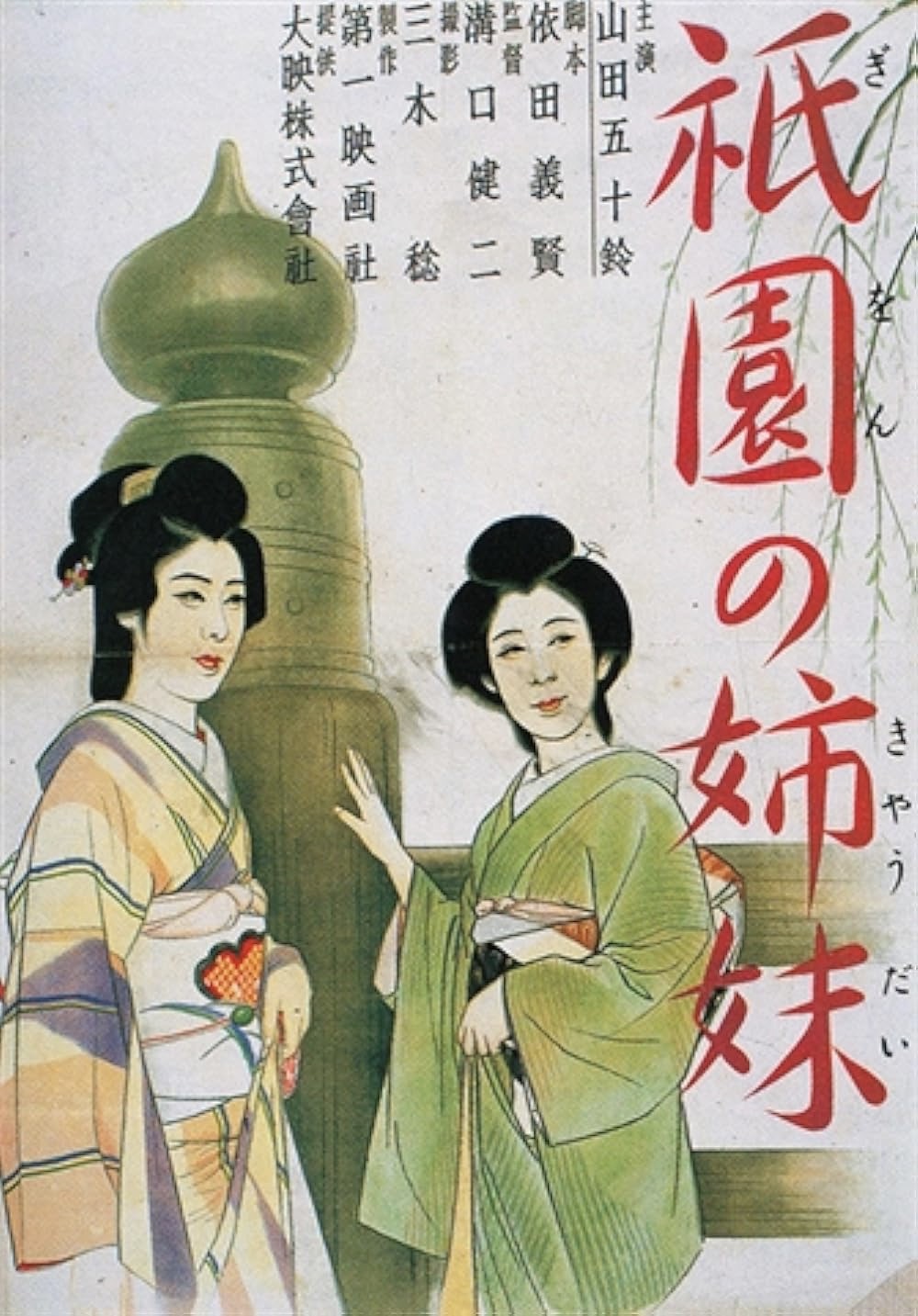
When it comes to equality between the sexes, do you think life has improved for women over the past 100 years? According to a June 2023 poll by CNBC, the best countries for women in terms of equality and work opportunities are (in this order) Iceland, Norway, Finland, New Zealand and Sweden. The UK is further down in the 15th position and the U.S. is surprisingly ranked at the 46th slot out of 146 countries. Of course, the places where women are treated like second class citizens or worse is no surprise. A poll on the Global Citizen website in 2021 shows the ten worst places for gender equality led by Afghanistan and followed by Syria, Yemen, Pakistan, Iraq, the South Sudan and other African countries. And what about Japan? Despite its reputation as a sophisticated culture and a major world power, the country is still a patriarchal society where women continue to serve the men who hold the power. Japanese director Kenji Mizoguchi has often examined and critiqued the kind of society that forces women to give up any independence and make constant sacrifices for their men which is why the director is often considered a proto-feminist in cinema circles. Yet, in Mizoguchi’s long career of almost 100 features and short films, the demeaning patriarchy of Japan has often been a running theme in his work and it created considerable controversy in his country early in his career, emerging most strongly in two of his finest movies, Naniwa Hika (English title: Osaka Elegy, 1936), which was banned by censors in 1940 for displaying “decadent tendencies,” and Gion no Shimai (English title: Sisters of the Gion, 1936), which is even angrier and more despairing than the later.
The Japanese fllm poster of SISTERS OF THE GION (1936).
By day Tokiko (Kinuyo Tanaka) works as a typist in a business firm but after dark she frequents the favorite haunts of gangsters with her yakuza boyfriend in DRAGNET GIRL (1933), directed by Yasujiro Ozu.
Tokiko works as a typist in a business office where Okazki, the owner’s son, is the office manager. He is smitten with his employee and often flirts with her behind closed doors in his private office. Tokiko manages to keep him at bay even though he showers her with gifts and offers her an engagement ring. What Okazki doesn’t know is that Tokiko leads a completely different life after work when she sheds her office worker identity and transforms into a chic underworld player with a gangster boyfriend, Joji. Tokiko not only supports Joji with her day job but also serves as his partner in crime in various money-making schemes. From this brief description you probably wouldn’t suspect that the Japanese crime drama, Hijosen no Onna (English title: Dragnet Girl, 1933), was directed by the celebrated Yasujiro Ozu, but it is an early and surprising entry in his filmography before he became famous for his portraits of Japanese family life in such post-WW2 movies as Late Spring (1949), Early Summer (1951) and his 1953 masterpiece, Tokyo Story.
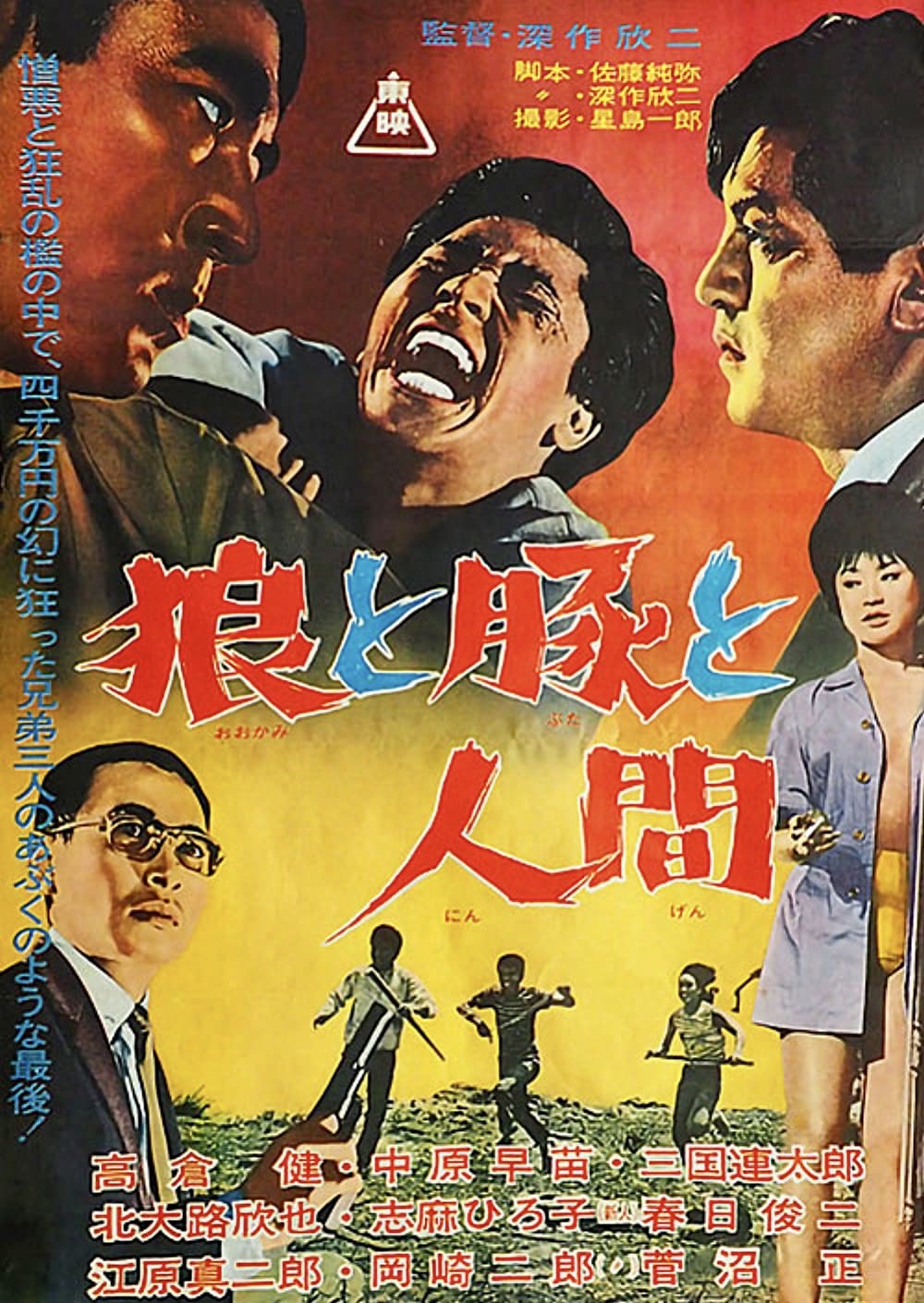
The Japanese film poster for WOLVES, PIGS AND MEN (1964).
Among the many post-WW2 Japanese filmmakers who emerged in the 1960s and hit their stride in the seventies, Kinji Fukasaku was one of the most prominent and critically acclaimed directors in his own country but didn’t start to acquire a growing fan base in the U.S. until after 2000 when some of his masterworks began to appear on DVD such as the yakuza epic Battles Without Honor and Humanity aka The Yakuza Papers (1973), which launched a five-film franchise, and Battle Royale (2000), a controversial futuristic fable about institutionalized violence against problem teenagers. Over the years, Fukasaku has dabbled in numerous film genres from historical drama (Under the Flag of the Rising Sun, 1972) to sci-fi (Message from Space, 1978) and comedy (Fall Guy, 1982), but he is best known from his crime dramas, especially those which popularized the jitsuroku eiga genre. His documentary-like dramatizations based on real crimes often depicted yakuza figures as ruthless men operating without “honor and humanity” (in the title words of his breakthrough film). Even prior to his trend-setting crime thrillers of the mid-seventies, Fukasaku was turning out edgy, innovative work and Okami to Buta to Ningen (English title: Wolves, Pigs and Men) from 1964 is an explosive, nihilistic tale which qualifies as a rough-hewn, early masterpiece.
The Japanese film poster for THIS TRANSIENT LIFE (1970).
Some people believe in heaven and the afterlife while others are convinced that human life is temporal and when it ends nothing remains but a corpse. A dramatization of those opposing views in a film would be a challenging task for any director but Japanese director Akio Jissoji confronts a number of philosophical and religious matters by exploring Buddhist thought and practices versus human desire in Mujo (English title: This Transient Life, 1970). The result is a fascinating and visually innovative character study that manages to balance the sacred and the profane in one of the most overlooked Japanese films of the 70s which is finally starting to receive its due thanks to resurfacing on Blu-ray in recent years.
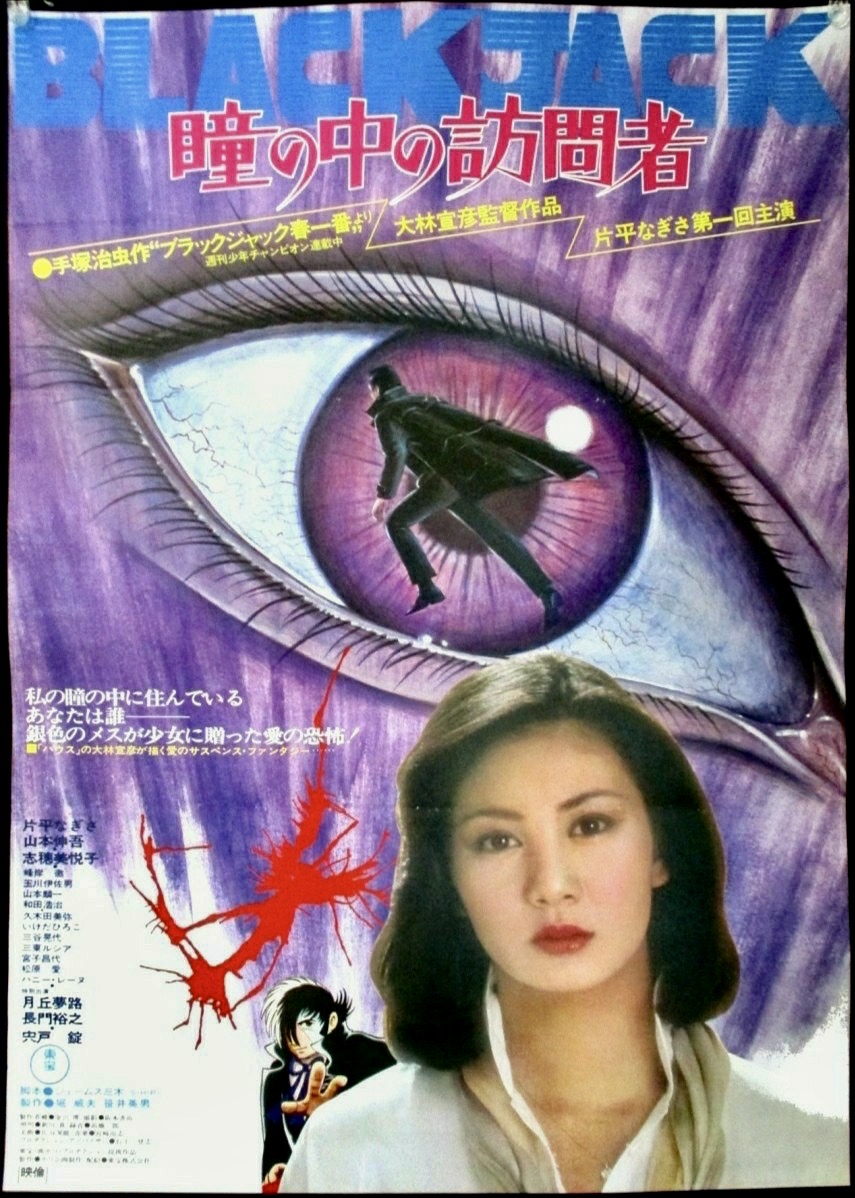
The Japanese film poster for THE VISITOR IN THE EYE aka Hitomi no naka no Houmonsha (1977), directed by Nobuhiko Obayashi.
When Nobuhiko Obayashi’s Hausu (English title: House) opened in Japan in 1977, it proved to be a surprise hit with audiences but not Japanese film critics and it didn’t attract any attention in the U.S. until it was rediscovered in 2009 as possibly the weirdest WFT cult movie since El Topo (1970), Eraserhead (1977) or Repo Man (1984). Originally intended for teenagers, particularly girls, House pits a bunch of young female schoolgirls against a demonic entity and the result is a frenzy of nightmarish images including flying decapitated heads, a cannibalistic piano, a satanic cat, and laughing watermelons to name a few. Obayashi’s subsequent film, Hitomi no naka no houmonsha (English title: The Visitor in the Eye, 1977) isn’t nearly as wild and raucous but it shares the same demented fairy tale ambiance of House and was overshadowed by its predecessor.
The Japanese film poster for Ginrei no hate aka SNOW TRAIL (1947).
Many people believe they are masters of their own fates but occasionally mother nature steps in to remind them that there are outside forces they cannot control such as a mountain wilderness or a blizzard or an avalanche. Such is the case in Snow Trail (Japanese title: Ginrei no hate, 1947), an engaging B-movie crime drama in which three bank robbers flee to the snow-covered slopes of Mount Hakuba, located in the northern alps of Nagano Prefecture. With the law in close pursuit, the trio soon find themselves in dire straits with no experience in mountain climbing or dealing with extreme weather conditions. Nature is simply indifference in such matters.
The Japanese film poster for THE BEAST SHALL DIE (1959), directed by Eizo Sugawa.
According to the Oxford Dictionary, a sociopath is a person who has a personality disorder which causes them to behave in an aggressive, violent or unpleasant way towards other people. The general opinion among psychiatrists is that sociopaths are not born that way, which is usually the case with psychopaths. Instead, sociopaths are shaped by their environment and experiences. A classic example of this is profiled in Eizo Sugawa’s Yaju Shisubeshi (English title: The Beast Shall Die). The protagonist of this 1959 psychological thriller is Date Kunihiko (Tatsuya Nakadai), a quiet, well-mannered graduate student who is exceptionally gifted as a writer and athlete. Behind his benign façade, however, is a cunning sociopath with a plan that slowly reveals itself as the film unfolds. As portrayed by Nakadai, Date is a truly chilling figure and one of his least known but most potent early performances. It deserves to be included with his more celebrated work in such Japanese masterpieces as Masaki Kobayashi’s The Human Condition (1959-1961), Kihachi Okamoto’s The Sword of Doom (1966) and numerous collaborations with Akira Kurosawa such as Sanjuro (1962), High and Low (1963) and Kagemusha (1980).