

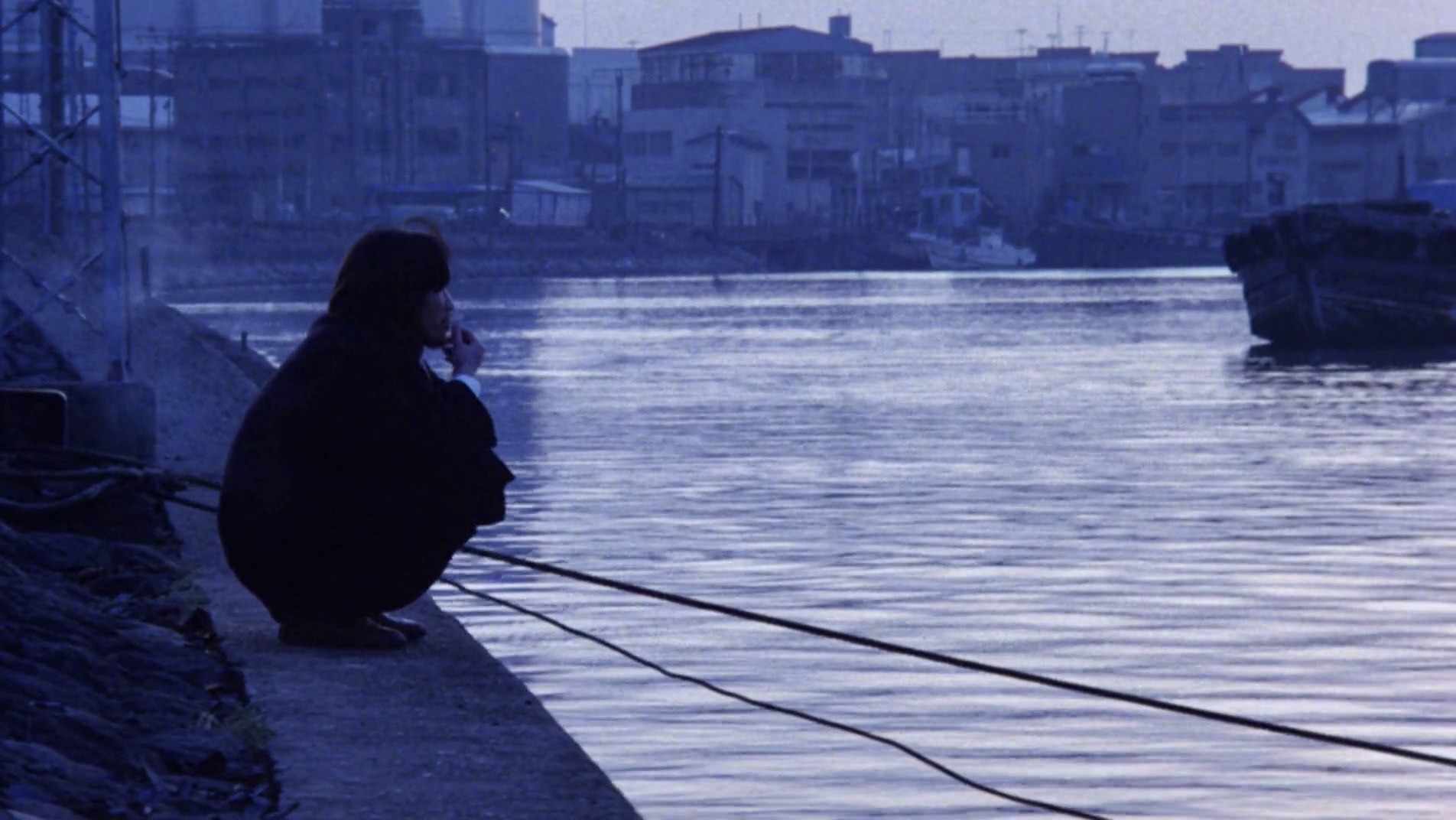
BJ is not a typical private detective by anyone’s standards. He doesn’t own a car and walks or jogs everywhere. Nor does he carry a gun (although he might steal one from any thug that threatens him) or play the tough guy in the brutal manner of Mike Hammer (Ralph Meeker in Kiss Me Deadly). In fact, when he is first introduced in Yokohoma BJ Blues, directed by Eiichi Kudo, he seems like some eccentric drifter who occasionally moonlights as a singer in an after-hours club, where he works for tips. But working as a private detective is his main gig and this 1981 feature is certainly one of the most offbeat and low-key detective dramas you will probably ever see and, even for Japanese viewers, it could be an endurance test or a fascinating hybrid.
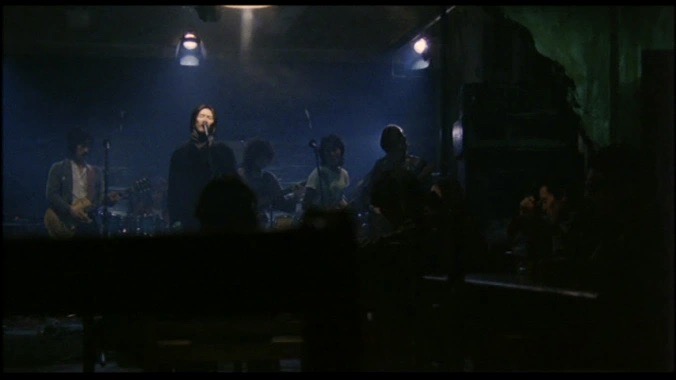
Mostly set in a nocturnal world – even the daylight scenes feature gray, overcast skies – Yokohoma BJ Blues is a noir-drenched mood piece where the seedy atmosphere, decadent underworld characters and Yusaku Matsuda’s low-key but charismatic performance as an enigmatic protagonist dressed in a long black overcoat are much more compelling than the convoluted plot. Even the look and style of the film deviates from the traditional detective thriller format to create a sense of disorientation and ambiguity – characters are sometimes obscured or partially seen in oddly framed shots or low lighting nighttime scenes, the pacing is erratic and moves in fits and starts and unexpected moments of humor occasionally emerge under drastic circumstances. All of this makes Kudo’s film a fascinating experiment that casts a strange, hypnotic spell but it doesn’t always offer clarity or tie up loose ends in a murky storyline that will satisfy genre enthusiasts.
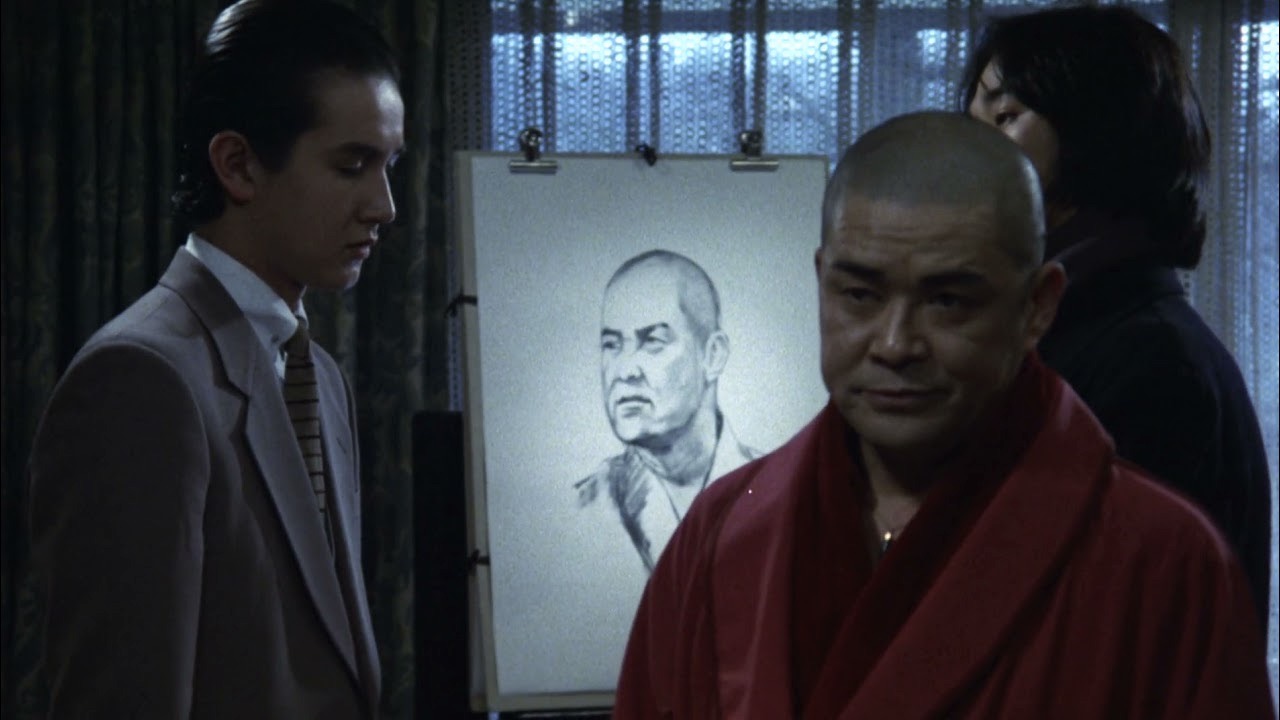
When the movie begins BJ (Matsuda) has already been hired by a mother to find her missing son Akira (Koji Tanaka). The detective tracks him down at the home of a gangster mogul, who runs a trading company as a cover for his drug smuggling activities. Akira is a recent recruit for the crime ring but he also seems to be the rent boy/sex slave of the crime boss. Yet he has no interest in returning home to his mother and tells the detective he enjoys his new life.
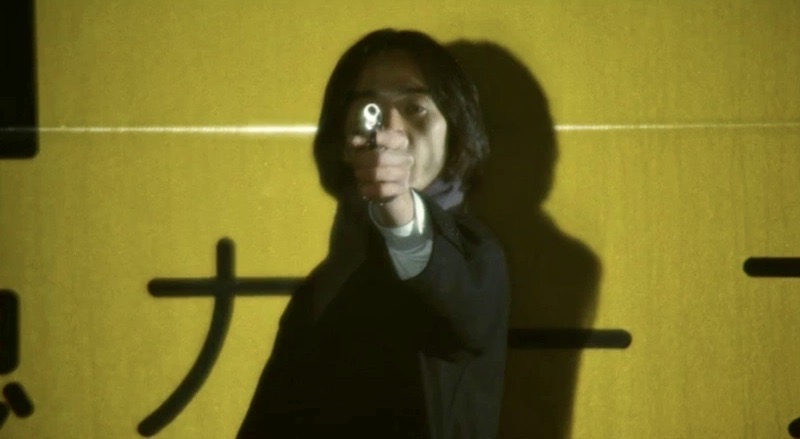
Events take a tragic turn when BJ meets his best friend, Ryo, a city cop, in a park with his partner Beniya. They are ambushed by unknown assailants and Ryo is shot dead. Beniya blames BJ for the attack and thinks he had Ryo murdered so he could be with Ryo’s wife Tamiko (Mari Henmi), who was a former girlfriend. Determined to find out who was responsible for the hit, BJ begins investigating Ali, the bisexual right-hand man of the gangster boss, who appears to have gone into hiding. What follows is a lurid wallow through an urban underworld of gay thugs, motorcycle punks and countless suspects before BJ can avenge his friend’s death.
Yokohoma BJ Blues was a particularly unusual film for its time because queer culture was rarely explored in mainstream Japanese movies and most of the supporting characters and crimes take place in a gay underworld that is treated in a non-exploitative, matter-of-fact presentation. There are no explicit sex scenes and even BJ’s sexuality is questionable. He appears to have no serious romantic attachments and the women in his life are either casual sex partners, work acquaintances or suspects in his line of work. The one exception is Tamiko and his feelings for her are never clearly articulated other than regret over their shared past.
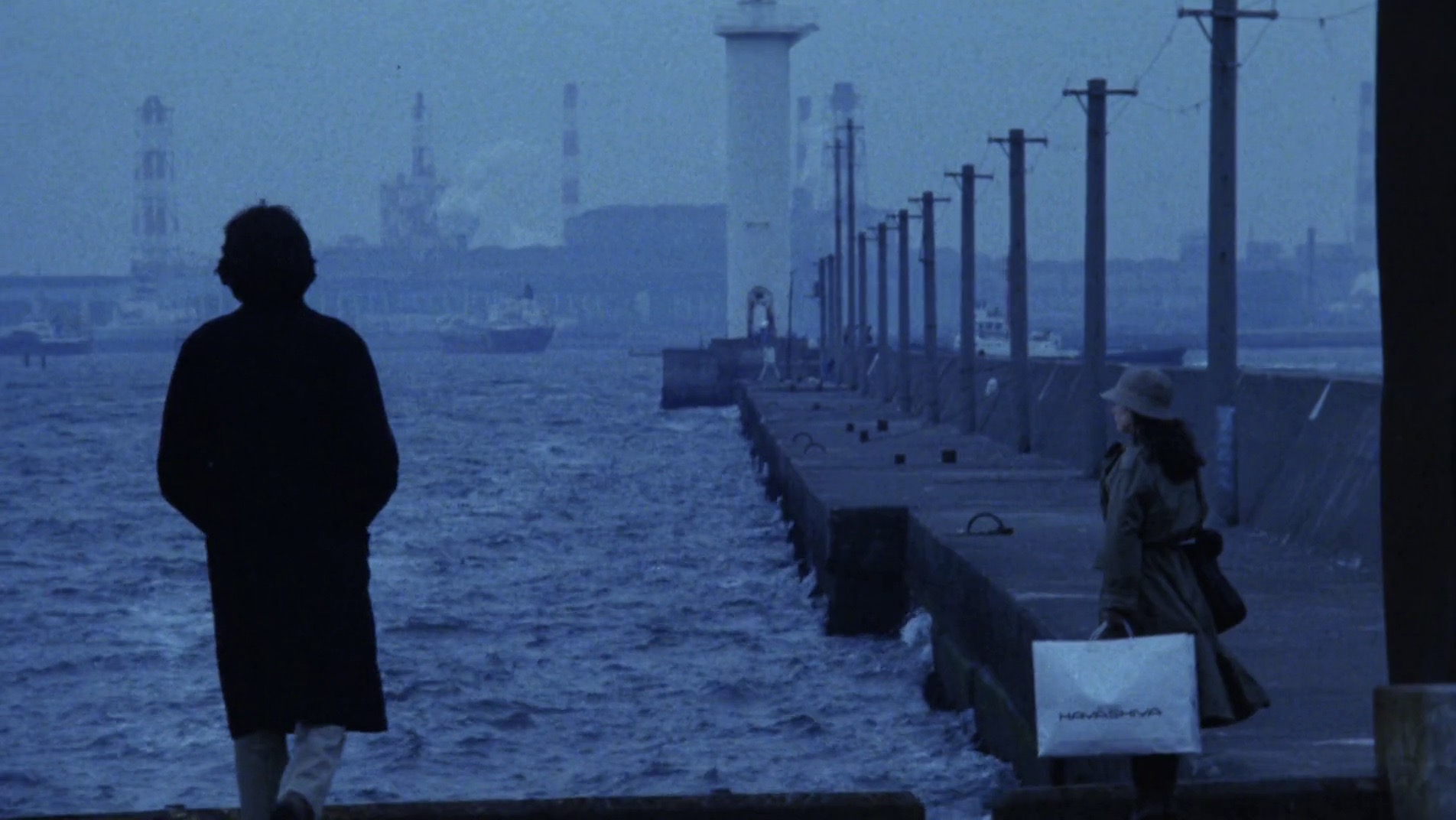
The only time BJ ever shows any affection or tenderness is in an afternoon romp with Akira, which is depicted like a ‘meet cute’ first date. At one point he tells Akira, “I felt like I had met you in another life when I first saw you. For example, I was a dog and you were my owner. Or you were a race horse and I was your owner.” The relationship with Akira is never depicted in an overtly sexual manner yet this sequence is filmed like a playful romantic interlude.
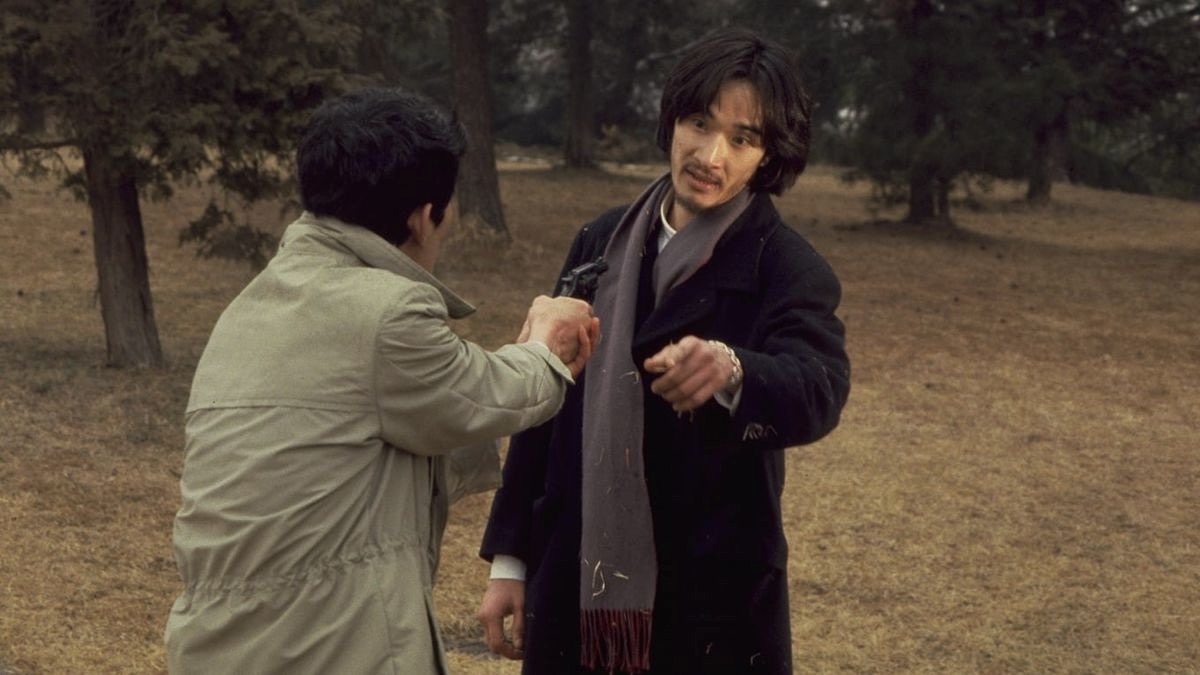
Viewers are left to sort out the relationships and meanings on their own and our protagonist often seems outwitted and overwhelmed by the corrupting forces he encounters. In this regard, he resembles Gene Hackman’s driven but unperceptive investigator in Arthur Penn’s Night Moves (1975) or Elliott Gould’s laid-back, cat-loving detective in Robert Altman’s The Long Goodbye (1973) as clueless pawns in a wicked world. At the same time, BJ can be brutal and unconventional in his methods such as a scene where he terrorizes a gang member for information in a bathroom stall with a knife, stabs him in the shoulder blade and then takes him to a doctor for treatment.
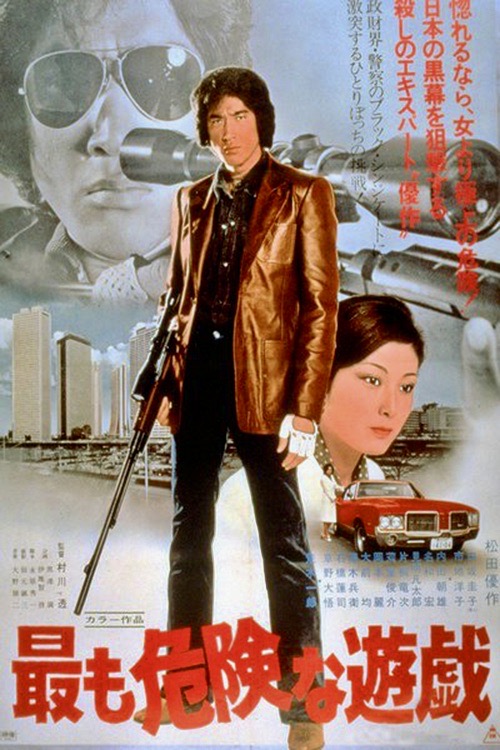
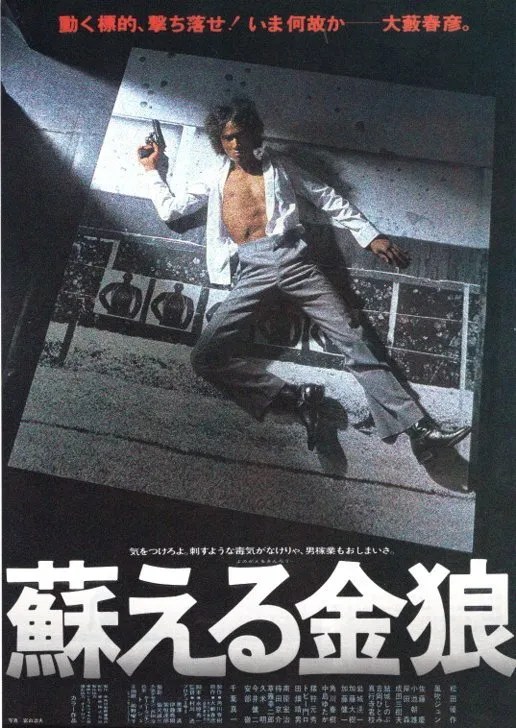
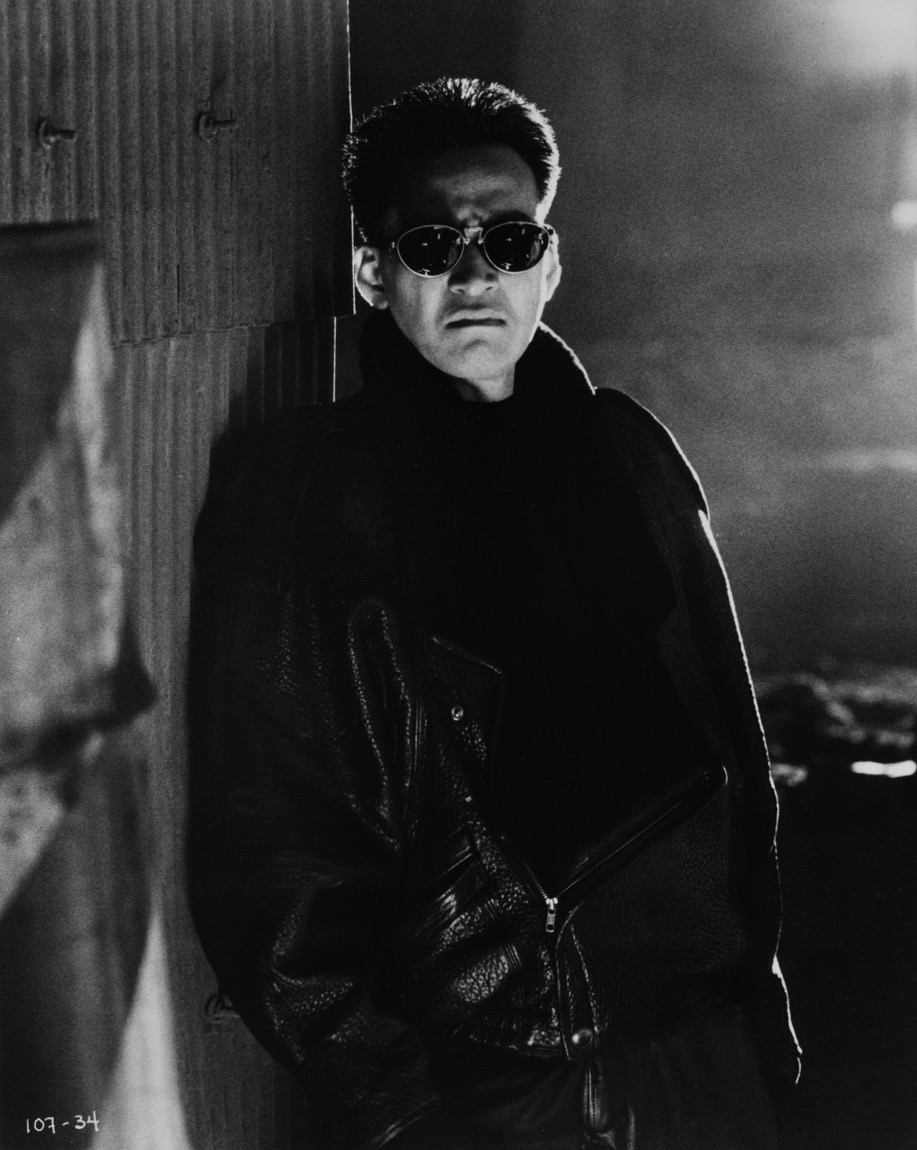
Yokohoma BJ Blues was a radical departure from the kind of roles that had made Yusaku Matsuda famous. He had achieved enormous fame and a rabid fanbase in Japan after appearing in a trilogy of crime films directed by Toru Murakawa – The Most Dangerous Game (1978), The Killing Game (1978) and The Execution Game (1979). As a reclusive hitman named Shohei Narumi, Matsuda strutted through the trilogy in his leather jacket, sunglasses and Detroit muscle car and projected the kind of cool that was reminiscent of Steve McQueen in Bullitt. He solidified his popularity as a charismatic action hero in Resurrection of the Golden Wolf (Yomigaeru Kinro, 1979) and the TV series, The Detective Story (1979-1980) but longed for other creative outlets and launched a singing career.
Matsuda does his own singing in Yokohoma BJ Blues and he has a fantastic voice – rough but soulful in a R&B style. He even agreed to a concert tour in support of the movie but music took second place to filmmaking and Matsuda was soon challenging himself with edgier and more provocative roles like the unconventional tutor in the 1983 satire The Family Game or the stoic drifter in A-homansu (1986), Matsuda’s sole attempt at directing.
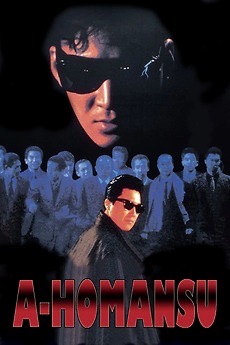
Unlike other Japanese actors like Toshiro Mifune and Ken Takakura, Matsuda remained virtually unknown in the U.S. until the release of Ridley Scott’s Black Rain (1989) where he played a notorious killer pursued by Michael Douglas and Andy Garcia. The movie might have launched his international career if he hadn’t died from cancer at age 40 the same year. Since his death, Matsuda’s cult following has increased to such a degree that he is now as iconic as James Dean in his own country.
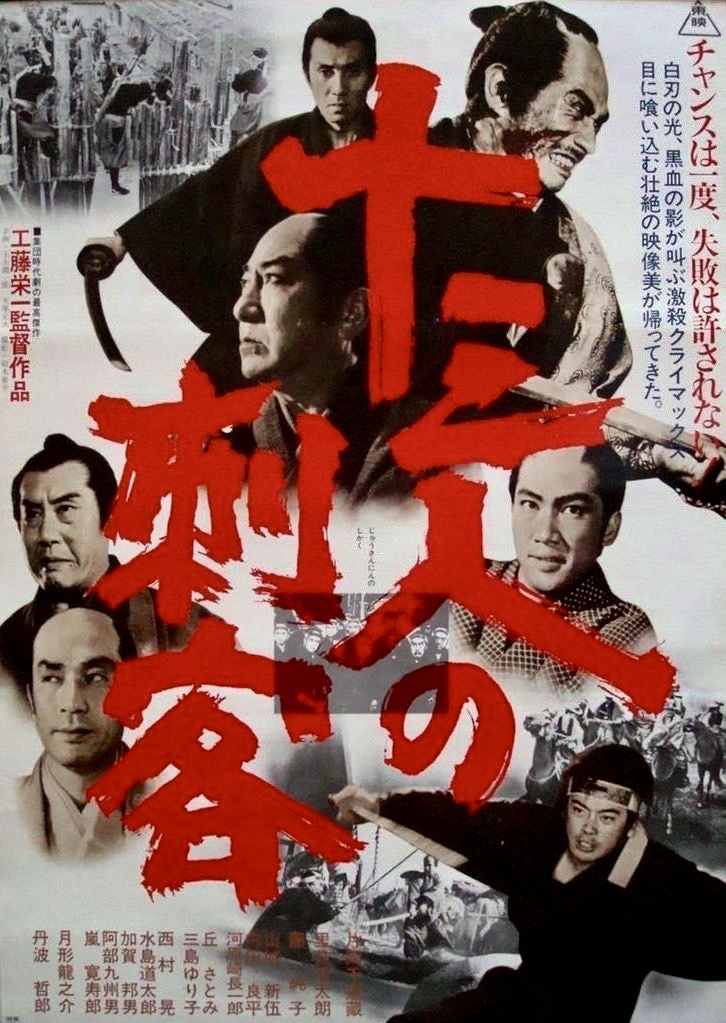
As for director Eiichi Kudo, he is also an overlooked figure in Japanese cinema in America. He got his start making period action dramas set in the Edo era for Toei Studios like the four-film Bloody Account of Jirocho series in 1960. He quickly moved on to more serious and elaborate samurai epics starting with Hengen Murasaki Zukin (English title: 13 Assassins, 1963), which was remade by Takashi Miike in 2010. Kudo’s 13 Assassins was also the first in a highly acclaimed but loosely related trilogy that included The Great Killing (1964) and Eleven Samurai (1967). These films have all been released on DVD in the U.S. and are probably the best introduction to his work. Yokohama BJ Blues is more of an anomaly in his career and a melancholy mood piece for the art house crowd but recommended for the curious cinephile.
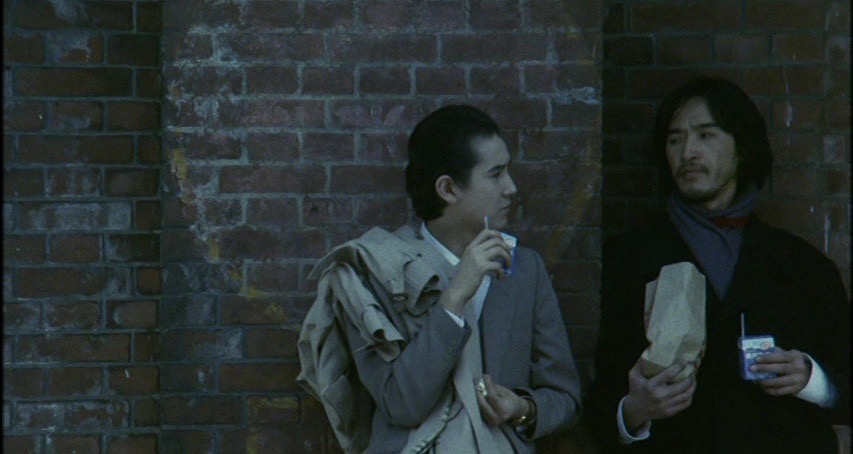
Yokohoma BJ Blues is not available as a domestic release in the U.S. on any format but it is available as a PAL Japanese import DVD (no English subtitles) from online sellers if you own an all-region DVD player.
Other links of interest:
http://www.midnighteye.com/features/eiichi-kudos-guerrilla-filmmaking/
http://www.midnighteye.com/features/yusaku-matsuda-lost-rebel/

