Gas, Food, Lodging…and Murder

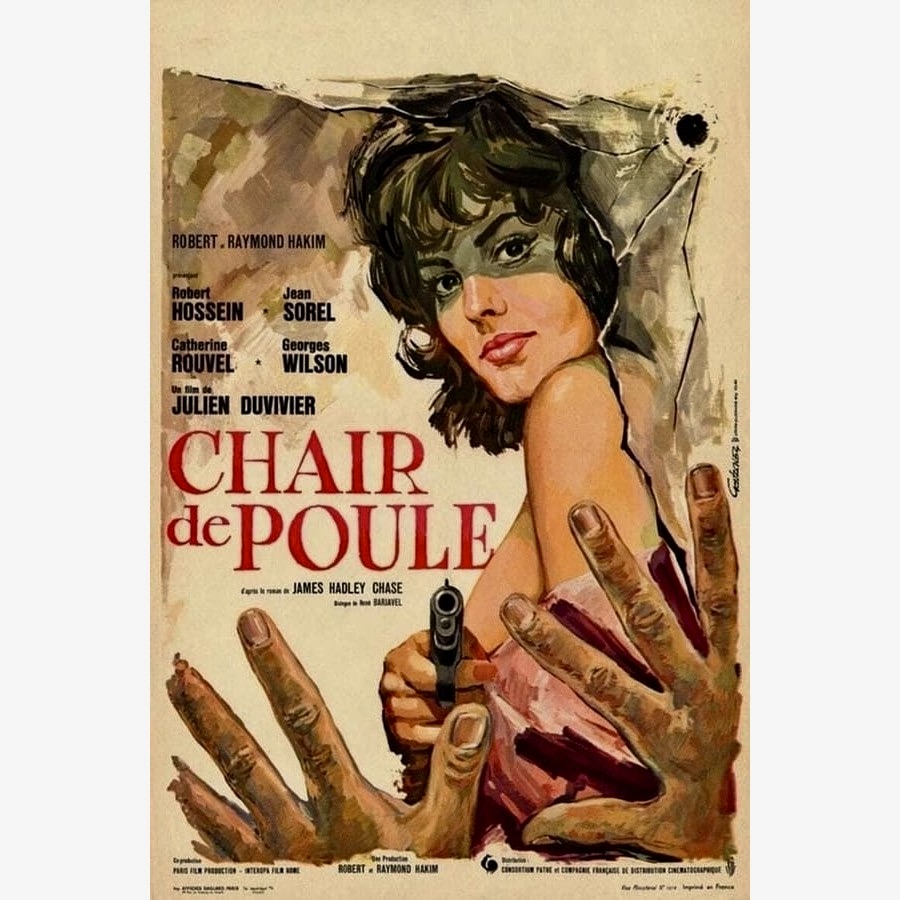
The French film poster for HIGHWAY PICK-UP (1963), a French crime drama directed by Julien Duvivier.

Daniel and Paul are professional locksmiths and good friends who work for the same company. When they mastermind the robbery of a client by breaking into a safe Daniel had previously repaired, the theft goes awry, with the client dying from a blow to the head. Paul escapes but Daniel is shot and injured by the police in the ensuing chase and sentenced to 20 years in prison. After a year in the stir, Daniel escapes by picking the jail cell lock (of course) and tries to elude the authorities in a desert-like region of Alpes-Maritimes in southeastern France. Under an assumed name, he manages to get hired on as an attendant at an isolated gas station run by Thomas and his sexy young wife Maria but Daniel soon realizes he has created a new prison for himself.

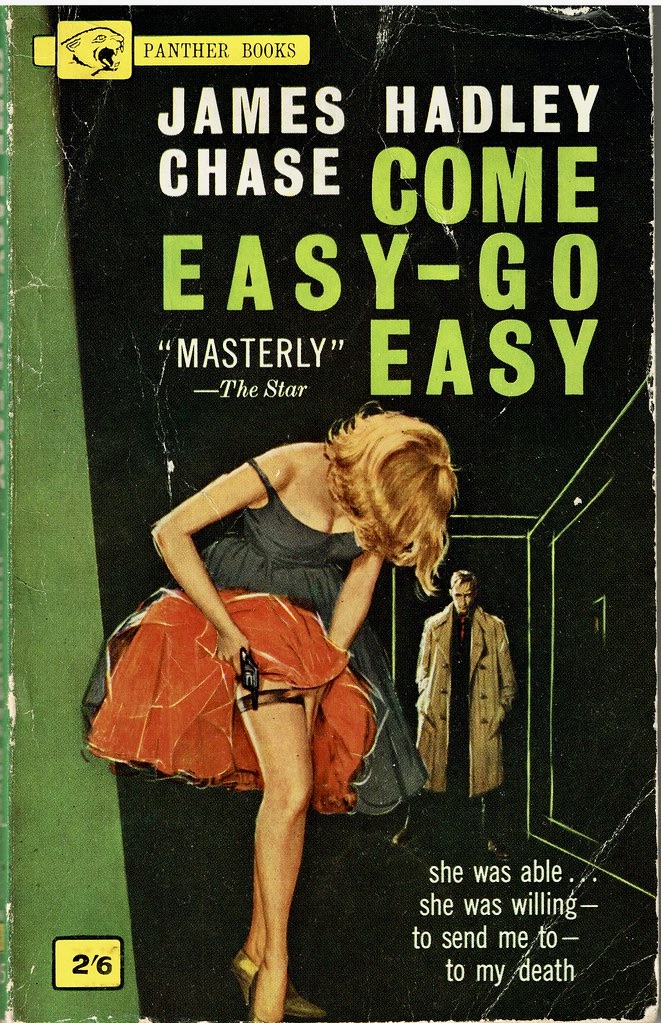
Based on the 1960 crime noir Easy Come, Easy Go by British author James Hadley Chase, Chair de Poule (English title: Highway Pick-Up, 1963) is the penultimate film of the legendary French director Julien Duvivier. If the basic premise sounds like it was inspired by The Postman Always Rings Twice, you wouldn’t be completely wrong. Chase (1906-1985), who used many pseudonyms during his career such as Raymond Marshall and Ambrose Grant, was actually motivated to become a writer after reading James M. Cain’s 1934 novel. Chase’s first novel, No Orchids for Miss Blandish (1939), was an overnight best seller and was adapted into a stage play and two film versions, one in 1948 and one in 1971, under the title The Grissom Gang, which was directed by Robert Aldrich.

Continue reading

Deciphering a French Film Icon

In 1969 French actor Jean-Louis Trintignant had three films in competition at the Cannes Film Festival, Costa-Garvas’s Z, Giuseppe Patroni Griffi’s Metti, Una Sera a Cena (Love Circle) and Eric Rohmer’s My Night at Maud’s, with the actor garnering critical praise for his performance in all three movies. When asked by an interviewer how it felt to be a potential prize recipient, Trintignant replied, “I’m not an award winner. I don’t have that affect to win Best Actor. You need a mad scene or a drunken scene or something like that. And in the films selected I don’t have any like that. All these roles are rather underwhelming. They’re ambiguous. They are complex but not remarkable. I’m not remarkable.” Typical of Trintignant, his response was self-deprecating but also shrewdly self-aware. The irony is that he did win Best Actor at Cannes for Z that year for playing the steadfast, non-partisan investigator of a highly political case. In fact, he built a career playing characters who were often hard to read, repressed or quietly self-possessed, and he made them endlessly fascinating for the viewer. This is just one of many insights shared by director Lucie Caries in Trintignant by Trintignant, an intimate documentary portrait of the actor that was made for French television in 2021, the year before he died. Even though the documentary is barely an hour in length, it pulls from more than 70 years of archival material, photos, interviews, TV and film clips and comments by fellow actors and directors to help dissect the enigma that is Jean-Louis Trintignant.

Continue reading

French Twists

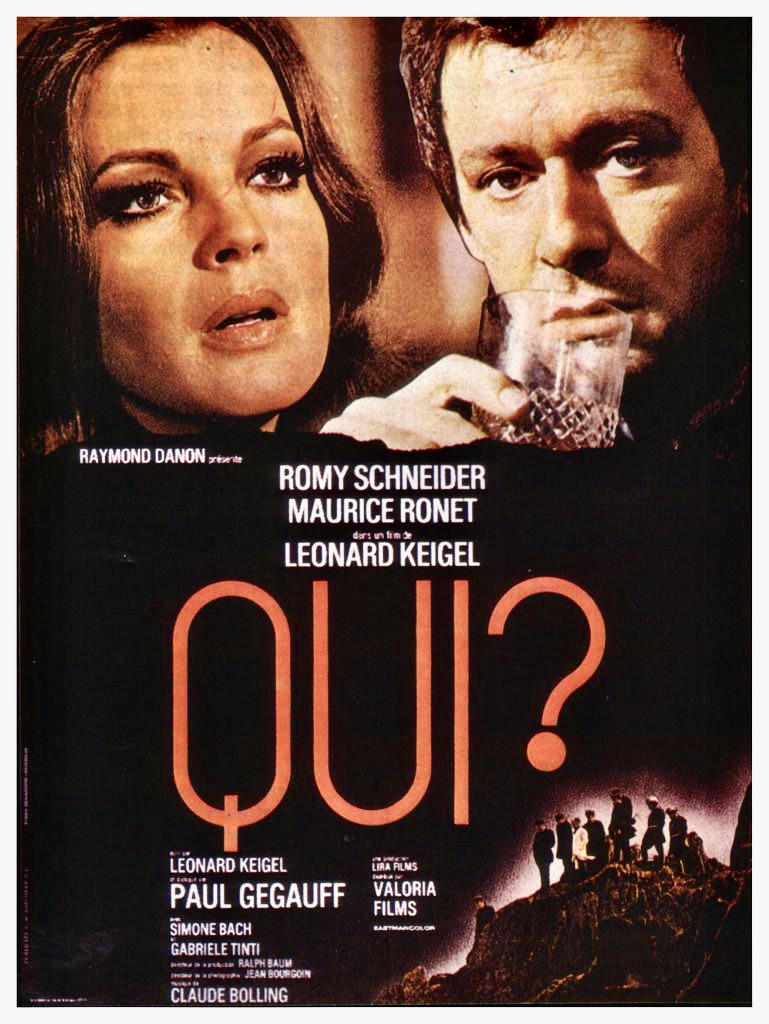
Marina (Romy Schneider) and Claude (Gabriele Tinti) have a violent argument after leaving an inn in the French countryside. A pistol is fired, Claude roughs up his girlfriend and the couple speed off in a convertible. The car leaves the main road and races along the cliffs of the Brittany coastline until it plunges over a ledge into the sea below with Claude at the wheel. Among the hillside rocks, we see Marina, who miraculously escaped from the car and is the only witness at the scene. All of this unfolds under the opening credits of Qui? (1970), a rarely seen French film which offers some odd twists and turns in its brisk 73-minute running time (In some regions it was released under the title The Sensuous Assassin, which is completely misleading in regards to the actual storyline).

Continue reading

Two Cats and a Mouse

When a movie is released under various titles it usually means there are problems. It could be confusion over how to market it or a simple case of a movie that doesn’t fit clearly into any designated genre or maybe it’s a star-driven, major studio release that’s too quirky for the average moviegoer but yields enough curiosity value to inspire various promotional approaches to finding the right audience. All of these could apply to Joy House (1964), an international production based on a pulp fiction paperback by American author Day Keene and filmed on the Riviera near Nice. It stars English-speaking (Lola Albright, Jane Fonda, Sorrell Booke, George Gaynes of Tootsie fame) and French-speaking actors (Alain Delon, Andre Oumansky, Annette Poivre, Marc Mazza) and is also known as The Love Cage and Les Felins (the original French title). Joy House was not a popular success at the time (most critics were unkind in their coverage) but it is a favorite film of mine, flaws and all.   Continue reading

Comic Strip Addiction

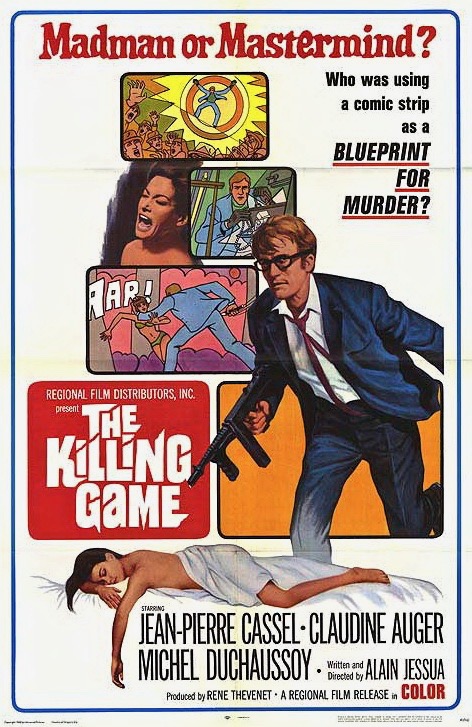
If you went by title alone, Alain Jessua’s Jeu de Massacre (released as The Killing Game in the U.S. and as Comic Book Hero in other territories) suggests it might be a murder mystery or a James Bond-like spy thriller which was still in vogue at the time of the film’s release in 1967. Instead, the film is a witty black comedy about the addictive power of pulp fiction – in this case, a superhero comic book – to ignite dangerous fantasies in readers whose grasp on reality is fragile.   Continue reading

Brigitte Bardot Plays Herself

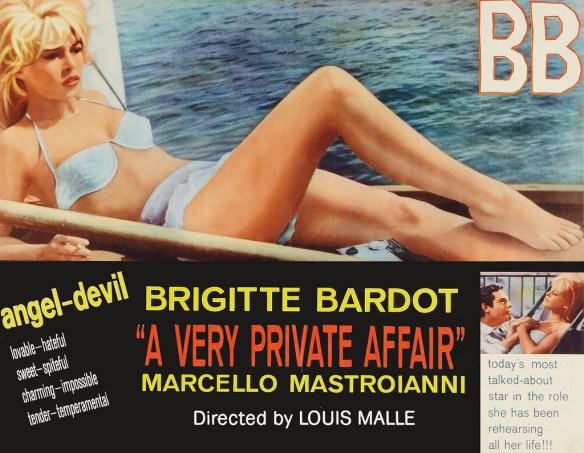
Before he had reached the age of thirty, French director Louis Malle (born in 1932) had already emerged as one of his country’s most critically acclaimed and internationally recognized filmmakers on the basis of his first three films – The Oscar®-winning documentary, The Silent World (1956), which he co-directed with Jacques-Yves Cousteau, the atmospheric noir Elevator to the Gallows (1958), and the controversial adultery drama, The Lovers (1958). Many film critics felt that his fourth film, Zazie dans le metro (1960), based on the novel by Raymond Queneau, was his most adventurous and impressive work to date but it failed to generate ticket sales and was a costly failure. Due to this, Malle felt pressured to make a more commercial feature and the result was A Very Private Affair (1962, French title Vie privée), starring Brigitte Bardot.   Continue reading

In the Shadows of the OAS

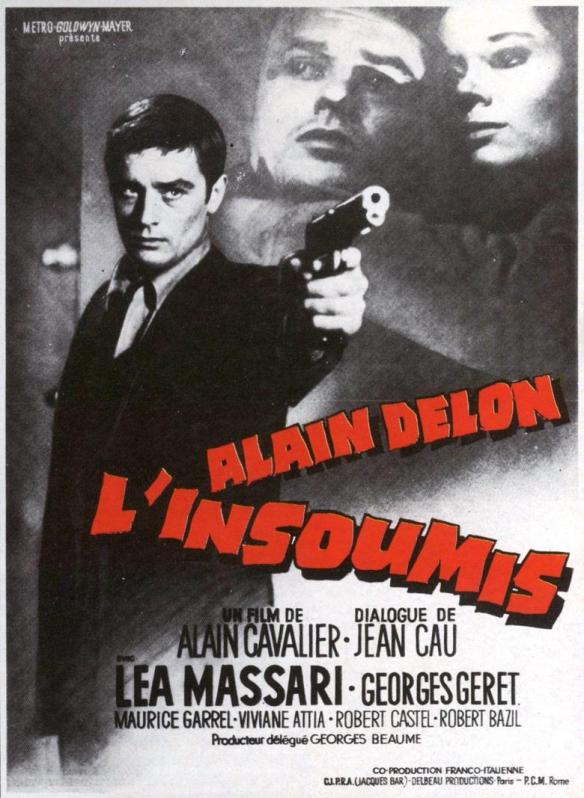
L'Insoumis (1964)L’insoumis (1964) aka The Unvanquished is a relatively unknown but deeply compelling and haunting French film from director Alain Cavalier that aired several years ago on TCM in an English language version titled Have I the Right to Kill? (It was originally distributed by MGM in the U.S.) Shot in glorious black and white by master cinematographer Claude Renoir, the film plays like a politically-charged film noir and it could easily be the best of Alain Delon’s early performances. In the other key role, Lea Massari, the beautiful Italian actress who is best known as the warm, charismatic mother in Louis Malle’s Murmur of the Heart (1971), has rarely been more appealing.  Continue reading

Fade to White

Charles Denner retreats from the world in Life Upside Down (1964), directed by Alain Jessua

Charles Denner retreats from the world in Life Upside Down (1964), directed by Alain Jessua

Films that explore mental illness, especially Hollywood productions such as The Snake Pit, The Three Faces of Eve and A Brilliant Mind, usually tend to be heavy on the histrionics providing highly dramatic showcases and Oscar award opportunities for actors. But a descent into madness isn’t always signaled by wildly disruptive or overwrought behavior from the afflicted. Sometimes the illness can creep up slowly by degrees and pass for something more fleeting and subtle that avoids detection during the early stages. Life Upside Down (La vie à l’envers), directed by Alain Jessua, is a remarkable example of this, presenting a man who goes quietly mad while interpreting his erratic behavior as a profound new self-awareness.     Continue reading

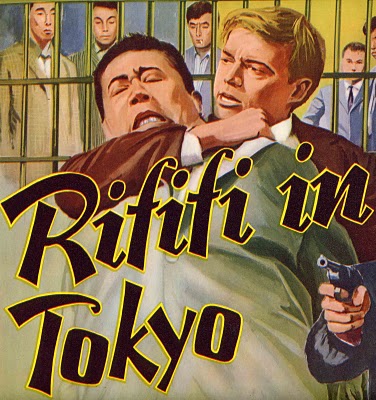
Rififi in Tokyo

Rififi in Tokyo poster

Rififi in Tokyo poster

Rififi, Jules Dassin’s quintessential 1955 noir/heist thriller, had quite an impact on the European crime movie genre in its day, although most of its imitators or similarly inspired creations rarely found distribution in the U.S. except as English-dubbed second features in limited runs in a few major cities like New York. I have yet to read of any major film critics or movie buffs like Quentin Tarantino championing any of the Rififi knockoffs. But for anyone with a soft spot for heist films, you might enjoy sampling some of these lesser efforts, particularly RIFIFI IN TOKYO (1963).      Continue reading