
John Drew Barrymore Double Feature

The Italian film poster for I’LL SEE YOU IN HELL (1960) starring John Barrymore Junior, who changed his name to John Drew Barrymore.

What film or theater buff is not familiar with the House of Barrymore, the acting dynasty known as the “Royal Family of the American Stage”? Led by Lionel Barrymore (1878-1954), the oldest of three acting siblings, including sister Ethel (1979-1959) and younger brother John (1882-1942), the trio dominated the Broadway stage during the early 1900s as well as the film industry of the silent and early sound era. Today, Drew Barrymore, the granddaughter of John Barrymore, is arguably as famous as he was during his era but the actress’s father, John Barrymore Jr., and his stepsister Diana Barrymore, are practically forgotten. Both were promising actors at the start of their career but personal problems and drug and alcohol addictions ended up derailing any opportunities in the profession.
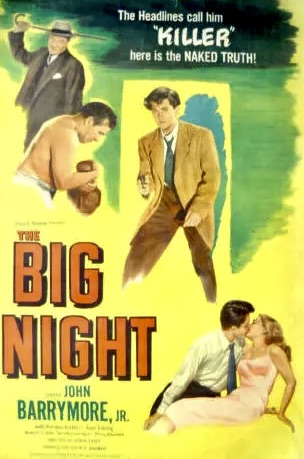
Diana was better known as a stage actress and only ended up making a handful of minor films before her early death at age 38 in 1960 but John Barrymore Jr. had a much longer film career and had the looks and potential talent to be a major star. He made his film debut in the 1950 western The Sundowners and attracted considerable attention in the starring role of his fourth movie, The Big Night (1951), directed by Joseph Losey. As an angry teenager seeking to avenge an assault on his father, John Jr. gives a moody, Method acting-style performance which prefigures the rise of rebellious screen icons like Marlon Brando and James Dean. His acting garnered some good reviews but it wasn’t a breakout success or help to advance his career. And he soon became unemployable in Hollywood due to unprofessional behavior on film sets and high profile press coverage of his abusive behavior toward his first wife, Cara Williams (an Oscar nominee for Best Supporting Actress in The Defiant Ones, 1958). Looking for new acting opportunities, he moved to Italy in the early sixties where he made thirteen movies over a five-year period, mostly low-budget genre films that included historical dramas (The Night They Killed Rasputin (1960), peplums (The Trojan Horse, 1961) and melodramas (A Game of Crime, 1964). I am highlighting two of his better efforts, Ti Aspettero all’inferno aka I’ll See You in Hell (1960) and Delitto allo Specchio aka Death on the Fourposter (1964) in this post.

Continue reading
Gas, Food, Lodging…and Murder

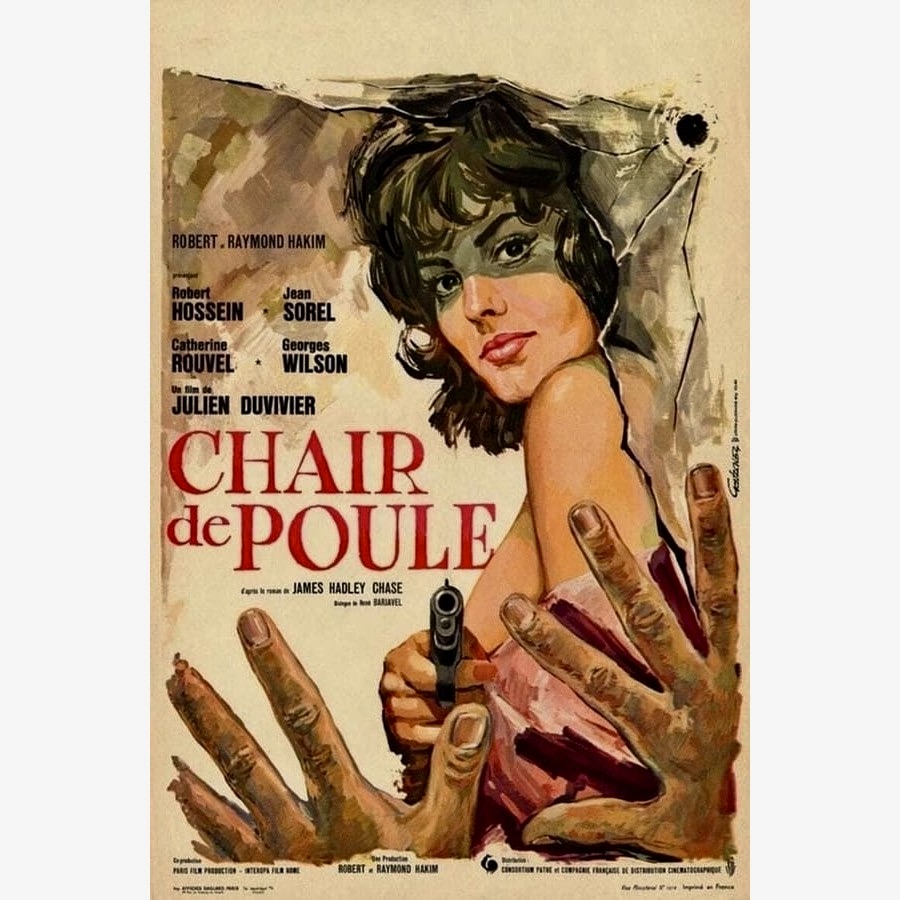
The French film poster for HIGHWAY PICK-UP (1963), a French crime drama directed by Julien Duvivier.

Daniel and Paul are professional locksmiths and good friends who work for the same company. When they mastermind the robbery of a client by breaking into a safe Daniel had previously repaired, the theft goes awry, with the client dying from a blow to the head. Paul escapes but Daniel is shot and injured by the police in the ensuing chase and sentenced to 20 years in prison. After a year in the stir, Daniel escapes by picking the jail cell lock (of course) and tries to elude the authorities in a desert-like region of Alpes-Maritimes in southeastern France. Under an assumed name, he manages to get hired on as an attendant at an isolated gas station run by Thomas and his sexy young wife Maria but Daniel soon realizes he has created a new prison for himself.

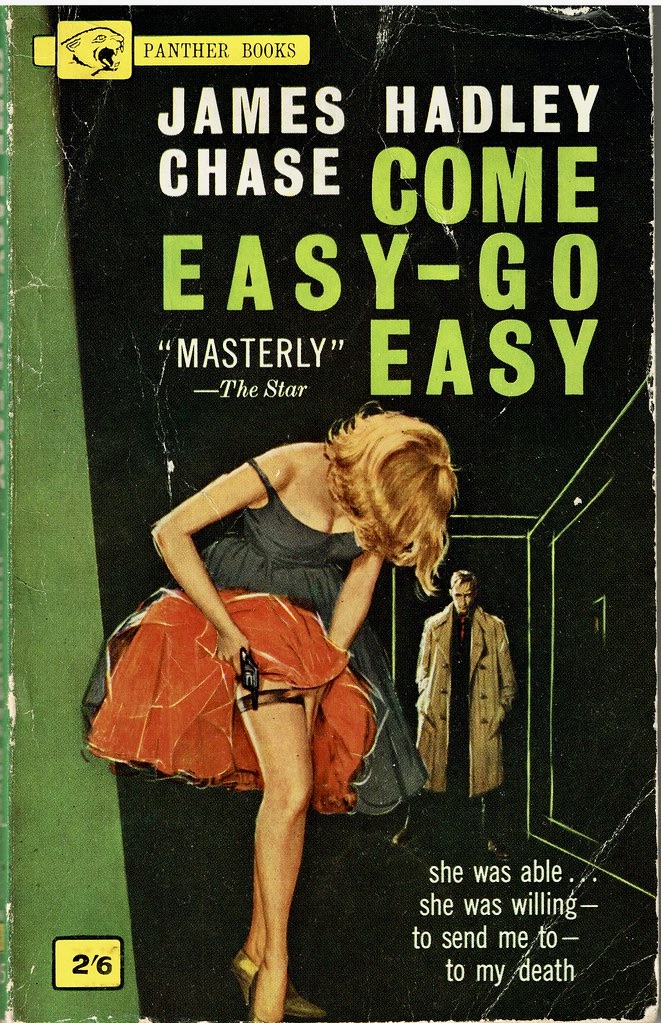
Based on the 1960 crime noir Easy Come, Easy Go by British author James Hadley Chase, Chair de Poule (English title: Highway Pick-Up, 1963) is the penultimate film of the legendary French director Julien Duvivier. If the basic premise sounds like it was inspired by The Postman Always Rings Twice, you wouldn’t be completely wrong. Chase (1906-1985), who used many pseudonyms during his career such as Raymond Marshall and Ambrose Grant, was actually motivated to become a writer after reading James M. Cain’s 1934 novel. Chase’s first novel, No Orchids for Miss Blandish (1939), was an overnight best seller and was adapted into a stage play and two film versions, one in 1948 and one in 1971, under the title The Grissom Gang, which was directed by Robert Aldrich.

Continue reading

Sex Trafficking in Marseilles

Human trafficking is recognized as a form of modern day slavery today but it has been around for decades. In the early 20th century the white slave trade in Europe became a major crime phenomenon in which hundreds of young women went missing only to end up enslaved in prostitution rings. This criminal activity provided the basis for countless melodramas and sexploitation films but one of the most entertaining and accomplished efforts is the French feature Des Femmes Disparaissent (1959), which was released in the U.S. in 1962 as Road to Shame. Women Disappear is a more accurate translation for the original title but the movie is a tautly directed thriller which has the look of a vintage noir with moody black and white cinematography by Robert Juillard (Forbidden Games, Gervaise).

Continue reading