Gypsies, Tramps and Thieves: The Bohemian Girl

Image courtesy of www.doctormacro.com and Dieter

Image courtesy of http://www.doctormacro.com and Dieter

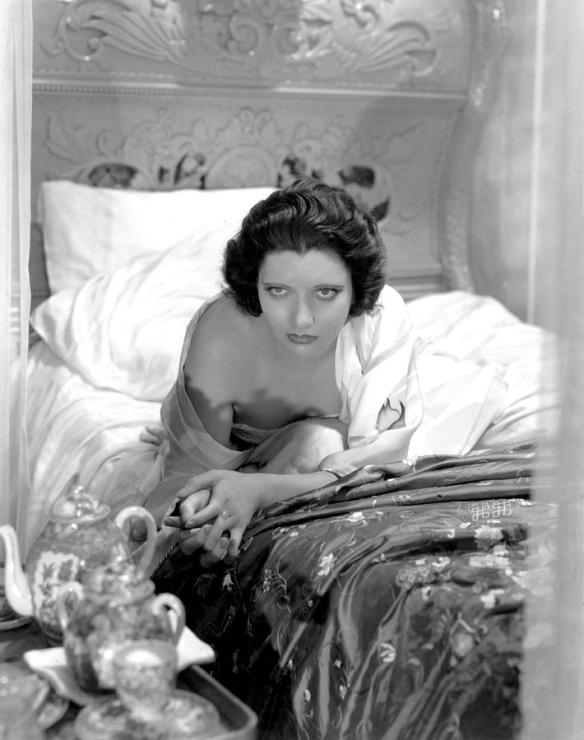
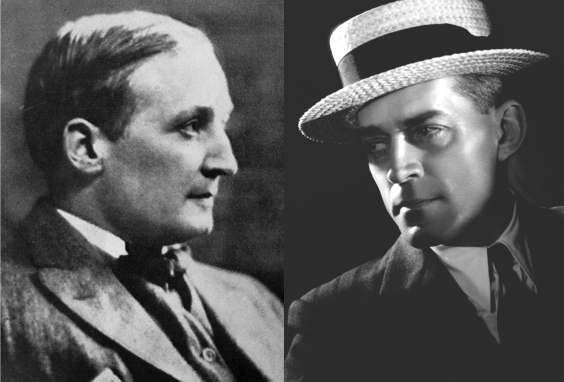
Even though the 1936 Laurel and Hardy feature The Bohemian Girl is not ranked among their best by the duo’s fervent fans or film historians, I have a fondness for it because I saw it at an early age before I was even aware of their silent films or the movies which would later become all-time favorites – Way Out West (1937), A Chump at Oxford (1940) and Sons of the Desert (1933). What stood out were the hilarious sight/audio gags such as Ollie’s bafflement at his partner’s slight-of-hand tricks, the horse scrubbing sequence, and Stan’s switch from high soprano to basso while singing; those have a resonate power to make you laugh in the worst of times. Unfortunately, most operetta aficionados dislike it because the music is secondary to the narrative and is not given a showcase deserving of the libretto. And L&H devotees find the music as insufferable and annoying as those musical passages in the MGM Marx Brothers comedies where you just want the boys to get on with their business. For those who fall between both camps and have never seen The Bohemian Girl, this is your homework.   Continue reading

Romain Gary’s Cinematic Overdose

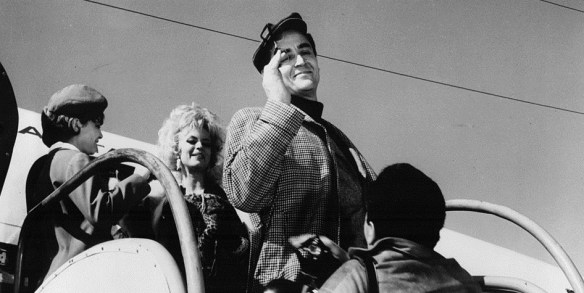
kill-kill-kill-movie-poster-1972-1020367435How many times do you need to say Kill! In a movie title if you want to stress that it is about murder on an international scale? Apparently the distributors of this 1971 oddity were uncertain about that so they created various poster versions for the global market that ranged from four emphatic Kills! to a succinct single Kill! for promotional purposes. They covered all their bases but forgot to identify a target audience for this chaotic, frenzied and wildly improbable mash-up that freebases elements from conspiracy thrillers, secret agent exploits and sexual melodramas with a political agenda. Of course, you wouldn’t expect anything less from author-turned-filmmaker Romain Gray whose only other directorial effort was the pretentious art house mega-bomb Birds in Peru (1968), which starred his wife Jean Seberg as a suicidal nymphomaniac in the Caribbean.   Continue reading

A Western for Adults

The Hanging TreeUnderrated at the time of its release, The Hanging Tree (1959) is now considered a superior western from the waning years of that popular genre which coincided with the end of the studio era. It is also considered one of Gary Cooper’s best performances from his final decade in film, comparable to his fine work in High Noon (1952) and Man of the West (1958), and a late period achievement for director Delmer Daves (Broken Arrow, 3:10 to Yuma). I encountered the film at a Saturday matinee in Harrisburg, Pennsylvania when I was eight years old and remember being disturbed by it. This is an adult western. It is not a film for children.  Continue reading

Marco Ferreri’s Hairy Angel

Annie Girardot in THE APE WOMAN (1964)

Annie Girardot in THE APE WOMAN (1964)

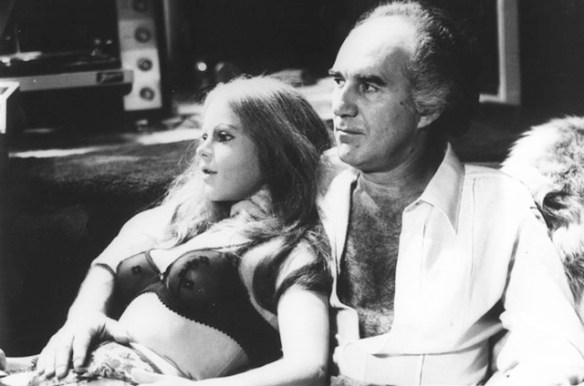
I can remember being fascinated with Marco Ferreri’s The Ape Woman (La donna scimmia) from the first time I saw a still from it in the May 1964 issue 28 of Famous Monsters of Filmland. A woman wearing eye makeup and sporting a beard and hairy legs poses provocatively for the camera while her mate, either a man in a tacky ape costume or a prop gorilla, rests his head in her lap. The photo description, “Beauty (?) and the Beast make a hairy horror pair in THE APE WOMAN,” was the only information offered about this upcoming release and, since it was being featured in FFofF, I assumed it qualified as fantasy cinema. Continue reading

Scandal Sheet Smackdown

Five Star Final poster

In the early thirties, most studios steered clear of social protest films but not Warner Bros. They embraced the genre with the same muckraking glee that characterized some of their subjects. Prison reform was addressed in one of their most famous films, I Am a Fugitive from a Chain Gang (1932), with equally controversial topics like the rise in urban crime and drug addiction among war veterans being presented in The Public Enemy (1931) and Heroes for Sale (1933), respectively. Five Star Final (1931), on the other hand, addressed a different type of social problem – tabloid journalism.   

Continue reading

Eurotrash or Subversive Satire?

ann and eveIs it possible to make a movie that works as both art house fare and exploitation cinema? Arne Mattsson’s Ann och Eve – de erotiska (1970), which was released in the U.S. in an English dubbed version as Ann and Eve, certainly comes close but still manages to frustrate both intended audiences with a bait-and-switch narrative that moves freely from sexual titillation to Swedish angst a la Bergman to surreal flights of fancy and back again, never revealing whether it should be taken seriously or as a put-on until the final frames. Continue reading

Middle Age Crazy

original posterIt’s hard to imagine a more unlikely prospect for a film adaptation than John Cheever’s short story, The Swimmer, which was first published in The New Yorker. Yet, it was actually adapted into a major motion picture from Columbia Pictures starring Burt Lancaster. Was it a success? Hardly. Even though a handful of critics endorsed it, the public stayed away but for some who were lucky enough to see it, the film resonated for years. Now it is available on Blu-Ray and DVD from Grindhouse Releasing and a reassessment is in order. Continue reading

Soul Survivors

11311651-lAlthough less well known today than Stanley Kramer’s Oscar-nominated 1967 drama, Guess Who’s Coming to Dinner?, and still unavailable on DVD/Blu-Ray, One Potato, Two Potato (1964) was the first serious, non-exploitive attempt to deal with an interracial marriage as its main subject and was independently produced outside Hollywood. Set in the fictional small town of Howard (a stand-in for Painesville, Ohio, where it was actually filmed), the movie is bookended by a courtroom ruling on a child custody case and in between is the sad but all too true story of an interracial couple who become social outcasts in both the white and black communities.    Continue reading

Desert Rats

Nigel Davenport (left ) & Michael Caine in PLAY DIRTY (1969)

Nigel Davenport (left ) & Michael Caine in PLAY DIRTY (1969)

Underrated by critics and ignored by audiences upon its initial release in 1969, Play Dirty, directed by Andre de Toth, has slowly but surely acquired an appreciative fan base over the years thanks to high profile advocates of the film like Martin Scorsese who included it on a long list of guilty pleasures for the May-June 1998 issue of Film Comment. Unfortunately, this World War II drama starring Michael Caine had the misfortune to follow in the wake of Robert Aldrich’s box-office hit, The Dirty Dozen (1967), to which it was often unfairly compared. But, outside of a similar assemble-the-team concept which sends a group of criminals on a suicide mission, the film has very little in common with Aldrich’s blockbuster and there is absolutely no reason to feel any guilt over liking it either.  Continue reading

The Neopolitan Trinity

Vittorio De Sica (left), Sophia Loren, Marcello Mastroianni in TOO BAD SHE'S BAD (1955)

Vittorio De Sica (left), Sophia Loren, Marcello Mastroianni in TOO BAD SHE’S BAD (1955)

Often overlooked or dismissed as a minor comic trifle, Peccato che sia una canaglia (English title: Too Bad She’s Bad) has, in recent years, acquired a much more favorable reassessment from film scholars and film buffs due to occasional revivals on Turner Classic Movies and a 2004 DVD release from Ivy Video. It not only has a delightful, rakish charm and evocative on-location filming in Rome but showcases three of the most iconic names in Italian cinema directed by the legendary Alessandro Blasetti, whose career began in the silent era and spanned six decades. Also noteworthy is the fact that the film is based on the short story Il fanatico by Alberto Moravia, the celebrated Italian novelist who saw many of his novels turned into major films – la ciociara became Vittorio De Sica’s Two Women, Il disprezzo became Jean-Luc Godard’s Contempt and Il conformista became Bernardo Bertolucci’s The Conformist. Continue reading