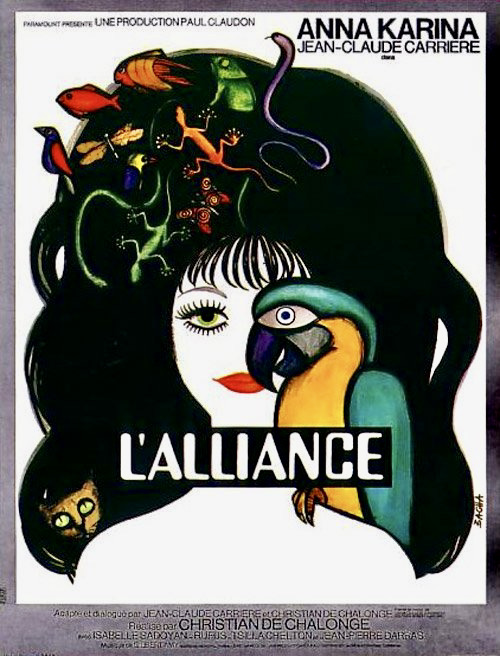
Almost everyone has a good reason for why they want to get married but for Hugues, there is a very specific need. He wants to find a woman with a place of her own, preferably one with ample square footage that includes a sitting room and a large, walk-in closet. Love or companionship isn’t a main objective. Nor does he have any particular preferences concerning the woman’s appearance or personality as long as she is close to the same age. Strangely enough, Hugues finds the ideal candidate through the Duvernet Agency, a professional matchmaker. Jeanne is not only lovely and charming, if a bit elusive, and she has never been married before. Plus, she resides in a sprawling ground floor apartment once owned by an uncle. What could be better? So begins 1970’s L’Alliance (also known as The Wedding Ring), an exceedingly peculiar tale that slowly lures the viewer down a rabbit hole.
Off the Grid
A master of 20th century cinema, the Swedish director and actor Victor Sjöström is best remembered for his moving performance as the elderly physician reflecting on his life in Wild Strawberries (1957). As a director, his highly acclaimed 1921 adaptation of Selma Lagerlöf’s novel The Phantom Carriage convinced MGM mogul Louis B. Mayer to bring him to America where Sjöström directed the prestigious projects He Who Gets Slapped (1924), with Lon Chaney, and two starring Lillian Gish, The Scarlet Letter (1926) and The Wind (1928), arguably the pinnacle of his Hollywood tenure. While The Outlaw and His Wife (1918) is not as well known, it is considered by many film historians to be Sjöström’s silent-era masterpiece and, nearly a century after its release, is enjoying a revival that should elevate its stature in the director’s pantheon.
Identity Disintegration

What would happen if you lost the face you recognize as your own and had to replace it with a new one? Would you have an identity crisis or simply become a different person? Japanese director Hiroshi Teshigahara ponders this unusual dilemma in The Face of Another (1966, Japanese title: Tanin no kao). Continue reading
The Harmonious Sounds of Franco De Gemini
You might not know the name but you have probably heard his music and the unmistakable sound of his harmonica on countless Italian film scores. The plaintive wail of his instrument on Once Upon a Time in the West (1968) was used as a musical motif for Charles Bronson’s avenging angel, who was identified simply as “the man with the harmonica” in Sergio Leone’s landmark film. Yet that nickname really belongs to Franco De Gemini who has brought his distinctive sound from the background to the foreground in more than 800 movie scores in his lifetime. His talent for expressing conflicting emotions through his music in both minimalist and operatic arrangements is this composer’s secret weapon.
Continue readingFear of Flying

Consider this as a possible scenario. You are on a flight from Lisbon, Portugal to New York City and, in the dead of night over the middle of the Atlantic Ocean, the pilot’s voice on the intercom suddenly jolts you awake with these words, “Can I have your attention please. This is Captain Williams. We’re in an emergency situation. We may have to ditch.” You might be able to ditch your girlfriend, boyfriend or spouse but it’s not so easy to ditch a plane as demonstrated by the principles of Crash Landing (1958).
Musicals from Behind the Iron Curtain

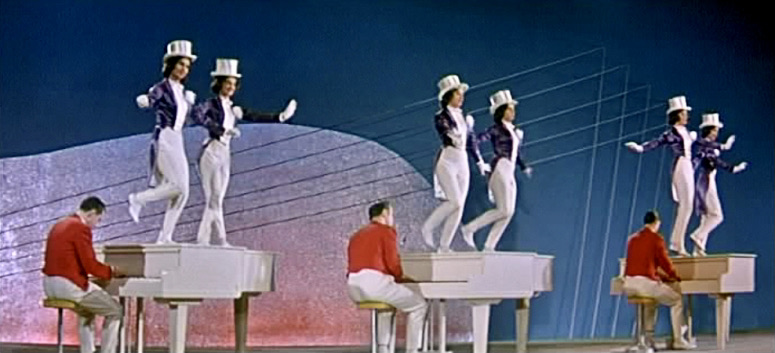
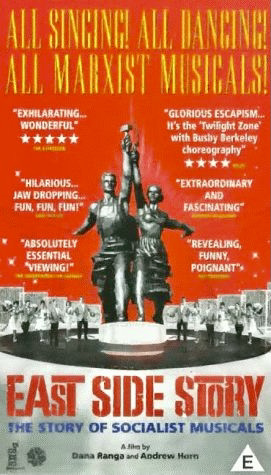
If you are a dedicated fan of movie musicals, you have probably been tempted to venture beyond the realm of Hollywood’s golden era to explore classic musicals from other countries like France (The Umbrellas of Cherbourg, 1964), Germany (The 3 Penny Opera, 1931) or England (Evergreen, 1934). You would certainly have no trouble discovering top rated favorites from India which produces between 1,500 to 2,000 Bollywood movies a year, most of which include at least three to five musical numbers. It might be harder though to dig up a famous film musical from countries as diverse as…say, Sweden, Japan or Egypt…but they definitely exist and there are more than you would think. What you probably haven’t seen is a socialist musical from Russia or any of its satellite countries during the Communist regime. There’s a reason for that. Those films weren’t exported outside Iron Curtain countries during that era but you can experience a highly entertaining sampler of the genre in East Side Story, a documentary on Marxist musicals that premiered in U.S. theaters in 1997.
Sean Connery as a Gypsy Grifter

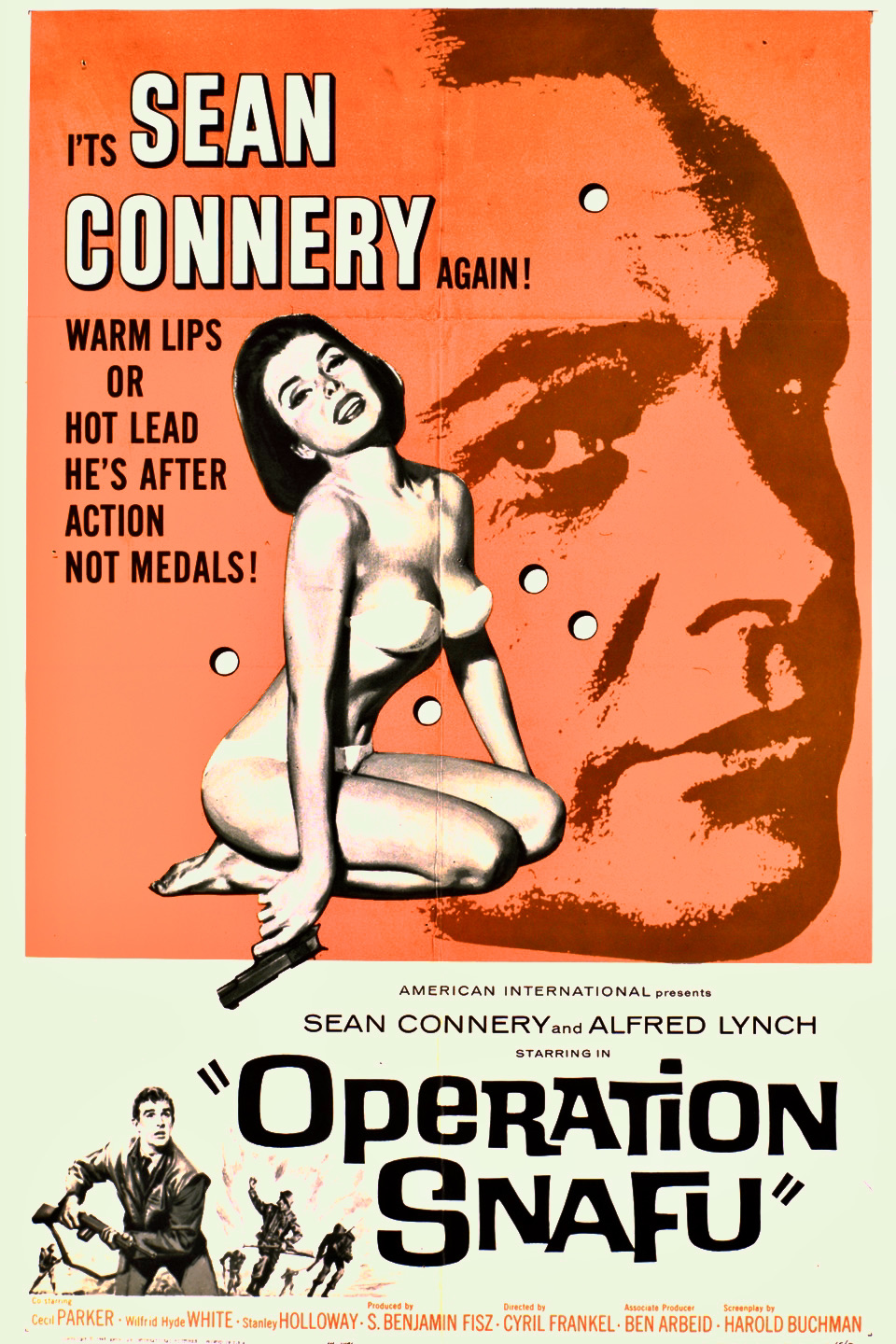
What’s your favorite Sean Connery role before he became famous as James Bond. This question might stump the average movie-goer but film buffs would probably choose one of his menacing villain roles in either Hell Drivers (1957) or Tarzan’s Greatest Adventure (1959) or possibly his dashing romantic hero opposite Janet Munro in Walt Disney’s Darby O’Gill and the Little People (1959), where he actually gets to sing. The latter is easily my favorite with the Irish mythology of leprechauns, pookas and banshees giving it the edge but there is something quite appealing about Connery trying his hand at comedy in the lesser-known British B-movie Operation Snafu (1961), which was released in the U.K. as On the Fiddle (It was also known as Operation War Head).
Hot Nocturne

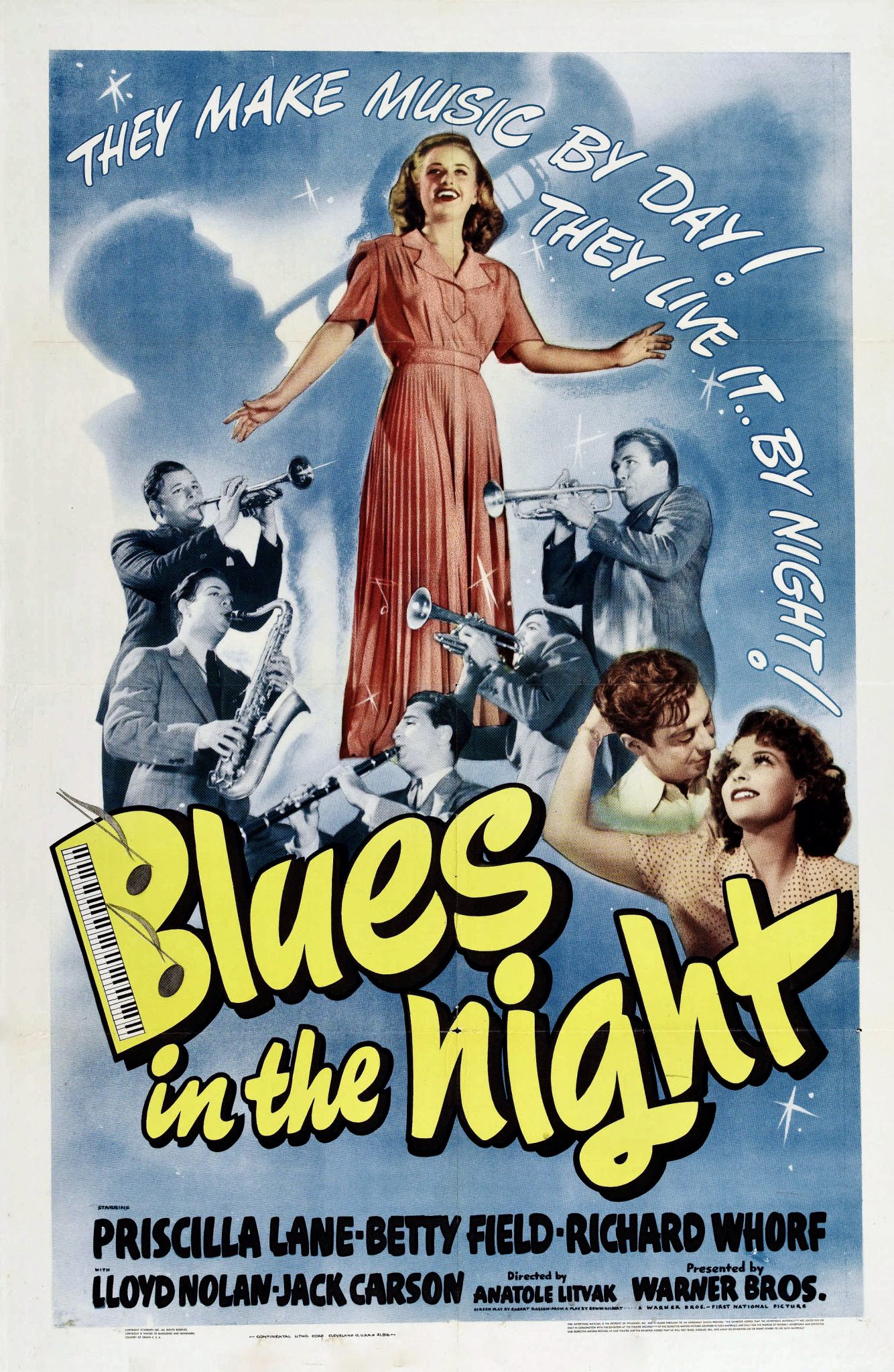
Most Hollywood films about musicians that were made during the studio era were usually biopics and focused on individual artists such as George Gershwin (Rhapsody in Blue, 1945) and Glenn Miller (The Glenn Miller Story, 1954). It was rare to see a feature film that detailed the ups and downs of an entire band and, in the case of 1941’s Blues in the Night, the featured jazz sextet was entirely fictitious. Originally titled Hot Nocturne, the name was changed just prior to its theatrical release to capitalize on the Harold Arlen-Johnny Mercer hit song that became its signature tune.
The Fabulous World of Karel Zeman
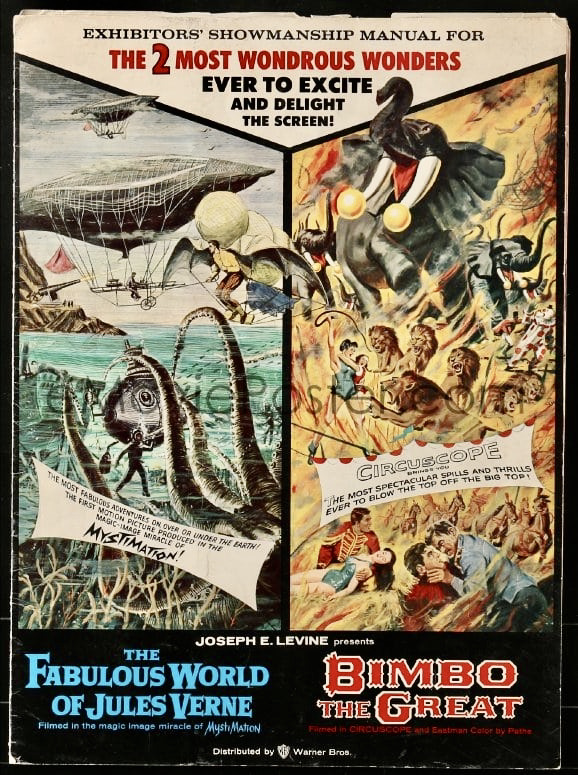
During the summer of 1961 a double feature aimed at children was being distributed in selected cities across the U.S.. If you saw the titles on a theatre marquee, you might think they were Walt Disney releases – Bimbo the Great and The Fabulous World of Jules Verne. But anyone who ventured inside the theatre immediately realized that these films were NOT made in Hollywood. And in the case of The Fabulous World of Jules Verne, it didn’t even look like the film was made in the 20th century!
Unlucky Horoscopes

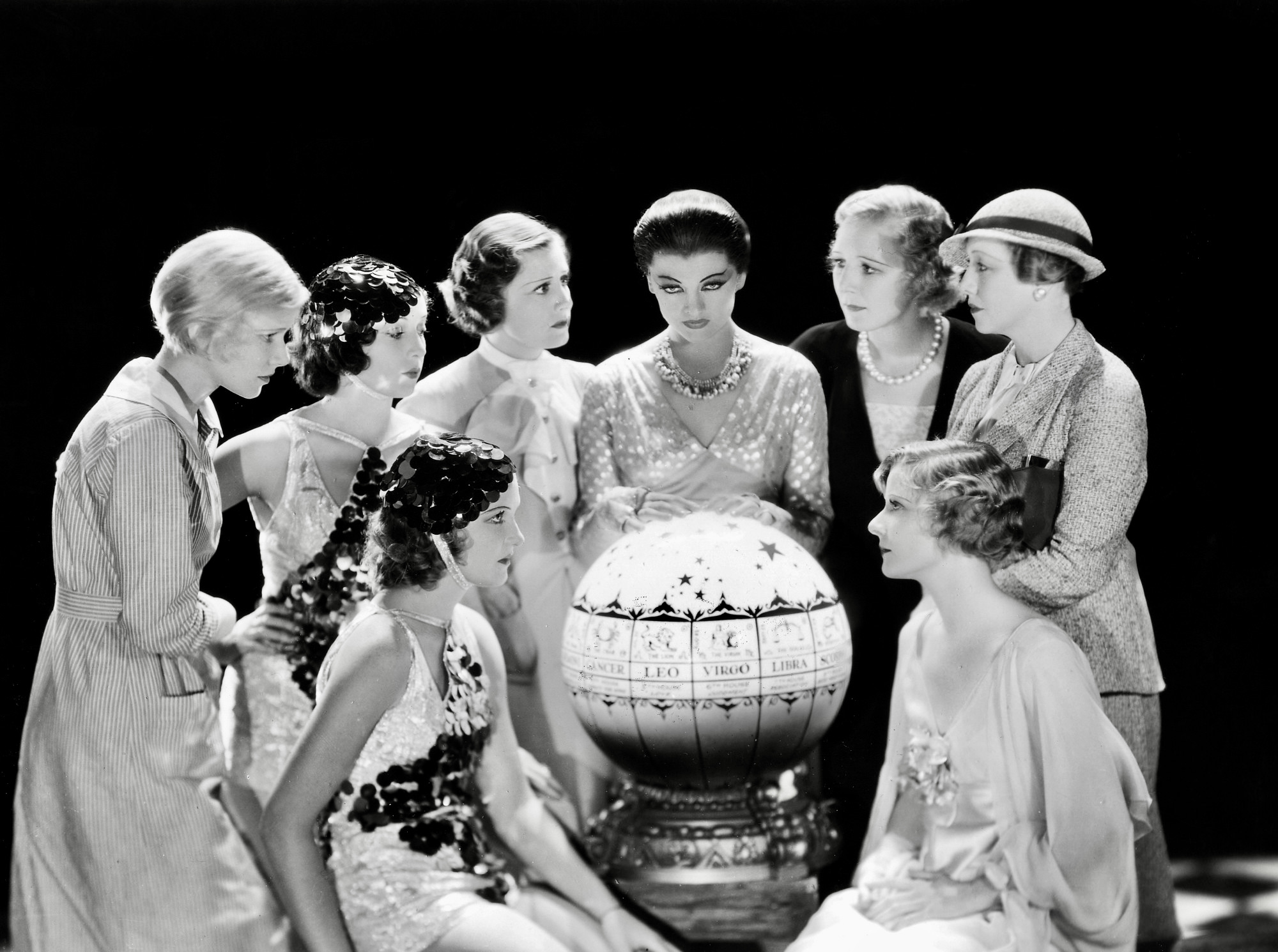
Throughout most of the 19th century in America, astrology was considered an occult science embraced by a small but growing number of converts. It wasn’t until the mid-1920s that an interest in astrological signs and horoscopes crossed over from a cult phenomenon to more popular acceptance on a national scale. This was partially due to the success of The Bowl of Heaven (1924), an autobiography of famous astrologer Evangeline Adams and the influential periodical American Astrology, which began publishing in 1923. It was only a matter of time until Hollywood would capitalize on the movement’s popularity by using it as a plot device in Thirteen Women (1932), one of Myrna Loy’s least known and most peculiar roles.