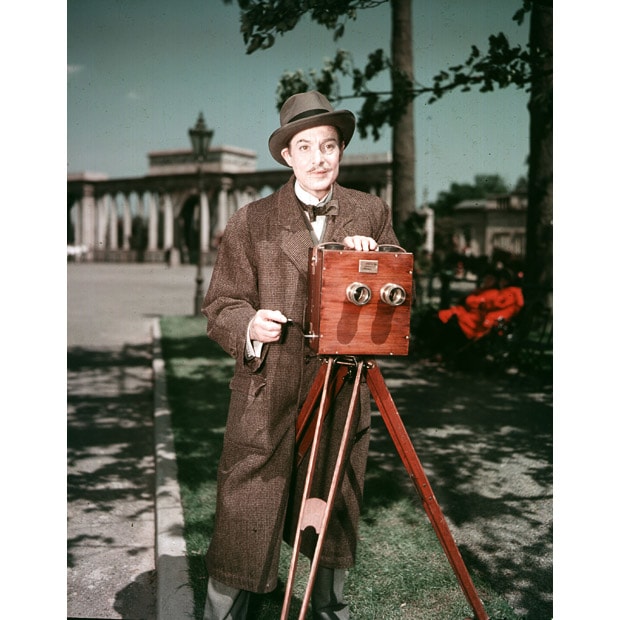
Either by accident or design, MGM came up with the most unlikely partnership in the history of motion pictures in the late twenties. Imagine if you can a collaboration between Robert Flaherty, the filmmaker who is generally credited with pioneering the documentary form (though some film scholars take issue with that classification), and W. S. Van Dyke II, who was known in the industry as “One Take Woody” because of his quick, cost-saving shooting schedule. Flaherty’s filmmaking method was just the opposite. His painstaking preparation for each film was legendary; both Nanook of the North (1922) and Moana (1926) took over two years to complete. Somehow these two men were brought together by MGM mogul Irving J. Thalberg for White Shadows in the South Seas (1928). Continue reading
Fade to White
Films that explore mental illness, especially Hollywood productions such as The Snake Pit, The Three Faces of Eve and A Brilliant Mind, usually tend to be heavy on the histrionics providing highly dramatic showcases and Oscar award opportunities for actors. But a descent into madness isn’t always signaled by wildly disruptive or overwrought behavior from the afflicted. Sometimes the illness can creep up slowly by degrees and pass for something more fleeting and subtle that avoids detection during the early stages. Life Upside Down (La vie à l’envers), directed by Alain Jessua, is a remarkable example of this, presenting a man who goes quietly mad while interpreting his erratic behavior as a profound new self-awareness. Continue reading
The Devil Made Me Do It
Looking for a Halloween film to creep you out? How about The Blood on Satan’s Claw? Continue reading
Fishing with Dynamite
Gillo Pontecorvo began as a documentarian and his interest in social and political issues was already evident in early works like Giovanni (1955), which follows a textile laborer and her female co-workers through punishing work conditions into a full-blown protest against the factory owners. So it comes as no surprise that his first feature length film, The Wide Blue Road (aka La Grande Strada Azzurra, 1957), has an underlying social agenda even if it looks like a slice-of-life melodrama on the surface. Continue reading
There’s No Business like Zombie Business……
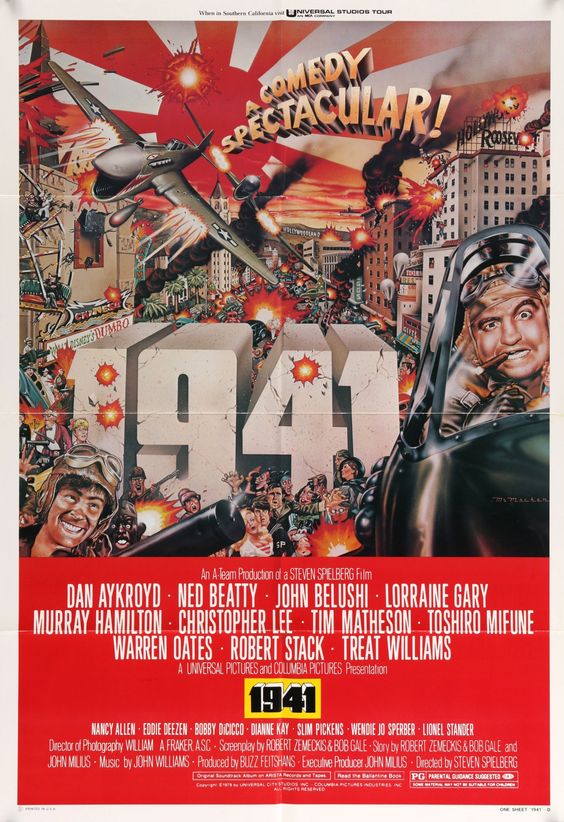
In 1941, the unexpected success of Buck Privates – a whopping $10 million dollar B-movie blockbuster – officially launched the comedy team of Abbott and Costello who became Universal Studios’ most profitable film franchise for more than a decade (The duo made their debut in One Night in the Tropics (1940) in supporting roles but the musical comedy with top billed Allan Jones and Nancy Kelly was not a boxoffice hit). Naturally, it inspired other studios to follow suit but it wasn’t as easy as it looked. Case in point – Wally Brown and Alan Carney (no relation to Art Carney), two former nightclub comedians recruited by RKO for a series of low-budget farces beginning with The Adventures of a Rookie (1943), a blatant attempt to ape the formula of Buck Privates. For critics who thought the humor of Abbott and Costello was déclassé, Zombies on Broadway (194) was a further step down but perfect for eight year old boys who enjoyed the simple concept of two nitwits with one (Brown) assuming superiority over his dim bulb pal (Carney). Continue reading
Mining for B-Movie Gold
It’s a rare thing when a crime thriller departs from the usual formulaic expectations and rewards the viewer with a much more unpredictable and entertaining twist on a familiar genre. Such is the case with Les étrangers (aka The Strangers, 1969), which begins with a carefully planned diamond heist in a remote desert town that goes spectacularly awry before transitioning into a deadly game of cat and mouse between a fleeing fugitive and a couple that offer him temporary shelter. This is a superior B-movie that feels like an A-picture with its iconic international cast of actors from France (Michel Constantin), Austria (Senta Berger), Spain (Julián Mateos) and South Africa (Hans Meyer), a spaghetti western-flavored score by Michel Magne and Francoise de Roubaix, and atmospheric cinematography by Marcel Grignon, who received an Oscar nomination for Is Paris Burning? (1967) and filmed such cult favorites as Roger Vadim’s Vice and Virtue (1963) and Walerian Borowczyk’s The Beast (1975). Continue reading
Richard Lester’s Feature Film Debut with the Mad Jazz Beat
While producer Sam Katzman was busy exploiting the youth culture in the U.S. with quickie productions like Twist Around the Clock (1961) and Don’t Knock the Twist (1962), his contemporary Milton Subotsky was doing the same in England but with a different musical focus. London was in the midst of a British jazz revival driven by the music of New Orleans and Dixieland and this is the sound that inspired It’s Trad, Dad! (1962, aka Ring-a-Ding Rhythm), which also marks the feature film debut of Richard Lester, whose subsequent film was A Hard Day’s Night (1964) for The Beatles. Subotsky didn’t just stack the deck with jazz groups though; he also added a generous helping of current pop acts and even tried to scoop Katzman with showcasing Chubby Checker in the new novelty dance, the twist (Katzman still beat him to the punch with Twist Around the Clock which was released first in the U.S.).
Continue reading
The Secret Cinema Experiment (Feb. 1980 – Dec. 1981, Athens, Ga.)
Have you ever had a fantasy about running and programming your own repertory cinema? Any self-proclaimed film buff probably has and for me it became a slowly emerging fantasy from the time I was seven or older. Unlike those kids who wanted to be firemen, astronauts, professional athletes or other revered professions, I pictured myself as a movie theater owner who could show what I wanted and print availability or attendance was never a concern. While this fantasy faded over the years as I became aware of the realities and headaches of film distribution and theater management, the love of programming movies always stayed with me and for a brief period (Feb. 1980 – Dec. 1981), I ran an invitation only film series out of my home in Athens, Ga. on Pulaski Street that I called Secret Cinema. Continue reading
Beverly Michaels: Wicked Woman
Voluptuous vixens, murderous golddiggers and greedy femme fatales were a familiar sight in B-movie melodramas of the fifties but Wicked Woman (1953) stands out from the rest of the pack. The look and feel of the movie captures the lurid quality of trashy pulp fiction covers from the same period like Tavern Girl, Passion Has Red Lips or Any Sex Will Do. Even the minimalistic, sparsely decorated sets, that represent a confined universe of dingy boarding house rooms and the neighborhood bar, exude a sleazy authenticity and sense of claustrophobia. And scheming her way through these lower depths is Beverly Michaels in the title role of Billie Nash. Blonde, statuesque and sullen, she is the quintessential hard luck tramp, moving from town to town in a futile search for a change in luck.
Continue reading
Francis Ford Coppola’s 1966 Valentine to New York City
Before he broke through as one of the most dynamic and successful directors of his generation in 1972 with The Godfather, Francis Ford Coppola had been working his way up from the lower rungs of the film industry since the early sixties in various capacities for producer/director Roger Corman (dialogue director on Tower of London [1962], second unit director on Premature Burial [1962] and others). Although his first full-fledged directorial effort was the sexploitation comedy Tonight for Sure (1962), which was barely distributed even on the grindhouse circuit, Dementia 13 [1963], was really the first indication that Coppola had promise as a filmmaker. Made on a miniscule budget, this gothic murder mystery shot on location in Ireland was a surprisingly stylish and atmospheric genre film that was released on a double feature with Corman’s The Terror [1963]. Yet, it was Coppola’s next feature, You’re a Big Boy Now (1966), that proved to the movie industry and film critics alike that this twenty-seven year old director was already a prodigious talent. Continue reading