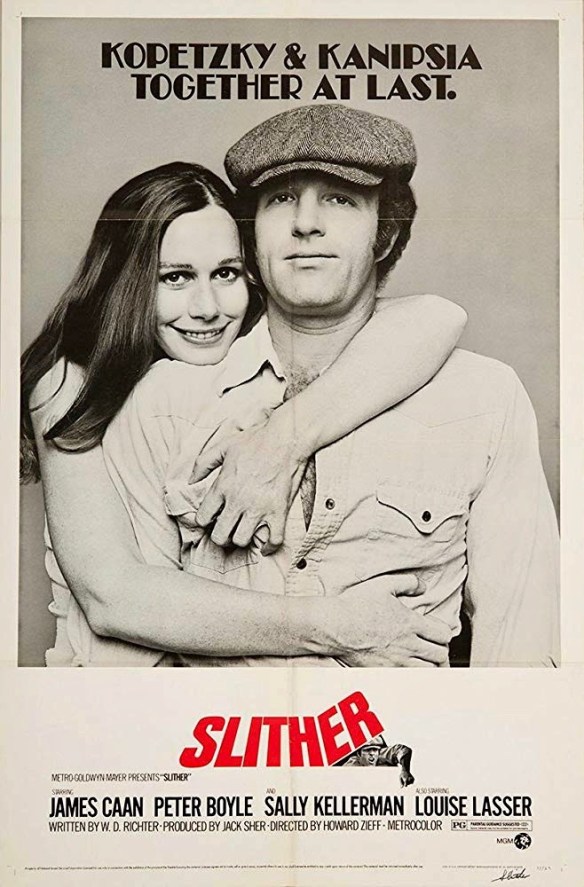
Slither (1973) is a film of firsts in many ways. It marked the directorial debut of Howard Zieff, who would go on to become one of the most sought-after comedy directors in Hollywood during the ’70s (Hearts of the West [1975], House Calls [1978], Private Benjamin [1980]). It featured the first screenplay by W. D. Richter who would later pen the 1978 remake of Invasion of the Body Snatchers, the 1979 remake of Dracula, and Brubaker [1980] as well as direct the cult film, The Adventures of Buckaroo Banzai Across the 8th Dimension [1984]. And it was James Caan’s first starring role after his critically acclaimed success in The Godfather [1972] and the beginning of his reign as a Hollywood leading man after struggling to break through in smaller scale movies like Rabbit, Run [1970] and T.R. Baskin [1971]. Continue reading
Author Archives: JStafford
Pandemonium in the Dark
In Japanese cinema, the samurai film can be many things. It can be a ghost story (Ugetsu, 1953), a rousing adventure (The Hidden Fortress, 1958), a tragic romance (Gate of Hell, 1953), a sweeping historical epic (Tales of the Taira Clan, 1955), a Shakespeare adaptation (Throne of Blood, 1957) or even a revenge saga (Chushingura, 1962). The latter is my favorite sub-genre in the category and the best samurai revenge films are usually driven by the avenger’s sense of honor being defamed and/or moral outrage at personal injustice. This is certainly the motivation behind the heroine of Lady Snowblood (1973), played by Meiko Kaji, and its sequel, Lady Snowblood 2: Love Song of Vengeance (1974). It is also the central premise of Masaki Kobayashi’s Harakiri (aka Seppuku, 1962), which is more doom-laden and brooding than the kinetic action of the Lady Snowblood films but nevertheless explodes in a bloody, sword-wielding finale. But if you want to go deeper, darker and crueler, it is hard to top Toshio Matsumoto’s Demons (aka Shura aka Pandemonium, 1971) for pure malice. Continue reading
The Insect and Animal Conjurer

Stop motion animator and entomologist Ladislas Starewicz is busy at work on a new flight of fantasy.
Ladislas Starewicz is generally acknowledged as the first person to create puppet animation but he is barely known except among other animators, film historians and movie buffs. Yet this self-taught Russian entomologist might be the most brilliant stop-motion artist that ever lived. Continue reading
Rudy Vallee: Comic Crooner
One of the more prestigious A-picture releases from Warner Bros. in 1935, Sweet Music was primarily designed as a star vehicle for the legendary crooner Rudy Vallee. In many ways, the movie could be seen as a distillation of his live appearances where he incorporated a great deal of humor into his act along with novelty songs and a jazz-influenced singing style that influenced Bing Crosby and other upcoming vocalists. Continue reading
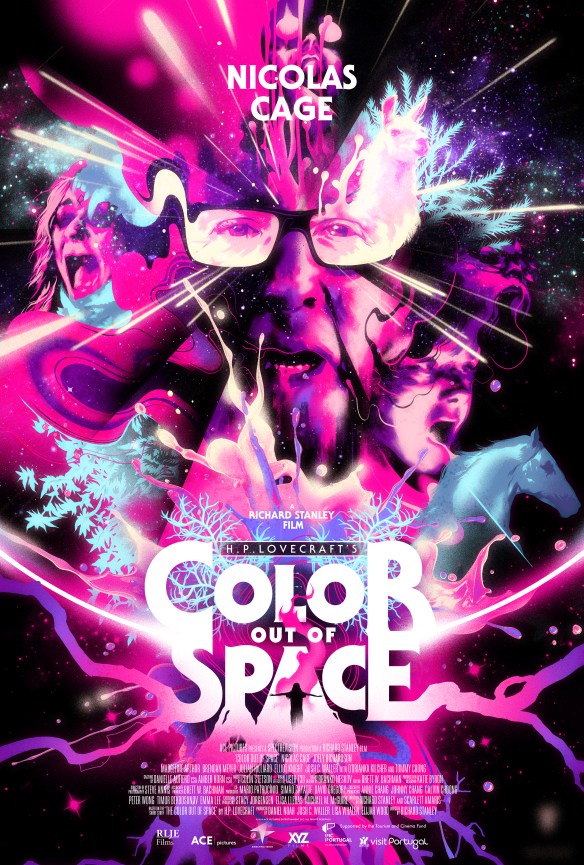
Richard Stanley and H.P. Lovecraft
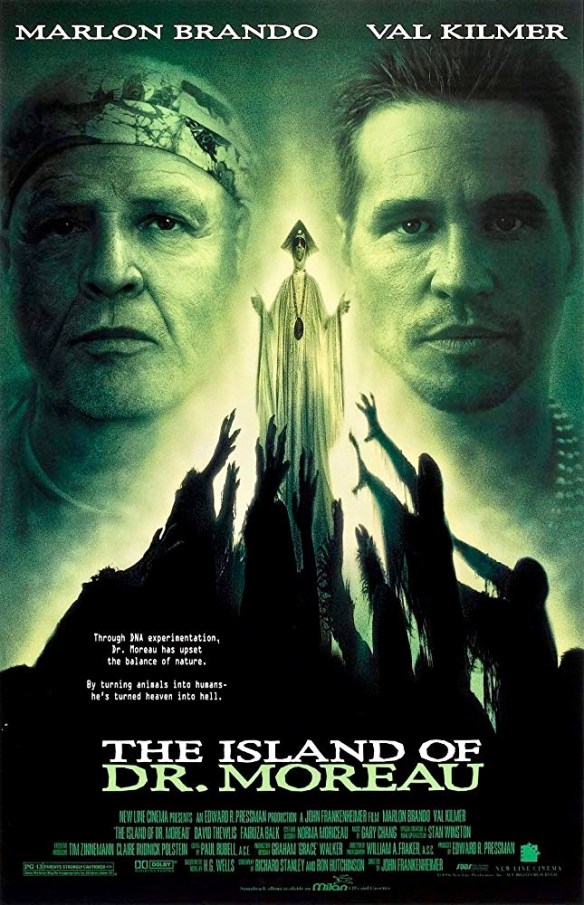
In 1990 South African filmmaker Richard Stanley made his feature film debut with Hardware, a post-apocalyptic tale about a killer cyborg on the rampage. Most critics who bothered to see it at the time dismissed it as a grungy rip-off of The Terminator and other genre favorites but it clearly had style to burn and sci-fi geeks embraced it despite the excessive violence (some of it was edited out in the original theatrical release). Next came Dust Devil (1992), an arty, mystical story of a demonic hitchhiker in pursuit of a runaway married woman in the African desert. It was distributed by Miramax and released in a re-edited version which added a narration and deleted 20 minutes. It was poorly distributed but Stanley’s dynamic visual aesthetic and offbeat narrative flourishes attracted the attention of Hollywood. Then New Line Cinema offered Stanley a dream project, a remake of H.G. Wells’ The Island of Dr. Moreau. 
It quickly became a nightmare project. A hurricane destroyed the sets just prior to shooting and Val Kilmer, coming off the mega-success of Batman Forever, undermined and intimidated Stanley and had him fired just days into production. His replacement was John Frankenheimer but even he couldn’t save the film from the damage inflicted by the self-destructive egos of Kilmer and Marlon Brando. The 1996 release was a cinematic train wreck and Stanley, depressed and dejected, appeared to abandon film making forever. Now, 23 years later, he returns from the wilderness with Color Out of Space, an effectively creepy and atmospheric sci-fi/horror thriller that might be one of the best film adaptations yet of H.P. Lovecraft’s famous short story. Continue reading
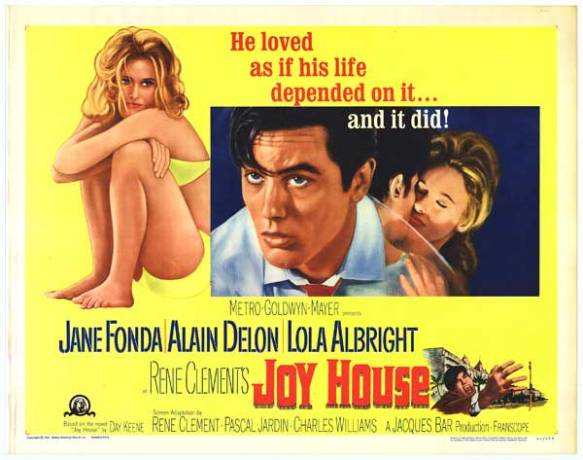
Two Cats and a Mouse
When a movie is released under various titles it usually means there are problems. It could be confusion over how to market it or a simple case of a movie that doesn’t fit clearly into any designated genre or maybe it’s a star-driven, major studio release that’s too quirky for the average moviegoer but yields enough curiosity value to inspire various promotional approaches to finding the right audience. All of these could apply to Joy House (1964), an international production based on a pulp fiction paperback by American author Day Keene and filmed on the Riviera near Nice. It stars English-speaking (Lola Albright, Jane Fonda, Sorrell Booke, George Gaynes of Tootsie fame) and French-speaking actors (Alain Delon, Andre Oumansky, Annette Poivre, Marc Mazza) and is also known as The Love Cage and Les Felins (the original French title). Joy House was not a popular success at the time (most critics were unkind in their coverage) but it is a favorite film of mine, flaws and all. Continue reading
Strange Brew
The sword and scandal genre rarely got much respect in the U.S. during its heyday and it was easy to see why. Aimed largely at indiscriminate male viewers, these action-adventure sagas were usually imported from Italy, poorly dubbed in English and featured some of the world’s most famous bodybuilders of that era (none of whom were known for their acting prowess) along with exotic female sex sirens. The plots were usually dumbed-down bastardizations of Greek and Roman myths or history and the production values were variable, mixing picturesque Italian locations with laughable special effects or papier-mache props. Due to their derivative nature and lowbrow appeal, few of these faux epics ever achieved classic movie status but occasionally one would stand out for its sheer weirdness alone like The Giant of Metropolis (1961), which is set in the year 20,000 A.C. and often looks like a Flash Gordon-inspired sci-fi adventure. Continue reading
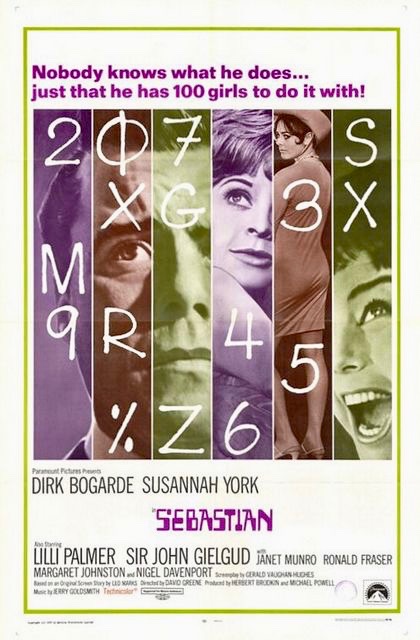
Dirk Bogarde on LSD
When I think of LSD depictions in the movies, American International Pictures immediately comes to mind with actors like Peter Fonda (The Trip), Susan Strasberg (Psych-Out) and Mimsy Farmer (Riot on Sunset Strip) blowing their minds amid the counterculture of the sixties. Of course, other more unlikely actors have been dosed with the hallucinogen on screen such as Vincent Price (The Tingler), Lana Turner (The Big Cube) and Jackie Gleason (Skidoo) but probably the most unexpected one of all is Dirk Bogarde in Sebastian (1967), a fascinating curiosity released in the waning days of “Swinging London” cinema which has been unaccountably forgotten since its release. Continue reading
Mortal Thoughts
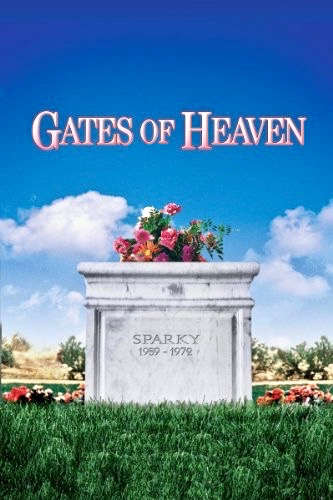
The story goes like this. German director Werner Herzog made a bet with aspiring filmmaker Errol Morris that if the latter ever completed the film he was working on – which was inspired by a news story about the mass relocation of the graves from a California pet cemetery – he would eat his shoe. Morris did indeed complete his film, which was called Gates of Heaven (1978) and, true to his word, Herzog boiled and ate his show at the film’s premiere in Berkeley. Filmmaker Les Blank recorded the event and turned it into a documentary short entitled Werner Herzog Eats His Shoe in 1980. Continue reading
A West German Fable by Rolf Thiele
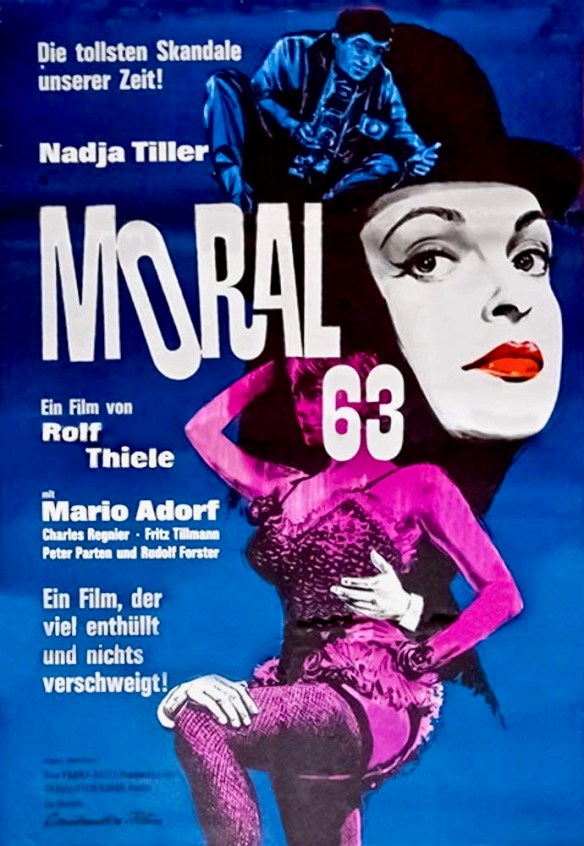
Why does it often seem like the accumulation of great wealth and power by individuals does not necessarily come with an equal respect for ethics and morality? For Marion (Nadja Tiller), the heroine of Rolf Thiele’s Moral 63, the path to unbridled success is merely an escalating series of business transactions with rich and influential men who reward her for being beautiful, accommodating and discreet. Who cares about honor or virtue in a society where those attributes have no monetary value? Continue reading