Destination: Ferness, Scotland

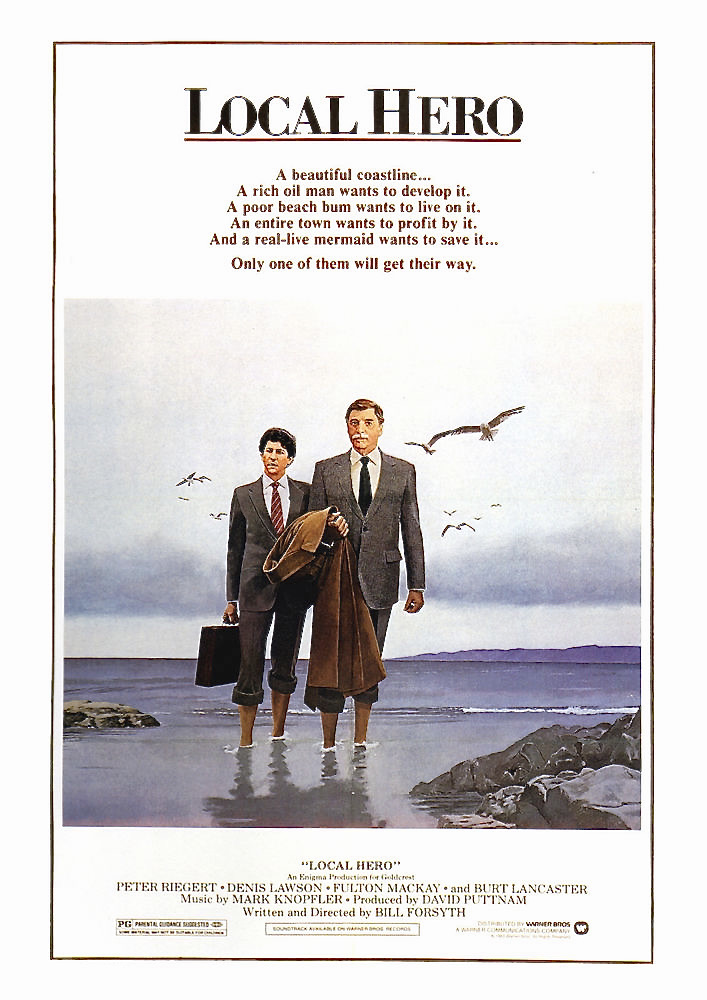
First of all, there is no Ferness, Scotland. It is a fictitious seaside town created by writer/director Bill Forsyth for his 1983 film, Local Hero. It is also a place that lives on in the hearts and minds of moviegoers who were bewitched by its picturesque beauty, eccentric but appealing residents and its tranquil setting far removed from urban blight and the madding crowd. To outsiders, it might look like a slice of heaven, an ideal place to live or revisit. But Forsyth’s film slyly juxtaposes this romanticized environment against the inevitability of progress and creates a gentle culture clash comedy that has far more resonance than you’d expect. It’s not sentimental or cynical but an intoxicating mixture of the wry and whimsical with a bittersweet finish.

Continue reading
Deadpan Lunacy

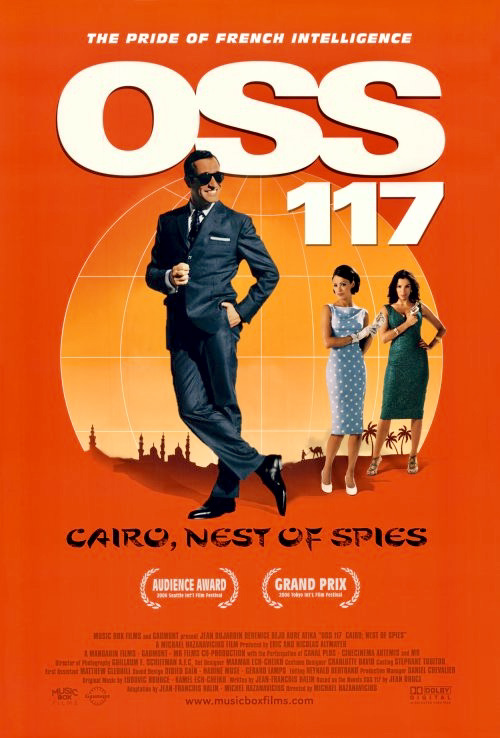
Amid the avalanche of overproduced and overmarketed films that flooded movie theaters in the summer of 2006 (Poseidon, Miami Vice, Lady in the Water and Snakes on a Plane to name a few), a gallic import flew in under the radar and delighted any moviegoer willing to give in to its droll sense of humor and fond appreciation of the spy thriller genre of the sixties. OSS 117: Cairo, Nest of Spies was a huge box-office hit in France and Europe but it barely lasted a week in many of its U.S. playdates.

Continue reading

Life is a Carnival

The Japanese film poster for THE WIND-OF-YOUTH GROUP CROSSES THE MOUNTAIN PASS (1961).

Most Japanese film fans and cult movie buffs are certainly familiar with maverick director Seijun Suzuki for his ultra-stylish and unconventional yakuza thrillers Tokyo Drifter (1966) and Branded to Kill (1967). Not as well known are the numerous genre films he was assigned by his studio Nikkatsu in the late fifties/early sixties. One of his most atypical efforts is The Wind-of-Youth Group Crosses the Mountain Pass (Japanese title: Toge o wataru wakai kaze, 1961), which is like a more adult variation on James Otis Kaler’s Toby Tyler or Ten Weeks with a Circus except, in this case, the protagonist is not a kid but a college student majoring in economics. There is also no circus, just a traveling carnival troupe with an uncertain future. Yet, the tone is surprisingly upbeat and cheerful with moments of slapstick comedy, musical interludes, dramatic incidents and a subplot involving competitive yakuza gangs, who are closer to bumbling schoolyard bullies than menacing gangsters.

A massive lantern float lights up the nightime sky in THE WIND-OF-YOUTH GROUP CROSSES THE MOUNTAIN PASS (1961), a Japanese film about a traveling carnival troupe.
Continue reading

The New Orleans Streetfighter

If you have never been tempted to see Charles Bronson in one of his many top-billed action vehicles, then you also probably wonder why he enjoyed superstar status on an international level. But put aside your skepticism for a moment and consider Hard Times (1975), a Depression-era tale about a mysterious drifter named Chaney who makes a living as a bare-knuckle streetfighter.

Continue reading

Having a Wild Weekend

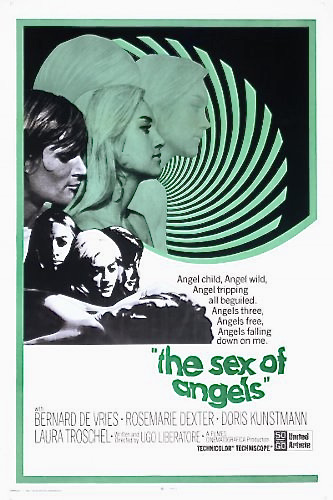
In the late sixties there were a number of sun-drenched erotic romps from Italy filmed in picturesque settings around the Mediterranean such as Giuliano Biagetti’s Interrabang (1969) and Ottavio Alessi’s Top Sensation aka The Seducers (1969). Most of these promised and delivered sexy scenarios with abundant nudity (primarily female), murder and risqué situations for the sexploitation crowd. The Sex of Angels (Italian title: Il Sesso degli Angeli, 1968) comes on like the ultimate softcore fantasy but turns out to be a complete tease. In fact, unlike others of its ilk, The Sex of Angels is actually a morality tale about the consequences of hedonism as well as a critique of the free love generation.

Continue reading

A Concert Pianist’s Worst Nightmare

The German film poster for the 1924 silent classic THE HANDS OF ORLAC.

What is the worst thing that could happen to a celebrated world class pianist? It would have to be something that destroyed his famous hands, wouldn’t it? The Hands of Orlac, based on a novel by Maurice Renard, has been adapted for the screen numerous times but the 1924 version by German director Robert Wiene remains a masterpiece of silent horror cinema.

Continue reading

Truckers on Speed

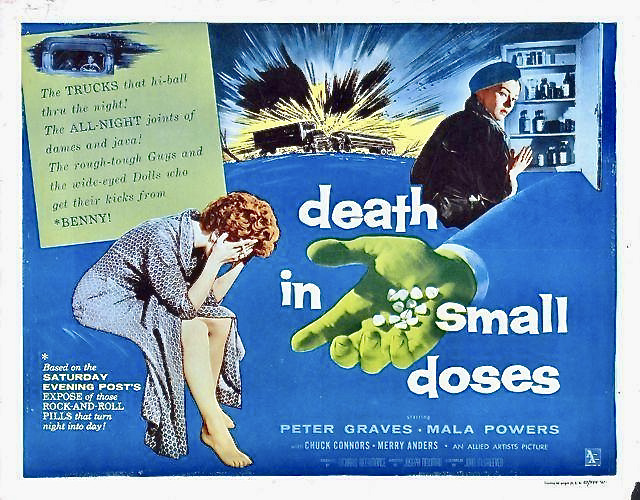
“The Pill Dragnet! Blasting the Blackest Market of all…the girl peddlers of the deadliest thrill for sale!” – one of the taglines for Death in Small Doses (1957).    

In the grand tradition of other B-movie crime expose of the fifties such as Kansas City Confidential (1952), The Phenix City Story (1955), and New Orleans Uncensored (1955), this little known 1957 programmer from Allied Artists (formerly known as poverty row studio, Monogram Pictures) has all the earmarks of a routine, low budget exploitation drama aimed at the drive-ins and double bill grindhouses of its era but it also serves up some surprises and memorably wacko moments for those who think they’ve been down this road before.

Continue reading

Robert Bresson’s Parisian Reverie

The French film poster for FOUR NIGHTS OF A DREAMER (1971), directed by Robert Bresson.

One wouldn’t normally associate Robert Bresson with such rapturously romantic, Paris-based films as Ninotchka, An American in Paris, Funny Face, Gigi, and Love in the Afternoon yet Four Nights of a Dream (Quartre Nuits d’un Reveur, 1971) is probably the closest the French director has ever come to making a film about love, longing and desire. You could even say it is almost a musical since strolling street musicians occasionally break into song at unexpected moments in the narrative.

Continue reading

…And You Thought Donald Pleasence Was Creepy?

Angela Pleasence stars in the 1974 psychodrama SYMPTOMS, directed by Jose Ramon Larraz.

Angela Pleasence, like her father, has a face made for the cinema though not in the realm of conventional leading ladies. Even as a young actress appearing in bit parts in movies like Here We Go Around the Mulberry Bush (1968) and The Love Ban (1973), she was never a winsome ingénue or the lovable girl next store. Her uniquely peculiar beauty – especially those hungry eyes that bore holes right through you – must have somehow hindered her movie career because her film roles have been few and far between. She is mostly remembered for her television work, particularly her role as Catherine Howard in the 1970 TV mini-series The Six Wives of Henry VIII, but she should have had the film career her father had on the basis of Symptoms (1974) alone.  

Continue reading

The Beat Goes On

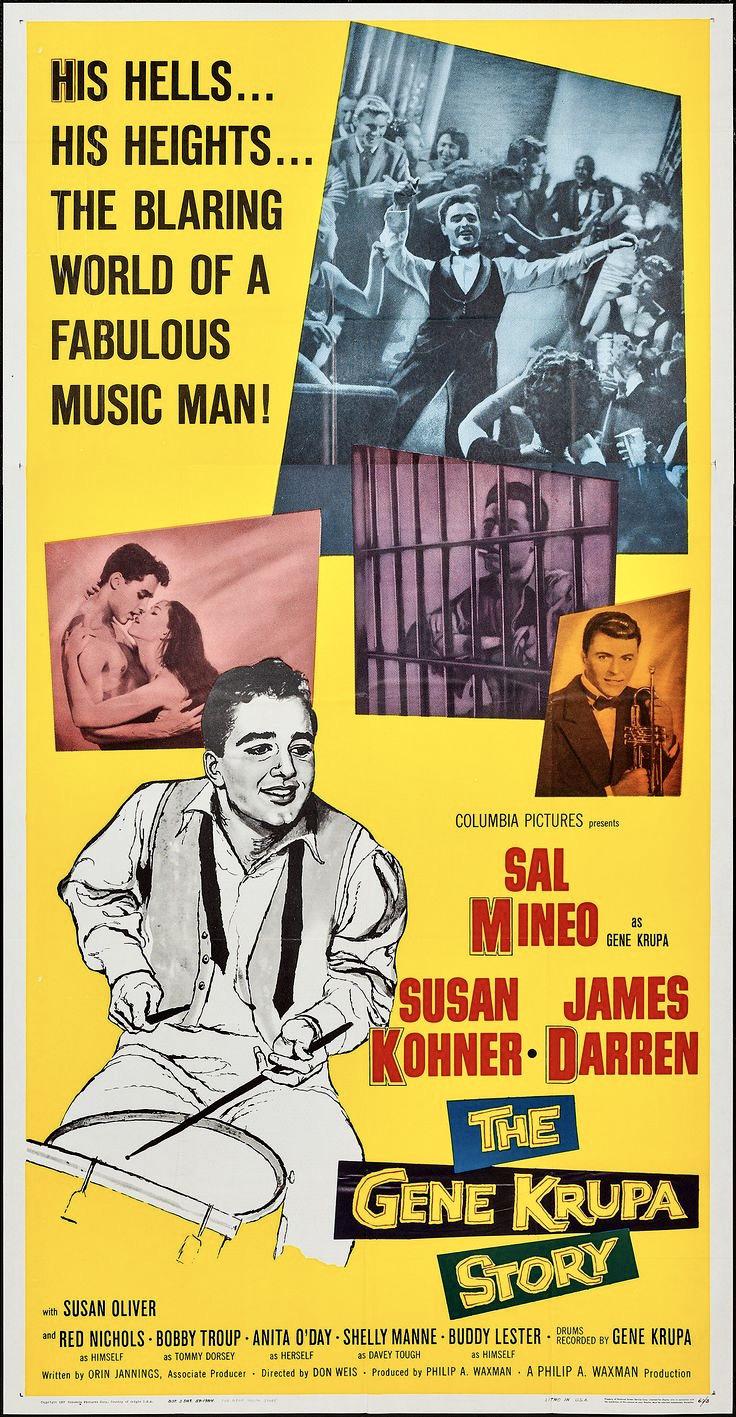
Hollywood has churned out countless musical biographies on popular musicians, singers and songwriters over the years, jazz artists and their life stories have remained a virtually untapped genre with few exceptions (Bird, Clint Eastwood’s 1988 portrait of Charlie Parker, 2015’s Born to be Blue with Ethan Hawke as Chet Baker). There was a brief time in the fifties, however, where public interest in some of the big band legends and early jazz innovators resulted in a spate of high-profile biopics: The Glenn Miller Story [1953], The Benny Goodman Story [1955], and The Five Pennies [1959), starring Danny Kaye as jazz trumpeter Red Nichols. Coming at the end of the cycle was The Gene Krupa Story [1959] which featured Sal Mineo (twenty years old at the time) in his first adult screen role. 

Continue reading