Cinema Interruptus

All of us have probably walked out on a movie at the theatre at some point in our lives but how often have you been forced to leave a film due to circumstances beyond your control? The few times this has happened to me are ingrained in my memory probably because it was such a rare occurrence…and because the interrupted scene and the movie itself never received the proper closure. In other words, a simple case of cinema interruptus (the Latin word for interrupted). The films in question are Around the World in 80 Days (1956), Cat on a Hot Tin Roof (1958), Don’t Give Up the Ship (1959) and Cat Ballou (1965).

Continue reading

True Love Transcends Everything

Marina (Hildegard Knef) and Alexander (Gustav Frohlich) make a final toast to their eternal love for each other in Die Sunderin (English title: THE SINNER, 1951), a West German romantic tragedy directed by Willi Forst.

Sometimes an offscreen scandal can kill or severely hamper a career (Fatty Arbuckle, Ingrid Bergman, Rose McGowan, etc.) or help bolster it as in the case of Mary Astor, Hedy LaMarr or Elizabeth Taylor. But what if the scandal is the film itself as in The Moon is Blue (1953), Baby Doll (1956) or Last Tango in Paris (1972)? That kind of notoriety can play out in different ways affecting the careers of the featured stars in a negative or positive way. A famous example of the latter is Die Sunderin (English title: The Sinner, 1951), a West German melodrama from Viennese director Willi Forst in which two social outcasts embark on a love affair which brings them true happiness and spiritual redemption after years of misery. The film created a public outcry in Germany due to a nude scene featuring the popular female star, Hildegard Knef. It might seem much ado about nothing today but at the time the typically conservative German moviegoer was offended. More importantly, it didn’t hurt Ms. Knef’s career at all and may have helped launch her international career. She was invited back to Hollywood the same year (where she had previously been under contract), made a few high profile films, and then returned to Germany where she not only resumed her film career but also became a renowned chanson-singer in the style of Marlene Dietrich, a mentor and friend.

Continue reading

Jeanne Moreau is Mata Hari

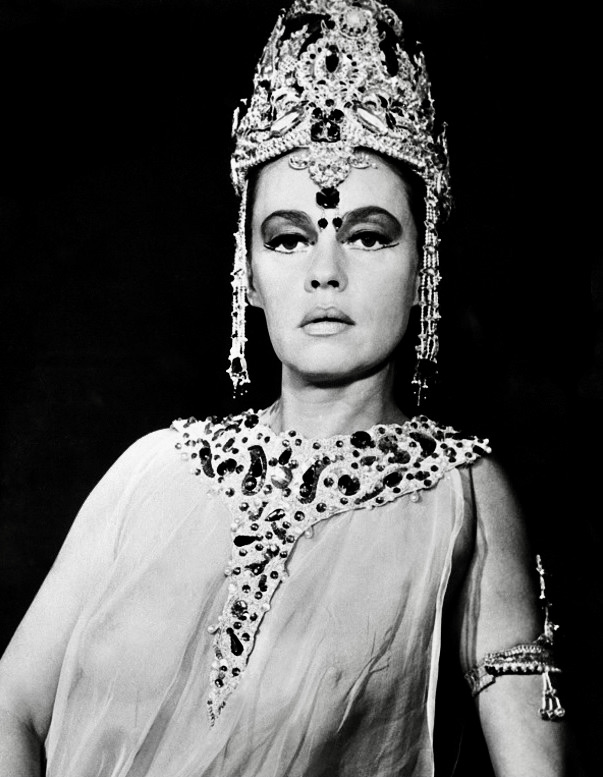
Jeanne Moreau as the famous WWI era spy Mata Hari in Jean-Louis Richard’s 1964 film biography, MATA HARI, AGENT H21.

The road to international fame was a long and arduous journey for Jeanne Moreau but it all began in 1948 when she became a stage actress at age 18. She started appearing in films a year later though it wasn’t until 1958 that she emerged as an important French actress, thanks to two Louis Malle features, the noir thriller Elevator to the Gallows and the scandalous romantic drama, The Lovers. More famous career-defining roles followed such as Michelangelo Antonioni’s La Notte (1961), Francois Truffaut’s Jules and Jim (1962), Jacques Demy’s Bay of Angels (1963) and Luis Bunuel’s Diary of a Chambermaid (1964). Yet, in terms of global recognition, she probably reached her peak in the mid-sixties when she appeared in big-budget Hollywood productions like The Victors (1963), The Train (1964) and The Yellow Rolls-Royce (1964). It was during this period that she appeared in Mata Hari, Agent H21 aka Secret Agent FX18 (1964), one of her least known and rarely seen movies.

Continue reading

The Naked Muse

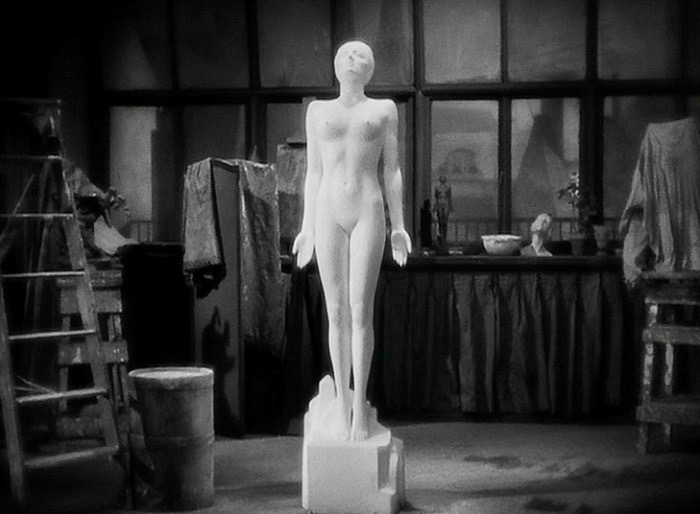
Sculptor Richard Waldow (Brian Aherne) creates a work of art inspired by his model Lily Czepanek (Marlene Dietrich) in The Song of Songs (1933), a Pre-Code drama.

Here’s a rarely seen Pre-Code curiosity made during the early period of Marlene Dietrich’s career at Paramount, The Song of Songs (1933). It is usually overlooked amid the Josef von Sternberg collaborations that made her famous such as The Blue Angel (1930), Morocco (1930) and Shanghai Express (1932), yet, it provides a fascinating look at Dietrich under a different director (Rouben Mamoulian) as well as a departure from her usual persona as a vamp or prostitute (at least in the beginning). The film is also generously seasoned with romance, decadence, melodrama, earthy humor, some musical numbers and a disaster – there is a fire in the final act.

Continue reading

Dietrich and von Sternberg’s Last Tango

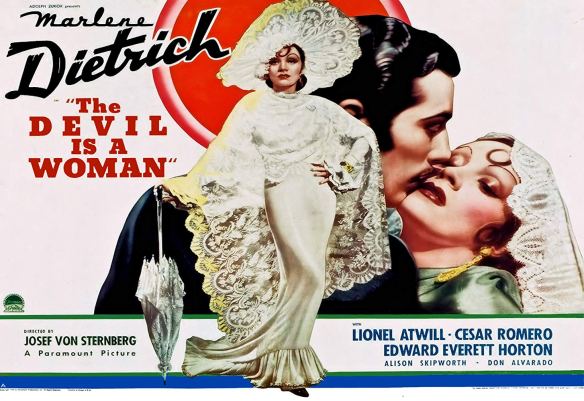
When The Scarlet Empress (1934), Josef von Sternberg’s lavish historical epic starring Marlene Dietrich as Catherine the Great, proved to be a critical and commercial disaster for Paramount, the director realized his days were numbered at the studio. So why not go for broke in one last picture? The result was The Devil is a Woman (1935). Continue reading

Polyurethane Companion

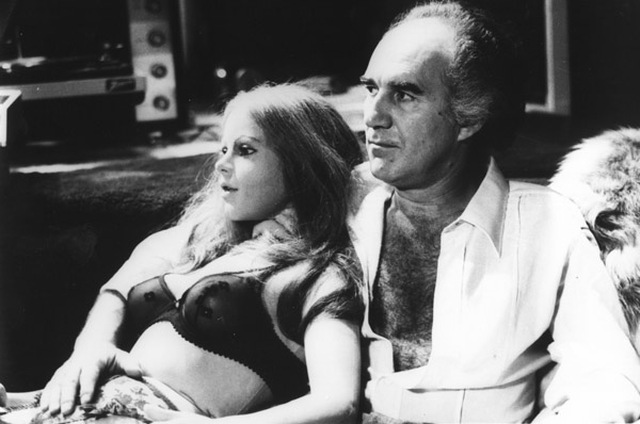
Michel Piccoli and his polyurethane companion in Luis Garcia Berlanga's Life Size (Grandeur Nature, 1974)

Michel Piccoli and his polyurethane companion in Luis Garcia Berlanga’s Life Size (Grandeur Nature, 1974)

The topic of men preferring lifelike dolls or mannequins to real women is nothing new in cinema and has been treated as poignant character study (Lars and the Real Girl, 2007), rom-com fantasy (Mannequin, 1987) and bleak psychological drama (The Doll aka Vaxdockan, 1962) to mention just a few examples of the different paths taken. Luis Garcia Berlanga’s Life Size (French title: Grandeur nature, 1974) takes a more ambiguous approach to its tale of a successful dentist and his new obsession and could be interpreted as a critique of misogyny, an attack on bourgeois values or a dark, perversely amusing character study.  Continue reading

The Many Noses of Orson Welles

triple Orson Welles shot“When you are down and out something always turns up – and it is usually the noses of your friends.” – Orson Welles

When you’re a film actor, it’s easy to understand how one can obsess over some less than perfect facial or physical feature that is going to be magnified by the camera on the big screen. But in most cases these fears are usually unfounded and not even something the average moviegoer would notice or care about. Claudette Colbert and Jean Arthur both insisted on being shot from the left side for profiles; Colbert called the right side of her face “the dark side of the moon.” Fred Astaire used movement and positioning to distract people from what he felt were his unusually large hands and Bing Crosby dealt with his increasing baldness by wearing hats at all times (he refused to wear toupees). Orson Welles’ insecurity over the size of his nose, however, is probably the most baffling of the actor hangups I’ve read about.

*This is a slightly revised version of my post that originally appeared on TCM’s Movie Morlocks blog     Continue reading

My Visit to Forry’s Ackermansion

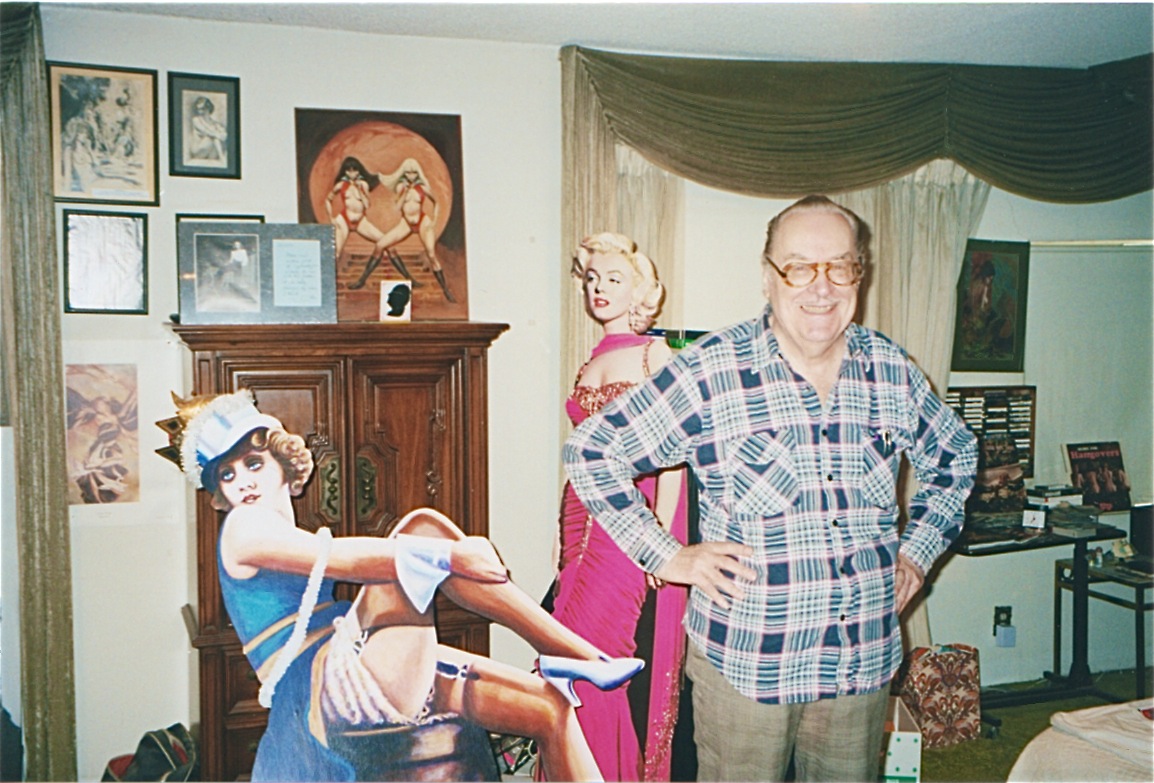
Forry Ackerman in his guest room at the Ackermansion (1998) photo by J.Stafford

Forry Ackerman in his guest room at the Ackermansion (1998) photo by J.Stafford

I never would have imagined when I was a geeky eleven year old kid hooked on Famous Monsters of Filmland magazine that I would one day meet the brainiac behind it – Forrest J. Ackerman – and be invited inside the world famous Ackermansion. It happened while I was visiting friends in Los Angeles in February 1998.    Continue reading