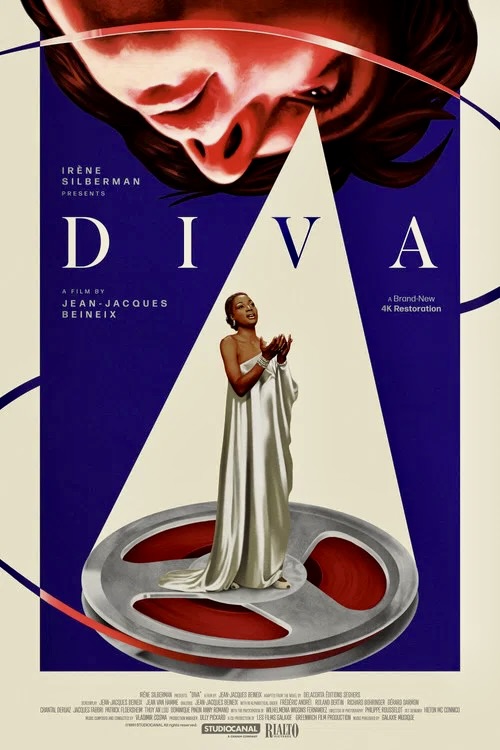
1981 was the year that a French film with the title Diva became a surprise box office hit in America. It grossed $6 million dollars, making it the third most profitable French since 1975 to attract both mainstream and art house audiences plus most of the important critics loved it. Roger Ebert of The Chicago Sun-Times called it, “A visual extravaganza. One of the most persistently entertaining, absorbing and scary thrillers I’ve seen in a long time.” Pauline Kael of The New Yorker raved, “Every shot seems to have a shaft of wit. It’s Welles romanticized, gift-wrapped. It’s a mixture of style and chic hanky-panky, but it’s also genuinely sparkling.” And J. Hoberman of The Village Voice stated, “Diva is not only the most purely pleasurable movie to open here this year, but surely one of the finest films to arrive from France in a decade.” Yet the film was a complete flop in France when it opened there with most critics attacking the film for a visual aesthetic they claimed was inspired by commercial advertising. Strangely enough, after Diva became a hit in America and around the world, French critics and audiences changed their minds and it finally became a commercial success in its own country, winning four Cesar Awards (the French equivalent of the Academy Awards) – Best First Work (director Jean-Jacques Beineix’s debut feature), Best Music Score (Vladimir Cosma), Best Cinematography (Philippe Rousselot) and Best Sound (Jean-Pierre Ruh). So how does it hold up today?
Continue readingTag Archives: Luc Besson
Where the Wild Things Are
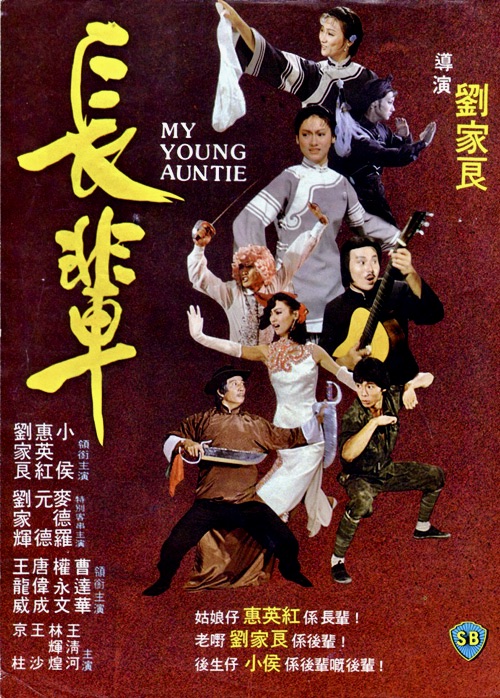
Remember the first wave of Hong Kong cinema to hit American movie screens in 1972? Bruce Lee was transformed into an international superstar after the release of The Big Boss and Fist of Fury and other martial arts masters like Jimmy Wang Yu and Lieh Lo developed cult followings for films such as One-Armed Boxer and Five Fingers of Death. Most of these movies were the product of a male-dominated film industry but, as early as the mid-sixties, female heroines begin to emerge in the genre as witnessed by Cheng Pei Pei in King Hu’s Come Drink with Me (1966). Others would follow like Angela Mao in Deadly China Doll (1973) and Kara Hui in My Young Auntie (1981).
The Hong Kong movie business became even more diversified in 1988 after a new censorship ordinance created a rating system: Category I (general viewing), Category II (parental guidance) and Category III (adults only over 18 years of age). That third category quickly became notorious for an anything-goes-approach to the depiction of sex and violence on-screen. A major turning point was 1991 when Michael Mak’s Sex and Zen, Robotrix starring Amy Yip, and Black Cat with Jade Leung in the title role were among the first to push these boundaries to extremes in Hong Kong cinema. Martial arts actioners got even more outrageous the following year with the release of Chik Loh Goh Yeung (English title: Naked Killer (1992), in which a pair of lesbian assassins terrorize the male scumbags of Hong Kong before squaring off against a rival duo of lesbian hired killers.
Continue reading