
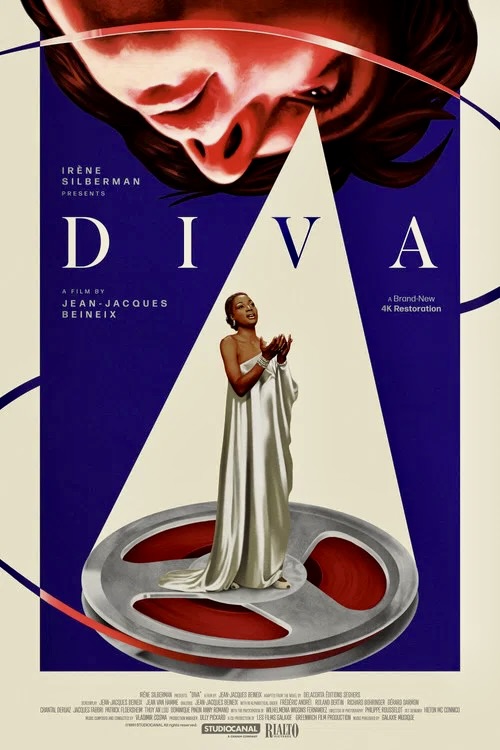
1981 was the year that a French film with the title Diva became a surprise box office hit in America. It grossed $6 million dollars, making it the third most profitable French since 1975 to attract both mainstream and art house audiences plus most of the important critics loved it. Roger Ebert of The Chicago Sun-Times called it, “A visual extravaganza. One of the most persistently entertaining, absorbing and scary thrillers I’ve seen in a long time.” Pauline Kael of The New Yorker raved, “Every shot seems to have a shaft of wit. It’s Welles romanticized, gift-wrapped. It’s a mixture of style and chic hanky-panky, but it’s also genuinely sparkling.” And J. Hoberman of The Village Voice stated, “Diva is not only the most purely pleasurable movie to open here this year, but surely one of the finest films to arrive from France in a decade.” Yet the film was a complete flop in France when it opened there with most critics attacking the film for a visual aesthetic they claimed was inspired by commercial advertising. Strangely enough, after Diva became a hit in America and around the world, French critics and audiences changed their minds and it finally became a commercial success in its own country, winning four Cesar Awards (the French equivalent of the Academy Awards) – Best First Work (director Jean-Jacques Beineix’s debut feature), Best Music Score (Vladimir Cosma), Best Cinematography (Philippe Rousselot) and Best Sound (Jean-Pierre Ruh). So how does it hold up today?
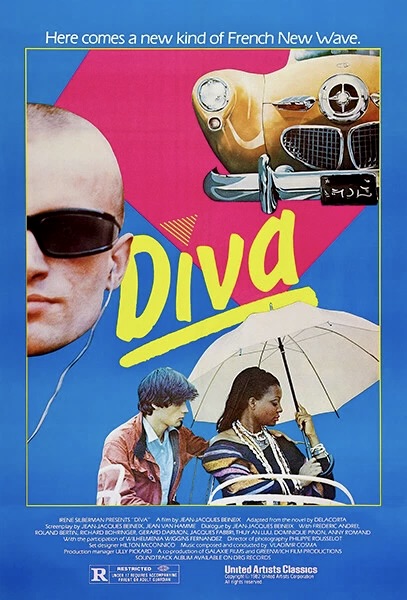
After watching Diva again after 45 years, I have to say that the film is just as fresh, engaging, witty and kinetic as I remembered it. It is true that many critics championed the film’s visual style over content. Some considered it the first French postmodern film and it ushered it an emerging style known as “cinema du look,” which was a reaction against realism and embraced pop art and visual stylization geared toward younger audiences. That makes it sound flashy and pretentious but the look of Diva (which was shot in 1980) pre-dated MTV and the music video explosion although Beineix’s film was obviously the trendsetter. Other young French filmmakers like Luc Besson (Subway, 1983) and Leos Carax (Mauvais Sang aka Bad Blood, 1986) would soon join Beineix with their own interpretation of “cinema du look.” Even non-French directors like Michael Mann and Adrian Lyne were influenced by this trend as reflected in Mann’s TV series Miami Vice and Lyne’s Flashdance (1983).
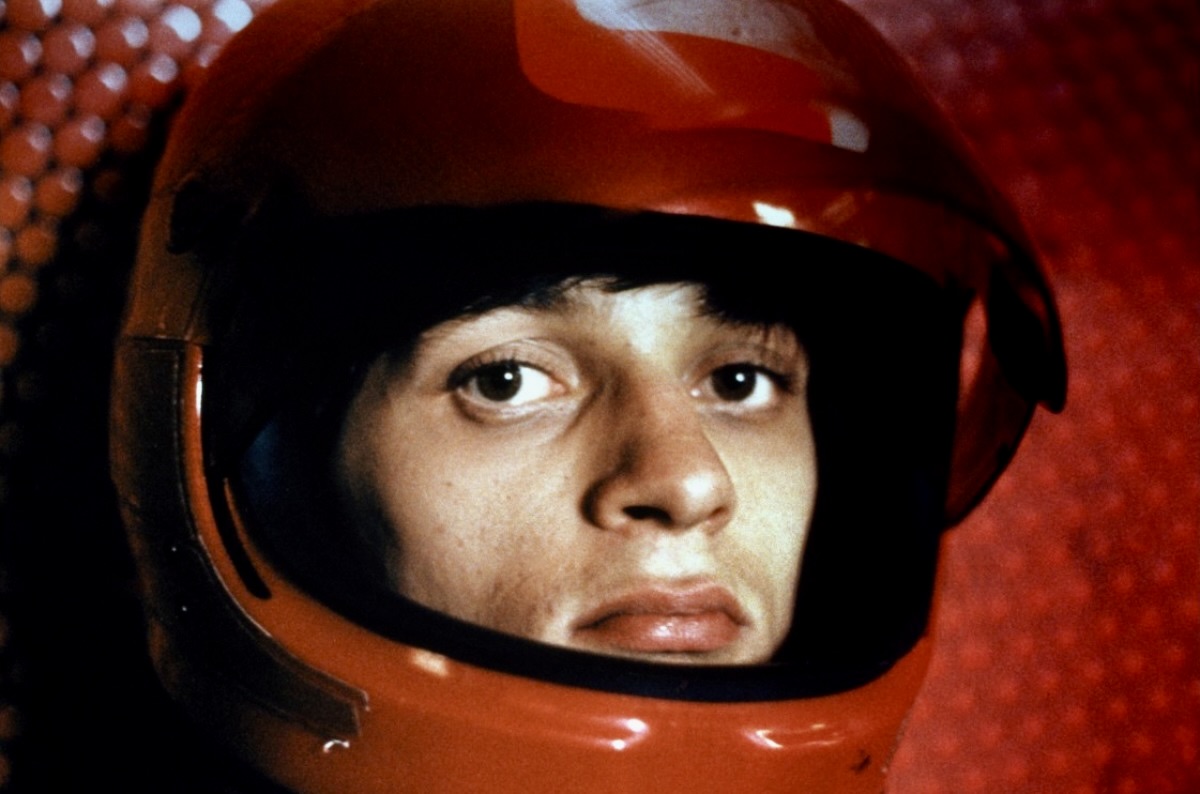
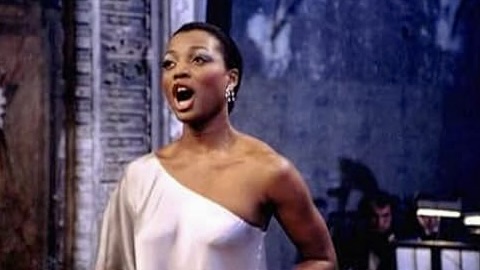
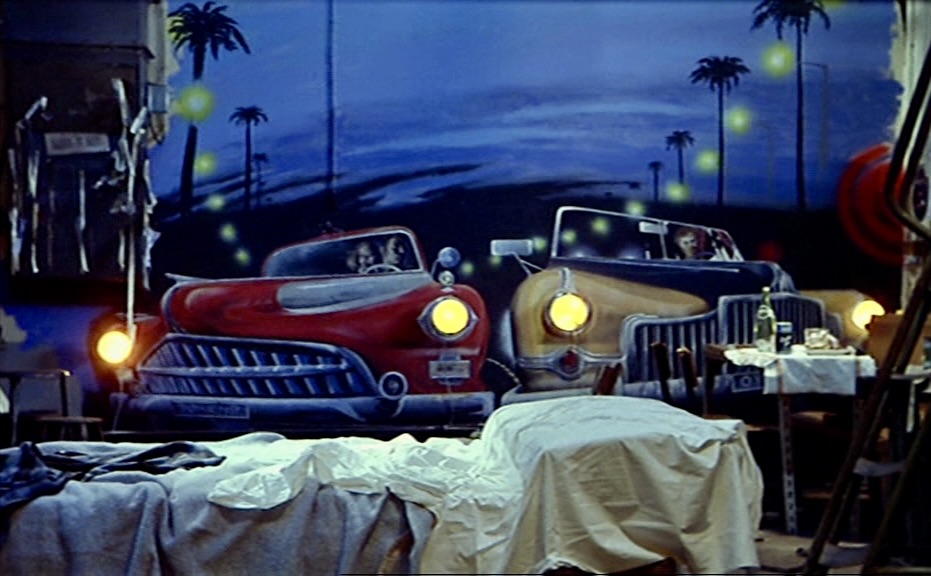
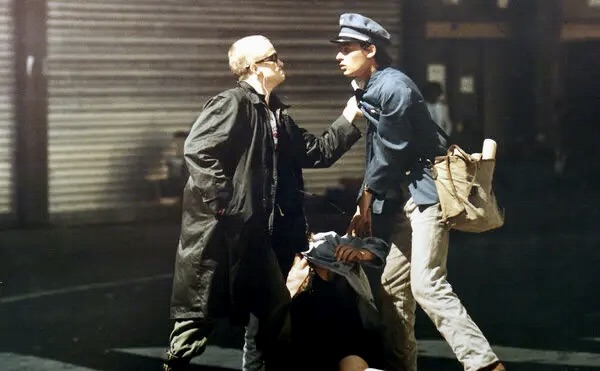
Despite the focus on the visual stylization of Diva, the movie does have a compelling narrative, based on a crime novel by Daniel Robert Odier, who goes by the pen name of Delacorta. At the center of the story is Jules (Frederic Andrei), a special delivery postman in France who rides around on a yellow moped and lives in a warehouse loft filled with junked automobiles and wall murals celebrating car culture. One evening he attends an opera featuring the celebrated singer Cynthia Hawkins (played by real life soprano virtuoso Wilhelmenia Wiggins Fernandez in her only film role) and he secretly records the performance on his portable Nagra device. It isn’t because he wants to make bootleg copies for profit but because he is obsessed with Hawkins’ voice and wants it for his own private enjoyment (the aria featured in the film is from a lesser known Italian opera entitled La Wally).
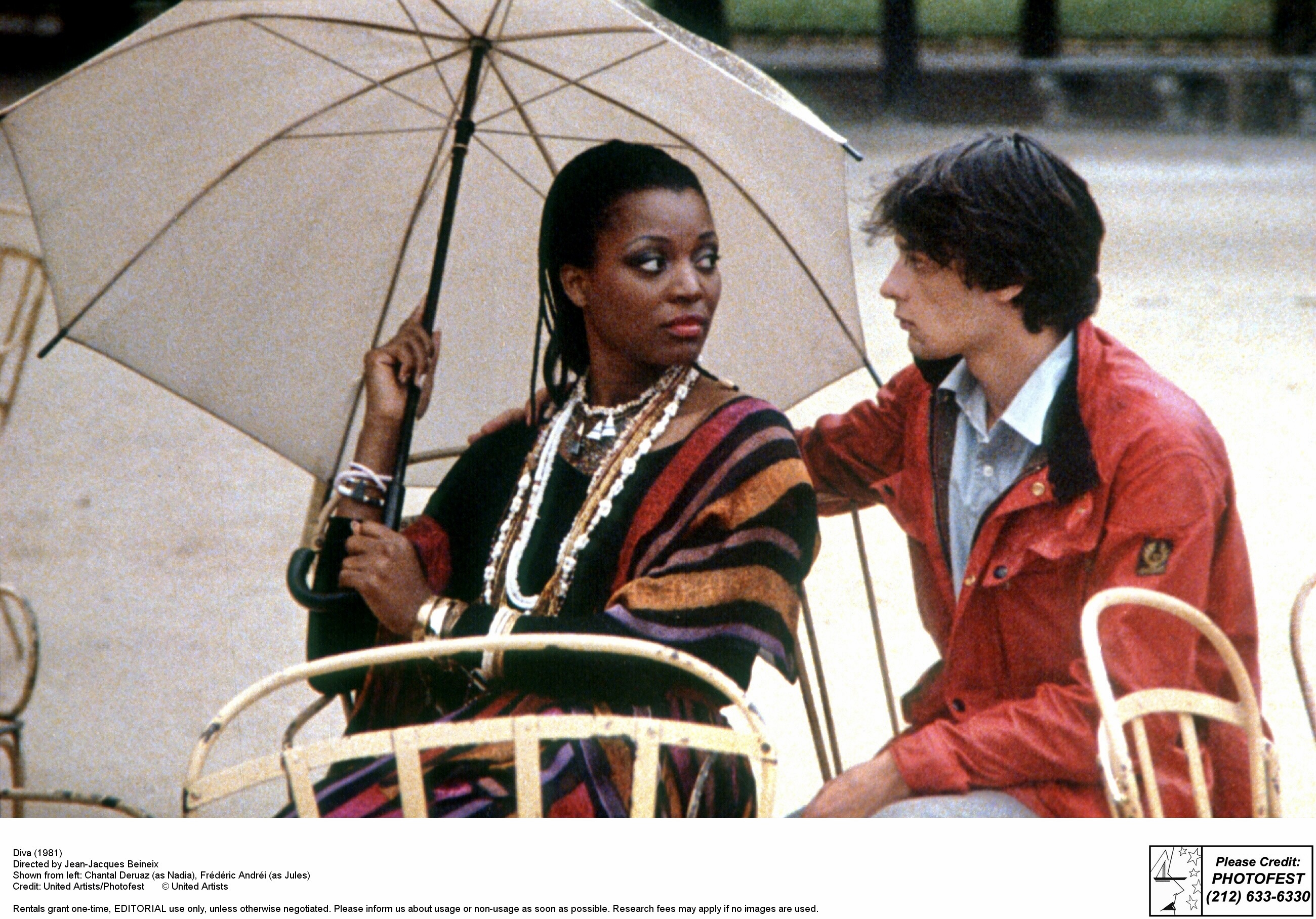
Unfortunately, Jules’s illegal act is suspected by two audience members sitting behind him and they turn out to be a pair of dangerous music pirates from Taiwan. They begin stalking Jules, certain he has the tape they want. Yet, this is only the beginning of the young postman’s troubles. During a daytime delivery near the Gare Saint-Lazare railway station, Jules witnesses a prostitute named Nadia (Chantal Deruaz) fleeing two sinister looking men. She manages to drop a cassette tape into Jules’ postal bag when no one is looking but is then apprehended and later killed. Jules never even finds the tape until much later and when he listens to it he hears Nadia’s detailed expose of a sex trafficking/drug operation which is masterminded by Jean Saporta (Jacques Fabbri), a respected Parisian police commissioner who has been with the force eight years! It is only a matter of time until Saporta’s two hitmen – ‘The Priest’ (Dominique Pinon) and ‘The West Indian’ (Gerard Darmon) – come looking for Jules and the tape.
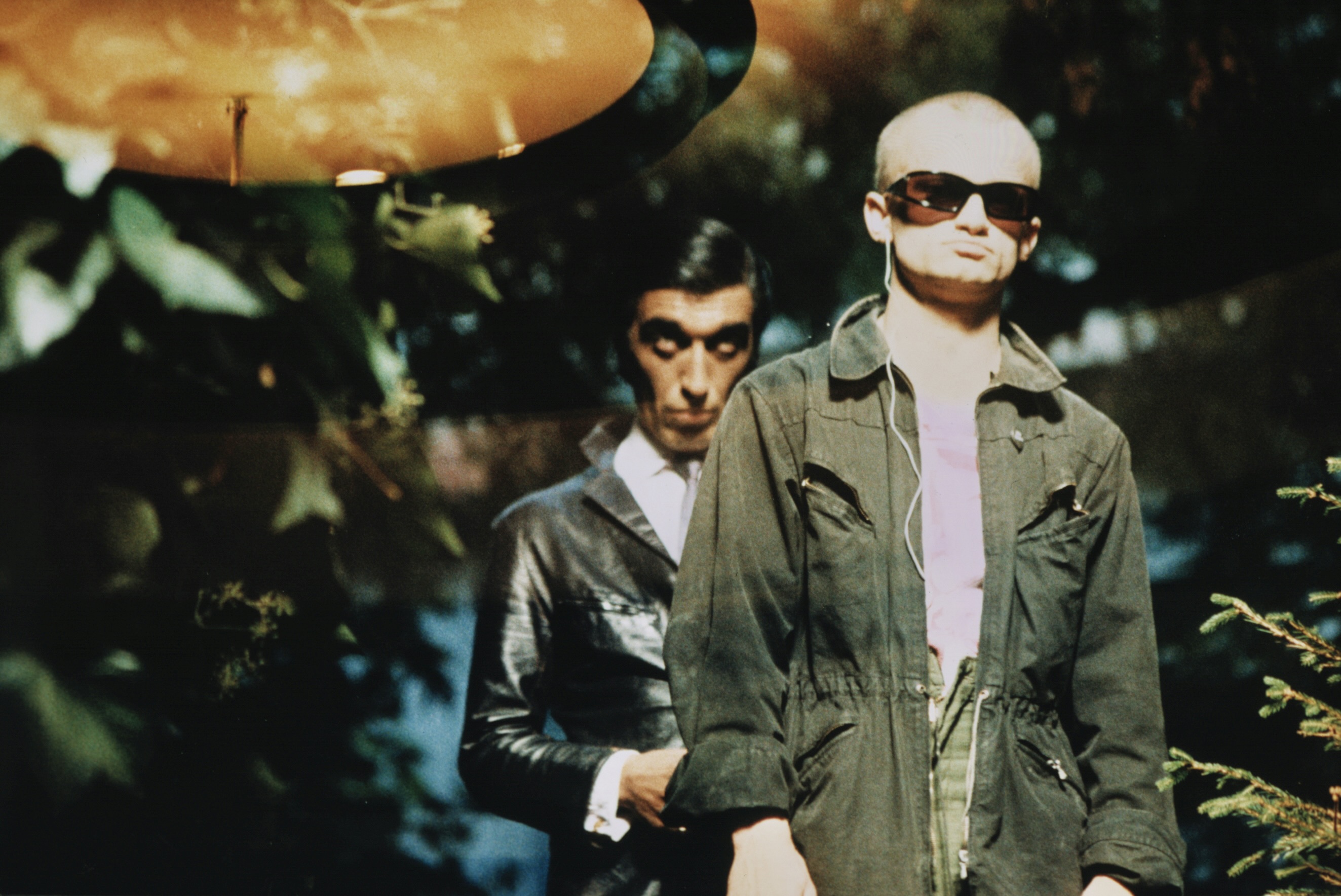
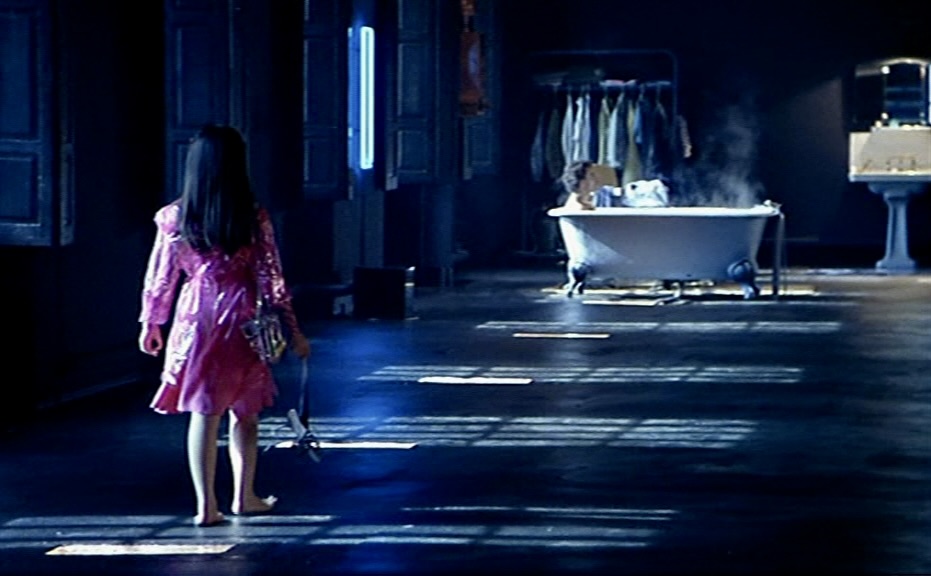
When it becomes obvious that Jules can’t remain in his apartment, which has been trashed by the Taiwanese bootleggers, he borrows money and a different moped from a street vendor friend and holes up with two new acquaintances, Alba (An Luu), a 14-year-old Vietnamese model and kleptomaniac, and her protector, Serge (Richard Bohringer), a mysterious middle-aged man who lives in a sprawling but sparsely furnished mansion. In the midst of all this calamity, Jules decides to visit Cynthia and return the silk dress he stole from her dressing room after her opera performance thus initiating the beginning of an unusual relationship.
All of these may sound like too many subplots to juggle coherently and it would be in any other movie but Beineix presents it all in such light, colorful broad strokes that it takes on the ambiance of an urban fairy tale with enough menace to work as both a crime thriller and a romantic comedy of sorts although the relationship between Jules and Cynthia is platonic and not sexual. And like Hitchcock, Beineix treats the pursuit of both the secret opera recording and the crime confessional cassette as MacGuffins, mere plot devices to propel the story forward while not allowing them to overcome what Diva is really about – the creative conflict between art and technology.
Cynthia is a purist when it comes to her art. She has never allowed herself to be recorded because “a concert is a privileged moment for the artist and her audience” and it is meant to be experienced in the moment like any encounter with art. The Taiwanese audio pirates and even Cynthia’s own business manager, on the other hand, are representative of the commercial side of the music world. Beineix once stated that Diva “is a warning about a situation that is starting to exist; an artist trapped in a system which is [capable of] being copied, cloned, xeroxed endlessly.” The director also noted in an interview by Alex Simon for The Hollywood Interview that “there’s a phrase in the film [uttered by Cynthia] which triggered a lot of problems with the producers, who wanted me to cut the line, which goes “It is up to industry to adapt to art, and not art to adapt to industry.” It was naïve, maybe, but I still stick to that.”
A second viewing of Diva makes it clear that the visual design of the movie is not just eye candy and glitzy affectation but the key to Beineix’s true interests in the film which are much more intriguing than the crime thriller subplots. The film’s innovative use of color, space and texture is actually used to represent Paris as it was in 1980. This is not the typical tourist tour of the city of lights but a portrait of a multi-cultural city undergoing major social change, all of which is reflected in Paris’s backstreets and rough and tumble neighborhoods. Beiniex also employs a ying-yang tension involving the use of doubles, representing alternate realities – the two hitmen vs. the two music pirates, the two detectives (one male, one female), the two prostitutes (one white, one black) that Jules encounters, the two missing tapes, etc.
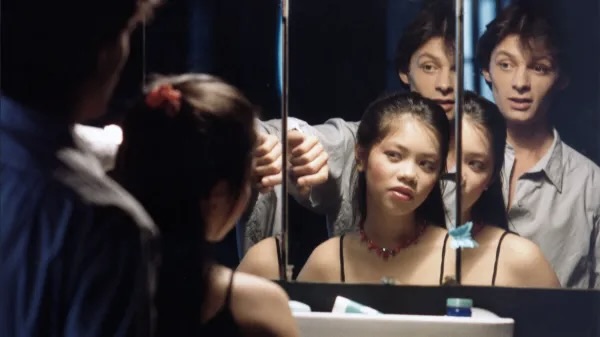
Colors also take on metaphorical meanings in Diva but so do some of the characters. Who is Serge really? Is he a magician, a zen master, a wealthy retired artist or is he a version of the adult Jules longs to be. What is interesting is that Jules starts the movie as a crafty streetwise kid but he is also a dreamer. Once he realizes that his actions have put Cynthia and her career in a compromising position, he takes action to set things right and finally confesses his indiscretions to the singer, becoming an adult in the process. So, you could say Diva is also a coming-of-age film but one that stands apart from any in that genre.
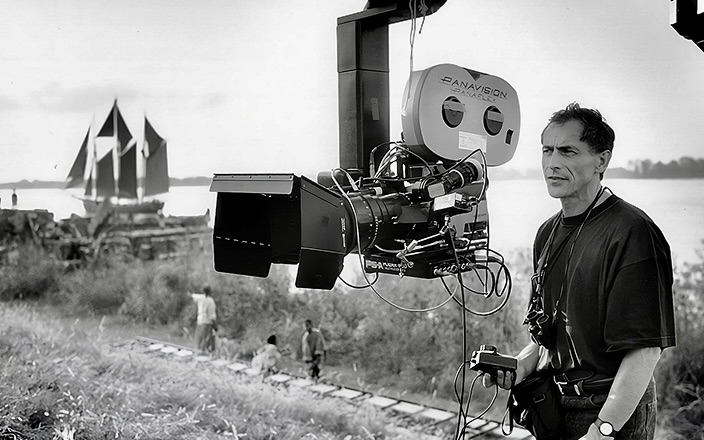
Jean-Jacques Beineix was 34 years old when he started work on Diva but he had been working in the French film industry since the early 1970s as an assistant director to such famous filmmakers as Claude Berri, Rene Clement and Jerry Lewis (Beineix worked on the infamous, 1972 never released drama The Day the Clown Cried). For his first film he wanted to try out a lot of creative ideas and he found the ideal collaborators with cinematographer Philippe Rousselot and production designer Hilton McConnico. Rousselot had been an assistant cameraman since 1968 and worked on three Eric Rohmer films before moving into the cinematographer’s chair in 1970 with Guy Gilles’ Le Clair de Terre. He would go on to work on such high profile projects as The People vs. Larry Flint (1996) and Tim Burton’s Big Fish (2003) and score three Oscar nominations for Hope and Glory (1988), Henry & June (1993) and A River Runs Through It (1993).
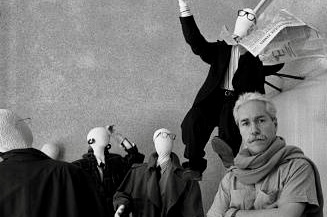
McConnico, who was born in Memphis, Tennessee, had a more unusual background. He worked in the fashion industry before relocating to Paris in 1965 and eventually moved into the French film industry working on set design and costumes. Among his early film credits are Alain Robbe-Grillet’s Playing with Fire (1975), The Best Way to Walk (1976), a critically acclaimed drama by Claude Miller, and Diane Kurys’s Cocktail Molotov (1980).
Moviegoers got a radically different view of contemporary Paris in Diva but were also offered glimpses of some other unique locations outside the city such as Phare de Gatteville, the lighthouse getaway featured in the movie (It is located on the Normandy coast). Other locations in the movie include the Theatre des Bouffles du Nord (where Cynthia performs her aria), the Tuileries Gardens, various metro stations for the moped chase sequences, and an abandoned Citroen car factory where Serge confronts the evil police commissioner Saporta.
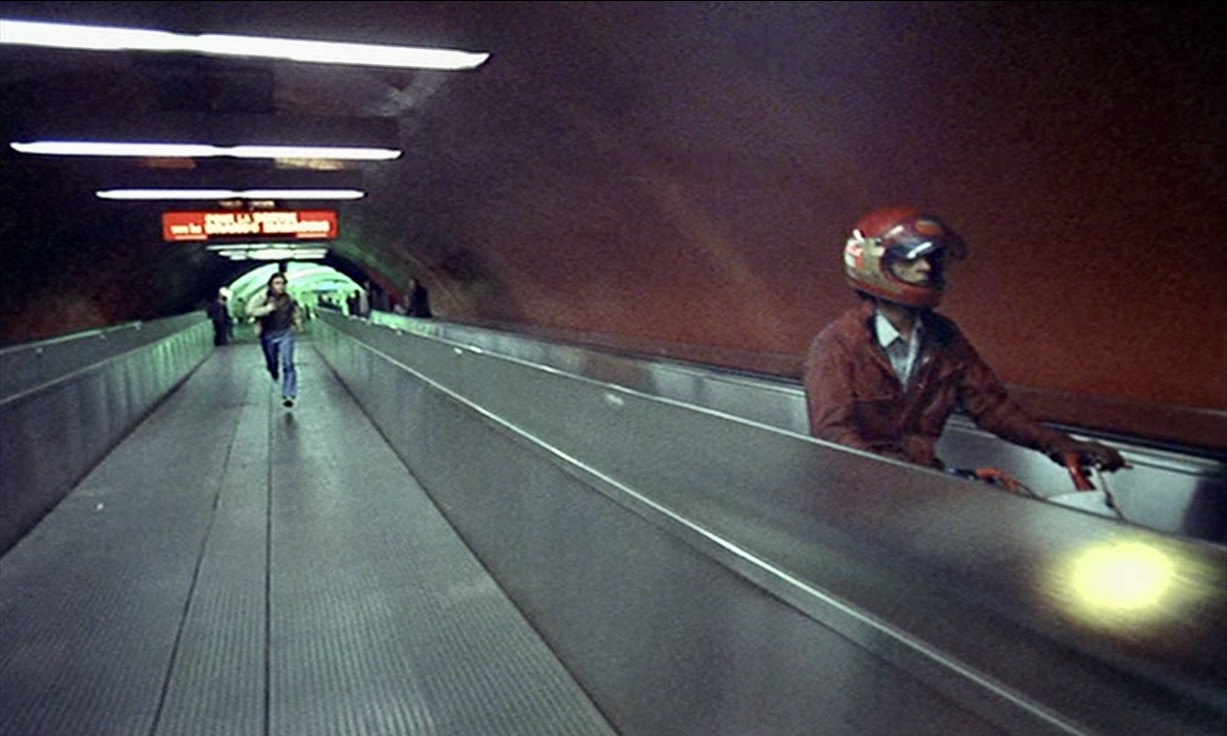
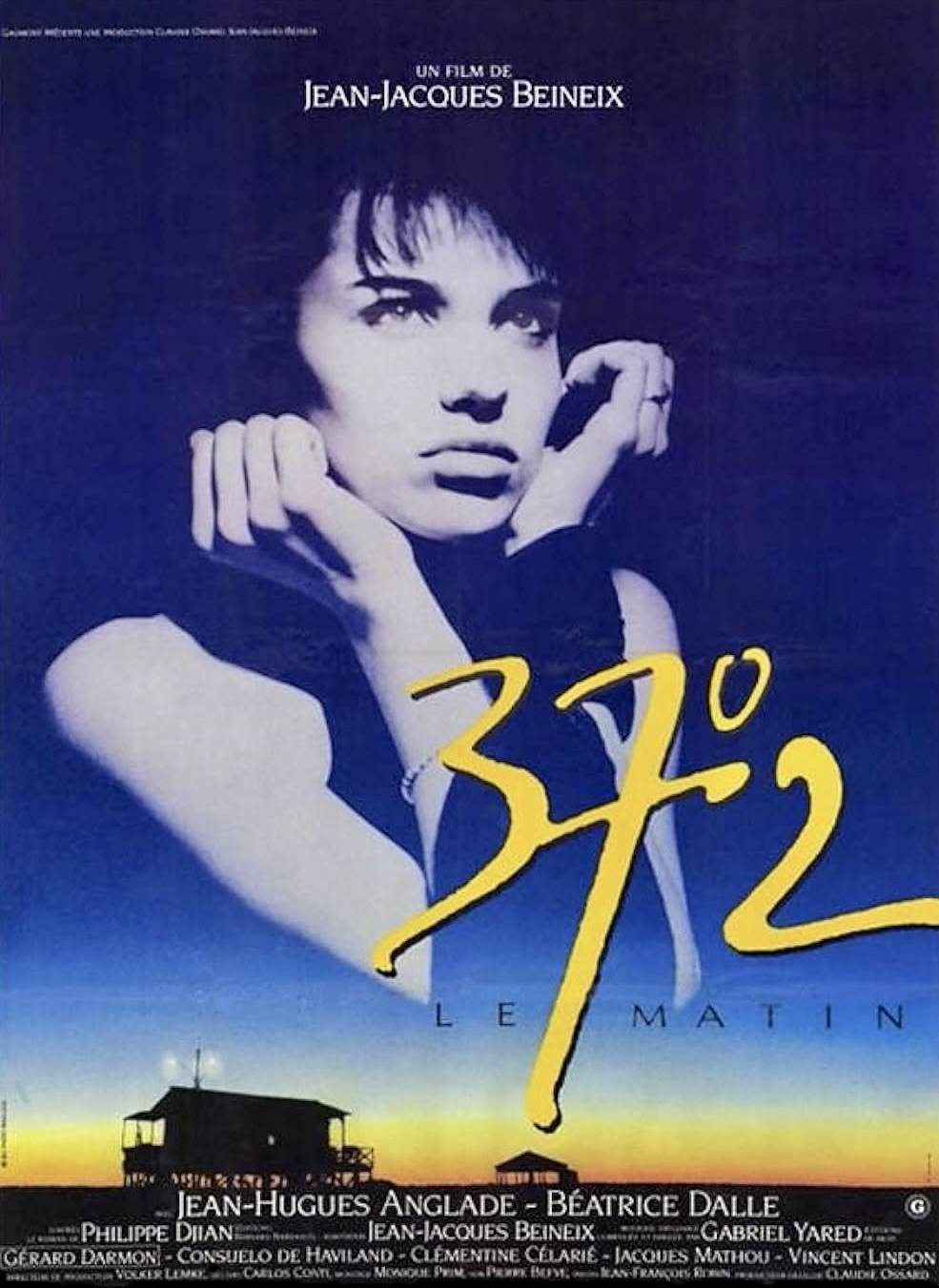
Diva went from being a box office bomb in France to becoming an international hit over the course of a year but Beineix’s follow-up feature The Moon in the Gutter (1983) was an unmitigated disaster. Based on a novel by pulp fiction specialist David Goodis, the moody noir was mostly panned by critics, ignored by moviegoers and even the main star Gerard Depardieu openly criticized it. Beineix also complained that the movie had been drastically cut down by producers from his original four hour cut and his third feature Betty Blue (1986), an erotic psychological drama, was also released in a shorter version than his original 186-minute cut. The difference, however, was that Betty Blue became a huge hit in France and around the world, especially with younger audiences. It also received an Oscar nomination for Best Foreign Language Film and garnered nine Cesar nominations. Despite the high water marks of Diva and Betty Blue, the rest of Beineix’s career remained undistinguished. He directed three made-for-TV movies and four more feature films with Mortal Transfer (2001), a black comedy/crime thriller starring Jean-Hughes Anglade, marking his final theatrical effort. (Beineix died in January 2022 at age 75 after a long illness).
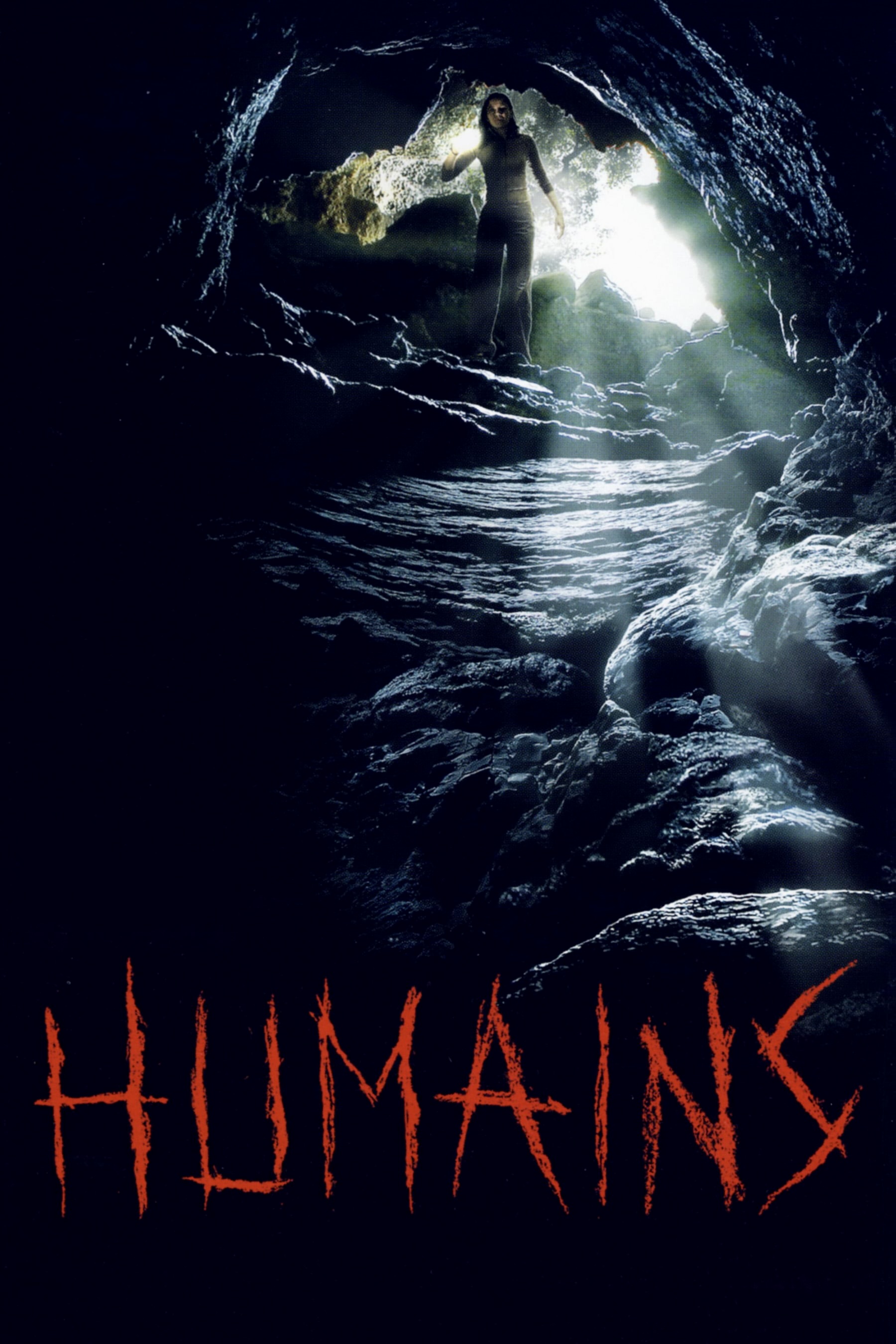
Most of the cast members of Diva were relatively unknown at the time the film was released with the exception of beloved character actor Jacques Fabbri as the cunning Saporta. Richard Bohringer would go on to become an important dramatic actor, winning a Caesar award for Best Supporting Actor in the prison drama L’addition (1985), and making memorable appearances in Luc Besson’s Subway (1985), Jean-Pierre Mocky’s Agent Trouble (1987) opposite Catherine Deneuve, and Peter Greenaway’s The Cook, the Thief, His Wife & Her Lover (1989). However, the real breakout star of Diva was Dominique Pinon (in the role of the skinhead assassin ‘The Priest’). He would end up being immortalized in two comic fantasy films by Marc Caro and Jean-Pierre Jeunet (1991’s Delicatessen, 1995’s The City of Lost Children) and also appear in such cult film favorites as Alien Resurrection (1997), Amelie (2001), and Humains aka Humans (2009), a horror thriller set in the Swiss Alps.
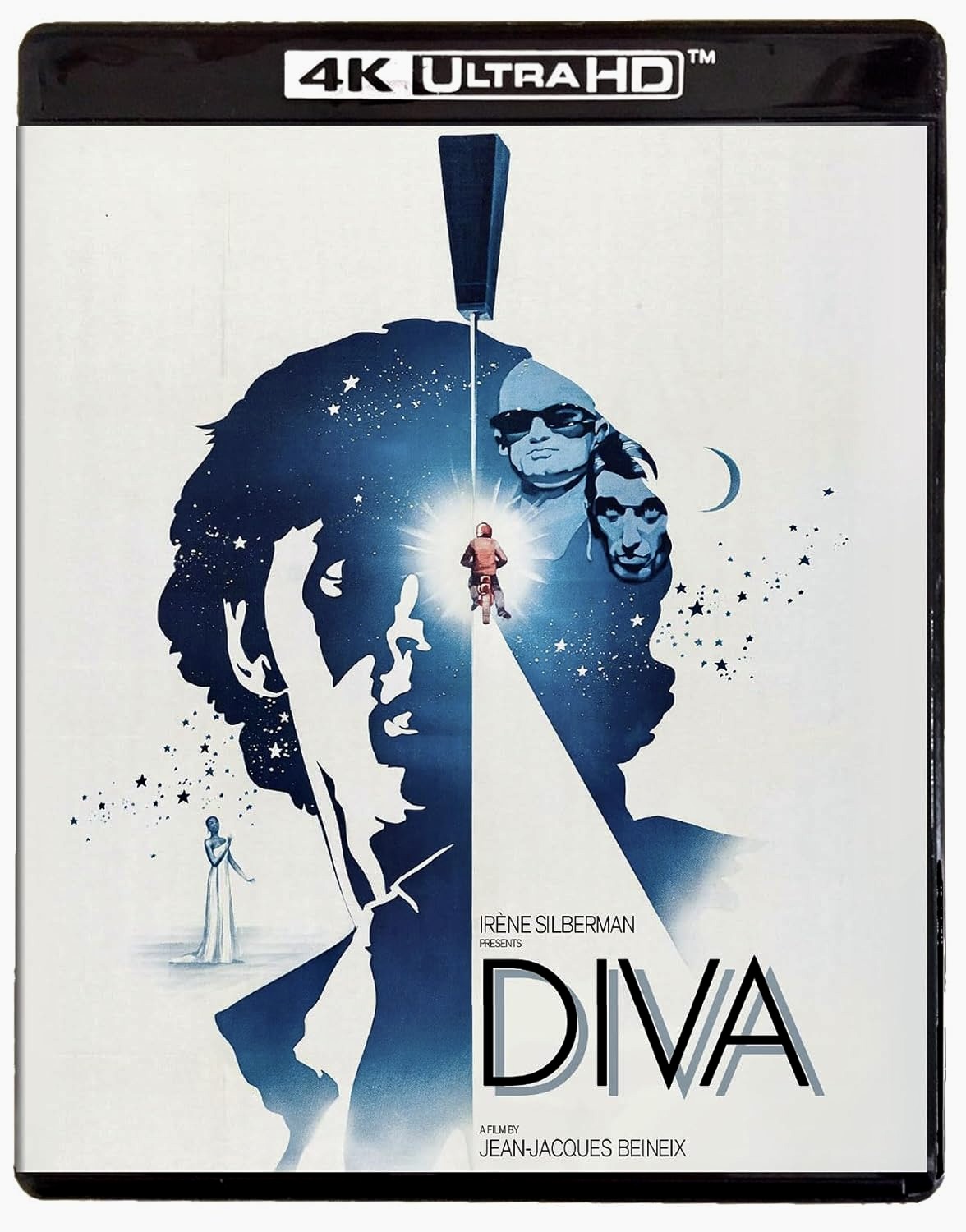
Diva has been released on various formats over the years but the January 2026 4KUHD/Blu-ray from Kino Lorber is highly recommended. The two-disc edition includes numerous interviews with the director, crew and cast members on the film plus an audio commentary by film critic Simon Abrams.
Other links of interest:
https://www.bfi.org.uk/news/jean-jacques-beineix-director-diva-betty-blue-1946-2022
https://www.hollywoodreporter.com/business/business-news/qampa-jean-jacques-beineix-89764
https://www.filmreviewdaily.com/in-memoriam/jean-jacques-beineix
https://www.bruceduffie.com/fernandez.html
https://encyclopedia.design/2022/01/13/hilton-mcconnico-american-interior-furniture-designer
https://www.tboake.com/diva_questions_2004.html

