
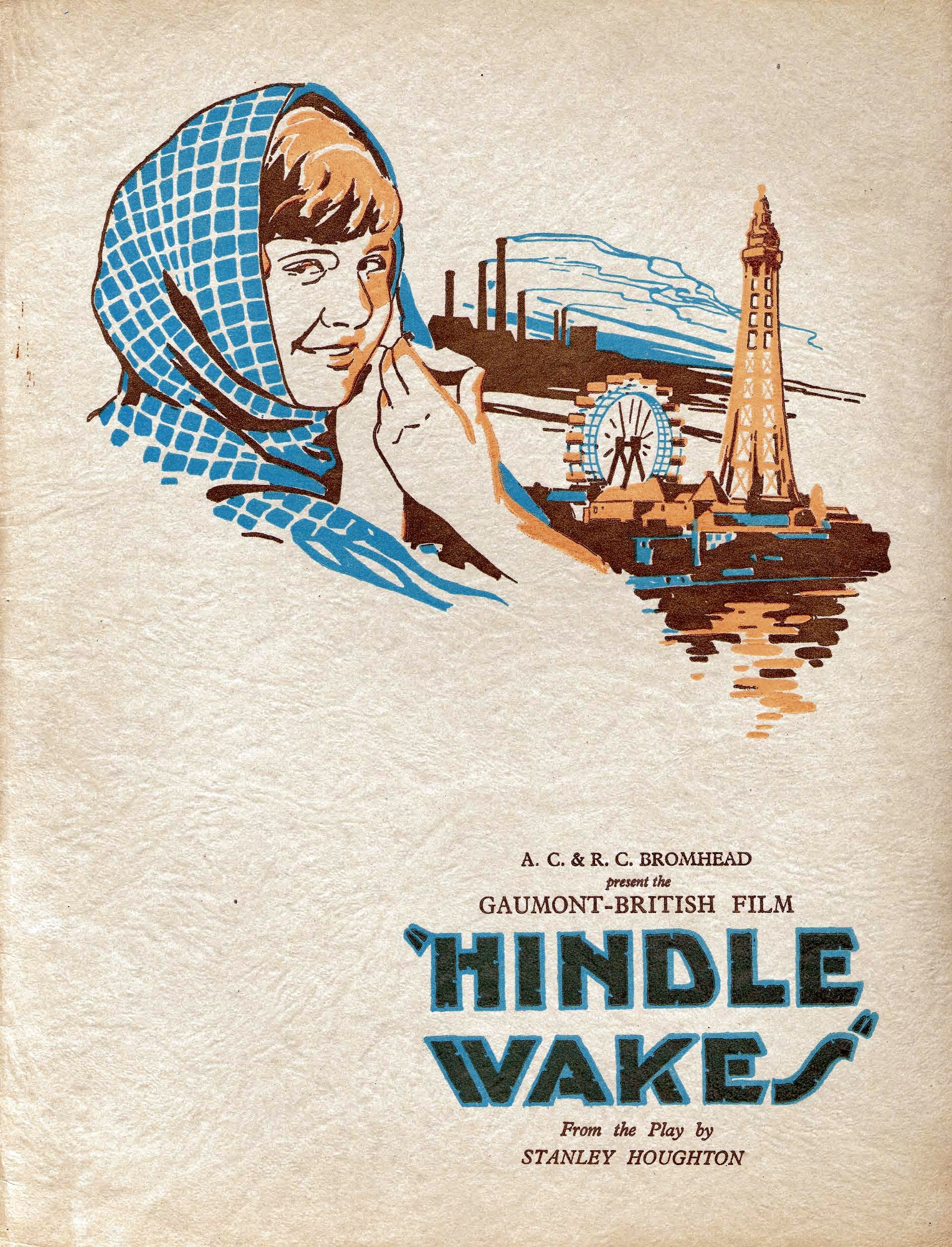
The year is 1910 and you work in a factory in the North West region of England where you are given a week off every year. So where do you take your vacation? During the Edwardian era, most working class people preferred to spend their leisure time at the seashore and Blackpool was one of the most popular resort towns for the working class. Frolicking in the surf, fairground rides, penny arcade amusements, live entertainment/musical revues, and the famous lights of Blackpool were all part of the attraction along with affordable lodgings and restaurants. It was only natural that such a popular destination would become the setting for one of the most famous British plays of the 20th century. Hindle Wakes, written by Stanley Houghton, was first performed on the stage in 1912 and would go on to enjoy numerous film and TV adaptations in the subsequent decades. Maurice Elvey would direct two silent versions (one in 1918, the other in 1927), a 1931 sound version was directed by Victor Saville and a remake entitled Holiday Week appeared in 1952 while TV versions premiered in 1947 (featuring Wendy Hiller as the heroine), 1950, 1957 and 1976 (co-directed by June Howson and Laurence Olivier). Of all the versions, however, most film critics and movie historians tend to favor Hindle Wakes aka Fanny Hawthorne, the 1927 adaptation spotlighting American actress Estelle Brody in possibly her most famous role.
Continue reading
