
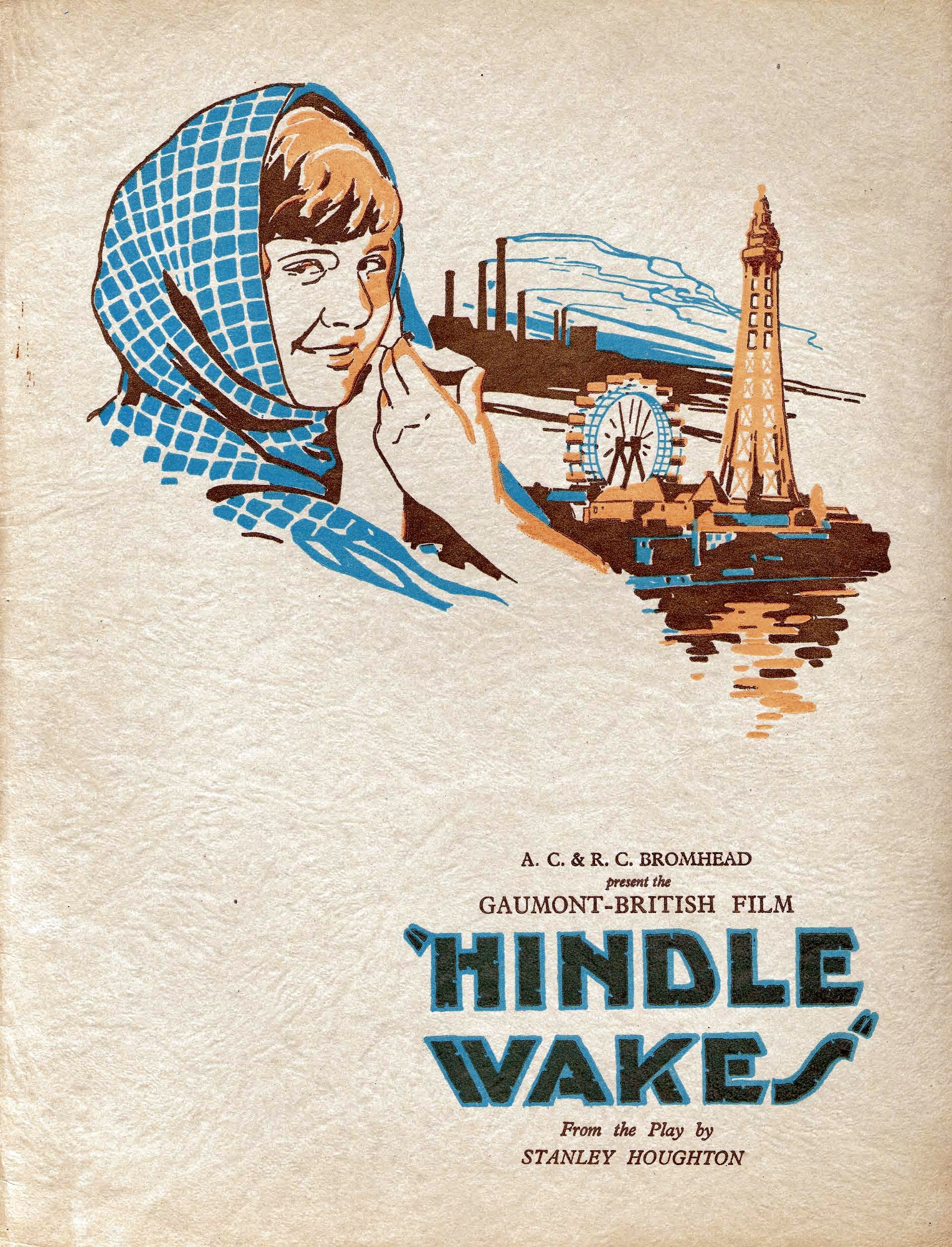
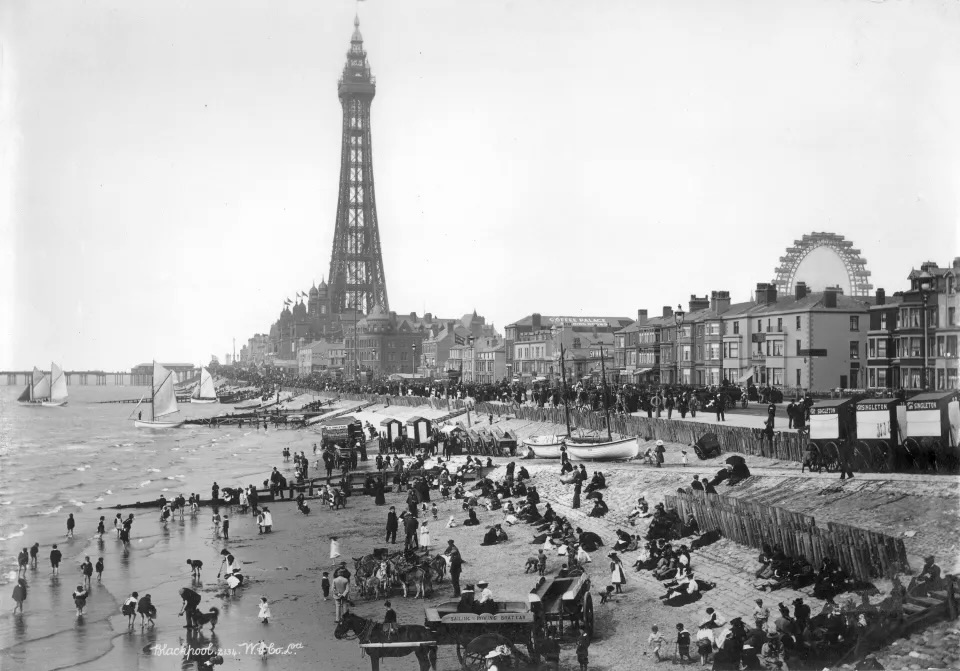
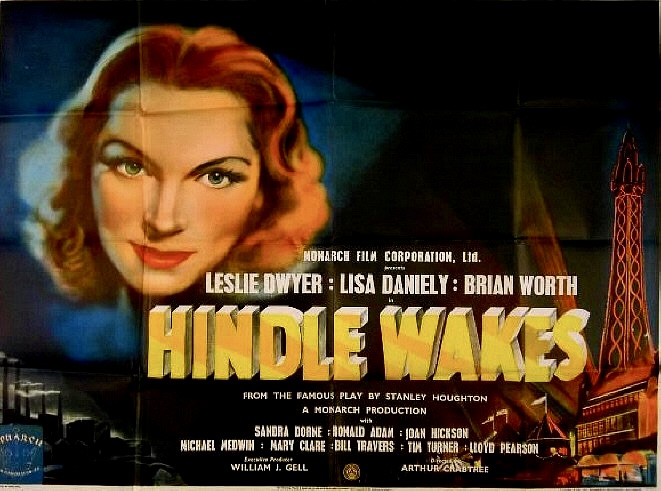
The year is 1910 and you work in a factory in the North West region of England where you are given a week off every year. So where do you take your vacation? During the Edwardian era, most working class people preferred to spend their leisure time at the seashore and Blackpool was one of the most popular resort towns for the working class. Frolicking in the surf, fairground rides, penny arcade amusements, live entertainment/musical revues, and the famous lights of Blackpool were all part of the attraction along with affordable lodgings and restaurants. It was only natural that such a popular destination would become the setting for one of the most famous British plays of the 20th century. Hindle Wakes, written by Stanley Houghton, was first performed on the stage in 1912 and would go on to enjoy numerous film and TV adaptations in the subsequent decades. Maurice Elvey would direct two silent versions (one in 1918, the other in 1927), a 1931 sound version was directed by Victor Saville and a remake entitled Holiday Week appeared in 1952 while TV versions premiered in 1947 (featuring Wendy Hiller as the heroine), 1950, 1957 and 1976 (co-directed by June Howson and Laurence Olivier). Of all the versions, however, most film critics and movie historians tend to favor Hindle Wakes aka Fanny Hawthorne, the 1927 adaptation spotlighting American actress Estelle Brody in possibly her most famous role.
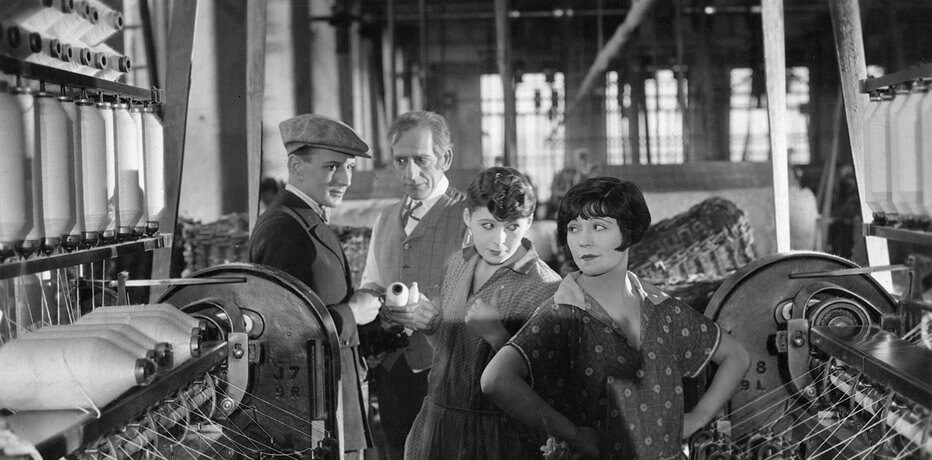
Hindle is a fictitious place that was modeled on other factory towns in the region of Lancashire and ‘wakes week’ refers to the annual event when the cotton mills close for a week (or more) and the workers take their vacations. Fanny (Estelle Brody) and her friend Mary (Peggy Carlisle) are close friends/co-workers at the Daisy Bank Mills and they hop on a train bound for Blackpool. Once there they try their luck at a shooting gallery arcade where they are spotted by Allan Jeffcote (John Stuart), the privileged son of the mill owner in Hindle, and his randy pal. Sparks fly between Fanny and Allan and soon they are inseparable during their time in Blackpool.
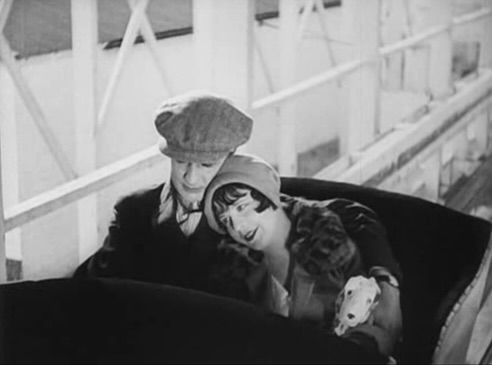
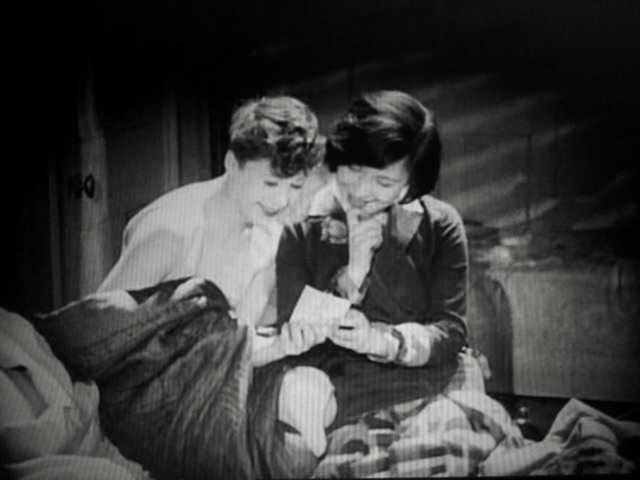
The romance becomes more serious when Allan proposes they spend the remainder of their vacation in the more upscale resort of Llandudno, Wales, where they are less likely to run into people they know from Hindle. Fanny begs her friend Mary to cover for her while she goes off with Allan and, to complete the deception, Fanny writes a postcard to her parents which Mary sends to them from Blackpool.
When Fanny returns home the day before her work week begins, she is in a joyful mood but her parents (Humberston Wright and Marie Ault) are surprisingly glum and wary. [Spoiler alert] It turns out that Mary accidentally drowned in the surf at Blackpool and the neighborhood is mourning her death. Fanny’s ignorance of this tragedy confirms her mother’s suspicions that the postcard from Blackpool was a ruse and that her daughter was off gallivanting with some man.
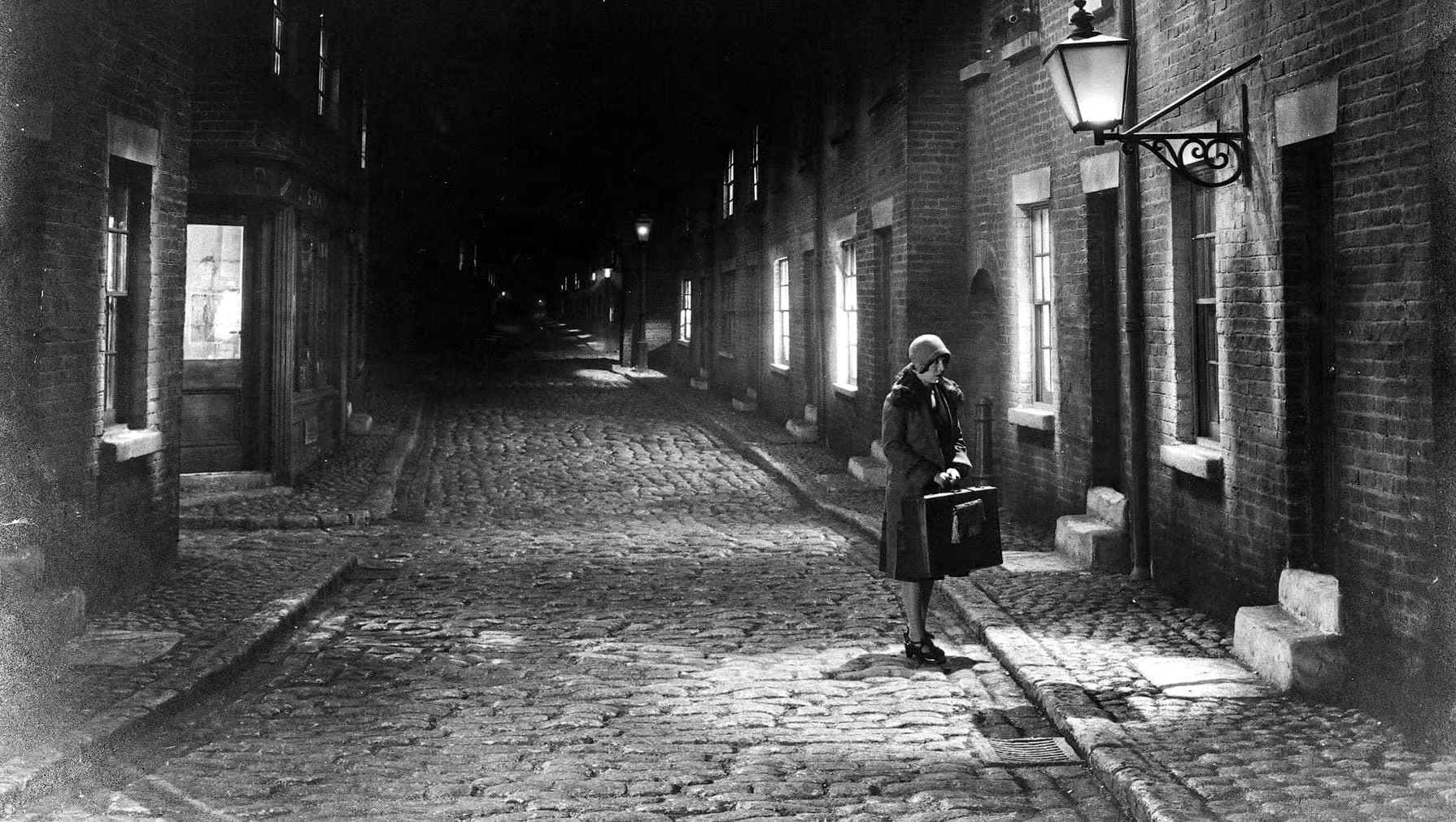
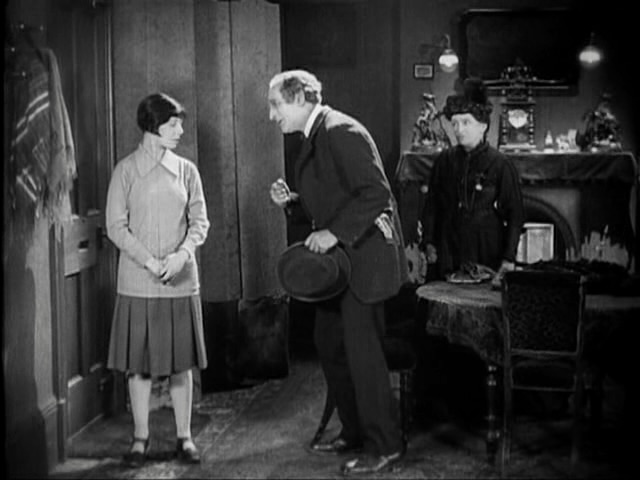
Devastated at the news of Mary’s death, Fanny reveals her secret affair with Allan, which turns into a major scandal for both families. Fanny’s father Chris is compelled to visit Nat Jeffcote (Norman McKinnel), his childhood friend turned factory owner, and reveal that his daughter has been seduced by his son, Allan. Nat is outraged but vows that his son will do the right thing and marry Fanny.
This does not go over well with Allan, who was engaged to marry Beatrice Farrar (Gladys Jennings), the daughter of another wealthy mill owner. Their marriage would have resulted in Nat Jeffcote and Tim Farrar merging their businesses together to form a textile empire but Fanny and Allan’s fling has ruined everything.
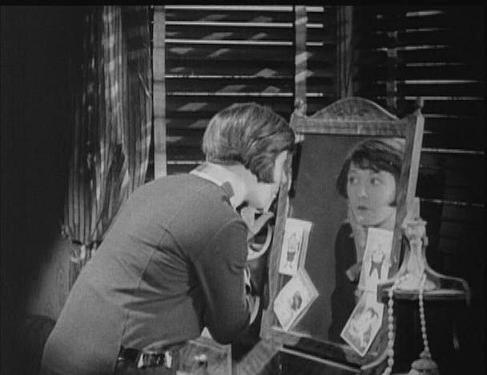
What nobody anticipated, however, was how Fanny would react to the news that she would have to marry Allan. Instead, she rejects any possibility of marriage but her decision results in her being ejected from her family home and forced to find her own place. When we last see Fanny, she is back at the mill and entertaining the idea of a date with Alf (Cyril McLaglen), a co-worker who has adored her from afar.
When Hindle Wakes was first performed as a play, it generated a great deal of controversy about Fanny’s outspoken independence and is one reason the 1927 film version is seen as an early example of feminist cinema (It is often favorably compared to Henrik Ibsen’s 1879 play, A Doll’s House). Those who were offended by Fanny’s behavior and the idea of pre-marital sex (suggested but never shown) thought Houghton’s social drama would be a bad influence on younger audiences. Yet Elvey’s 1927 film version is so dramatically engaging, visually sophisticated and free of moral sermonizing that the film feels fresh and naturalistic even today.
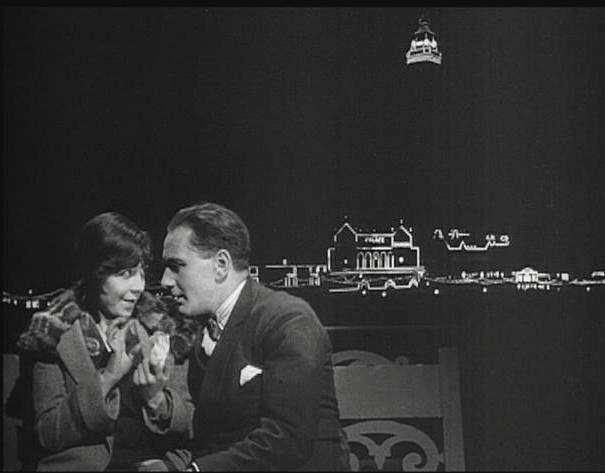
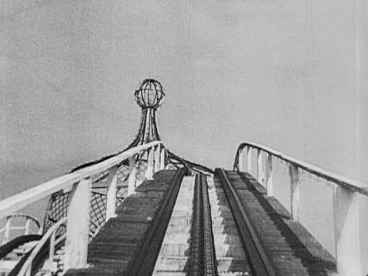
For one thing, Hindle Wakes is a wonderful time capsule look at Edwardian life from its documentary-like glimpses of factory life to the colorful eccentricities of Blackpool. The cinematography by Jack E. Cox and William Shenton is full of surprising hand-held camera moments that put you front and center in the action such as a rollercoaster ride (where the point of view is from the first passenger seat). Director Elvey took full advantage of his location shooting in Blackpool and Llandudno and contemporary viewers can glimpse the Big Dipper and Helter Skelter rides from Paradise Beach or experience a night of dancing at the Tower Ballroom from Blackpool’s glorious past.
There are also impressive montage sequences that capture machinery and people in motion that rival similar cinematic mosaics from Walter Ruttmann’s Berlin: Symphony of Metropolis (1927) but also look forward to the experimental techniques used in King Vidor’s The Crowd (1928) and Dziga Vertov’s Man with a Movie Camera (1929).
Another major virtue of Elvey’s Hindle Wakes is the ensemble cast, especially Estelle Brody as Fanny. She perfectly embodies Fanny’s high-spirited nature and luminous beauty but, more importantly, she convincingly asserts her own independence and self-respect when she is subjected to a strict and unforgiving moral code. It becomes obvious from Fanny’s final actions in the film that she is determined to live life on her own terms, even if it means never getting married or being confined to working class status for the remainder of her life. As she tells a co-worker, “I’m a Lancashire lass and so long as there are spinning mills in Lancashire, I can earn enough to keep myself respectable.”
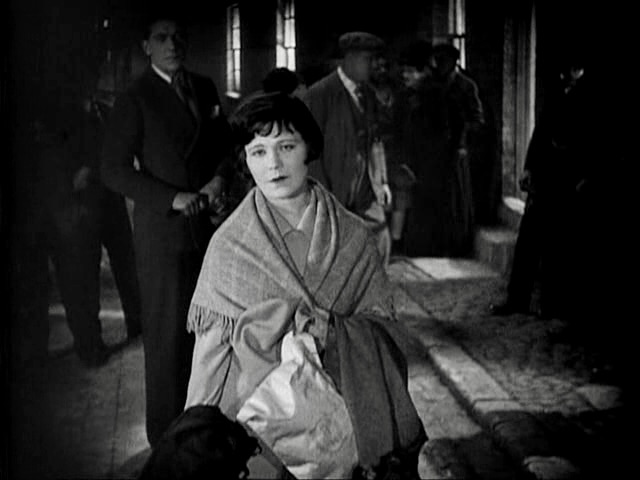
One can only imagine how Edwardian audiences would have reacted to Fanny’s decision. Not only does she defy the demands of her parents and the Jeffcotes to avoid shame and maintain respectability at all costs but she turns down the opportunity to marry into a wealthy, socially prominent family (who cares if the result is a loveless marriage?). Even more baffling for viewers of that era is Fanny’s desire to go it alone and return to her factory job. What most people failed to see was that Fanny was exercising her freedom to live the life she wanted….and that was not even an option for most women of that era.
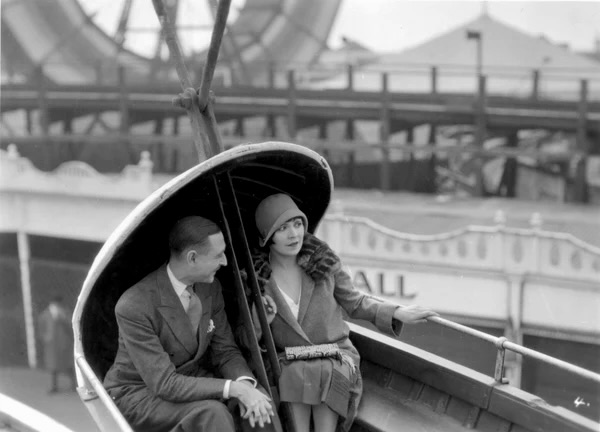
A New York City native, Brody became one of the most famous actresses in British silent films starting with her debut in Mademoiselle from Armentiere (1927), directed by Maurice Elvey. Other major roles included the romantic drama Kitty (1929) and the comedy Week-End Wives (1929), but Brody’s stardom was short lived through no fault of her own and movie offers became more scarce. Still, she managed to get some bit parts in a few American films and supporting roles in British productions such as The Story of Esther Costello (1957), a Joan Crawford drama, and Never Take Candy from a Stranger (1960), a Hammer Horror production about a pedophile on the prowl. She retired in 1980 and died in June 1995 at age 94.
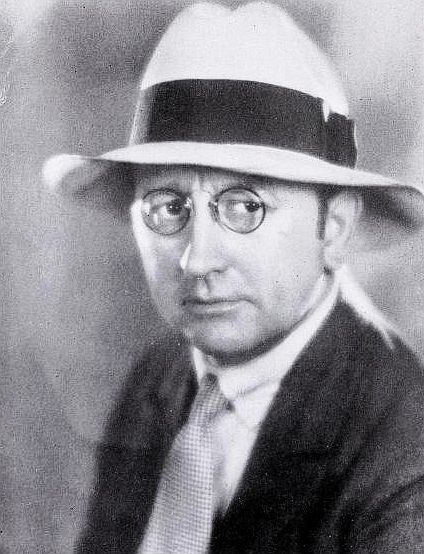
Director Maurice Elvey, who was responsible for launching Estelle Brody’s career in England and worked with her on numerous films, was one of the most prolific filmmakers in the British film industry, amassing almost 200 movies over a forty year period. Unfortunately, most of his work from the silent era (including some Sherlock Holmes mysteries) has been lost but Elvey proved to be adept at tackling almost any film genre successfully, helming everything from suspense thrillers (The Clairvoyant, 1935) to sci-fi epics (Transatlantic Tunnel, 1935) to patriotic war dramas (Medal for the General, 1944). After he lost his vision in one eye, he retired from filmmaking in 1957 and died in August 1967 at age 79.
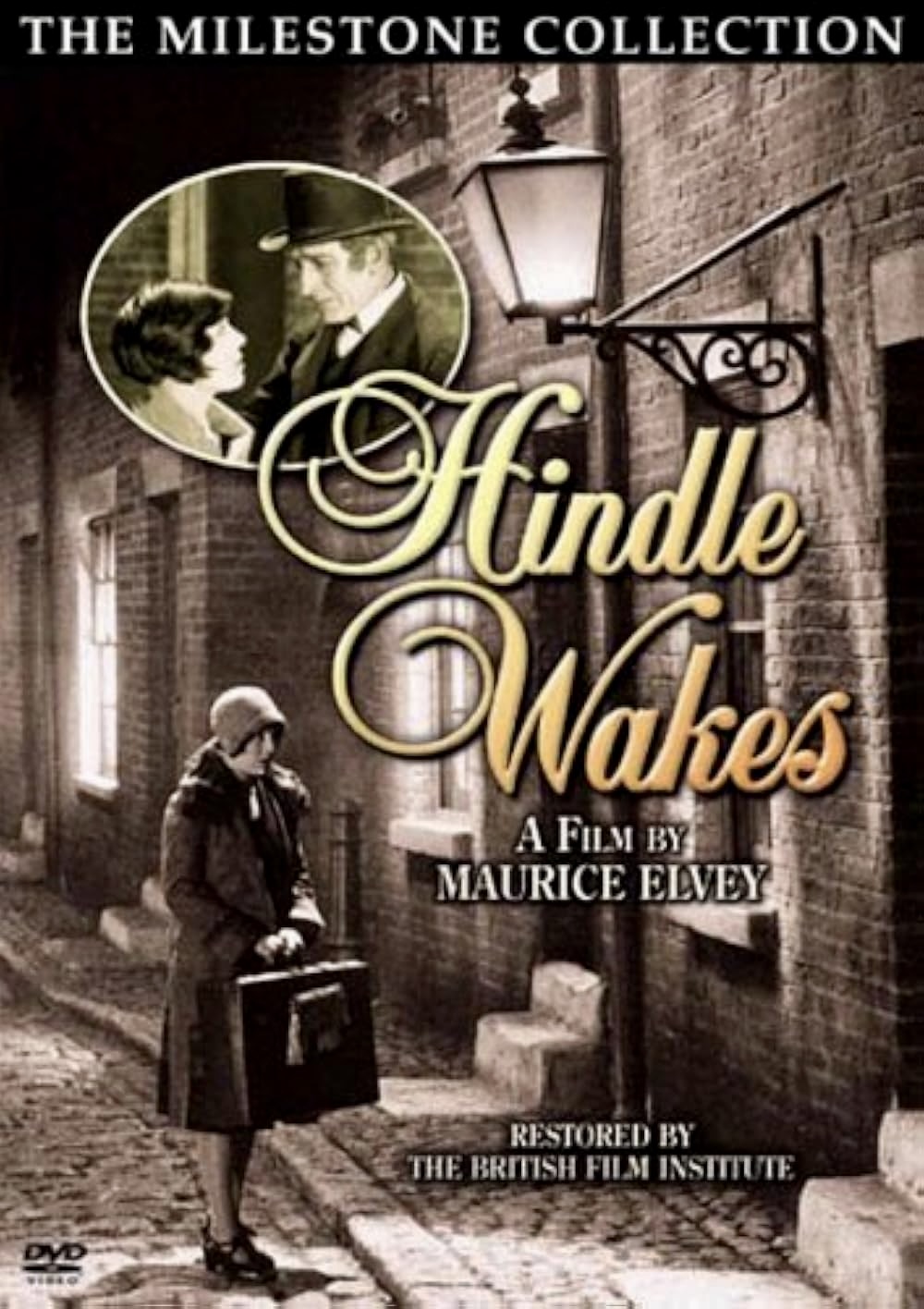
Hindle Wakes was originally originally released on DVD by Image Entertainment as part of The Milestone Films Collection but is now out of print. You might still be able to find copies of the film from online sellers.
Other links of interest:
https://heritage.stockton.gov.uk/articles/people/maurice-elvey-film-director
https://www.the-independent.com/news/people/obituary-estelle-brody-1585164.html

